Complete breed guide
Xoloitzcuintle OWNERSHIP GUIDE
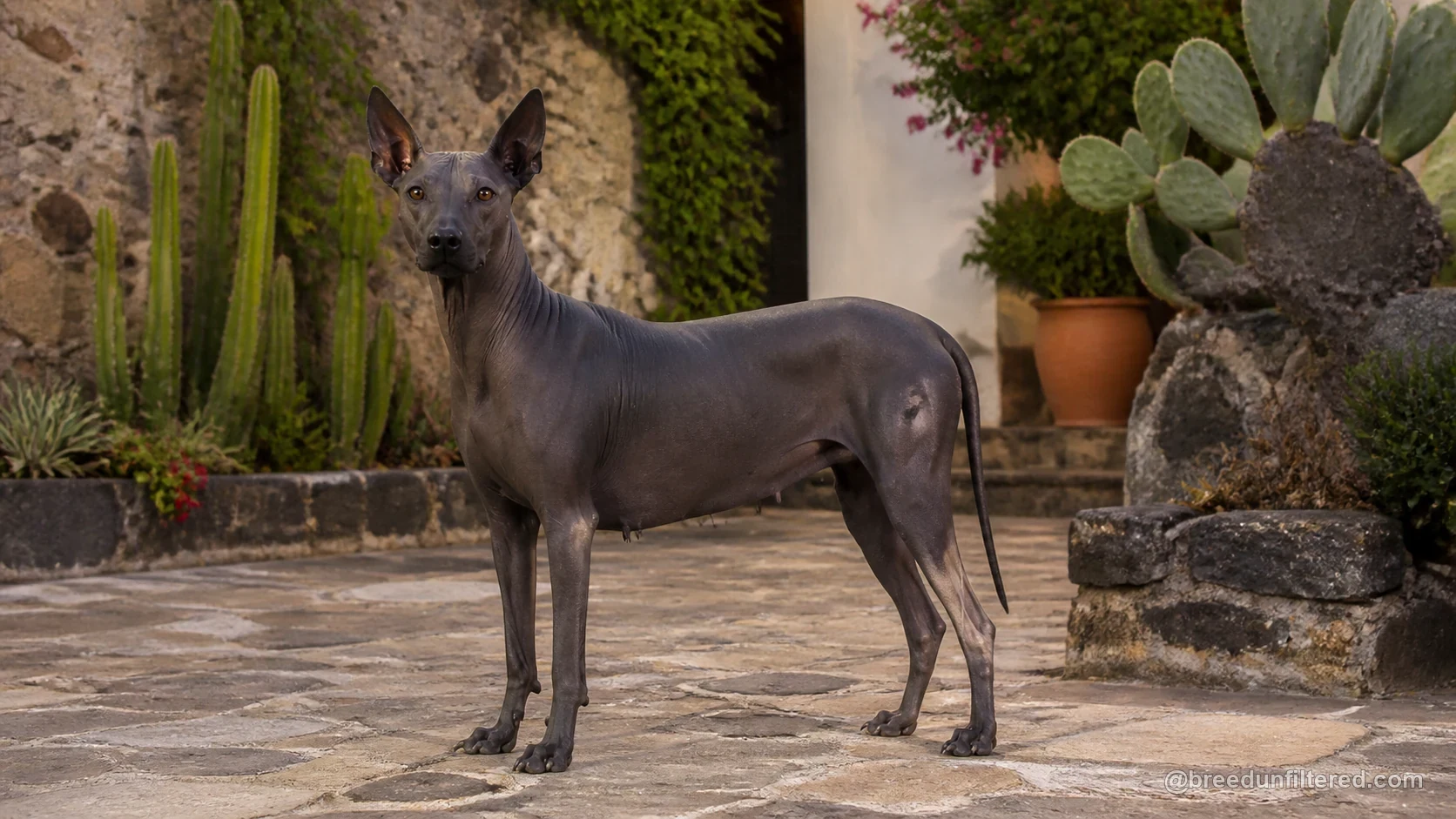
The Xoloitzcuintle, often called the Mexican Hairless Dog, is one of the oldest and most distinctive breeds in the Americas. With roots tracing back over 3,000 years to pre-Columbian civilizations, this breed was revered by the Aztecs and Maya as a guardian and companion, believed to guide souls to the afterlife. Today, the Xoloitzcuintle is recognized by the Fédération Cynologique Internationale (FCI) under standard number 234, and it comes in three sizes—toy, miniature, and standard—and two varieties: hairless and coated. Its unique appearance, calm demeanor, and deep historical significance make it a fascinating choice for the right owner.
However, the Xoloitzcuintle is not a breed for everyone. It is known for its intelligence, loyalty, and a somewhat aloof nature with strangers, yet it forms strong bonds with its family. Prospective owners should be prepared for a dog that is both independent and sensitive, requiring consistent training and early socialization. This guide aims to provide a balanced overview of the breed's characteristics, care requirements, and the responsibilities involved, helping you decide if the Xoloitzcuintle is the right companion for your lifestyle.
Origin and Purpose
The Xoloitzcuintle's history is deeply intertwined with ancient Mesoamerican cultures. Archaeological evidence suggests the breed existed over 3,000 years ago, with artifacts and depictions found in tombs and temples. The Aztecs believed the Xolo guided the dead through the underworld, and they were often sacrificed and buried with their owners. The breed's name derives from Xolotl, the Aztec god of fire and lightning, and 'itzcuintli,' meaning dog. This sacred status meant the Xolo was valued not only as a spiritual guide but also as a practical companion, providing warmth and pest control.
After the Spanish conquest, the breed's numbers dwindled, but it survived in remote areas. In the 20th century, efforts to preserve the breed began, and it was officially recognized by the FCI in 1956. Today, the Xoloitzcuintle is celebrated as a national treasure in Mexico and is gaining popularity worldwide. Its original purpose as a companion and guardian remains, though it is no longer used for ritualistic roles. Understanding this rich heritage helps appreciate the breed's dignified and sometimes reserved nature.
Temperament and Variation
The Xoloitzcuintle is typically calm, loyal, and alert. It is known for forming strong attachments to its family and can be wary of strangers, making it an effective watchdog. However, temperament can vary between individuals and between the hairless and coated varieties. Hairless Xolos are often described as more sensitive and may require a gentler approach, while coated Xolos might be slightly more outgoing, but these are general tendencies, not guarantees. The breed is intelligent and has a independent streak, which can be mistaken for stubbornness.
The breed comes in three sizes: toy (10-14 inches), miniature (14-18 inches), and standard (18-23 inches) at the shoulder. Size can influence energy levels and space requirements, but all share similar core traits. Early socialization is crucial to ensure they grow into well-adjusted adults. With proper exposure, they can be affectionate and playful with family, but they may remain reserved with unfamiliar people. Prospective owners should be prepared for a dog that is devoted but not overly demonstrative.
Exercise and Mental Work
The Xoloitzcuintle has moderate exercise needs. Daily walks and play sessions are essential to keep them physically fit and mentally stimulated. They are not hyperactive but do enjoy activities like hiking, running in a secure yard, or participating in canine sports such as agility or obedience. However, their hairless variety requires protection from extreme sun and cold, so exercise should be adjusted accordingly. Mental stimulation is equally important; puzzle toys, training sessions, and scent games can help prevent boredom and destructive behaviors.
Because of their intelligence, Xolos thrive when given a job or purpose. They excel in activities that challenge their minds, such as nose work or trick training. Without adequate mental engagement, they may become anxious or develop undesirable habits. It's important to note that exercise needs vary by age and individual health, so it's best to consult with a veterinarian to tailor a routine. A tired Xolo is a content Xolo, but they are not a breed that requires excessive physical exertion.
Training and Socialisation
Training a Xoloitzcuintle requires patience, consistency, and positive reinforcement. They are sensitive and do not respond well to harsh methods or punishment. Early socialization is vital to help them become comfortable with various people, animals, and environments. Puppy classes and controlled introductions can build their confidence and reduce wariness. Because they are intelligent, they can learn quickly, but they may also test boundaries, so a firm yet gentle approach works best.
The breed's independent nature means they may not always be eager to please, but they are loyal and responsive to their owners. Short, varied training sessions are more effective than long, repetitive ones. Using treats, praise, and play as rewards can motivate them. It's also important to establish clear rules and routines. With proper training, Xolos can be well-mannered companions, but they are not recommended for first-time owners who are unfamiliar with dog training or who cannot commit to consistent socialization.
Family and Other Pets
The Xoloitzcuintle can be a wonderful family dog, but it may not be the best choice for households with very young children. They are generally gentle and patient, but their sensitive nature means they may not tolerate rough handling. Older children who understand how to interact respectfully with dogs are usually a better match. The breed is loyal and protective of its family, often forming a particularly strong bond with one person. They can be good with other dogs if socialized early, but their prey drive may be triggered by small animals like cats or rodents.
When it comes to other pets, early and ongoing socialization is key. Xolos can coexist with cats and other dogs if introduced properly, but their hunting instincts may be strong, especially in the hairless variety. It's important to supervise interactions and provide a safe space for all pets. The breed's guarding tendency means they may be wary of strangers, including other dogs, so careful introductions are necessary. With the right environment, they can be a harmonious addition to a multi-pet household.
Grooming and Health
Grooming needs vary significantly between the hairless and coated varieties. The hairless Xolo requires regular skin care, including moisturizing to prevent dryness, and protection from sunburn and cold. They may also be prone to acne and blackheads, so gentle cleansing is recommended. The coated variety has a short, flat coat that requires minimal brushing. Both varieties are generally low-shedding, making them a potential option for allergy sufferers, though no dog is truly hypoallergenic.
Health-wise, the Xoloitzcuintle is generally a hardy breed, but like all dogs, they can be prone to certain conditions. These may include dental issues, skin problems, and hip dysplasia, though the breed is not known for a high incidence of genetic disorders. Responsible breeders screen for common issues. Regular veterinary check-ups, a balanced diet, and proper dental care are essential. The hairless variety's lack of hair means they are more susceptible to skin injuries, so owners should be vigilant. Overall, with good care, Xolos can live long, healthy lives.
Costs and Responsibility
Owning a Xoloitzcuintle involves significant financial and time commitments. Initial costs include purchasing from a reputable breeder, which can be expensive due to the breed's rarity. Ongoing expenses include high-quality food, routine veterinary care, grooming supplies (especially for hairless varieties), and pet insurance. Additionally, the breed's need for socialization and mental stimulation requires a dedicated owner who can invest time in training and exercise. Unexpected medical costs should also be considered.
Responsibility extends beyond finances. Prospective owners must be prepared for a long-term commitment, as Xolos can live 13-18 years. They thrive on companionship and may suffer from separation anxiety if left alone for long periods. It's crucial to ensure you have the time, space, and patience to meet their needs. Adopting from a rescue or shelter is also an option, though Xolos are rare in rescues. Ultimately, responsible ownership means providing a loving, stable home and being prepared for the breed's unique challenges.
Clear answers
FREQUENTLY ASKED QUESTIONS
Are Xoloitzcuintles good with children?
Xoloitzcuintles can be good with children, especially if they are raised together and the children are taught to interact respectfully. They are generally gentle and patient, but their sensitive nature means they may not tolerate rough handling. Older children who understand how to approach and play with dogs are usually a better fit. Supervision is always recommended to ensure positive interactions.
Do Xoloitzcuintles require a lot of grooming?
Grooming needs depend on the variety. Hairless Xolos require regular skin care, including moisturizing and protection from sun and cold. They may need occasional baths to keep their skin clean. Coated Xolos have a short coat that requires minimal brushing. Both varieties are low-shedding, but hairless ones need more attention to skin health.
Are Xoloitzcuintles hypoallergenic?
No dog is truly hypoallergenic, but Xoloitzcuintles are often considered more suitable for allergy sufferers because they shed very little. The hairless variety produces less dander, which is a common allergen. However, individual reactions vary, and it's important to spend time with the breed before committing to see if you have an allergic response.
How much exercise does a Xoloitzcuintle need?
Xoloitzcuintles have moderate exercise needs. Daily walks and play sessions are essential, but they are not a high-energy breed. They enjoy activities like hiking or running in a secure area. Mental stimulation is equally important, as they are intelligent and can become bored easily. Exercise should be adjusted based on age, health, and the individual dog's preferences.
Are Xoloitzcuintles easy to train?
Xoloitzcuintles are intelligent but can be independent and sensitive, which can make training a challenge for novice owners. They respond best to positive reinforcement methods, such as treats and praise, and do poorly with harsh corrections. Early socialization and consistent, patient training are essential. With the right approach, they can learn quickly and be well-behaved.
Sources and further reading
Scores describe typical breed tendencies from 1 to 10. They are not a quality ranking or a prediction for an individual dog.
Size and presence5/10
CompactVery large
Physical strength5/10
LightExceptional
Energy level9/10
LowRelentless
Exercise demand9/10
ModestVery demanding
Mental work needed8/10
ModerateDaily job
Trainability6/10
ChallengingExceptional
Everyday manageability2/10
SpecialistStraightforward
First-time owner fit2/10
Poor fitGood fit
Family-life fit6/10
LimitedExcellent
Dog sociability6/10
SelectiveVery social
Prey drive8/10
LowVery high
Guarding tendency7/10
MinimalSerious
Independence9/10
Handler-focusedSelf-directed
Grooming demand8/10
LightHeavy
Apartment fit4/10
Poor fitGood fit