Complete breed guide
Finnish Lapponian Dog OWNERSHIP GUIDE
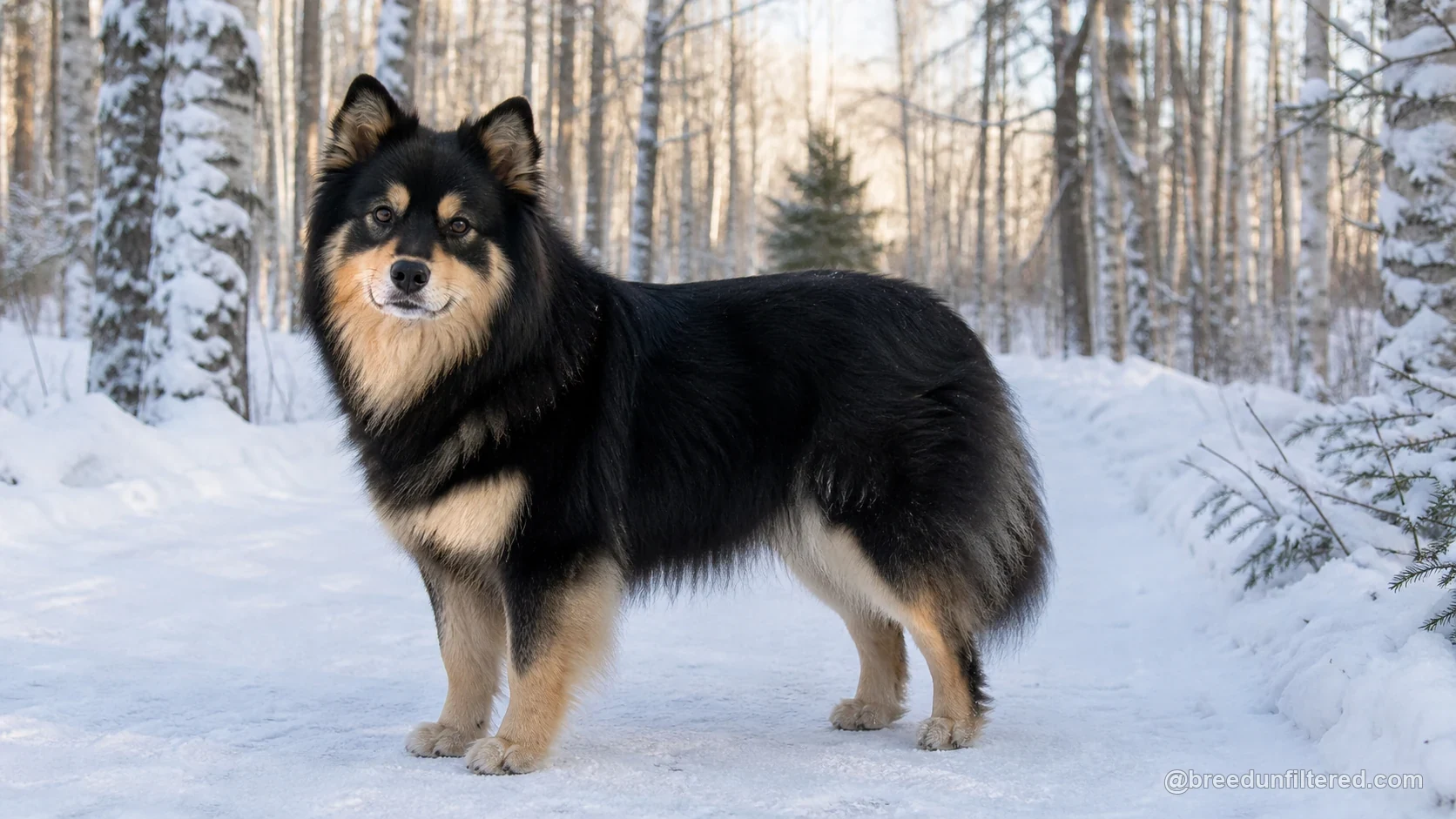
The Finnish Lapponian Dog, known in its homeland as the Suomenlapinkoira, is a medium-sized spitz-type breed developed to work alongside the indigenous Sámi people in the harsh Arctic conditions of Lapland. Originally used for herding reindeer, this breed is prized for its intelligence, endurance, and cooperative nature. Today, it has gained popularity as a family companion and versatile working dog, admired for its friendly disposition and striking appearance.
This breed is characterized by its profuse double coat, which provides insulation against extreme cold, and its expressive, dark eyes that convey a gentle and alert expression. Finnish Lapponian Dogs are known for their strong herding instincts, which can manifest in a tendency to round up children or other pets. They are generally social and adaptable, but they thrive in environments where they receive ample mental and physical stimulation. Prospective owners should be prepared for a loyal, energetic companion that requires consistent engagement and a commitment to positive training methods.
Origin and Purpose
The Finnish Lapponian Dog originates from the northernmost regions of Finland, Sweden, and Norway, where the Sámi people relied on these dogs for herding and guarding reindeer. The breed's history is intertwined with the nomadic lifestyle of the Sámi, who valued dogs that could work independently in vast, snowy landscapes. The breed was developed from local spitz-type dogs and was officially recognized by the Finnish Kennel Club in the 1940s, with the FCI standard published in 1955.
Historically, the Finnish Lapponian Dog was essential for managing reindeer herds, helping to gather, move, and protect the animals. This working heritage has shaped the breed's temperament, making it intelligent, responsive, and eager to cooperate with its handler. While modern Finnish Lapponian Dogs are often kept as companions, they still retain strong herding instincts and excel in dog sports such as agility, obedience, and herding trials. Understanding this background is crucial for prospective owners, as it explains the breed's need for purposeful activity and its natural affinity for working alongside humans.
Temperament and Variation
Finnish Lapponian Dogs are generally known for their friendly, calm, and sociable temperament. They are typically good-natured and get along well with people, including children, and are often described as gentle and patient. However, like any breed, individual temperament can vary based on genetics, socialization, and training. Some individuals may be more reserved or independent, while others are more outgoing and eager to please. Early and ongoing socialization is essential to help them develop into well-rounded adults.
This breed is not typically aggressive, but they can be alert and will bark to announce visitors or unusual occurrences. Their herding instinct may lead them to nip at heels or try to control the movement of family members, especially children. This behavior can be managed through training and redirection. Finnish Lapponian Dogs are known to form strong bonds with their families and can be sensitive to harsh handling, so positive reinforcement methods work best. They are generally adaptable to various living situations, but they do best in homes where they are included in daily activities and not left alone for long periods.
Exercise and Mental Work
Finnish Lapponian Dogs are an active and energetic breed that requires regular exercise to maintain physical and mental well-being. They were bred to cover long distances in challenging terrain, so they benefit from daily walks, runs, or hikes. However, exercise needs can vary among individuals; some may be satisfied with moderate activity, while others may require more vigorous outlets. It is important to tailor exercise to the dog's age, health, and energy level, and to provide a securely fenced area for off-leash play, as their herding instincts may tempt them to chase moving objects.
Mental stimulation is equally important for this intelligent breed. Without adequate mental engagement, they may become bored and develop undesirable behaviors such as excessive barking or digging. Activities that challenge their minds include puzzle toys, obedience training, scent work, and dog sports like agility or rally. Herding instinct tests can also provide a fulfilling outlet for their natural abilities. Prospective owners should be prepared to dedicate time each day to both physical exercise and mental enrichment to keep their Finnish Lapponian Dog happy and well-adjusted.
Training and Socialisation
Finnish Lapponian Dogs are intelligent and generally eager to please, which makes them responsive to training when approached with positive, reward-based methods. They are known to be sensitive and do not respond well to harsh corrections or heavy-handed techniques. Consistency, patience, and the use of treats, praise, or play as rewards are key to successful training. Early training should focus on basic obedience, impulse control, and recall, as their herding instincts can make them prone to chasing or wandering.
Socialisation is a critical component of raising a well-mannered Finnish Lapponian Dog. Exposing them to a variety of people, animals, environments, and situations from a young age helps them become confident and adaptable adults. Puppy classes and supervised interactions with other dogs can be beneficial. While they are generally friendly, some individuals may be reserved with strangers, so ongoing positive experiences are important. Training and socialisation should be viewed as lifelong processes, not just puppyhood tasks, to maintain good behavior and a strong bond between dog and owner.
Family and Other Pets
Finnish Lapponian Dogs are often excellent family companions due to their gentle and affectionate nature. They typically form strong attachments to their human family members and enjoy being involved in household activities. They are generally good with children, especially when raised with them, but as with any breed, interactions should be supervised to prevent accidental knocks or herding nips. Their herding instinct may lead them to try to round up small children, which can be managed through training and by teaching children how to interact appropriately with the dog.
When it comes to other pets, Finnish Lapponian Dogs can coexist peacefully with other dogs and even cats, especially if they are raised together. However, their herding background may cause them to chase or try to control smaller animals, so introductions should be gradual and supervised. They may not be suitable for homes with very small pets like rodents or birds, as their prey drive could be triggered. Early socialisation and consistent training can help them learn to live harmoniously with other animals, but individual temperament and experiences will play a significant role.
Grooming and Health
The Finnish Lapponian Dog has a thick double coat that requires regular grooming to keep it in good condition. They shed moderately throughout the year and heavily during seasonal sheds, often referred to as 'blowing coat.' During these periods, daily brushing is necessary to remove loose fur and prevent matting. Outside of shedding seasons, weekly brushing is usually sufficient. They are generally clean dogs with minimal odor, and bathing should be done only when necessary to avoid stripping natural oils from the coat.
As a breed, Finnish Lapponian Dogs are generally healthy, but like all breeds, they may be predisposed to certain health conditions. These can include hip dysplasia, progressive retinal atrophy (PRA), and cataracts. Responsible breeders screen their breeding stock for these conditions. Regular veterinary check-ups, a balanced diet, and appropriate exercise are important for maintaining overall health. Prospective owners should ask breeders about health testing and be prepared for the potential costs of veterinary care. It is also important to note that this breed is not suitable for extreme heat, as their thick coat is designed for cold climates.
Costs and Responsibility
Owning a Finnish Lapponian Dog involves significant financial and time commitments. Initial costs include the purchase price from a reputable breeder, which can vary, as well as supplies such as a crate, bedding, food, and grooming tools. Ongoing expenses include high-quality dog food, routine veterinary care, vaccinations, parasite prevention, and pet insurance. Grooming supplies and professional grooming services may also be needed, especially during heavy shedding periods. It is wise to budget for unexpected medical expenses, as no dog is immune to illness or injury.
Beyond financial costs, prospective owners must consider the responsibility of providing a suitable environment and lifestyle for this active breed. Finnish Lapponian Dogs require daily exercise, mental stimulation, and social interaction. They are not well-suited to being left alone for long hours or to living in apartments without adequate exercise opportunities. They thrive in homes with secure yards where they can run and play. Potential owners should also be prepared for the breed's vocal nature, as they may bark to alert or communicate. Responsible ownership includes committing to training, socialisation, and lifelong care, ensuring that the dog's physical and emotional needs are met.
Clear answers
FREQUENTLY ASKED QUESTIONS
Are Finnish Lapponian Dogs good with children?
Finnish Lapponian Dogs are generally known for their gentle and friendly nature, making them good companions for children when properly socialized and supervised. They may exhibit herding behaviors, such as nipping at heels, which can be managed through training. Early and ongoing socialization with children helps them learn appropriate interactions, and teaching children how to respect the dog's space is essential.
How much exercise does a Finnish Lapponian Dog need?
Finnish Lapponian Dogs are an active breed that requires daily exercise to stay healthy and happy. This typically includes at least an hour of physical activity, such as walks, runs, or playtime in a fenced yard. They also need mental stimulation through training, puzzle toys, or dog sports. Individual needs vary, so owners should adjust based on their dog's age, health, and energy level.
Do Finnish Lapponian Dogs shed a lot?
Yes, Finnish Lapponian Dogs shed moderately throughout the year and heavily during seasonal shedding periods, often called 'blowing coat.' During these times, daily brushing is necessary to manage loose fur and prevent matting. Regular grooming helps keep their coat healthy and reduces the amount of hair around the home.
Are Finnish Lapponian Dogs easy to train?
Finnish Lapponian Dogs are intelligent and generally eager to please, which makes them trainable with positive reinforcement methods. They respond well to consistent, reward-based training and do not do well with harsh corrections. Early training and socialization are important to channel their herding instincts and ensure they become well-mannered adults.
Can Finnish Lapponian Dogs live in apartments?
Finnish Lapponian Dogs can adapt to apartment living if their exercise and mental stimulation needs are met. They are not overly large and can be calm indoors, but they require daily outdoor activities and should not be left alone for long periods. A secure outdoor area for off-leash play is beneficial, and owners must be prepared for regular walks and enrichment.
Sources and further reading
Scores describe typical breed tendencies from 1 to 10. They are not a quality ranking or a prediction for an individual dog.
Size and presence5/10
CompactVery large
Physical strength5/10
LightExceptional
Energy level8/10
LowRelentless
Exercise demand8/10
ModestVery demanding
Mental work needed8/10
ModerateDaily job
Trainability6/10
ChallengingExceptional
Everyday manageability4/10
SpecialistStraightforward
First-time owner fit3/10
Poor fitGood fit
Family-life fit6/10
LimitedExcellent
Dog sociability6/10
SelectiveVery social
Prey drive8/10
LowVery high
Guarding tendency6/10
MinimalSerious
Independence9/10
Handler-focusedSelf-directed
Grooming demand10/10
LightHeavy
Apartment fit4/10
Poor fitGood fit