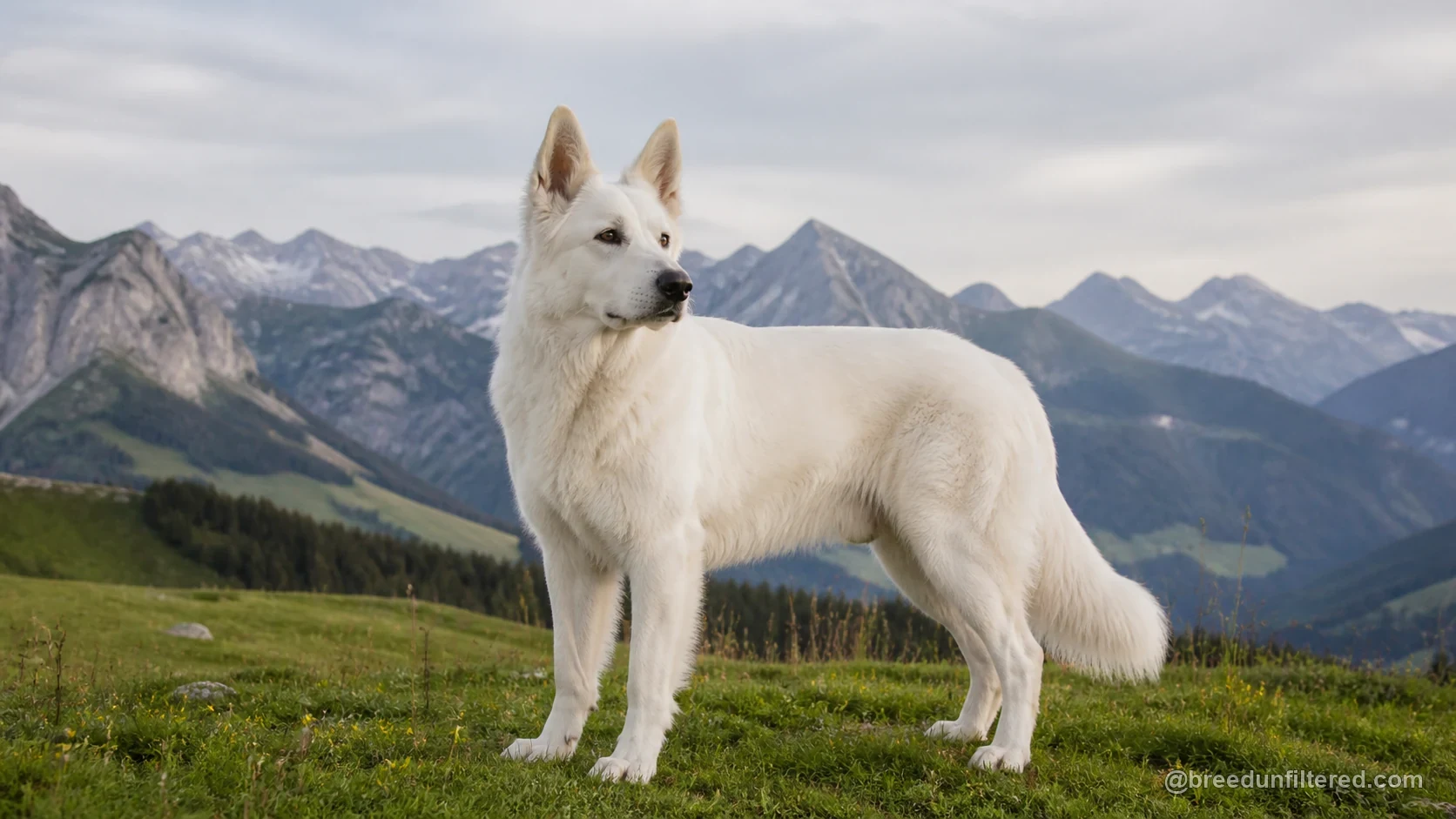
Complete breed guide
White Swiss Shepherd Dog OWNERSHIP GUIDE
The White Swiss Shepherd Dog, recognized by the FCI as Berger Blanc Suisse (Standard No. 347), is a striking canine companion known for its pure white coat and attentive, gentle expression. While sharing ancestry with the German Shepherd, this breed has been developed separately for decades, emphasizing a slightly different temperament and appearance. Prospective owners are often drawn to its wolf-like beauty, but understanding the breed's needs is essential for a successful match.
This guide provides an evidence-conscious overview of the White Swiss Shepherd Dog, drawing on the official FCI standard and reputable breed resources. We'll explore the breed's origins, typical temperament, exercise and training requirements, family compatibility, grooming and health considerations, and the financial and time commitments involved. Remember that every dog is an individual, and breed tendencies are not guarantees.
Origin and Purpose
The White Swiss Shepherd Dog traces its roots to white-coated German Shepherds that were once common but later excluded from the German Shepherd standard. In the late 20th century, enthusiasts in Switzerland and other countries began selectively breeding these white dogs, aiming to preserve their working abilities and distinctive appearance. The breed was officially recognized by the FCI in 2011, with the standard emphasizing a medium-sized, well-muscled dog with a harmonious silhouette.
Historically, these dogs served as herding and farm dogs, valued for their intelligence and versatility. Today, while some still participate in herding trials, the breed is primarily a companion and family dog. The FCI standard describes a dog that is 'self-confident' and 'good-natured,' with a 'watchful' and 'attentive' character. Understanding this heritage helps prospective owners appreciate the breed's need for purposeful activity and close human companionship.
Temperament and Variation
The White Swiss Shepherd Dog is often described as gentle, loyal, and sociable, with a strong bond to its family. The FCI standard notes that the breed is 'not to be shy, not aggressive,' and that it is 'very attached to its master.' Individual dogs may vary, but many are known for being sensitive and responsive to their owner's moods. They tend to be alert and may bark to announce visitors, but they are not typically guard dogs in the aggressive sense.
As with any breed, temperament is influenced by genetics, socialization, and training. Early and ongoing exposure to various people, animals, and environments is crucial to help a White Swiss Shepherd develop into a well-adjusted adult. While breed tendencies suggest a friendly and trainable nature, each dog is an individual, and some may be more reserved or energetic than others. Prospective owners should meet the parents of a puppy when possible and work with reputable breeders who prioritize temperament.
Exercise and Mental Work
White Swiss Shepherds are an active and intelligent breed that requires regular physical exercise and mental stimulation to thrive. They are not couch potatoes; daily walks, play sessions, and opportunities to run in a securely fenced area are typically necessary. The FCI standard describes the breed as 'lively' and 'eager to work,' indicating a need for purposeful activity. Without adequate exercise, they may become restless or develop undesirable behaviors.
Mental work is equally important. These dogs excel in activities that challenge their minds, such as obedience training, agility, nose work, or herding trials. Puzzle toys and interactive games can also provide stimulation. Prospective owners should be prepared to dedicate time each day to both physical and mental engagement. The exact amount will vary by age, health, and individual temperament, but a general expectation of at least one to two hours of combined activity is a reasonable starting point.
Training and Socialisation
The White Swiss Shepherd is a highly trainable breed, known for its eagerness to please and quick learning ability. Positive reinforcement methods, such as treats, praise, and play, work best, as the breed can be sensitive to harsh corrections. Consistency and patience are key. Early puppy training classes are recommended to establish basic obedience and to provide structured socialization opportunities.
Socialisation should begin early and continue throughout the dog's life. Exposing the puppy to a wide range of people, dogs, and environments helps prevent fearfulness or over-reactivity. While the breed is generally friendly, some individuals may be reserved with strangers, so gentle and gradual introductions are important. A well-socialized White Swiss Shepherd is typically a confident and reliable companion, but this requires ongoing effort from the owner.
Family and Other Pets
White Swiss Shepherds are often excellent family dogs, forming strong bonds with all household members, including children. Their gentle and patient nature, when properly socialized, can make them good playmates for older children who understand how to interact respectfully with dogs. However, as with any breed, supervision is essential, especially with younger children, to ensure safe interactions for both the child and the dog.
With other pets, the breed's herding background may lead to attempts to 'herd' smaller animals, but with early socialization, many White Swiss Shepherds live peacefully with cats and other dogs. Their prey drive is generally moderate, but individual variation exists. Introducing them to other animals gradually and under controlled conditions is recommended. Prospective owners should be prepared to manage interactions and provide clear boundaries.
Grooming and Health
The White Swiss Shepherd has a double coat that sheds heavily, especially during seasonal changes. Regular brushing, at least two to three times a week, is necessary to manage loose hair and keep the coat healthy. During shedding season, daily brushing may be required. The white coat shows dirt easily, so occasional baths are needed, but over-bathing can strip natural oils. Routine nail trimming, ear cleaning, and dental care are also part of responsible grooming.
As a breed, White Swiss Shepherds may be prone to certain health conditions, including hip and elbow dysplasia, degenerative myelopathy, and some eye disorders. Responsible breeders screen their breeding stock for these issues. Prospective owners should ask for health clearances and be aware of the potential for these conditions. Regular veterinary check-ups and a healthy diet are important for overall well-being. While the breed has a typical lifespan of around 12-13 years, individual health varies.
Costs and Responsibility
Owning a White Swiss Shepherd involves significant financial and time commitments. Initial costs include the purchase price from a reputable breeder, which can vary, as well as supplies such as a crate, bedding, food bowls, and a leash. Ongoing expenses include high-quality dog food, routine veterinary care, vaccinations, parasite prevention, and pet insurance. Grooming supplies and professional grooming services, if used, add to the budget.
Beyond finances, this breed requires a substantial investment of time for exercise, training, and companionship. They are not suited to being left alone for long periods and thrive in homes where someone is often present. Prospective owners should also consider the long-term responsibility of caring for a dog that may live over a decade. It is essential to research breeders thoroughly, ask about health testing, and ensure that the breed's needs align with your lifestyle before making a commitment.
Clear answers
FREQUENTLY ASKED QUESTIONS
Are White Swiss Shepherds good with children?
Many White Swiss Shepherds are gentle and patient with children, especially when raised with them and properly socialized. However, as with any breed, supervision is essential, and children should be taught how to interact respectfully with dogs. Individual temperaments vary, so it's important to assess each dog's behavior and provide consistent training.
Do White Swiss Shepherds shed a lot?
Yes, White Swiss Shepherds have a thick double coat that sheds heavily, particularly during seasonal changes. Regular brushing, at least two to three times a week, is necessary to manage loose hair, and daily brushing may be needed during peak shedding periods. Their white coat also shows dirt easily, so occasional baths are required.
How much exercise does a White Swiss Shepherd need?
White Swiss Shepherds are an active breed that typically requires at least one to two hours of exercise and mental stimulation each day. This can include walks, playtime, and activities like obedience training or agility. The exact amount varies by age and individual energy levels, but they are not suited to a sedentary lifestyle.
Are White Swiss Shepherds easy to train?
Yes, White Swiss Shepherds are generally highly trainable due to their intelligence and eagerness to please. They respond best to positive reinforcement methods, such as treats and praise. Early socialization and consistent training are important to help them become well-mannered adults. They can excel in obedience and dog sports.
What health issues are common in White Swiss Shepherds?
White Swiss Shepherds may be prone to certain health conditions, including hip and elbow dysplasia, degenerative myelopathy, and some eye disorders. Responsible breeders screen their breeding dogs for these issues. Regular veterinary check-ups and a healthy lifestyle can help manage risks, but no breed is free from potential health problems.
Sources and further reading
Scores describe typical breed tendencies from 1 to 10. They are not a quality ranking or a prediction for an individual dog.
Size and presence6/10
CompactVery large
Physical strength5/10
LightExceptional
Energy level8/10
LowRelentless
Exercise demand9/10
ModestVery demanding
Mental work needed10/10
ModerateDaily job
Trainability9/10
ChallengingExceptional
Everyday manageability5/10
SpecialistStraightforward
First-time owner fit4/10
Poor fitGood fit
Family-life fit7/10
LimitedExcellent
Dog sociability6/10
SelectiveVery social
Prey drive7/10
LowVery high
Guarding tendency7/10
MinimalSerious
Independence5/10
Handler-focusedSelf-directed
Grooming demand8/10
LightHeavy
Apartment fit4/10
Poor fitGood fit