The honest version
WHAT THIS DOG NEEDS
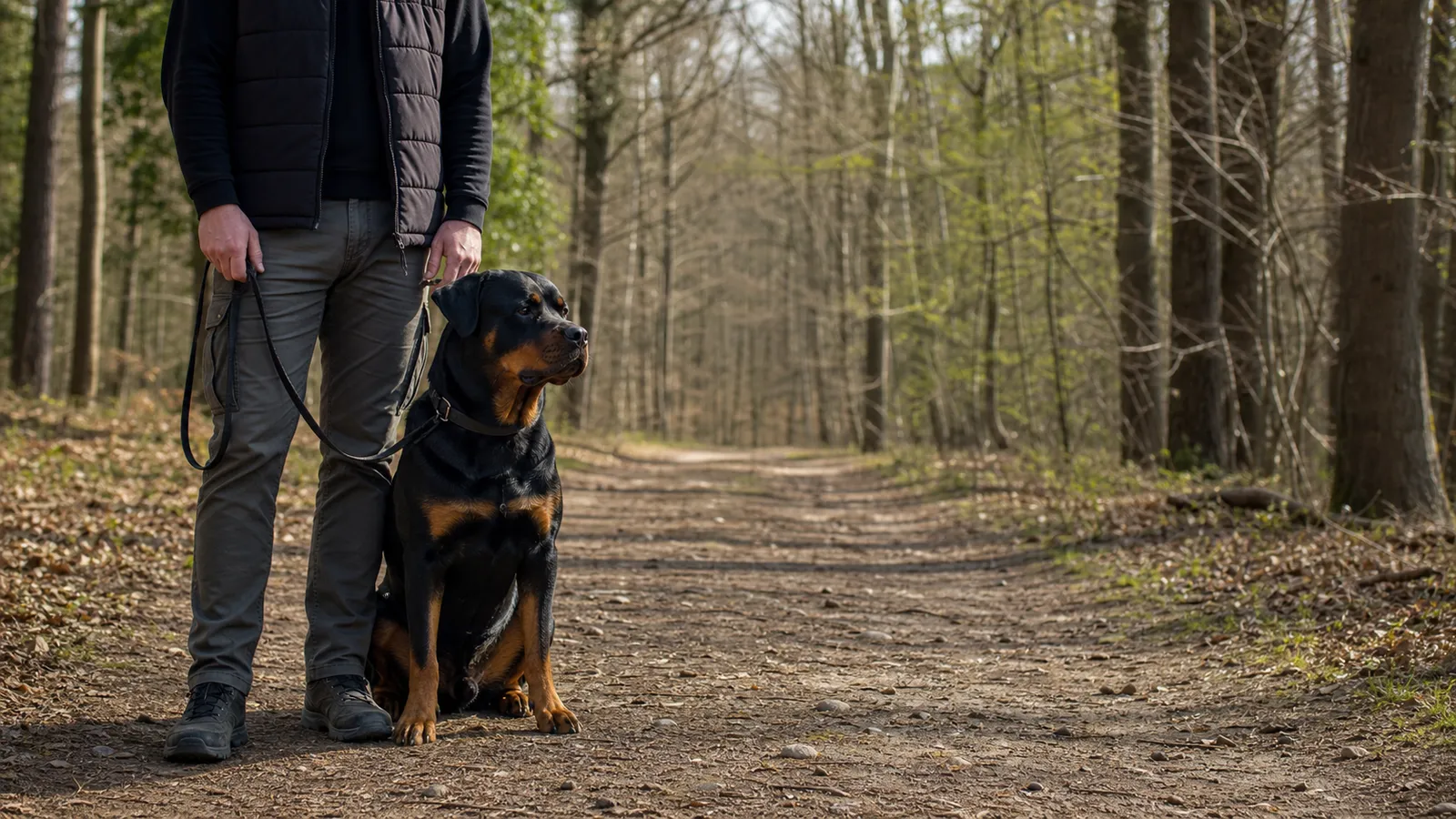
A capable, composed working breed that benefits from patient training and clear household expectations.
The honest version
A capable, composed working breed that benefits from patient training and clear household expectations.
Watch the episode
Complete breed guide
The Rottweiler is a powerful German working breed with a long association with livestock, transport, property work, and later service roles. A well-supported Rottweiler can be a steady, engaged companion, but size and strength increase the consequences of weak socialisation, poor containment, or delayed training. Prospective owners should evaluate the whole daily commitment rather than choosing on appearance or reputation.
Breed descriptions are only a starting point. Individual behavior reflects genetics, early development, health, learning, age, and environment, and Rottweilers vary in sociability, sensitivity, energy, and dog tolerance. This guide is written for international readers, who must confirm current local laws, housing permissions, insurance terms, and travel requirements. Veterinarians and qualified humane behavior professionals should be part of responsible planning, not reserved only for crises.
The breed's history is linked with cattle-driving and guarding dogs that developed around the German town of Rottweil. Dogs helped move livestock and protect people and goods; later, Rottweilers were used for draft and service work. The modern FCI standard describes a companion, service, and working dog with strength, agility, endurance, and an even basic disposition. Functional balance matters more than an excessively massive outline or an intimidating image.
Historical guarding ability does not mean a companion should be provoked, tested, or taught to threaten people. Responsible modern work develops controlled movement, scenting, obedience skills, cooperative care, and calm responses to ordinary environments. A dog that can notice a change and then disengage is easier and safer to live with than one encouraged to make independent decisions about strangers. Bite or protection training is not needed for a family companion and is outside this ownership guide.
Many Rottweilers are affectionate with their households, observant, playful, and willing to work for food, toys, or shared activity. Some are socially relaxed with newcomers, while others are reserved and need more space. Adolescence can bring stronger opinions, increased environmental interest, and changes in dog-to-dog behavior. A stable dog need not greet everyone, but should be capable of recovery, redirection, and safe management without constant physical struggle.
Ask breeders and rescues specific questions about adult relatives, handling, startle recovery, visitors, unfamiliar dogs, resource guarding, separation, and behavior in public. Do not accept claims that aggression proves quality or that a bloodline guarantees behavior. Sudden withdrawal, irritability, sensitivity to touch, or reduced tolerance should prompt a veterinary examination because discomfort can change behavior. Persistent fear, reactivity, or conflict requires an individual assessment by a qualified behavior professional using humane, evidence-based practice.
Healthy adult Rottweilers generally benefit from daily purposeful movement, including walks, sniffing, and activities that develop fitness without repetitive strain. Many enjoy hiking, tracking-style games, retrieving, swimming where safe, or carefully taught dog sports. Exercise must suit weather, body condition, age, and medical status. Growing puppies need short, varied, self-paced activity rather than forced running, heavy pulling, or repeated jumping while bones and joints are developing.
Mental work can be woven into ordinary routines. Searching for food, learning object names, stationing on a mat, carrying a toy, and practicing cooperative grooming all use the brain without creating constant excitement. Alternate activity with enough sleep and quiet time. A yard does not replace shared exercise, and unsupervised fence running can rehearse barking or frustration. If the dog becomes stiff, reluctant, unusually tired, or changes gait, pause activity and seek veterinary guidance rather than pushing through.
Training should start early, remain rewarding, and focus on everyday leverage points. Teach loose-leash walking, recall in safe areas, emergency turns, waiting at doors, releasing objects, calm vehicle entry, and settling behind a barrier. Introduce nail care, examination, and a well-fitted basket muzzle through gradual positive associations. Secure equipment matters, but tools do not replace teaching. Physical corrections and intimidation can increase conflict, suppress warning signals, and damage the trust needed to guide a strong dog.
Good socialisation is not a checklist of forced greetings. Help the puppy experience relevant people, respectful dogs, surfaces, noises, transport, and veterinary-style handling while it remains comfortable enough to learn. Reward observation and checking back with the handler, and let the puppy decline interaction. Continue through adolescence, when sensitivity may change. If the dog freezes, hides, stares, lunges, or takes a long time to recover, increase distance and consult a qualified professional instead of flooding it with more exposure.
Rottweilers can be devoted family dogs, but affection does not remove the need for supervision. Children should not climb on the dog, disturb food or sleep, take objects, or walk it without a capable adult. Use gates and separate rest spaces during meals, rough play, parties, and other busy periods. Adults should learn subtle discomfort signals such as turning away, stillness, lip licking, or leaving, and should intervene before a dog feels it must use stronger communication.
Compatibility with other dogs, cats, or small pets depends on the individuals, early history, resources, and social maturity. Introduce gradually with barriers and controlled distance, feed separately, and supervise until a reliable long-term pattern is established. For visitors and deliveries, prepare before opening the door: use a trained station, leash, gate, or closed room as appropriate. Secure separation is not a failure; it may be the clearest way to keep a brief or high-energy visit comfortable for everyone.
The short double coat needs regular brushing and sheds more at certain times. Check nails, teeth, ears, eyes, skin, and feet, and make handling a cooperative routine rather than a wrestling match. Rottweilers can gain excess weight easily when food rewards and portions are not balanced. Keep the dog lean, account for training treats, provide nonslip footing, and ask a veterinarian for diet guidance appropriate to growth, activity, sterilisation status, and any health concerns.
Orthopedic, cardiac, eye, neurologic, and cancer concerns are discussed in the breed, among other conditions, but general information cannot predict or diagnose an individual. Prospective buyers should verify health results through recognized registries and understand that completion of screening does not guarantee normal results or a disease-free life. Routine examinations and prompt attention to changes are important. Collapse, severe breathing difficulty, sudden abdominal enlargement, or repeated unproductive retching requires urgent veterinary care.
Plan for more than an acquisition fee. Large-dog food, medication, diagnostic imaging, surgery, preventive care, training, boarding, strong equipment, secure fencing, and suitable transport can be expensive. Insurance may exclude specific breeds, liability, or pre-existing conditions, and rental choices may narrow. Obtain written local quotes before committing and maintain an emergency fund. Responsible breeders may charge more because screening and careful rearing cost money, but price alone never proves quality.
Check current national, regional, municipal, tenancy, insurer, and travel rules before bringing a Rottweiler home. Some jurisdictions require registration, permission, insurance, specific containment, leash or muzzle use, or other conditions. Follow official sources and review rules when moving or traveling. At home, use locked gates, maintained fencing, identification, an updated microchip, and a door routine. Choose lifelong breeder or rescue support and plan for illness, relocation, caregiver changes, reduced mobility, and the dog's senior years.
Clear answers
A prepared first-time owner can succeed, but this is not a forgiving choice for someone who plans to learn only after problems appear. Secure housing, early reward-based training, socialisation, financial capacity, and physical management are essential. Meet stable adults and arrange professional support before acquiring the dog. An adult with a well-documented history may be more predictable than a puppy, although every placement still needs individual assessment and a realistic backup plan.
Most healthy adults need daily walking and mental activity, often split into several sessions, but the correct amount varies. Quality matters: sniffing, skill practice, and steady conditioning may be more useful than relentless high-impact play. Puppies should not follow adult exercise plans, and seniors may need shorter outings. A veterinarian can tailor activity for growth, excess weight, joint disease, heat, or recovery. The dog should settle after appropriate activity rather than remain chronically exhausted.
Some live very successfully with children, but no breed or individual is automatically safe. Size alone can cause accidental injury, and dogs need protection from climbing, grabbing, and disturbance. Adults must supervise actively, teach children respectful boundaries, and use physical separation whenever supervision is divided. The match also depends on the dog's history and the household's routines. Any discomfort or guarding around a child warrants immediate separation and qualified professional guidance.
Many do, especially with careful introductions and compatible individuals, but tolerance is not guaranteed and can change with maturity. Use neutral introductions, barriers, separate feeding, and controlled supervision. Do not force sharing of beds, toys, or human attention. Cats and small animals need escape routes and protected areas. If stalking, persistent chasing, freezing, guarding, or fighting occurs, separate safely and consult a qualified behavior professional rather than testing the relationship again without a plan.
Ask for independently verifiable health-screening records, honest information about mature temperament, a clear contract, and lifelong return support. A breeder should discuss the strengths and limitations of both parents, raise puppies with thoughtful exposure, and match homes rather than sell by color or size. A rescue should distinguish observed behavior from unknown history. Avoid guaranteed temperament claims, pressure sales, hidden living conditions, unverifiable test statements, or marketing that celebrates extreme aggression or excessive body type.
Scores describe typical breed tendencies from 1 to 10. They are not a quality ranking or a prediction for an individual dog.