Complete breed guide
Hamiltonstövare OWNERSHIP GUIDE
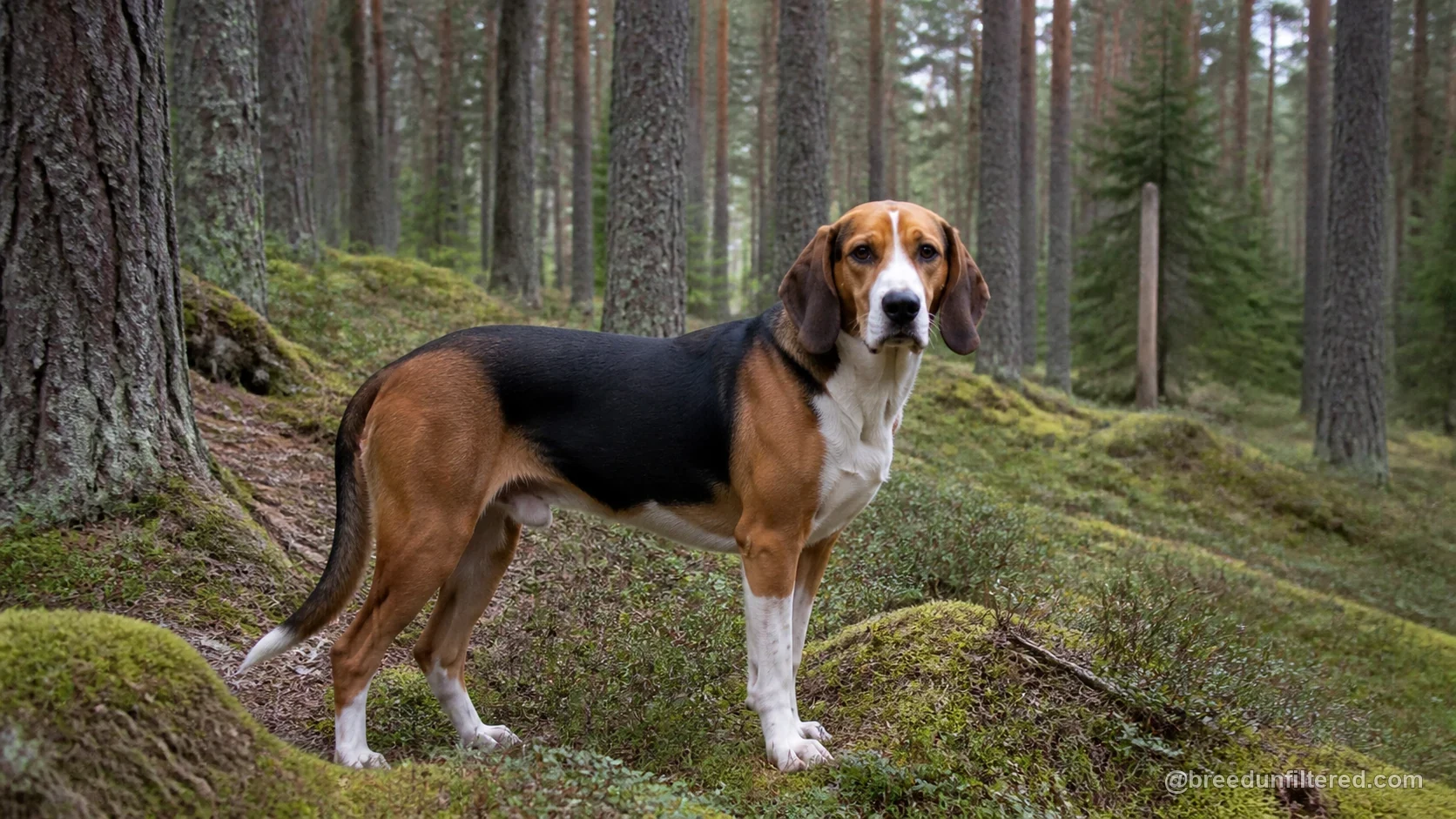
The Hamiltonstövare is a Swedish scenthound developed for hare hunting in the rugged Scandinavian terrain. Named after its founder, Count Adolf Patrick Hamilton, this breed combines a keen nose with a steady, methodical hunting style. While still primarily a working dog, the Hamiltonstövare has gained admirers for its balanced temperament and striking tri-color coat, making it a versatile companion for active families.
Prospective owners should understand that this is a breed with strong instincts and considerable energy needs. The Hamiltonstövare thrives when given a job, whether that be hunting, tracking, or participating in dog sports. They are known for their friendly disposition, but their independent nature and vocal tendencies require patient training and secure containment. This guide aims to provide a realistic overview of what life with a Hamiltonstövare entails.
Origin and Purpose
The Hamiltonstövare was developed in Sweden during the late 19th century by Count Adolf Patrick Hamilton, a founder of the Swedish Kennel Club. He aimed to create a versatile hare-hunting dog that could work in the varied landscapes of Sweden, from dense forests to open fields. By crossing various German and Swiss scenthounds, including the Holsteiner Hound and the Swiss Laufhund, he established a breed with a powerful nose and a persistent, yet controlled, hunting style.
Today, the Hamiltonstövare remains a dedicated hunting dog, particularly for hare and fox. It is recognized by the FCI in Group 6, Scenthounds and related breeds. While its primary role is still as a working dog, it has also found a place in homes as a companion, provided that its exercise and mental stimulation needs are met. The breed's purpose has shaped its temperament, making it a determined tracker with a sociable and even-tempered disposition.
Temperament and Variation
The Hamiltonstövare is generally described as friendly, calm, and even-tempered. They are known to be good-natured with people, including children, and typically get along well with other dogs. However, they are also independent thinkers, a trait common among scenthounds, which can manifest as stubbornness. Individual variation exists, with some dogs being more outgoing and others more reserved, but a stable and sociable temperament is a breed hallmark.
This breed is not known for aggression, but they can be reserved with strangers, making them decent watchdogs. Their hunting instinct is strong, and they may be prone to chasing small animals, so early socialization is crucial. While they are not typically excessive barkers, they do have a distinctive bay that they may use when tracking or when excited. Prospective owners should appreciate that this is a vocal breed, and training can help manage excessive noise.
Exercise and Mental Work
The Hamiltonstövare is a high-energy breed that requires substantial daily exercise. They are bred for endurance and can cover long distances in the field. A simple walk around the block is insufficient; they need opportunities to run, preferably in a securely fenced area. Activities like jogging, hiking, or cycling can help meet their physical needs. Without adequate exercise, they may become restless and develop destructive behaviors.
Mental stimulation is equally important. This intelligent breed needs tasks that engage their nose and mind. Scent work, tracking trials, and puzzle toys can provide valuable outlets. They excel in activities that mimic hunting, such as nose work or barn hunt. Owners should be prepared to dedicate time each day to both physical and mental challenges to keep their Hamiltonstövare content and well-adjusted.
Training and Socialisation
Training a Hamiltonstövare requires patience and consistency. They are intelligent but can be independent and easily distracted by scents. Positive reinforcement methods, using treats and praise, work best. Harsh corrections are counterproductive and can damage the trust between dog and owner. Early obedience training is essential to establish a foundation for good behavior, and it should be continued throughout the dog's life.
Socialisation is critical from a young age. Exposing the puppy to various people, animals, environments, and sounds helps develop a well-rounded adult. Because of their hunting background, they may have a high prey drive, so careful introduction to small pets is necessary. Dog parks can be good for socializing with other dogs, but supervision is advised. A well-socialized Hamiltonstövare is typically friendly and adaptable.
Family and Pets
The Hamiltonstövare can make a wonderful family dog for active households. They are generally gentle and patient with children, and they enjoy being part of family activities. However, their size and energy might be overwhelming for very young children, so supervision is recommended. They are not typically clingy and can entertain themselves, but they thrive when included in family outings.
With other dogs, they usually get along well, especially if raised together. Their pack-oriented nature makes them amenable to multi-dog households. However, due to their strong hunting instincts, they may not be trustworthy with small pets like rabbits, guinea pigs, or cats unless they have been raised with them from puppyhood. Even then, supervision is wise. A secure yard is essential to prevent them from following a scent and wandering off.
Grooming and Health
The Hamiltonstövare has a short, dense, and weather-resistant coat that requires minimal grooming. Weekly brushing with a firm bristle brush or a hound glove will help remove loose hair and keep the coat healthy. They shed moderately throughout the year, with heavier shedding during seasonal changes. Bathing is only necessary when they are dirty or have a doggy odor, as excessive bathing can strip natural oils.
As a breed, the Hamiltonstövare is generally healthy, but like all dogs, they can be prone to certain conditions. Responsible breeders screen for hip dysplasia and eye disorders. They are also susceptible to ear infections due to their floppy ears, so regular ear cleaning is important. Maintaining a healthy weight and providing regular veterinary care are key to a long, happy life. Prospective owners should ask breeders about health clearances for the parents.
Costs and Responsibility
Owning a Hamiltonstövare involves significant financial and time commitments. The initial cost of a puppy from a reputable breeder can be substantial, and ongoing expenses include high-quality food, routine veterinary care, vaccinations, and preventive medications. Additionally, because this is an active breed, owners may need to invest in secure fencing, training classes, and possibly dog sports equipment. Unexpected medical costs should also be considered, and pet insurance is a wise investment.
Beyond finances, this breed demands a responsible owner who can provide ample exercise, mental stimulation, and companionship. They are not suited to a sedentary lifestyle or apartment living without a dedicated plan for their needs. Prospective owners should research the breed thoroughly, talk to breeders and owners, and honestly assess their ability to meet the breed's requirements. A Hamiltonstövare can be a rewarding companion for the right person, but it is a significant responsibility.
Clear answers
FREQUENTLY ASKED QUESTIONS
Is the Hamiltonstövare a good family dog?
The Hamiltonstövare can be a good family dog for active households. They are generally friendly and patient with children, especially when raised with them. However, their high energy and strong hunting instincts require supervision around very young kids and small pets. They do best with families who can provide ample exercise and mental stimulation.
How much exercise does a Hamiltonstövare need?
The Hamiltonstövare needs a substantial amount of daily exercise, typically at least an hour or more of vigorous activity. They enjoy running, hiking, and playing in a secure area. Mental exercise, such as scent work or puzzle toys, is also important to keep them engaged. Without enough exercise, they may become bored and develop behavioral issues.
Are Hamiltonstövare easy to train?
Hamiltonstövare are intelligent but can be independent and stubborn, making training a challenge for novice owners. They respond best to positive reinforcement techniques like treats and praise. Consistency and patience are key. Early socialization and obedience training are essential to manage their strong prey drive and ensure they become well-mannered adults.
Do Hamiltonstövare get along with other pets?
Hamiltonstövare generally get along well with other dogs, especially if socialized early. However, due to their hunting background, they may have a high prey drive and may chase small animals like cats, rabbits, or rodents. With proper introduction and supervision, some can live peacefully with cats, but it is not guaranteed. A secure yard is necessary to prevent them from wandering off after a scent.
What are the grooming requirements for a Hamiltonstövare?
The Hamiltonstövare has a short, dense coat that is easy to groom. Weekly brushing with a firm bristle brush or hound glove is sufficient to remove loose hair and keep the coat shiny. They shed moderately, with heavier shedding during seasonal changes. Regular ear cleaning is important to prevent infections, and nail trimming should be done as needed.
Sources and further reading
Scores describe typical breed tendencies from 1 to 10. They are not a quality ranking or a prediction for an individual dog.
Size and presence5/10
CompactVery large
Physical strength6/10
LightExceptional
Energy level9/10
LowRelentless
Exercise demand10/10
ModestVery demanding
Mental work needed8/10
ModerateDaily job
Trainability5/10
ChallengingExceptional
Everyday manageability2/10
SpecialistStraightforward
First-time owner fit3/10
Poor fitGood fit
Family-life fit6/10
LimitedExcellent
Dog sociability8/10
SelectiveVery social
Prey drive10/10
LowVery high
Guarding tendency3/10
MinimalSerious
Independence8/10
Handler-focusedSelf-directed
Grooming demand2/10
LightHeavy
Apartment fit4/10
Poor fitGood fit