Complete breed guide
Romanian Raven Shepherd Dog OWNERSHIP GUIDE
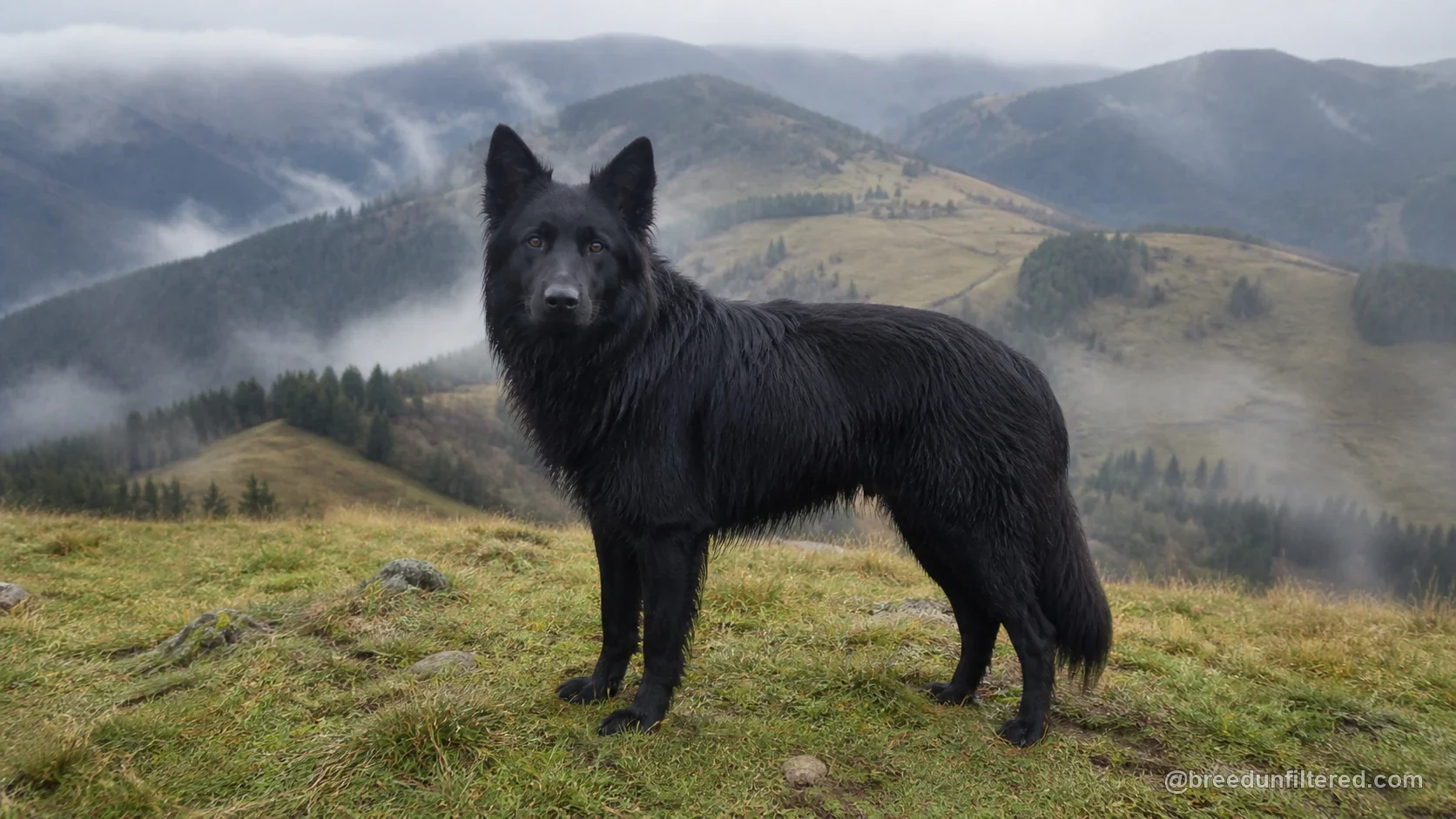
The Romanian Raven Shepherd Dog, also known as Ciobănesc Românesc Corb, is a large and powerful livestock guardian breed from the Carpathian Mountains of Romania. Recognized provisionally by the Fédération Cynologique Internationale (FCI) under standard number 373, this breed is prized for its protective instincts, loyalty, and imposing presence. Its name 'Corb' refers to its raven-black coat, which helps it blend into the shadows while guarding flocks.
For prospective owners, the Romanian Raven Shepherd Dog is not a typical companion. Bred to work independently in harsh mountain terrain, it requires a job, ample space, and an experienced handler. This guide provides an evidence-conscious overview of the breed's origin, temperament, care needs, and the realities of living with a guardian dog, helping you decide if this rare breed is the right fit for your lifestyle.
Origin and Purpose
The Romanian Raven Shepherd Dog originates from the Carpathian Mountains, where it has been used for centuries to guard livestock against predators such as wolves and bears. It is one of several Romanian shepherd breeds, each adapted to different regions and climates. The breed's exact lineage is not well-documented, but it is believed to share ancestry with other livestock guardian breeds of the Balkans and Eastern Europe.
The FCI provisionally recognized the breed in 2015, placing it in Group 2 (Pinscher and Schnauzer type, Molossoid and Swiss Mountain and Cattledogs) under the 'Provisionally recognised' section. This recognition is an important step in preserving the breed's genetic heritage and promoting responsible breeding. However, the breed remains rare outside its native Romania, and its primary purpose remains working as a guardian rather than a companion.
Temperament and Variation
The Romanian Raven Shepherd Dog is known for its calm, confident, and watchful temperament. As a livestock guardian, it is independent and capable of making decisions without human input, which can translate into a stubborn streak in a home environment. It is typically devoted to its family and wary of strangers, but individual temperaments can vary based on genetics, socialization, and training.
While the breed standard describes a balanced and even-tempered dog, there is natural variation among individuals. Some may be more sociable, while others are more reserved. Prospective owners should meet the parents of a puppy and ask the breeder about the temperament of their lines. Early and ongoing socialization is crucial to help these dogs distinguish between genuine threats and everyday situations.
Exercise and Mental Work
The Romanian Raven Shepherd Dog is a working breed with high energy levels, but its exercise needs are not like those of a sporting dog. It requires daily physical activity, such as long walks or a secure, large yard to patrol. However, its primary need is mental stimulation and a sense of purpose. Without a job, it may become bored and develop destructive behaviors.
Mental work can include obedience training, scent work, or even guarding tasks that simulate its natural role. Puzzle toys and interactive games can help, but they are not a substitute for meaningful work. Prospective owners should be prepared to dedicate time each day to both physical and mental enrichment, and to provide a secure environment where the dog can safely exercise off-leash.
Training and Socialisation
Training a Romanian Raven Shepherd Dog requires patience, consistency, and a firm but gentle approach. This breed is intelligent but independent, and it may question commands if it does not see the value in them. Positive reinforcement methods work best, as harsh training can damage trust and increase stubbornness. Early obedience training is essential to establish a strong bond and clear communication.
Socialisation is equally critical. Exposing the puppy to a wide range of people, animals, and environments from a young age helps prevent excessive fear or aggression. However, even with excellent socialisation, these dogs retain their guarding instincts and may be aloof with strangers. Owners must manage interactions carefully and provide clear guidance on acceptable behavior.
Family and Other Pets
The Romanian Raven Shepherd Dog can be a devoted family member, especially when raised with children. Its protective nature means it may watch over the family, but its large size and boisterous play could accidentally knock over small children. Supervision and teaching children how to interact respectfully with dogs are essential. The breed is generally not recommended for first-time dog owners.
With other pets, the breed's behavior varies. It may get along with dogs it is raised with, but it can be territorial with unfamiliar dogs. Its prey drive is typically high, so it may not be safe around small animals such as cats or rabbits unless raised with them from puppyhood. Careful introductions and management are necessary to ensure harmony in a multi-pet household.
Grooming and Health
The Romanian Raven Shepherd Dog has a thick, double coat that is typically black or dark gray. It sheds seasonally and requires regular brushing, at least two to three times a week, to remove loose hair and prevent matting. During heavy shedding periods, daily brushing may be needed. Bathing should be infrequent to preserve natural oils, and routine nail trimming, ear cleaning, and dental care are important.
As a relatively rare breed, there is limited health data available. However, like many large breeds, it may be prone to hip dysplasia and other joint issues. Responsible breeders screen their breeding stock for common conditions. Prospective owners should ask about health clearances and the longevity of the parents. Regular veterinary check-ups and a balanced diet are essential to maintain overall health.
Costs and Responsibility
Owning a Romanian Raven Shepherd Dog is a significant financial and time commitment. Initial costs include the purchase price, which can be high due to the breed's rarity, as well as supplies, fencing, and veterinary care. Ongoing expenses include high-quality food, routine vet visits, grooming supplies, and potential medical treatments. Owners should also budget for training classes and pet insurance.
Beyond finances, this breed demands a responsible owner who can provide ample space, time, and mental stimulation. It is not suited to apartment living or a sedentary lifestyle. Prospective owners must be prepared for a long-term commitment of 10-12 years or more, and should consider the dog's needs in the context of their future plans. Responsible ownership also includes proper containment and supervision to prevent the dog from wandering or becoming a nuisance.
Clear answers
FREQUENTLY ASKED QUESTIONS
Is the Romanian Raven Shepherd Dog good for first-time owners?
Generally, no. This breed is independent, strong-willed, and requires experienced handling. First-time owners may struggle with its training and socialization needs. It is better suited to owners familiar with livestock guardian breeds or those willing to seek professional guidance.
How much exercise does a Romanian Raven Shepherd Dog need?
It needs daily physical activity, such as long walks or a large, secure yard, but its mental exercise needs are equally important. Without a job or structured activities, it can become bored and destructive. Owners should provide both physical and mental stimulation every day.
Does the Romanian Raven Shepherd Dog get along with other dogs?
It can get along with dogs it is raised with, but it may be territorial with unfamiliar dogs. Early socialization is crucial, but even then, its guarding instincts may lead to aggression. Careful introductions and supervision are necessary.
What is the grooming requirement for this breed?
The breed has a thick double coat that sheds seasonally. Regular brushing, at least two to three times a week, is needed to manage loose hair and prevent matting. During heavy shedding, daily brushing may be required. Bathing should be infrequent.
Is the Romanian Raven Shepherd Dog suitable for apartment living?
No, this breed is not suited to apartment living. It requires ample space to roam and patrol, and its guarding instincts make it more comfortable in a rural or suburban setting with a large, secure yard. Apartment life would likely lead to frustration and behavioral issues.
Sources and further reading
Scores describe typical breed tendencies from 1 to 10. They are not a quality ranking or a prediction for an individual dog.
Size and presence7/10
CompactVery large
Physical strength7/10
LightExceptional
Energy level6/10
LowRelentless
Exercise demand6/10
ModestVery demanding
Mental work needed7/10
ModerateDaily job
Trainability5/10
ChallengingExceptional
Everyday manageability2/10
SpecialistStraightforward
First-time owner fit1/10
Poor fitGood fit
Family-life fit6/10
LimitedExcellent
Dog sociability6/10
SelectiveVery social
Prey drive6/10
LowVery high
Guarding tendency7/10
MinimalSerious
Independence9/10
Handler-focusedSelf-directed
Grooming demand7/10
LightHeavy
Apartment fit4/10
Poor fitGood fit