Complete breed guide
Porcelaine OWNERSHIP GUIDE
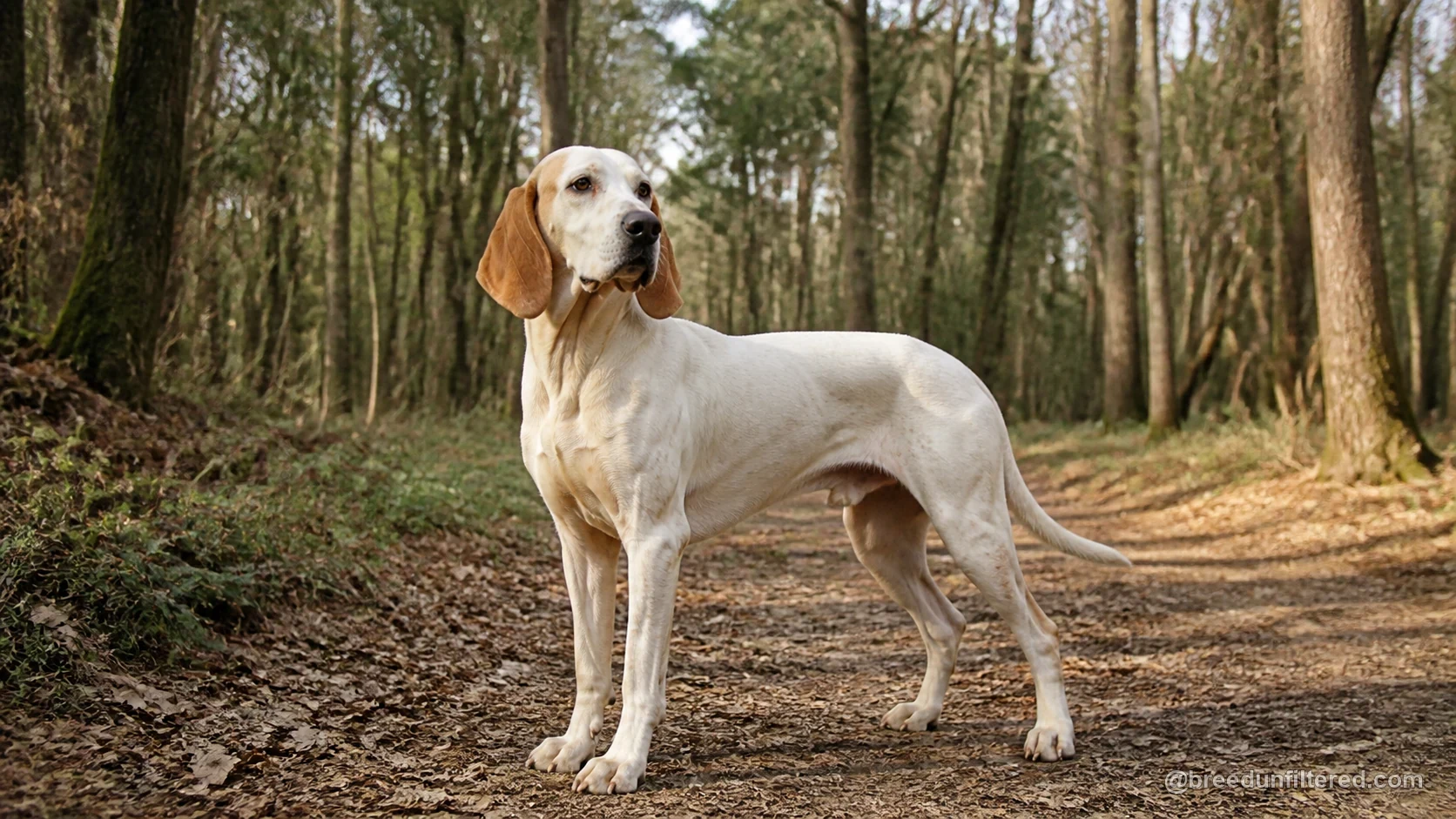
The Porcelaine, also known as the Chien de Franche-Comté, is a French scenthound that combines elegance with athleticism. Its name, meaning 'porcelain', reflects its fine, glossy white coat and refined appearance. Bred for hunting in packs, this breed is prized for its exceptional scenting ability, endurance, and harmonious, bell-like voice. While not as widely known as some other hounds, the Porcelaine has a devoted following among hunters and dog enthusiasts who appreciate its unique blend of beauty and function.
For prospective owners, the Porcelaine offers a fascinating glimpse into the world of traditional French hunting dogs. However, it is not a breed for everyone. Its strong hunting instincts, high energy levels, and need for consistent training and socialization require a committed and experienced owner. This article provides a comprehensive overview of the Porcelaine, covering its origins, temperament, exercise needs, training, health, and more, to help you decide if this elegant hound is the right companion for your lifestyle.
Origin and Purpose
The Porcelaine is one of the oldest French scenthound breeds, with roots tracing back to the 18th century. It was developed in the Franche-Comté region of eastern France, near the Swiss border, by crossing various French and Swiss hounds, including the Chien de Saint-Hubert and the English Foxhound. The goal was to create a fast, agile, and keen-nosed hound that could hunt hare and deer in the dense forests and rolling hills of the region. The breed's name, 'Porcelaine', is said to derive from its glossy white coat, which resembles fine porcelain.
Historically, the Porcelaine was bred to hunt in packs, and this pack-oriented heritage remains a defining characteristic. These dogs are highly social with their canine companions and thrive in a group environment. Their primary role was to track game by scent, pursue it with speed and stamina, and alert hunters with their distinctive, melodic baying. Today, while still used for hunting in France and other European countries, the Porcelaine is also gaining recognition as a companion dog, though its hunting instincts remain strong.
Temperament and Variation
The Porcelaine is known for its friendly, outgoing, and affectionate nature. It is typically good-natured and gets along well with people, including children, especially when raised with them. As a pack hound, it is generally tolerant and sociable with other dogs. However, its temperament is strongly influenced by its hunting background: it is energetic, determined, and has a high prey drive. This means that while it can be a loving family companion, it may not be trustworthy off-leash in areas with small animals, as its instinct to chase can override its training.
Individual variation exists within the breed, as with any dog. Some Porcelaines may be more laid-back, while others are more intense and driven. Early socialization and consistent training can help shape a well-rounded adult. It is important for prospective owners to understand that this breed is not a lapdog; it requires ample physical and mental stimulation to prevent boredom and destructive behaviors. A Porcelaine that is adequately exercised and engaged is typically calm and gentle at home, but an under-exercised one may become restless and vocal.
Exercise and Mental Work
The Porcelaine is a high-energy breed with significant exercise needs. Bred for endurance, it requires daily vigorous activity to stay physically and mentally satisfied. This can include long walks, jogs, hiking, or opportunities to run in a securely fenced area. Because of its strong hunting instinct, it is crucial to keep the dog on a leash or in a safe, enclosed space when not in a controlled hunting situation. Without adequate exercise, the Porcelaine may develop behavioral issues such as excessive barking, digging, or escaping.
Mental stimulation is equally important for this intelligent and curious breed. Scent games, tracking exercises, and puzzle toys can help channel its natural abilities. Activities like nose work or barn hunt can provide an outlet for its tracking instincts and strengthen the bond between dog and owner. The Porcelaine thrives when given a job to do, and engaging its mind is just as vital as physical exercise. Prospective owners should be prepared to dedicate time each day to both physical and mental enrichment.
Training and Socialisation
Training a Porcelaine requires patience, consistency, and positive reinforcement methods. This breed is intelligent but can be independent and somewhat stubborn, typical of many hounds. It responds best to reward-based training that uses treats, praise, and play as motivators. Harsh or punitive methods are counterproductive and can damage the trust between dog and handler. Early obedience training is essential to establish basic commands and to manage the breed's strong will.
Socialisation is equally critical, especially during puppyhood. Exposing the Porcelaine to a variety of people, animals, environments, and situations helps it develop into a confident and well-mannered adult. Because it is a pack hound, it generally gets along well with other dogs, but early positive experiences are still important. Socialisation also helps mitigate any tendency toward shyness or over-excitement. A well-socialised Porcelaine is typically friendly and adaptable, but it will always retain its hunting instincts, so supervision around small pets is advised.
Family and Pets
The Porcelaine can make a wonderful family dog for active households. It is affectionate and generally good with children, especially when raised with them. Its playful and gentle nature makes it a suitable companion for older children who understand how to interact with dogs. However, due to its size and energy, it may inadvertently knock over very young children, so supervision is recommended. As with any breed, teaching children how to respect the dog's space and boundaries is essential.
Regarding other pets, the Porcelaine's compatibility varies. It is typically sociable with other dogs, thanks to its pack heritage, and can live harmoniously with them. However, its prey drive is strong, and it may view smaller animals such as cats, rabbits, or guinea pigs as quarry. Early introduction and training can sometimes allow a Porcelaine to coexist with cats, but it is not guaranteed. Prospective owners with small pets should exercise caution and be prepared for the possibility that the dog's instincts may override training.
Grooming and Health
The Porcelaine has a short, fine coat that is relatively low-maintenance. Weekly brushing with a soft bristle brush or hound glove is usually sufficient to remove loose hair and keep the coat shiny. The breed sheds moderately, and more frequent brushing may be needed during seasonal shedding periods. Regular ear checks are important, as the floppy ears can trap moisture and debris, potentially leading to infections. Nail trimming, teeth brushing, and occasional baths are also part of routine care.
As a breed, the Porcelaine is generally healthy, but like all dogs, it can be prone to certain conditions. Responsible breeders screen for hip dysplasia, a common orthopedic issue in many breeds. Eye disorders and ear infections may also occur. The breed's deep chest may predispose it to bloat (gastric dilatation-volvulus), a serious condition that requires immediate veterinary attention. Prospective owners should seek a reputable breeder who conducts health testing and provides a health guarantee. Regular veterinary check-ups and a balanced diet are essential for maintaining overall health.
Costs and Responsibility
Owning a Porcelaine involves significant financial and time commitments. Initial costs include the purchase price from a reputable breeder, which can vary, as well as supplies such as a crate, bedding, food bowls, leash, and collar. Ongoing expenses include high-quality dog food, routine veterinary care, vaccinations, parasite prevention, and pet insurance. Emergency medical care can be costly, so planning ahead is wise. Additionally, if the dog is used for hunting, there may be costs for training, equipment, and licensing.
Beyond finances, owning a Porcelaine requires a substantial time investment. This breed needs daily exercise, mental stimulation, training, and socialisation. It is not suited to a sedentary lifestyle or being left alone for long periods. Prospective owners must be prepared to provide a secure, fenced yard and to supervise the dog when outdoors. The Porcelaine is a loyal and rewarding companion for those who can meet its needs, but it is a serious commitment that should not be taken lightly.
Clear answers
FREQUENTLY ASKED QUESTIONS
Is the Porcelaine a good family dog?
The Porcelaine can be a good family dog for active households. It is affectionate and generally good with children, especially when raised with them. However, its high energy and size may be overwhelming for very young kids, and its strong prey drive means it may not be safe around small pets. Early socialisation and supervision are key.
How much exercise does a Porcelaine need?
The Porcelaine is a high-energy breed that requires substantial daily exercise. This should include at least an hour of vigorous activity, such as long walks, jogging, or running in a securely fenced area. Mental stimulation through scent games and training is also essential to prevent boredom and destructive behavior.
Does the Porcelaine get along with other dogs?
Yes, the Porcelaine is generally sociable with other dogs due to its pack-hunting heritage. It often enjoys the company of canine companions and can thrive in a multi-dog household. Early socialisation is still important to ensure positive interactions, and supervision is recommended when introducing new dogs.
Is the Porcelaine easy to train?
The Porcelaine is intelligent but can be independent and stubborn, typical of hounds. Training requires patience, consistency, and positive reinforcement methods. Harsh techniques are counterproductive. Early obedience training and socialisation are essential to manage its strong will and hunting instincts.
What are the common health issues in Porcelaines?
The Porcelaine is generally healthy, but like all breeds, it can be prone to certain conditions. These may include hip dysplasia, ear infections, and bloat (gastric dilatation-volvulus). Responsible breeders screen for hereditary issues. Regular veterinary check-ups and a healthy lifestyle can help mitigate risks.
Sources and further reading
Scores describe typical breed tendencies from 1 to 10. They are not a quality ranking or a prediction for an individual dog.
Size and presence5/10
CompactVery large
Physical strength5/10
LightExceptional
Energy level9/10
LowRelentless
Exercise demand10/10
ModestVery demanding
Mental work needed8/10
ModerateDaily job
Trainability5/10
ChallengingExceptional
Everyday manageability2/10
SpecialistStraightforward
First-time owner fit3/10
Poor fitGood fit
Family-life fit6/10
LimitedExcellent
Dog sociability9/10
SelectiveVery social
Prey drive10/10
LowVery high
Guarding tendency3/10
MinimalSerious
Independence8/10
Handler-focusedSelf-directed
Grooming demand4/10
LightHeavy
Apartment fit4/10
Poor fitGood fit