Complete breed guide
Great Swiss Mountain Dog OWNERSHIP GUIDE
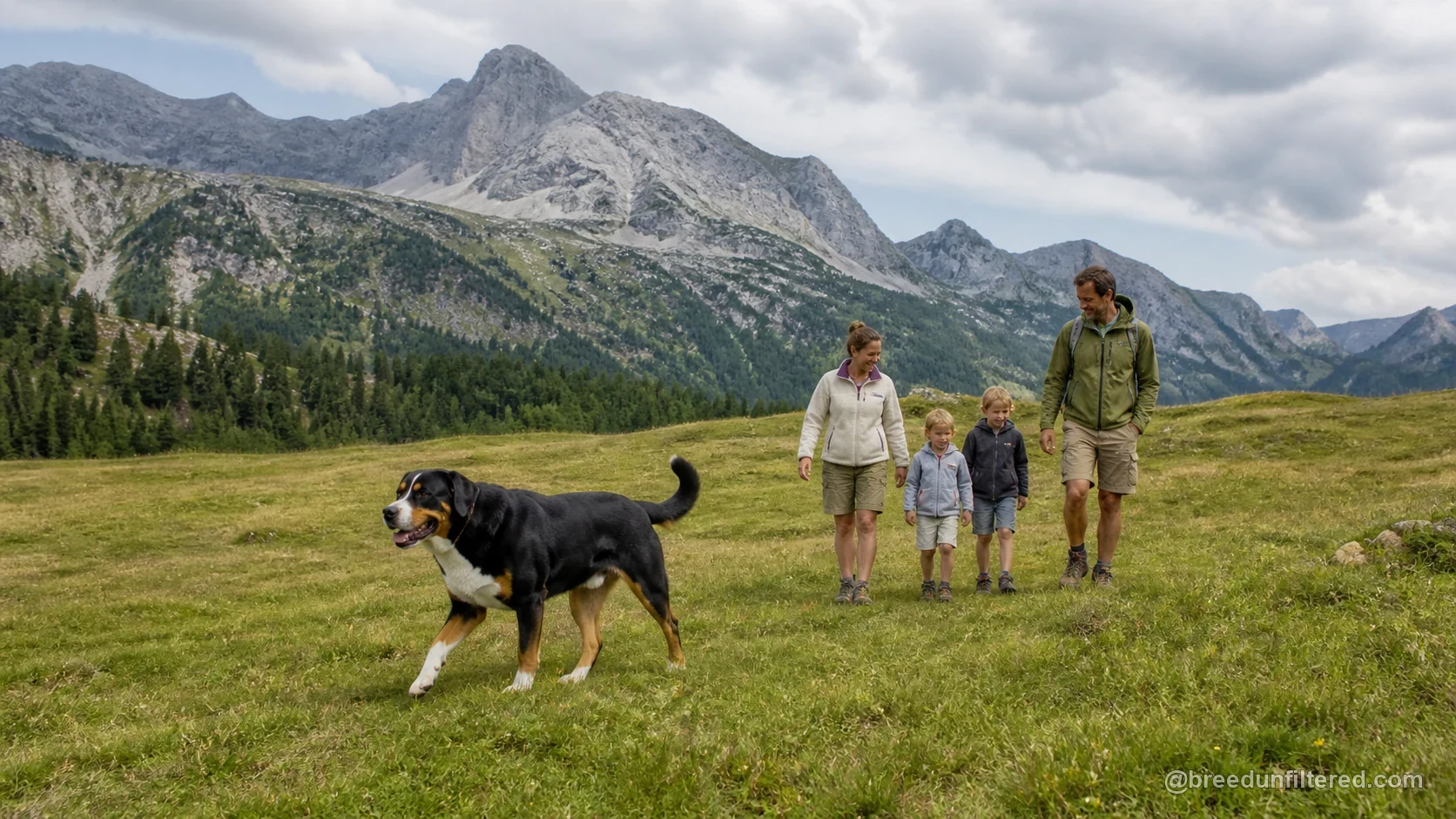
The Great Swiss Mountain Dog, known as the Grosser Schweizer Sennenhund in its native Switzerland, is the largest and most massive of the four Sennenhund breeds. With a striking tri-color coat of black, rust, and white, this dog exudes strength and stability. Historically a versatile farm dog, it was used for herding, guarding, and drafting, pulling heavy carts to market. Today, it remains a powerful working breed that also thrives as a devoted family companion, though its size and energy demand a committed owner.
Prospective owners should understand that this breed is not for everyone. Its substantial size, need for consistent training, and strong guarding instincts require an experienced hand and a suitable living environment. However, for those who can provide ample space, daily exercise, and firm but gentle leadership, the Great Swiss Mountain Dog offers unwavering loyalty and a gentle, affectionate nature with family. This article provides a balanced overview of the breed's characteristics, care requirements, and the responsibilities that come with ownership.
Origin and Purpose
The Great Swiss Mountain Dog's roots trace back to the large molosser-type dogs that accompanied Roman legions over the Alps, later interbreeding with local farm dogs. By the 19th century, these dogs were indispensable on Swiss farms, serving as herders, watchdogs, and draft animals. They were known for their ability to pull heavy loads and protect livestock, making them valuable assets in the rugged mountain terrain.
The breed nearly became extinct in the late 1800s when its working roles diminished, but thanks to the efforts of Swiss cynologist Albert Heim, it was revived and officially recognized in the early 20th century. Today, the FCI classifies it under Group 2 (Pinscher and Schnauzer - Molossoid and Swiss Mountain and Cattledogs), Section 3 (Swiss Mountain and Cattledogs), with Standard No. 58. While no longer a common farm dog, it still participates in drafting and cart-pulling sports, preserving its historical purpose.
Temperament and Variation
The Great Swiss Mountain Dog is known for its calm, steady, and self-assured temperament. It is typically good-natured and even-tempered, forming strong bonds with its family. While it can be reserved with strangers, it is not inherently aggressive; rather, it is watchful and protective. Individual variation exists, and early socialization plays a crucial role in shaping a well-adjusted adult.
This breed is often described as 'gentle giant' due to its affectionate nature with children and its patient demeanor. However, its size can be intimidating, and it may not always be aware of its own strength. Prospective owners should be prepared for a dog that is loyal and devoted but also independent-minded at times. Consistency and positive reinforcement are key to bringing out the best in this breed.
Exercise and Mental Work
Despite its large size, the Great Swiss Mountain Dog has moderate energy levels. It requires daily exercise to keep it physically fit and mentally stimulated, but it is not a hyperactive breed. A long walk, a jog, or a play session in a securely fenced yard is usually sufficient. This breed also excels in activities like cart-pulling, which provides both physical and mental challenges.
Mental stimulation is equally important to prevent boredom, which can lead to destructive behaviors. Puzzle toys, obedience training, and scent games can help keep its mind engaged. Because of its history as a working dog, it thrives when given a job to do. Owners should be prepared to invest time in both physical and mental enrichment to ensure a well-balanced companion.
Training and Socialisation
Training a Great Swiss Mountain Dog requires patience, consistency, and a firm but fair approach. This breed is intelligent and willing to please, but it can also be stubborn. Positive reinforcement methods, such as treats and praise, work best. Harsh corrections are counterproductive and can damage the trust between dog and owner. Early training is essential to manage its size and strength.
Socialisation from a young age is critical. Exposing the dog to various people, animals, and environments helps it develop into a confident and well-mannered adult. Without proper socialisation, it may become overly wary or reactive. Puppy classes and regular outings can greatly benefit this breed. A well-socialized Great Swiss Mountain Dog is typically calm and friendly in public settings.
Family and Pets
The Great Swiss Mountain Dog is generally excellent with children, often displaying a gentle and protective nature. It is patient and tolerant, making it a good family dog for households with older children who understand how to interact with dogs. However, due to its size, supervision is recommended around very young children to prevent accidental knocks or falls.
With other pets, this breed can coexist peacefully if raised together. Its herding and guarding instincts may lead it to chase smaller animals, but with proper socialisation, it can learn to live with cats and other dogs. It tends to be dominant with same-sex dogs, so careful introductions and management are advised. Overall, it is a loyal and affectionate family member, but its size and strength require responsible handling.
Grooming and Health
Grooming the Great Swiss Mountain Dog is relatively straightforward. Its short, dense double coat sheds moderately year-round and heavily during seasonal changes. Weekly brushing with a firm bristle brush or a deshedding tool helps manage loose hair and keeps the coat healthy. Bathing is only necessary when the dog is dirty, as over-bathing can strip natural oils.
As with many large breeds, the Great Swiss Mountain Dog is prone to certain health issues, including hip and elbow dysplasia, bloat (gastric dilatation-volvulus), and some cardiac conditions. Responsible breeders screen for these conditions, and prospective owners should ask for health clearances. Regular veterinary check-ups, a balanced diet, and appropriate exercise can help mitigate some risks. Lifespan is typically 8 to 11 years, which is shorter than smaller breeds.
Costs and Responsibility
Owning a Great Swiss Mountain Dog is a significant financial and time commitment. Initial costs include purchase price, which can vary widely, and essential supplies like a crate, bed, and food. Ongoing expenses include high-quality dog food, routine veterinary care, vaccinations, and preventive medications. Emergency medical costs can be substantial, so pet insurance is often recommended.
Beyond finances, this breed requires a considerable amount of space and time. It is not suited to apartment living and needs a home with a securely fenced yard. Owners must be prepared for daily exercise, training, and socialisation. The breed's size also means it can be challenging to manage for inexperienced owners. Prospective owners should honestly assess their lifestyle and ability to meet these demands before bringing a Great Swiss Mountain Dog into their home.
Clear answers
FREQUENTLY ASKED QUESTIONS
Is the Great Swiss Mountain Dog good with children?
Yes, the Great Swiss Mountain Dog is generally good with children, especially when raised with them. It is known for its gentle and patient nature, making it a suitable family dog. However, due to its large size, supervision is recommended around very young children to prevent accidental injuries. Teaching children how to interact respectfully with dogs is also important.
How much exercise does a Great Swiss Mountain Dog need?
The Great Swiss Mountain Dog has moderate exercise needs. Daily walks or play sessions of about 30 to 60 minutes are typically sufficient, but this can vary by individual. It also enjoys activities like cart-pulling or hiking. Mental stimulation is equally important to prevent boredom. Owners should adapt exercise to the dog's age and health, avoiding excessive strain on growing puppies.
Does the Great Swiss Mountain Dog shed a lot?
Yes, the Great Swiss Mountain Dog sheds moderately throughout the year and heavily during seasonal changes. Its short, dense double coat requires regular brushing, ideally weekly, to manage loose hair. During shedding seasons, more frequent brushing may be necessary. Bathing should be done only when needed to avoid drying out the skin.
Is the Great Swiss Mountain Dog easy to train?
The Great Swiss Mountain Dog is intelligent and willing to please, but it can also be stubborn. Training requires patience, consistency, and positive reinforcement techniques. Early socialisation and obedience training are essential to manage its size and strength. With a firm but gentle approach, this breed can learn commands and behaviors effectively, though it may test boundaries at times.
What are common health issues in Great Swiss Mountain Dogs?
Like many large breeds, the Great Swiss Mountain Dog is prone to hip and elbow dysplasia, bloat (gastric dilatation-volvulus), and certain heart conditions. Responsible breeders screen for these issues, and prospective owners should request health clearances. Regular veterinary check-ups, a balanced diet, and appropriate exercise can help reduce risks. Lifespan is typically 8 to 11 years.
Sources and further reading
Scores describe typical breed tendencies from 1 to 10. They are not a quality ranking or a prediction for an individual dog.
Size and presence8/10
CompactVery large
Physical strength9/10
LightExceptional
Energy level6/10
LowRelentless
Exercise demand6/10
ModestVery demanding
Mental work needed7/10
ModerateDaily job
Trainability6/10
ChallengingExceptional
Everyday manageability4/10
SpecialistStraightforward
First-time owner fit3/10
Poor fitGood fit
Family-life fit6/10
LimitedExcellent
Dog sociability4/10
SelectiveVery social
Prey drive6/10
LowVery high
Guarding tendency8/10
MinimalSerious
Independence7/10
Handler-focusedSelf-directed
Grooming demand5/10
LightHeavy
Apartment fit3/10
Poor fitGood fit