The honest version
WHAT THIS DOG NEEDS
Pit bull-type describes a family of muscular terrier-derived dogs, not one universal personality. Individual history, breeding and management matter.
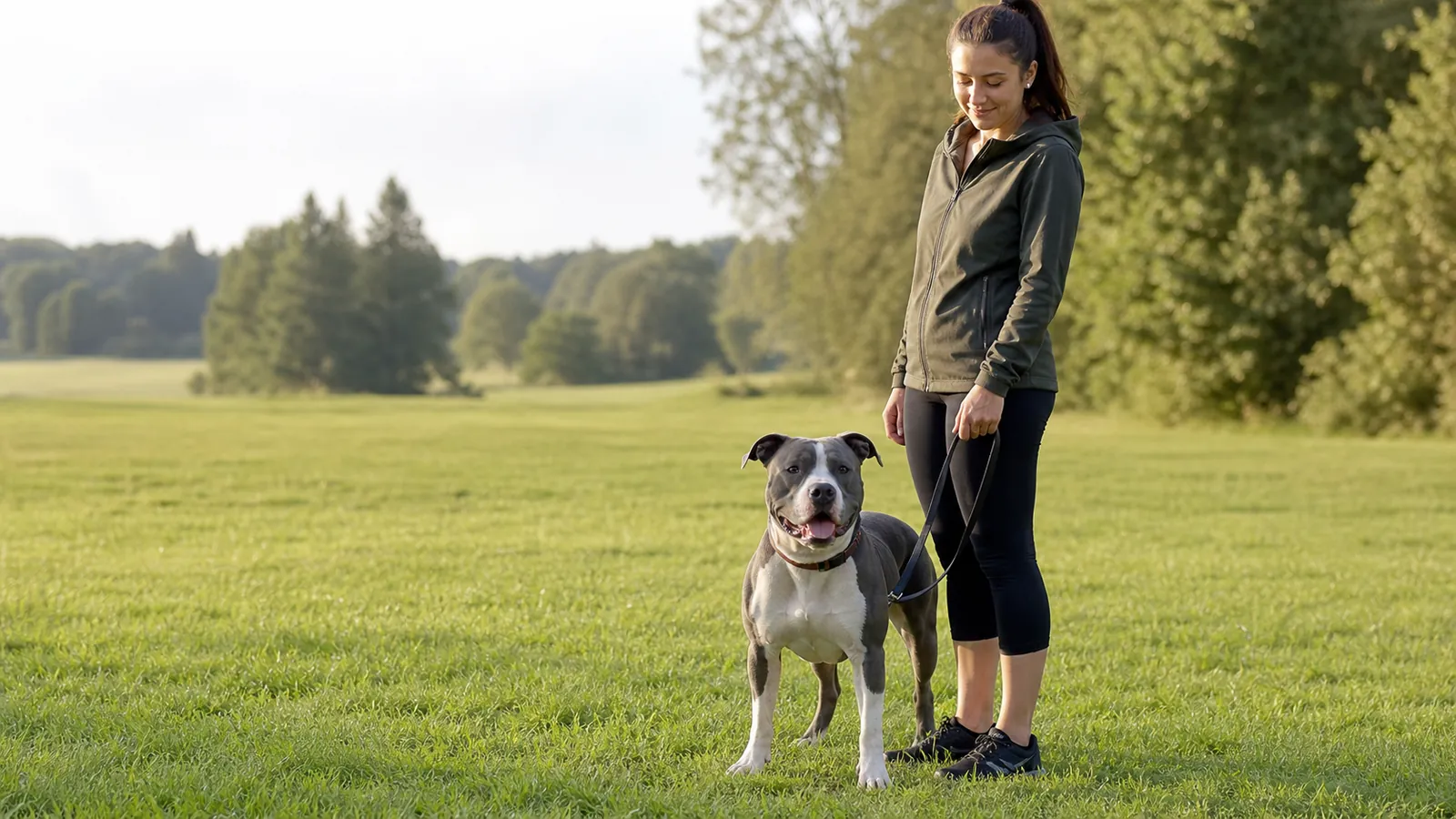
The honest version
Pit bull-type describes a family of muscular terrier-derived dogs, not one universal personality. Individual history, breeding and management matter.
Watch the episode
Complete breed guide
Pit bull-type is an umbrella label, not one uniform breed. Depending on country, registry, shelter, law, or speaker, it may refer to the American Pit Bull Terrier, American Staffordshire Terrier, Staffordshire Bull Terrier, some American Bulldogs or American Bullies, mixes, or simply muscular short-coated dogs with a certain appearance. Those groups differ in ancestry, size, structure, and breeding goals. Visual identification is imperfect, so the label alone cannot provide a complete account of an individual dog's genetics, health, or behaviour.
Prospective ownership deserves calm assessment rather than either fear or romantic claims. Many pit bull-type dogs are affectionate, playful companions; some are powerful, highly aroused, persistent, or selective around other dogs; and individuals vary widely. History, health, early experience, current environment, and learning all matter. A responsible decision considers the actual dog, the household's management skills, housing and insurance, local rules, access to veterinary care and training, and the long-term cost of owning a strong dog.
Dogs commonly placed under the pit bull-type label have connections to historical bull-and-terrier dogs, developed from bulldog and terrier ancestry. Some were exploited in blood sports, while later populations were selected for conformation, companionship, farm work, weight pull, sport, or other roles. Modern recognised breeds have their own standards and registries, and mixed dogs may not belong to any recognised breed. A difficult history should be acknowledged without assuming that every living dog expresses the same traits or that ancestry determines an inevitable outcome.
Terminology changes across borders. The American Pit Bull Terrier is recognised by some registries, while the American Staffordshire Terrier and Staffordshire Bull Terrier are distinct recognised breeds in others. Legislation may use measurements or visual characteristics rather than pedigree, and shelters may assign labels from appearance. Ask what a label means in the specific context and what evidence supports it. For choosing a companion, verified history, observed behaviour, health, size, and daily needs are more useful than arguing over a name that different institutions define differently.
Many pit bull-type dogs show enthusiasm for people, physical play, food, toys, and close contact. Others are reserved or cautious. Strength, persistence, excitement around movement, rough play, or frustration on lead can make ordinary behaviour harder to manage even when there is no intent to harm. Dog sociability ranges from social to selective to uncomfortable, and preferences can change with maturity. A friendly response to people does not predict behaviour toward every dog, and behaviour toward dogs does not by itself predict behaviour toward people.
No breed label can diagnose aggression or promise safety. Genetics influence tendencies, but pain, fear, stress, sleep, hormones, experience, reinforcement, and the immediate situation also shape behaviour. Evaluate the individual repeatedly and notice recovery after surprise, handling tolerance, resource use, play style, and responses to frustration. Sudden change requires a veterinary examination. Threatening, fearful, aggressive, or compulsive behaviour should be managed to prevent incidents and assessed by qualified professionals who use humane methods, communicate uncertainty, and avoid guarantees based on either breed reputation or ideology.
Exercise needs differ because the umbrella includes compact terriers, athletic medium-sized dogs, heavy bully-type dogs, seniors, and mixes. A healthy adult may enjoy brisk walks, scent searches, hiking, controlled tug, retrieving, strength and balance exercises, or organised sports. Start gradually and adjust to body structure, fitness, medical status, surface, and weather. Puppies should avoid forced distance and repetitive impact while developing. Heavier or short-muzzled individuals may tolerate heat and sustained exertion poorly, so owners should seek veterinary guidance rather than copying another dog's routine.
Mental work can reduce boredom without creating constant arousal. Food searches, pattern games, cooperative care, learning names for toys, calm observation, and problem-solving tasks provide useful variety. Tug can be played with clear start, release, and pause cues; it does not need to become a test of dominance. Repetitive high-speed exercise may increase injury risk and produce a fitter dog who still cannot relax. Plan quiet sleep, comfortable confinement introduced positively, and low-key time with the family alongside active outlets.
Prioritise practical control that suits a strong dog: attention around distractions, loose-lead walking, recall, waiting at doors, releasing objects, settling, accepting examination, and comfortable basket-muzzle use after gradual positive conditioning. Reward-based training can be precise and boundaried, using leads, barriers, distance, and controlled access to valued activities to prevent unsafe rehearsal. Intimidation, leash jerks, or physical confrontation can increase fear and conflict, suppress useful warnings, or encourage the person to overlook what the dog is communicating.
Socialisation is not compulsory greeting. Help puppies and newly adopted adults experience people, dogs, transport, handling, sounds, surfaces, and household events at a level where they can remain comfortable and learn. Forced proximity can worsen fear or overexcitement. Dog parks are not required, especially for a dog that becomes selective or plays too intensely. A good trainer describes methods clearly, reads body language, and works within professional limits. Cases involving bites, escalating aggression, severe fear, or separation panic deserve prompt veterinary input and appropriately credentialed behaviour support.
Some pit bull-type dogs are affectionate, tolerant family companions, but no dog is automatically safe with children. Muscular dogs can knock over a child during friendly play, and children's running, squealing, hugging, or interference with food and sleep can create stress. Adults must supervise actively, use gates and separate rooms, teach respectful interaction, and provide the dog with a protected retreat. Children should never walk a dog they cannot physically control or take responsibility for resolving conflict. Visitor routines should be planned before the door opens.
Compatibility with dogs, cats, and small pets is individual. Some live in stable multi-pet homes; some need careful introductions or separate resources; others are safest as the only pet. Use scent exchange, barriers, parallel walking, short sessions, and secure leads rather than placing animals together to see what happens. Separate food, chews, and exciting toys until relationships are well understood. Foster observations are useful but cannot guarantee future compatibility. Changes at social maturity, after pain, or following conflict should be taken seriously and managed before another incident occurs.
Most dogs in this broad group have short coats that benefit from weekly brushing, with bathing as needed using dog-safe products. Short hair still sheds and does not protect fully from cold, intense sun, or rough surfaces. Check skin folds where present, ears, paws, nails, teeth, and body condition regularly. Pale or sparsely coated skin may need veterinarian-approved sun protection. Nail care and cooperative handling should begin early because restraining a strong adult for routine care is stressful and avoidable.
There is no single pit bull-type health checklist because this is not one uniform breed. Risks and recommended screening differ among American Pit Bull Terriers, American Staffordshire Terriers, Staffordshire Bull Terriers, American Bullies, other breeds, and mixes. Ask for the registered breed, pedigree where relevant, independently verifiable screening, relatives' health and longevity, and veterinary records. Discuss skin disease, allergies, joint problems, heart concerns, neurological conditions, breathing, and body structure without assuming they apply to every dog. A veterinarian can build an individual preventive plan and assess limping, itching, exercise intolerance, digestive signs, masses, or behaviour change.
Ownership rules vary by country, region, municipality, housing provider, and insurer, and they can change. Some places regulate named breeds, dogs matching a physical type, or individual dogs with particular histories; requirements may involve registration, sterilisation, muzzling, insurance, fencing, or restrictions on import and ownership. Other jurisdictions use breed-neutral rules. Before acquiring or moving with a dog, obtain current written information from the relevant public authority, landlord, insurer, and transport provider. This is practical due diligence, not a judgement about the individual dog.
Budget for food, preventive and emergency veterinary care, licensing, training, secure fencing, robust equipment, identification, humane transport, boarding, insurance where available, and professional support. Responsible breeders define the breed they produce, show current health results, select for stable function, raise puppies appropriately, and provide lifetime return support. Responsible rescues disclose known facts and uncertainty, match carefully, and avoid simplistic promises. Every owner must prevent roaming, supervise appropriately, obey local rules, and plan for ageing, relocation, illness, and changes in household capacity over the dog's entire life.
Clear answers
No. It is an umbrella label used differently by registries, shelters, laws, and the public. It may include several recognised breeds and mixes, and visual identification can be unreliable. Ask what the term means in the specific document or conversation.
A label cannot predict one dog's behaviour or guarantee safety. Individual genetics, health, development, experience, environment, and handling all matter. Assess the actual dog and seek qualified veterinary and behaviour support for fear, aggression, sudden change, or any bite history.
Some live successfully with other dogs, while some become selective or need to live alone. Use individual assessment, gradual introductions, separate resources, and supervision. Do not assume puppy sociability will remain unchanged or force close contact to prove a point.
Yes. Check current rules with the relevant government authority and confirm housing, insurance, travel, and import conditions in writing. Definitions and requirements differ widely and may apply by appearance rather than pedigree, so informal assurances may not protect the owner or dog.
Ask how the dog is identified, what evidence supports that identification, and what is known about health, behaviour, relatives, handling, animals, children, confinement, and bite history. Verify screening where applicable and look for honest uncertainty, careful matching, and lifetime return support.
Scores describe typical breed tendencies from 1 to 10. They are not a quality ranking or a prediction for an individual dog.