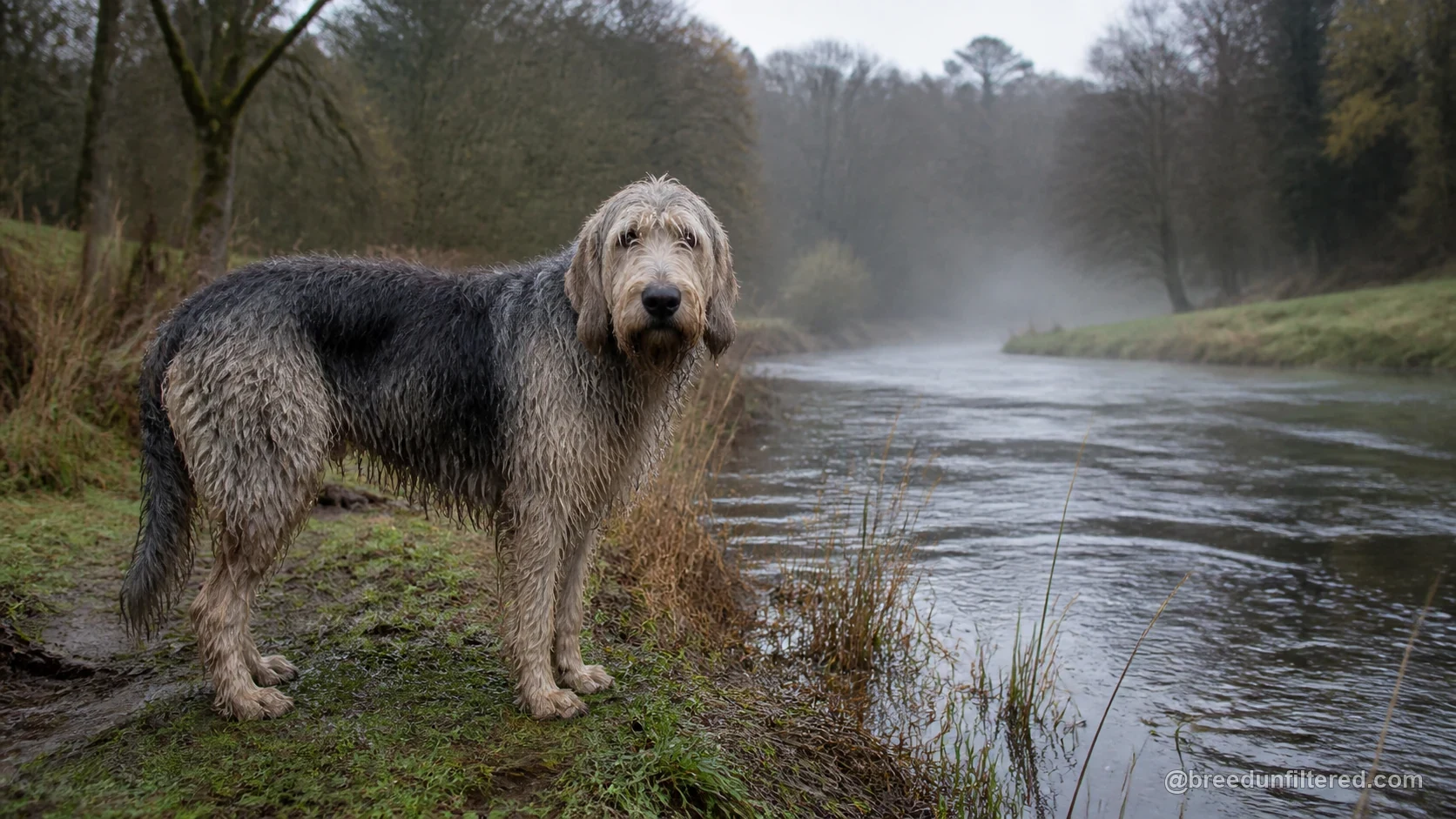
Complete breed guide
Otterhound OWNERSHIP GUIDE
The Otterhound is a rare and ancient British scent hound, originally bred to hunt otters along rivers and streams. With its shaggy coat, webbed feet, and remarkable nose, this breed is a true working dog with a cheerful and boisterous personality. Today, the Otterhound is one of the most endangered native breeds in the UK, with only a few hundred puppies registered worldwide each year, making them a unique and special companion for those lucky enough to find one.
Prospective owners should be prepared for a large, energetic dog with a strong independent streak and a deep, melodious voice. Otterhounds are known for their friendly and affectionate nature, but they also require consistent training, plenty of exercise, and a secure, fenced yard to satisfy their wandering instincts. This article provides a comprehensive overview of the breed, covering its history, temperament, care needs, and the responsibilities involved in owning an Otterhound.
Origin and Purpose
The Otterhound's history is intertwined with the practice of otter hunting, which was once a popular sport in medieval England. The breed is believed to have descended from a mix of old southern hounds, bloodhounds, and possibly French griffons, resulting in a dog with an exceptional nose and a waterproof, rough coat. Otter hunting was a demanding activity that required dogs to work in water and on land, tracking otters over long distances and through difficult terrain.
As otter populations declined and hunting was banned in the UK in 1978, the Otterhound's original purpose disappeared. However, the breed's skills and temperament have been preserved by dedicated enthusiasts who value their tracking ability, endurance, and sociable nature. Today, Otterhounds participate in various dog sports such as tracking, obedience, and scent work, and they also serve as loving family pets, though their rarity means that finding one can be a challenge.
Temperament and Variation
Otterhounds are typically described as amiable, boisterous, and good-natured. They are known for their friendly disposition towards people and other dogs, and they often retain a puppy-like enthusiasm well into adulthood. Their temperament is generally stable, but like all breeds, individual variation exists. Some Otterhounds may be more reserved or independent, while others are more outgoing and clingy. Early socialization and positive experiences help shape a well-rounded adult dog.
As a scent hound, the Otterhound is driven by its nose and can be single-minded when following an interesting trail. This independence can translate into stubbornness during training, but it also makes them resourceful and intelligent problem-solvers. They are not typically aggressive, but their size and exuberance can be overwhelming for small children or elderly individuals if not managed properly. Prospective owners should be prepared for a dog that is affectionate and loyal, yet with a mind of its own.
Exercise and Mental Work
Otterhounds are a high-energy breed that requires substantial daily exercise to remain happy and healthy. They were bred to work all day, so a simple walk around the block is insufficient. Regular opportunities to run, swim, and explore in a safe, enclosed area are essential. Because of their strong hunting instincts, they should be kept on a leash or in a securely fenced yard, as they may take off after a scent without warning.
Mental stimulation is equally important for this intelligent breed. Scent games, puzzle toys, and nose work classes can help satisfy their natural desire to use their nose. Without adequate physical and mental outlets, Otterhounds may become bored and develop destructive behaviors such as digging, chewing, or excessive barking. Owners should be committed to providing a varied and engaging routine to keep their Otterhound content.
Training and Socialisation
Training an Otterhound requires patience, consistency, and a good sense of humor. They are intelligent but can be stubborn and easily distracted by scents. Positive reinforcement methods, such as treats and praise, work best, while harsh corrections may cause them to shut down or become more obstinate. Early training should focus on basic obedience, recall, and leash manners, as these are essential for managing a large, strong dog.
Socialisation is crucial from a young age. Exposing an Otterhound puppy to a variety of people, animals, environments, and sounds helps ensure they grow into confident, well-adjusted adults. They generally get along well with other dogs and can live with cats if raised with them, but their prey drive may be triggered by small furry animals. Puppy classes and regular outings can help reinforce positive social behaviors and prevent shyness or over-excitement.
Family and Pets
Otterhounds are typically excellent family dogs, known for their gentle and playful nature with children. They are sturdy and can tolerate rough play, but their size and enthusiasm may inadvertently knock over toddlers. Supervision and teaching children how to interact respectfully with dogs are important. Otterhounds often form strong bonds with their human family and prefer to be included in activities, rather than left alone for long periods.
When it comes to other pets, Otterhounds are usually sociable with other dogs and can live harmoniously with them. However, their hunting background means they may view smaller animals, such as rabbits, guinea pigs, or cats, as prey. Early socialisation and training can help mitigate this, but it is not a guarantee. Prospective owners with small pets should carefully consider whether an Otterhound is the right fit for their household.
Grooming and Health
The Otterhound's shaggy, double coat is weather-resistant but requires regular grooming to prevent matting and tangles. Weekly brushing is typically necessary, and more frequent grooming may be needed during seasonal shedding. Their long, floppy ears are prone to infections and should be checked and cleaned regularly. Additionally, their feet have webbed toes, which are an adaptation for swimming, but they also collect debris and should be inspected after outdoor activities.
As a breed, Otterhounds are generally healthy, but like all dogs, they can be prone to certain conditions. Hip dysplasia, elbow dysplasia, and bloat (gastric dilatation-volvulus) are concerns in large breeds. They may also be susceptible to ear infections and skin allergies. Responsible breeders screen their breeding dogs for hereditary issues, and prospective owners should ask about health clearances. Regular veterinary check-ups, a balanced diet, and appropriate exercise contribute to a long, healthy life.
Costs and Responsibility
Owning an Otterhound is a significant financial and time commitment. The initial cost of a puppy from a reputable breeder can be high, and ongoing expenses include quality food, routine veterinary care, grooming supplies, and pet insurance. Because Otterhounds are rare, finding a breeder may require being placed on a waiting list, and rescue organizations occasionally have adults needing homes. Prospective owners should budget for unexpected medical expenses and be prepared for the long-term commitment of 10 to 12 years or more.
Beyond finances, Otterhounds require a substantial amount of time and energy. They are not suited to apartment living or owners who are away from home for long hours. They thrive in homes with access to a securely fenced yard and an active lifestyle. Potential owners should honestly assess their ability to meet the breed's exercise, training, and companionship needs. Adopting an Otterhound is a rewarding experience, but it is not a decision to be taken lightly.
Clear answers
FREQUENTLY ASKED QUESTIONS
Are Otterhounds good with children?
Otterhounds are generally good with children, as they are friendly, patient, and playful. However, their large size and exuberant nature can accidentally knock over small children, so supervision is recommended. Teaching children how to interact gently with dogs and providing the Otterhound with a quiet space to retreat to can help ensure positive interactions.
Do Otterhounds bark a lot?
Otterhounds have a deep, melodious bark that they may use to communicate, especially when they are excited or following a scent. They are not typically excessive barkers, but they may vocalize when bored or left alone. Adequate exercise and mental stimulation can help minimize nuisance barking. Their voice is distinctive and may not be suitable for close neighbors.
Are Otterhounds easy to train?
Otterhounds are intelligent but can be stubborn and independent, making training a challenge for novice owners. They respond best to positive reinforcement techniques, such as treats and praise, and short, engaging sessions. Consistency and patience are key. Early socialisation and obedience training are essential to manage their size and strong instincts.
How much exercise does an Otterhound need?
Otterhounds are a high-energy breed that needs at least an hour of vigorous exercise daily, though many will enjoy more. This should include opportunities to run off-leash in a safe, fenced area and access to water for swimming if possible. Mental exercise, such as scent games, is equally important to prevent boredom and destructive behavior.
Are Otterhounds rare?
Yes, Otterhounds are one of the rarest dog breeds in the world. They are listed as a vulnerable native breed by The Kennel Club in the UK, with only a few hundred puppies registered annually worldwide. This rarity means that finding a puppy can be difficult and may involve a waiting list. Rescue organizations occasionally have Otterhounds in need of homes.
Sources and further reading
Scores describe typical breed tendencies from 1 to 10. They are not a quality ranking or a prediction for an individual dog.
Size and presence5/10
CompactVery large
Physical strength5/10
LightExceptional
Energy level9/10
LowRelentless
Exercise demand10/10
ModestVery demanding
Mental work needed8/10
ModerateDaily job
Trainability5/10
ChallengingExceptional
Everyday manageability3/10
SpecialistStraightforward
First-time owner fit3/10
Poor fitGood fit
Family-life fit6/10
LimitedExcellent
Dog sociability9/10
SelectiveVery social
Prey drive9/10
LowVery high
Guarding tendency3/10
MinimalSerious
Independence8/10
Handler-focusedSelf-directed
Grooming demand4/10
LightHeavy
Apartment fit4/10
Poor fitGood fit