Complete breed guide
Spanish Mastiff OWNERSHIP GUIDE
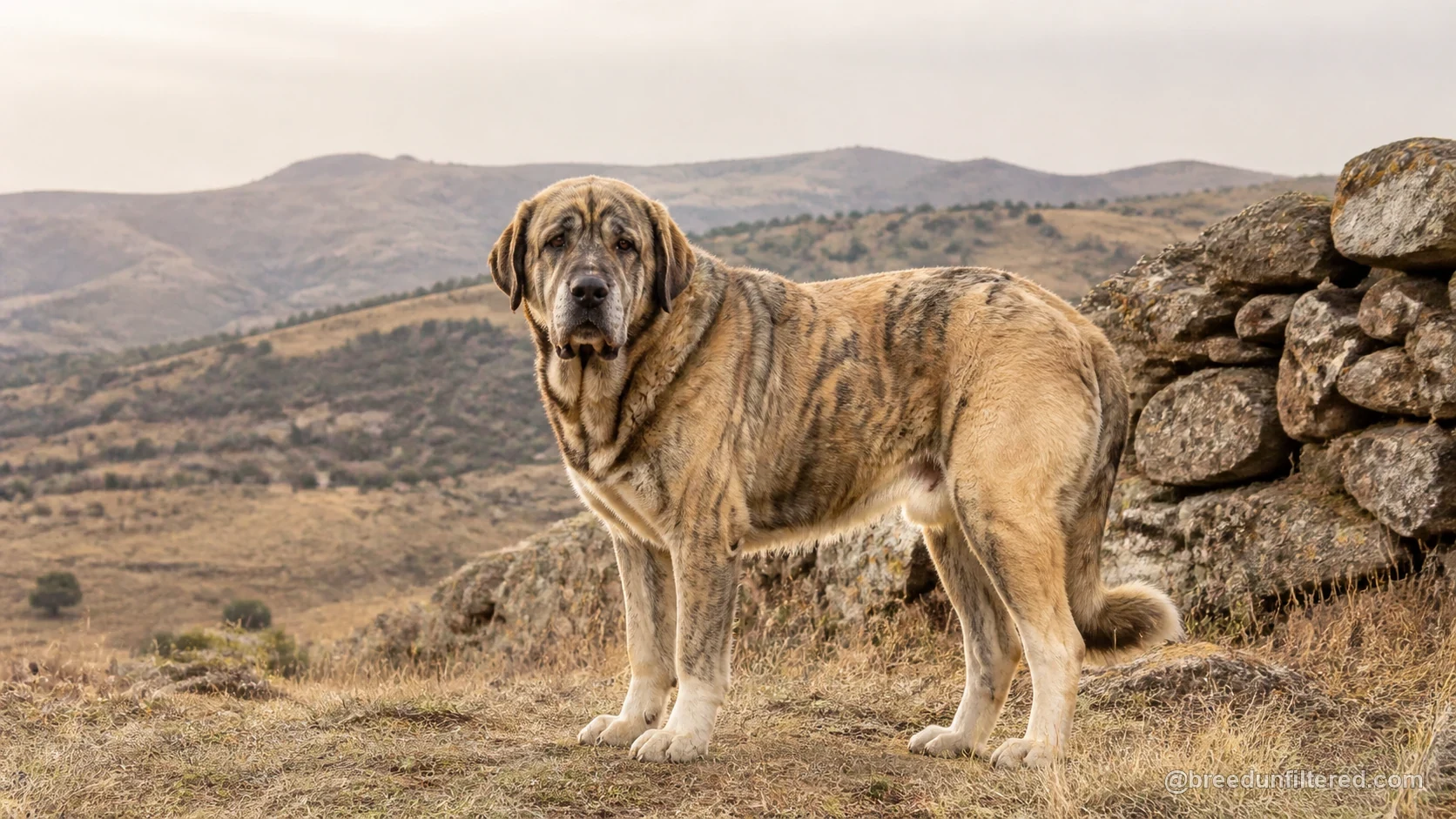
The Spanish Mastiff, known as Mastín Español in its native land, is a majestic livestock guardian breed with roots stretching back centuries on the Iberian Peninsula. Bred to protect flocks from wolves and other predators, this giant dog is defined by its calm, watchful presence and unwavering loyalty to its family. Prospective owners should understand that this is not a high-energy companion but a working guardian that requires space, purpose, and a commitment to responsible ownership.
While the Spanish Mastiff's imposing size and protective instincts make it an exceptional guardian, it is also a gentle and patient companion within its home. This breed thrives in rural or suburban settings with ample room to roam, and it forms deep bonds with its human pack. However, its independent nature and strong guarding instincts demand experienced handling and early socialisation. This article provides a balanced overview of the breed's characteristics, care requirements, and the realities of living with a Spanish Mastiff.
Origin and Purpose
The Spanish Mastiff's history is intertwined with the transhumant shepherds of Spain, who relied on these dogs to protect their flocks during long seasonal migrations. For centuries, these mastiffs accompanied sheep and goats across the rugged terrain of Extremadura, León, and other regions, defending them against wolves, bears, and thieves. Their size, strength, and courage were essential for survival, and they were bred to work independently, making decisions without human direction.
This heritage as a livestock guardian has shaped the breed's temperament and physical form. Spanish Mastiffs are large, powerful dogs with a thick, protective coat and a calm, observant demeanour. They are not herding dogs but guardians, and their instinct to patrol and protect is deeply ingrained. Today, while many are kept as companions, they still excel in their traditional role, and their working heritage influences their need for space and a job to do.
Temperament and Variation
The Spanish Mastiff is known for its even-tempered and loyal nature. Within the home, they are typically gentle, patient, and affectionate with their family, often forming a particularly strong bond with one person. They are generally calm and quiet indoors, but they remain alert to their surroundings, ready to respond to any perceived threat. However, individual temperaments can vary, and early socialisation and training play a crucial role in shaping a well-adjusted adult.
There is also variation within the breed in terms of size and coat type. Some lines are heavier and more massive, while others are slightly lighter and more agile. Coat colours range from fawn, wolf grey, and black to brindle and yellow, with a dense undercoat that provides insulation. These variations reflect the diverse environments in which the breed developed, but all share the same core traits of loyalty, protectiveness, and a calm, watchful nature.
Exercise and Mental Work
Despite their large size, Spanish Mastiffs are not high-energy dogs. They require moderate daily exercise, such as a long walk or a supervised romp in a securely fenced area, to maintain physical health and mental well-being. However, their true need is for mental stimulation and a sense of purpose. Activities that engage their natural guarding instincts, such as patrolling a property or participating in canine sports like carting or obedience, can be highly satisfying for them.
Without adequate mental and physical outlets, a Spanish Mastiff may become bored and develop undesirable behaviours, such as excessive barking or digging. They are not suited to apartment living or a sedentary lifestyle. A home with a large, secure yard is ideal, and they thrive when given a job, even if it is simply watching over the family and property. Prospective owners should be prepared to provide regular, structured activities that challenge their intelligent, independent minds.
Training and Socialisation
Training a Spanish Mastiff requires patience, consistency, and a calm, assertive approach. These dogs are intelligent but independent, and they may not be as eager to please as some other breeds. Positive reinforcement methods, such as treats and praise, work best, while harsh or forceful techniques can damage trust and lead to resistance. Early obedience training is essential to establish boundaries and ensure that the dog respects its handler as a leader.
Socialisation is equally critical. Exposing the Spanish Mastiff to a wide variety of people, animals, and situations from a young age helps to prevent excessive suspicion or aggression. They are naturally wary of strangers, and without proper socialisation, this wariness can become problematic. Puppy classes and controlled introductions to new experiences are recommended. With consistent, gentle guidance, a well-socialised Spanish Mastiff can be a reliable and trustworthy companion.
Family and Other Pets
Spanish Mastiffs are devoted to their families and are often particularly gentle with children they have been raised with. Their calm and patient nature makes them suitable for families, but their sheer size means that supervision is necessary when they are around very young children, as they may accidentally knock them over. They are protective of their family members and may be wary of strangers, making them excellent watchdogs.
When it comes to other pets, Spanish Mastiffs can coexist peacefully with dogs and cats if they are raised together. However, their guarding instincts may lead them to be territorial, and they may not tolerate unfamiliar dogs, especially those of the same sex. Their prey drive is generally low, but they may chase small animals that run, so introductions should be managed carefully. Early socialisation with other animals is key to fostering harmonious relationships.
Grooming and Health
The Spanish Mastiff has a thick, double coat that sheds heavily, particularly during seasonal changes. Regular brushing, at least two to three times a week, is necessary to manage loose hair and keep the coat healthy. During heavy shedding periods, daily brushing may be required. They are not a high-maintenance breed in terms of grooming, but their size can make tasks like nail trimming and ear cleaning more challenging, so early handling is beneficial.
As a giant breed, Spanish Mastiffs are prone to certain health issues, including hip and elbow dysplasia, bloat (gastric dilatation-volvulus), and heart conditions. Responsible breeders screen their dogs for these conditions, and prospective owners should ask for health clearances. Regular veterinary check-ups, a balanced diet, and appropriate exercise can help mitigate some risks. It is also important to be aware of their relatively short lifespan, typically 10 to 12 years, and to provide them with a comfortable, supportive environment as they age.
Costs and Responsibility
Owning a Spanish Mastiff is a significant financial and time commitment. The initial cost of a puppy from a reputable breeder can be high, and ongoing expenses include food, veterinary care, grooming supplies, and insurance. As a giant breed, they consume a substantial amount of food, and their medical care can be more expensive due to their size. Prospective owners should budget for these costs and be prepared for the possibility of unexpected health issues.
Beyond finances, owning a Spanish Mastiff carries a great deal of responsibility. Their size and protective nature mean that they require secure fencing, proper containment, and responsible management to prevent incidents. They are not suitable for first-time dog owners or those who are not prepared to invest time in training and socialisation. Potential owners must also consider local laws and regulations regarding large breeds, as some areas have restrictions. With the right environment and commitment, a Spanish Mastiff can be a rewarding and loyal companion for many years.
Clear answers
FREQUENTLY ASKED QUESTIONS
Are Spanish Mastiffs good with children?
Spanish Mastiffs can be excellent with children, especially when raised with them. They are typically gentle and patient, but their large size means they can accidentally knock over small children. Supervision is essential, and children should be taught how to interact respectfully with the dog. Early socialisation and training help ensure a safe and positive relationship.
Do Spanish Mastiffs need a lot of exercise?
No, Spanish Mastiffs have moderate exercise needs. They enjoy daily walks and time to roam in a secure yard, but they are not high-energy dogs. However, they do need mental stimulation and a sense of purpose. Without adequate activity, they may become bored and develop behavioural issues.
Are Spanish Mastiffs good for first-time owners?
Spanish Mastiffs are generally not recommended for first-time owners due to their size, independence, and guarding instincts. They require experienced handling, consistent training, and early socialisation. A novice owner may find it challenging to manage a dog that can weigh over 100 kilograms and has a strong protective nature.
How much do Spanish Mastiffs shed?
Spanish Mastiffs shed heavily, especially during seasonal changes. They have a thick double coat that requires regular brushing, at least two to three times a week, to manage loose hair. During shedding season, daily brushing may be necessary to keep the coat healthy and reduce hair around the home.
What health issues are common in Spanish Mastiffs?
Spanish Mastiffs are prone to certain health conditions, including hip and elbow dysplasia, bloat (gastric dilatation-volvulus), and heart issues. Responsible breeders screen for these conditions, and regular veterinary care is important. As a giant breed, they also have a shorter lifespan, typically 10 to 12 years, and may require special care as they age.
Sources and further reading
Scores describe typical breed tendencies from 1 to 10. They are not a quality ranking or a prediction for an individual dog.
Size and presence10/10
CompactVery large
Physical strength10/10
LightExceptional
Energy level7/10
LowRelentless
Exercise demand7/10
ModestVery demanding
Mental work needed7/10
ModerateDaily job
Trainability7/10
ChallengingExceptional
Everyday manageability1/10
SpecialistStraightforward
First-time owner fit3/10
Poor fitGood fit
Family-life fit7/10
LimitedExcellent
Dog sociability4/10
SelectiveVery social
Prey drive6/10
LowVery high
Guarding tendency10/10
MinimalSerious
Independence8/10
Handler-focusedSelf-directed
Grooming demand7/10
LightHeavy
Apartment fit1/10
Poor fitGood fit