Complete breed guide
Bavarian Mountain Scent Hound OWNERSHIP GUIDE
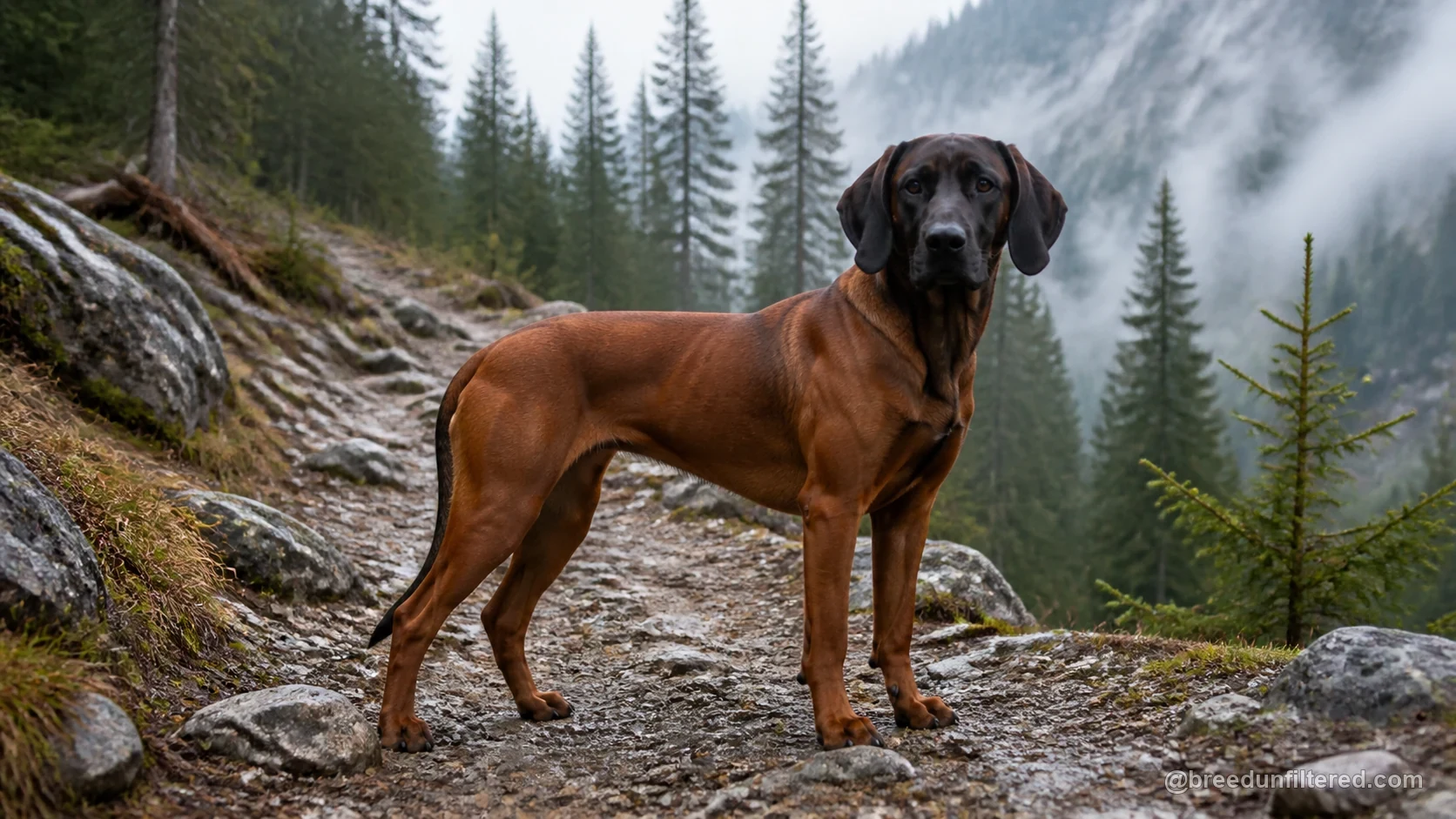
The Bavarian Mountain Scent Hound, a German breed developed for tracking wounded game in challenging alpine terrain, is a specialist with a remarkable nose and a calm, steady disposition. Bred to work independently yet cooperatively with hunters, this medium-sized hound is known for its perseverance and loyalty to its handler. For the right owner, it offers a unique blend of athleticism and companionship, but its purpose-driven nature means it is not a typical family pet.
This guide provides an evidence-conscious overview of the breed's characteristics, care requirements, and potential challenges. We draw on official breed standards and recognized kennel club resources to help you assess whether this specialized hound aligns with your lifestyle, experience, and expectations. Remember that individual dogs vary, and responsible ownership begins with thorough research and honest self-assessment.
Origin and Purpose
The Bavarian Mountain Scent Hound, or Bayerischer Gebirgsschweisshund, originated in Germany in the 19th century, developed by crossing the Hanoverian Scent Hound with local mountain hounds. The goal was to create a dog capable of tracking wounded game, such as deer, over steep and rocky terrain, often after significant time had passed. The breed's name reflects its primary function: 'Schweiss' refers to the blood trail of wounded game, and 'Gebirge' means mountains.
This breed is still primarily used by hunters and gamekeepers, and its working ability is highly valued. The FCI standard (No. 217) describes it as a 'tracking dog' with a keen nose and a strong desire to work. Because of its specialized role, the breed is not commonly kept as a pet, and its instincts are deeply ingrained. Prospective owners must understand that this is a dog with a job, and its needs are shaped by that heritage.
Temperament and Variation
The breed standard portrays the Bavarian Mountain Scent Hound as calm, balanced, and self-assured, with a reserved attitude toward strangers. It is devoted to its handler and forms a close bond, but it is not typically effusive or demonstrative. This hound is known for its perseverance and concentration when working, yet at home it can be quiet and unobtrusive. However, temperament varies among individuals, and early socialization and training play a significant role in shaping behavior.
Because the breed was developed for solitary work in the forest, it may be more independent and less overtly affectionate than some companion breeds. It is not a dog that demands constant attention, but it does require meaningful engagement. Potential owners should be prepared for a dog that is loyal but not clingy, and that may be aloof with unfamiliar people. Understanding this nuance is key to a successful relationship.
Exercise and Mental Work
As a working hound, the Bavarian Mountain Scent Hound has substantial exercise needs. It thrives on activities that engage its nose, such as tracking, scent work, and search games. Regular, vigorous exercise is essential to maintain physical fitness and mental well-being. However, the breed is not hyperactive; it is known for its endurance and ability to work steadily for hours, but it also appreciates rest after exertion.
Mental stimulation is as important as physical exercise. Without adequate outlets for its tracking instincts, the breed may become bored and develop undesirable behaviors. Activities like nose work classes, puzzle toys, and structured games that mimic tracking can be beneficial. Prospective owners should be prepared to invest time in both physical and mental enrichment, ideally in a safe, enclosed area where the dog can explore scents off-leash.
Training and Socialisation
Training a Bavarian Mountain Scent Hound requires patience, consistency, and a positive approach. The breed is intelligent and willing, but it can be independent and may have a mind of its own. Harsh methods are counterproductive; instead, using rewards and building a strong bond are more effective. Early socialisation is crucial to help the dog become well-adjusted and to mitigate its natural reserve toward strangers.
Because the breed is bred to work closely with a handler, it responds well to cooperative training. However, its hunting instincts can be strong, and recall may be unreliable when it catches an interesting scent. Training should include solid recall and impulse control, practiced in various environments. Owners should be realistic about the challenges and seek guidance from experienced trainers if needed.
Family and Other Pets
The Bavarian Mountain Scent Hound can be a loyal and gentle companion for families that understand its needs. It is typically good with children, especially when raised with them, but its size and energy may be overwhelming for very young kids. Supervision and teaching children how to interact respectfully with dogs are essential. The breed's calm demeanor at home can make it a pleasant presence, but it is not a boisterous playmate.
Regarding other pets, the breed's hunting background means it may have a strong prey drive towards small animals, including cats and small dogs. Early socialisation can help, but there is no guarantee. It generally gets along with other dogs, especially if properly introduced, but its preference for human companionship may limit its need for canine friends. Prospective owners with small pets should proceed with caution and seek professional advice.
Grooming and Health
The Bavarian Mountain Scent Hound has a short, dense coat that is relatively low-maintenance. Weekly brushing helps remove loose hair and keep the coat healthy. It sheds moderately, and more during seasonal changes. Regular ear checks are important, as floppy ears can be prone to infections. Nail trimming and dental care are also part of routine grooming.
As a breed, it is generally robust, but like all dogs, it may be predisposed to certain health conditions. Responsible breeders screen for issues such as hip dysplasia and eye problems. Prospective owners should ask for health clearances and be prepared for potential veterinary costs. Maintaining a healthy weight and providing regular exercise can contribute to overall well-being, but no breed is immune to health challenges.
Costs and Responsibility
Owning a Bavarian Mountain Scent Hound involves significant financial and time commitments. Initial costs include purchase price, which can be high for a well-bred working dog, as well as supplies, fencing, and training classes. Ongoing expenses include quality food, routine veterinary care, and potential emergency treatments. Because the breed is not common, finding a reputable breeder may require travel and waiting lists.
Beyond finances, this breed demands a responsible owner who can provide ample exercise, mental stimulation, and a safe environment. It is not suited to apartment living unless the owner is exceptionally dedicated to meeting its needs. Prospective owners should also consider the ethical implications of owning a breed with strong hunting instincts, and whether they can manage those instincts in daily life. Thorough research and honest self-assessment are essential before making a commitment.
Clear answers
FREQUENTLY ASKED QUESTIONS
Is the Bavarian Mountain Scent Hound a good family dog?
The Bavarian Mountain Scent Hound can be a good family dog for active households that understand its needs. It is typically gentle and loyal to its family, but it may be reserved with strangers. Its high exercise and mental stimulation requirements mean it is best suited to families that can provide ample outdoor activities and training. With proper socialisation, it can coexist with children, but supervision is recommended, especially with younger kids.
How much exercise does a Bavarian Mountain Scent Hound need?
This breed requires substantial daily exercise, including long walks, runs, or hiking, as well as opportunities to use its nose. It is not a couch potato and needs at least an hour or more of vigorous activity, but the exact amount varies by individual. Mental exercise, such as scent games or tracking, is equally important to prevent boredom. Without adequate exercise, it may become restless or develop behavioral issues.
Are Bavarian Mountain Scent Hounds easy to train?
They are intelligent and willing, but they can be independent and sometimes stubborn. Training requires patience, consistency, and positive reinforcement methods. Early socialisation and obedience training are crucial. Because they are bred to work with a handler, they can excel in tracking and scent work, but recall may be challenging when they are on a scent. Experienced owners may find them easier to train than novices.
Do Bavarian Mountain Scent Hounds get along with other pets?
Due to their hunting background, they may have a strong prey drive and may not be reliable with small animals like cats or rabbits. With early and consistent socialisation, some individuals can learn to live with other pets, but it is not guaranteed. They generally get along with other dogs, especially if properly introduced. Prospective owners with small pets should be cautious and seek professional guidance.
What are the grooming needs of a Bavarian Mountain Scent Hound?
Grooming is relatively low-maintenance. Their short, dense coat requires weekly brushing to remove loose hair and keep it healthy. They shed moderately, with heavier shedding during seasonal changes. Regular ear cleaning is important to prevent infections, as their floppy ears can trap moisture. Nail trimming and dental care should also be part of the routine. Overall, grooming is not a major time commitment.
Sources and further reading
Scores describe typical breed tendencies from 1 to 10. They are not a quality ranking or a prediction for an individual dog.
Size and presence5/10
CompactVery large
Physical strength6/10
LightExceptional
Energy level9/10
LowRelentless
Exercise demand10/10
ModestVery demanding
Mental work needed8/10
ModerateDaily job
Trainability5/10
ChallengingExceptional
Everyday manageability2/10
SpecialistStraightforward
First-time owner fit3/10
Poor fitGood fit
Family-life fit6/10
LimitedExcellent
Dog sociability8/10
SelectiveVery social
Prey drive10/10
LowVery high
Guarding tendency3/10
MinimalSerious
Independence8/10
Handler-focusedSelf-directed
Grooming demand4/10
LightHeavy
Apartment fit4/10
Poor fitGood fit