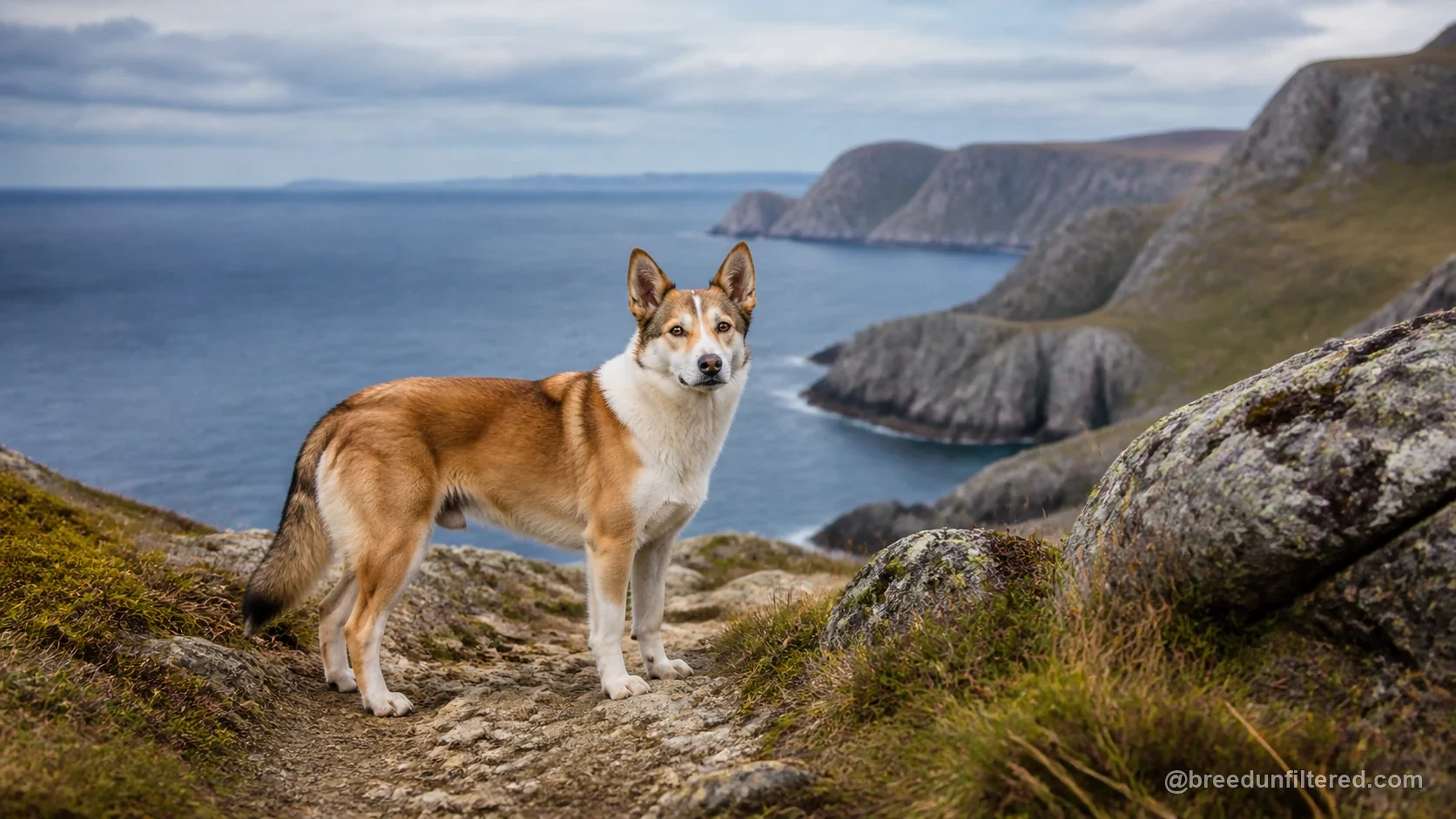
Complete breed guide
Norwegian Lundehund OWNERSHIP GUIDE
The Norwegian Lundehund is a rare and ancient breed from Norway, historically used to hunt puffins on steep cliffs. Its most distinctive features include six toes on each foot, extremely flexible joints, and the ability to bend its head backward to touch its back. These adaptations made it an agile climber and a valuable asset to coastal communities. Today, the breed is a fascinating companion for those who appreciate its quirky history and unique physical abilities.
Prospective owners should understand that the Lundehund is not a typical dog. It retains many primitive instincts and behaviors, which can be both charming and challenging. This guide provides an evidence-based overview of the breed's characteristics, care requirements, and potential health considerations, helping you decide if this remarkable dog fits your lifestyle.
Origin and Purpose
The Norwegian Lundehund originated on remote islands off Norway's coast, where it was bred to hunt puffins and their eggs from inaccessible cliff nests. Its name literally means 'puffin dog' (Lunde = puffin, hund = dog). The breed's unique physical traits, such as extra toes and remarkable flexibility, were essential for navigating narrow rock crevices and steep terrain. This specialized hunting role shaped its instincts and physical capabilities.
With the decline of puffin hunting and the introduction of nets, the Lundehund's original purpose became obsolete. The breed nearly went extinct, and today it remains rare, with a small population worldwide. Modern Lundehunds are primarily companion animals, but they still retain the agility, problem-solving skills, and independent nature of their working ancestors. Understanding this history is key to appreciating their behavior and needs.
Temperament and Variation
The Norwegian Lundehund is known for its alert, curious, and sometimes stubborn temperament. It is typically affectionate with its family but can be reserved with strangers. Individual variation is significant, as with any breed, and early experiences play a crucial role in shaping behavior. Some Lundehunds are more outgoing, while others are more cautious. They are not typically aggressive but may be wary in new situations.
This breed is intelligent and independent, often described as having a 'primitive' nature. They may be less eager to please than more biddable breeds, and their problem-solving skills can lead to creative mischief. Prospective owners should be prepared for a dog that thinks for itself and may not always respond to traditional training methods. Patience and a sense of humor are essential.
Exercise and Mental Work
The Norwegian Lundehund is an agile and energetic breed, but its exercise needs are moderate compared to some working breeds. Daily walks and opportunities to run and explore in a safe area are important. However, mental stimulation is equally crucial. Puzzle toys, scent games, and training sessions that challenge their problem-solving abilities can help prevent boredom and destructive behaviors.
Due to their history as cliff climbers, Lundehunds enjoy climbing and balancing on varied terrain. Providing safe structures like dog agility equipment or natural obstacles can be beneficial. They also have a strong prey drive, so off-leash activities should be in securely fenced areas. Owners should avoid over-exercising puppies to protect their developing joints, but adult dogs thrive with regular, varied activity.
Training and Socialisation
Training a Norwegian Lundehund requires patience, consistency, and positive reinforcement. They respond well to reward-based methods but may become bored with repetitive drills. Short, engaging sessions work best. Early socialisation is vital to help them become well-adjusted adults. Exposing them to various people, animals, and environments can reduce wariness and prevent fear-based behaviors.
Lundehunds are known for their independence, which can be mistaken for stubbornness. They may not see the point in obeying commands unless there is a clear benefit. Using high-value treats and making training fun can improve cooperation. Harsh methods are counterproductive and can damage trust. Owners should also be aware that Lundehunds have a strong instinct to use their flexible bodies to escape enclosures, so secure fencing is essential.
Family and Other Pets
The Norwegian Lundehund can be a loving family companion, especially when raised with children. They are generally gentle and playful, but like any dog, interactions should be supervised, especially with young children who may not understand boundaries. Their small size (about 13-15 inches tall) makes them manageable, but they are sturdy and agile.
With other pets, Lundehunds may have a high prey drive, which can be problematic with small animals like rodents or birds. They can coexist with other dogs, especially if socialized early, but they may be assertive. Their hunting background means they might chase cats, though some individuals can live peacefully with them if raised together. Each dog is unique, so careful introductions and management are necessary.
Grooming and Health
The Norwegian Lundehund has a double coat that is dense and weather-resistant. Grooming needs are moderate: weekly brushing to remove loose hair and prevent mats, with more frequent brushing during seasonal sheds. They are not heavy shedders year-round but do blow their coat. Bathing should be infrequent to preserve natural oils. Nail trimming, ear cleaning, and dental care are routine.
Health-wise, Lundehunds are prone to a specific gastrointestinal condition called Lundehund syndrome, which affects nutrient absorption and can cause digestive issues. This is a serious concern for the breed, and prospective owners should seek health screening from breeders. They may also be prone to other conditions like patellar luxation. Regular veterinary check-ups and a high-quality diet are important. Research and responsible breeding are crucial.
Costs and Responsibility
Owning a Norwegian Lundehund involves significant financial and time commitments. Initial costs include purchase price (which can be high due to rarity), supplies, and veterinary care. Ongoing expenses include food, routine vet visits, grooming, and potential treatment for breed-specific health issues. Pet insurance is advisable. Additionally, their unique needs may require specialized care, such as a diet tailored to their digestive sensitivities.
Responsibility extends beyond finances. Lundehunds need dedicated owners who can provide mental and physical stimulation, secure containment, and patient training. They are not a breed for first-time owners or those with a sedentary lifestyle. Their rarity means finding a reputable breeder may involve a waiting list, and rescue organizations exist. Prospective owners should thoroughly research and prepare for a long-term commitment of 12-15 years.
Clear answers
FREQUENTLY ASKED QUESTIONS
Are Norwegian Lundehunds good with children?
Norwegian Lundehunds can be good with children, especially when raised together and properly socialized. They are generally playful and gentle, but their independent nature means they may not tolerate rough handling. Supervision is recommended with young children to ensure safe interactions for both the dog and the child.
Do Norwegian Lundehunds have any special health concerns?
Yes, the breed is predisposed to Lundehund syndrome, a gastrointestinal disorder that can cause chronic diarrhea and malabsorption. This condition requires careful dietary management and veterinary monitoring. Other potential issues include patellar luxation and dental problems. Responsible breeders screen for these conditions, and owners should be prepared for possible health care costs.
How much exercise does a Norwegian Lundehund need?
Norwegian Lundehunds have moderate exercise needs, typically requiring daily walks and opportunities to run and explore. They also need mental stimulation through puzzle toys and training. Their agility and climbing ability mean they enjoy varied terrain, but they can adapt to apartment living if given sufficient activity. Avoid over-exercising puppies to protect their joints.
Are Norwegian Lundehunds easy to train?
Training a Norwegian Lundehund can be challenging due to their intelligence and independent nature. They are not as eager to please as some breeds and may become bored with repetitive tasks. Positive reinforcement with high-value treats and short, engaging sessions work best. Early socialisation and consistent, patient training are essential for a well-behaved adult.
Can Norwegian Lundehunds live in apartments?
Norwegian Lundehunds can adapt to apartment living if their exercise and mental needs are met. They are not excessively active indoors, but they need daily walks and playtime. However, their strong prey drive and tendency to bark may require management. Secure fencing is crucial if they have access to a yard, as they are skilled escape artists.
Sources and further reading
Scores describe typical breed tendencies from 1 to 10. They are not a quality ranking or a prediction for an individual dog.
Size and presence5/10
CompactVery large
Physical strength5/10
LightExceptional
Energy level8/10
LowRelentless
Exercise demand8/10
ModestVery demanding
Mental work needed8/10
ModerateDaily job
Trainability6/10
ChallengingExceptional
Everyday manageability3/10
SpecialistStraightforward
First-time owner fit3/10
Poor fitGood fit
Family-life fit6/10
LimitedExcellent
Dog sociability6/10
SelectiveVery social
Prey drive10/10
LowVery high
Guarding tendency6/10
MinimalSerious
Independence9/10
Handler-focusedSelf-directed
Grooming demand8/10
LightHeavy
Apartment fit4/10
Poor fitGood fit