Complete breed guide
West Siberian Laika OWNERSHIP GUIDE
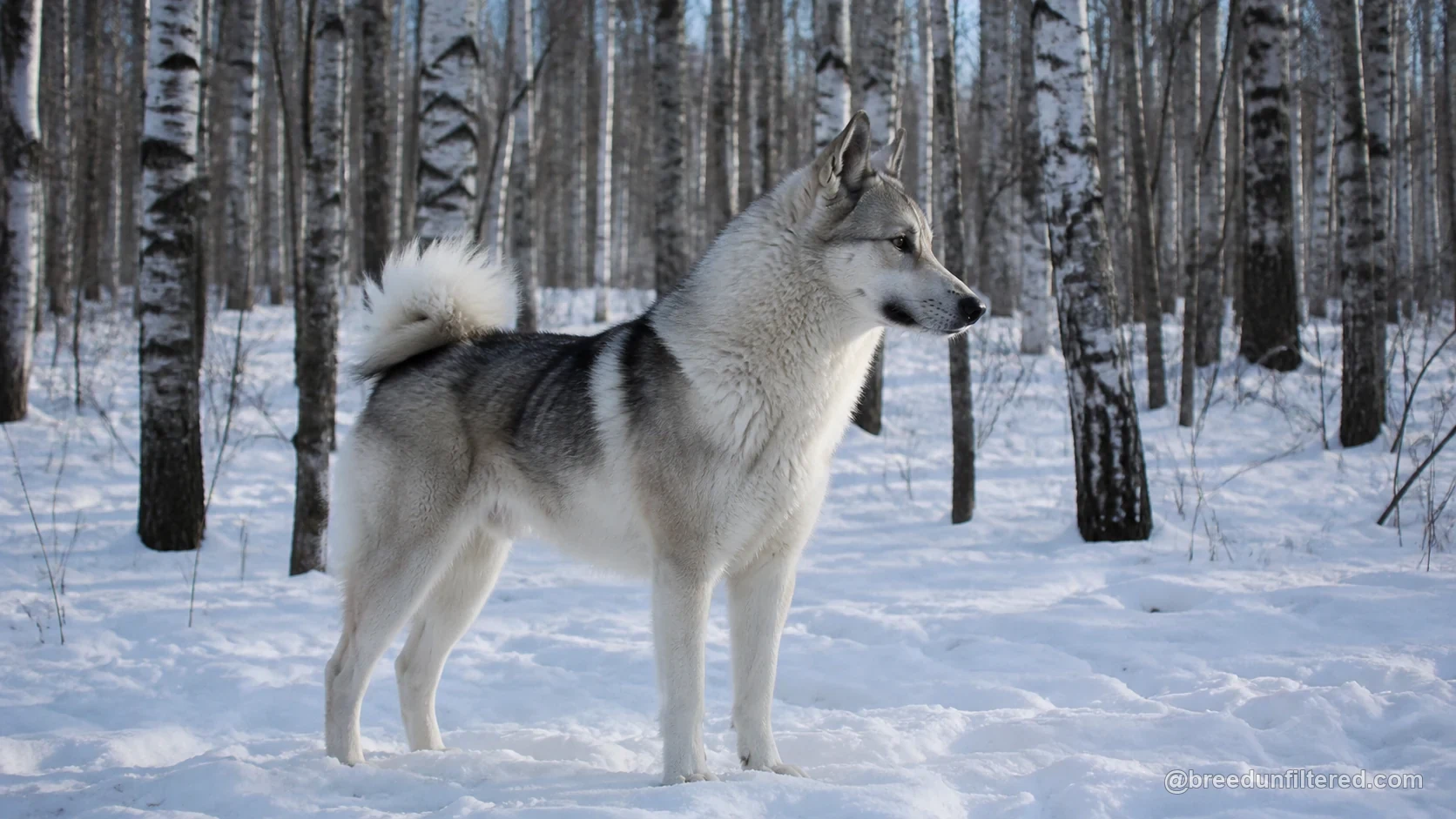
The West Siberian Laika is a breed that carries the spirit of the Siberian taiga in its very essence. Developed by indigenous peoples of northwestern Siberia, this spitz-type dog was honed for centuries to be a versatile hunting companion, capable of tracking and baying large game like bear and elk, as well as hunting small fur-bearing animals. Its name, 'Laika', simply means 'barker' in Russian, a nod to its vocal nature when working. Today, while still a dedicated hunting dog, the West Siberian Laika is also gaining recognition as a loyal and energetic companion for the right active household.
This breed is not for everyone. It is a primitive breed with a strong independent streak, a high prey drive, and an immense need for physical and mental stimulation. Prospective owners must be prepared for a dog that is not a typical house pet but a working partner. In this guide, we will explore the breed's origins, temperament, care requirements, and the realities of living with a West Siberian Laika, helping you decide if this remarkable dog is the right fit for your lifestyle.
Origin and Purpose
The West Siberian Laika originates from the vast forests of the Ural and West Siberian regions of Russia. It is one of several Laika breeds developed by indigenous tribes such as the Khanty and Mansi, who relied on these dogs for survival. The breed was selectively bred for its hunting abilities, including a keen nose, endurance, and the courage to face formidable game. The FCI recognized the breed in 1980, and today it remains a prized hunting dog in Russia and increasingly in other countries.
The breed's purpose has always been practical: to assist hunters in tracking and holding game at bay. Unlike some hunting breeds that retrieve or point, the Laika is a 'barker' that alerts the hunter to the location of the game by barking persistently. This working heritage has shaped the breed's temperament, making it highly independent, alert, and vocal. Understanding this background is crucial for any prospective owner, as it explains the breed's strong instincts and need for a job to do.
Temperament and Variation
The West Siberian Laika is known for its loyal and devoted nature towards its family, but it can be reserved with strangers. It is a breed that forms strong bonds with its owner and thrives on being an integral part of the household. However, its independence can sometimes be mistaken for stubbornness. The breed is intelligent and quick to learn, but it may choose to follow its own instincts rather than commands, especially when distracted by scent or movement.
There is variation within the breed, as different lines may have been bred for different types of game. Some lines may be more focused on large game like bear, while others are specialized for small game like squirrel. This can influence temperament, with large-game lines often being more assertive and small-game lines being more agile and perhaps more biddable. Prospective owners should research the specific lineage of a puppy to understand its potential drives and temperament.
Exercise and Mental Work
The West Siberian Laika is a high-energy breed that requires substantial daily exercise. A simple walk around the block will not suffice; this dog needs opportunities to run, explore, and use its nose. Ideally, it should have access to a securely fenced area where it can roam and play off-leash. Activities like hiking, jogging, and biking can help meet its physical needs. Without adequate exercise, the breed may become restless and develop destructive behaviors.
Mental stimulation is equally important. This intelligent breed needs challenges to keep its mind engaged. Puzzle toys, scent games, and training sessions that require problem-solving can help satisfy its mental needs. Activities that mimic hunting, such as tracking or barn hunt, can be particularly rewarding. Owners should be prepared to dedicate a significant portion of their day to both physical and mental exercise to keep their Laika happy and balanced.
Training and Socialisation
Training a West Siberian Laika requires patience, consistency, and a good understanding of the breed's independent nature. Positive reinforcement methods work best, as this breed does not respond well to harsh or forceful training. Early socialisation is crucial to help the dog become a well-adjusted adult. Exposing the puppy to various people, environments, and other animals can help mitigate its natural wariness of strangers and reduce the risk of aggression or fearfulness.
Because of its hunting instincts, recall training is essential but can be challenging. The breed's prey drive is strong, and it may ignore commands when chasing after prey. Using high-value treats and making training sessions fun and rewarding can improve reliability. It is also important to teach the dog to settle and be calm indoors, as its high energy can be overwhelming if not managed. Professional training classes or working with an experienced trainer can be beneficial for first-time owners.
Family and Pets
The West Siberian Laika can be a wonderful family dog for active households that understand its needs. It is typically affectionate with its family members, including children, especially if raised with them. However, due to its size and energy, it may inadvertently knock over small children during play. Supervision is recommended when the dog is around young children. The breed's hunting instincts can also make it a risk to smaller pets like cats, rabbits, or rodents, as it may view them as prey.
With other dogs, the West Siberian Laika can get along well if properly socialised, but it may be dominant, especially with same-sex dogs. It is not a breed that thrives in a dog park environment, as its play style can be too intense for some dogs. The breed is better suited to a home where it is the only pet or where it lives with compatible dogs. Prospective owners should consider their existing pets and lifestyle before bringing a Laika into the home.
Grooming and Health
The West Siberian Laika has a double coat that is dense and weather-resistant. It sheds moderately throughout the year and heavily during seasonal sheds, typically twice a year. Regular brushing, at least two to three times a week, is necessary to remove loose fur and prevent matting. During heavy shedding periods, daily brushing may be required. Bathing should be infrequent to preserve the coat's natural oils. The breed is generally clean and has minimal doggy odor.
As a primitive breed, the West Siberian Laika is generally healthy, but like all breeds, it can be prone to certain conditions. Responsible breeders screen for hip dysplasia and eye disorders. The breed's lifespan is typically 10-12 years. Regular veterinary check-ups, a balanced diet, and proper exercise are essential for maintaining health. Owners should be aware of the breed's high energy and ensure it does not become overweight, which can exacerbate joint issues.
Costs and Responsibility
Owning a West Siberian Laika is a significant financial and time commitment. Initial costs include purchasing a puppy from a reputable breeder, which can be expensive, and setting up necessary equipment like a secure fence, crate, and high-quality food. Ongoing costs include veterinary care, vaccinations, grooming supplies, and potential training classes. The breed's exercise needs may also require additional expenses, such as membership to dog sports or hiking gear.
Beyond finances, the responsibility of owning a Laika is immense. This is not a breed that can be left alone for long hours or ignored. It requires a dedicated owner who can provide ample exercise, mental stimulation, and companionship. Prospective owners should honestly assess their lifestyle and ability to meet these needs. Adopting a Laika without proper preparation can lead to behavioral issues and a unhappy dog. It is a rewarding experience for those who are ready, but it is not a decision to be taken lightly.
Clear answers
FREQUENTLY ASKED QUESTIONS
Is the West Siberian Laika a good family dog?
The West Siberian Laika can be a good family dog for active households that understand its needs. It is loyal and affectionate with its family, including children, especially if raised with them. However, due to its high energy and strong hunting instincts, it may not be suitable for families with very young children or small pets. Supervision and proper socialisation are essential to ensure a harmonious relationship.
How much exercise does a West Siberian Laika need?
The West Siberian Laika is a high-energy breed that requires substantial daily exercise. At least one to two hours of vigorous activity, such as running, hiking, or playing in a securely fenced area, is recommended. Mental stimulation is equally important, as the breed is intelligent and needs challenges to prevent boredom. Without adequate exercise, the dog may become destructive or develop behavioral issues.
Is the West Siberian Laika easy to train?
Training a West Siberian Laika can be challenging due to its independent nature and strong prey drive. It is intelligent and can learn quickly, but it may be stubborn and easily distracted. Positive reinforcement methods, consistency, and early socialisation are key. Recall training is particularly important but can be difficult, so owners should be prepared for a long-term commitment to training.
Does the West Siberian Laika get along with other pets?
The West Siberian Laika has a strong prey drive and may not get along with small pets like cats, rabbits, or rodents, as it may view them as prey. With other dogs, it can get along if properly socialised, but it may be dominant, especially with same-sex dogs. It is not typically a good fit for households with small animals, and introductions should be done carefully.
What are the grooming requirements for a West Siberian Laika?
The West Siberian Laika has a dense double coat that sheds moderately year-round and heavily during seasonal sheds. Regular brushing, at least two to three times a week, is necessary to remove loose fur and prevent matting. During heavy shedding periods, daily brushing may be needed. Bathing should be infrequent to preserve the coat's natural oils. The breed is generally clean and has minimal odor.
Sources and further reading
Scores describe typical breed tendencies from 1 to 10. They are not a quality ranking or a prediction for an individual dog.
Size and presence5/10
CompactVery large
Physical strength5/10
LightExceptional
Energy level9/10
LowRelentless
Exercise demand10/10
ModestVery demanding
Mental work needed8/10
ModerateDaily job
Trainability5/10
ChallengingExceptional
Everyday manageability2/10
SpecialistStraightforward
First-time owner fit3/10
Poor fitGood fit
Family-life fit6/10
LimitedExcellent
Dog sociability6/10
SelectiveVery social
Prey drive10/10
LowVery high
Guarding tendency6/10
MinimalSerious
Independence9/10
Handler-focusedSelf-directed
Grooming demand10/10
LightHeavy
Apartment fit4/10
Poor fitGood fit