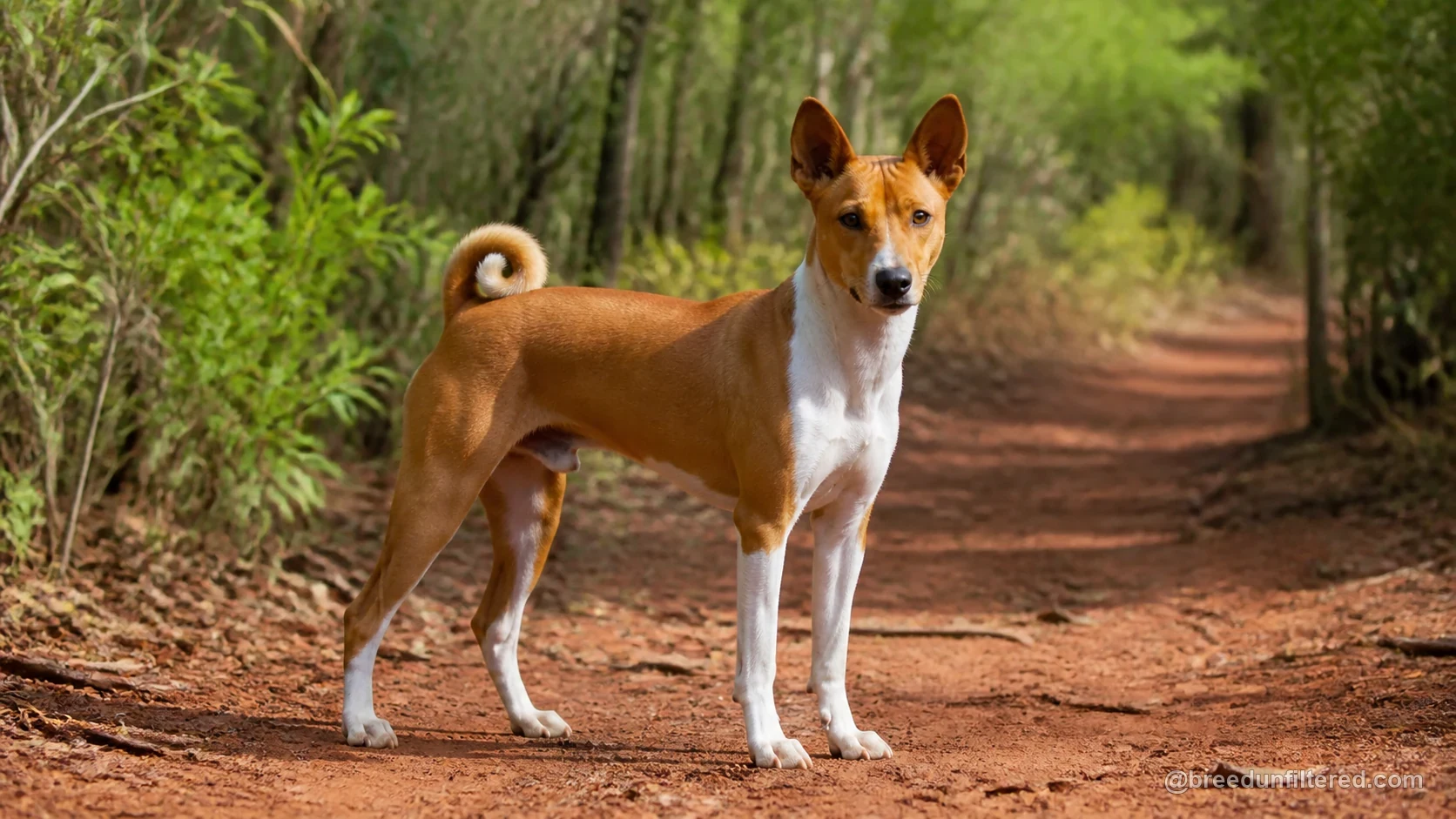
Complete breed guide
Basenji OWNERSHIP GUIDE
The Basenji is an ancient sighthound-like breed from Central Africa, known for its unique yodel-like sound instead of a typical bark. With a sleek, athletic build and an alert, curious expression, this breed has captured the hearts of dog enthusiasts worldwide. However, the Basenji is not a dog for everyone; its independent nature and high intelligence require an experienced and patient owner who appreciates a canine companion with a mind of its own.
This article provides a comprehensive overview of the Basenji, covering its historical purpose, temperament, exercise and mental stimulation needs, training and socialisation, suitability for families and other pets, grooming and health considerations, and the financial and time commitments involved. By understanding these aspects, prospective owners can make an informed decision about whether the Basenji is the right breed for their lifestyle.
Origin and Purpose
The Basenji originates from Central Africa, where it was prized for its hunting abilities, particularly in tracking and flushing small game. Depictions of similar dogs appear in ancient Egyptian artifacts, suggesting a lineage that spans thousands of years. The breed was developed to work independently in dense vegetation, using both sight and scent to locate prey, and to alert hunters with a distinctive, yodel-like sound rather than a bark.
In the early 20th century, Basenjis were introduced to Europe and North America, where they gained recognition for their unique characteristics. The Fédération Cynologique Internationale (FCI) classifies the Basenji in Group 5 (Spitz and Primitive Types) under standard number 43. Today, while still used for hunting in some regions, the Basenji is primarily a companion dog, but its ancestral instincts remain strong, influencing its behavior and needs.
Temperament and Variation
Basenjis are known for their alert, curious, and independent temperament. They are often described as cat-like in their cleanliness and self-reliance. While they form strong bonds with their families, they can be reserved with strangers and may not be overly demonstrative. Individual variation exists, with some Basenjis being more outgoing and others more aloof, but the breed generally exhibits a confident and intelligent demeanor.
Because of their independence, Basenjis can be challenging for first-time dog owners. They are not typically eager to please in the way many sporting breeds are, and they may choose to ignore commands if they see no benefit. This trait, combined with a keen intelligence, means that training requires creativity and patience. Prospective owners should be prepared for a dog that thinks for itself and may test boundaries.
Exercise and Mental Work
Basenjis are an energetic and athletic breed that requires regular physical activity to stay healthy and content. They enjoy running, hiking, and playing in a securely fenced area. However, their strong prey drive means that off-leash exercise in unenclosed spaces is risky, as they may chase small animals and ignore recall. A daily walk or jog, combined with opportunities to run safely, is typically recommended, but the exact amount varies with the individual dog's age and health.
Mental stimulation is equally important for this intelligent breed. Puzzle toys, nose work, and training sessions that challenge their problem-solving skills can help prevent boredom and destructive behaviors. Basenjis thrive when given tasks that engage their natural instincts, such as scent games. Without adequate mental and physical outlets, they may become restless and develop undesirable habits like digging or escaping.
Training and Socialisation
Training a Basenji requires a gentle, consistent, and positive approach. Harsh methods are counterproductive, as this sensitive breed may shut down or become stubborn. Short, varied sessions with high-value rewards tend to work best. Because Basenjis are independent, owners must be creative in making training enjoyable and rewarding for the dog. Early socialisation is crucial to help them become well-adjusted adults, exposing them to various people, environments, and other animals in a controlled manner.
Basenjis can be challenging to train off-leash due to their strong prey drive and independent nature. Reliable recall is difficult to achieve, and even well-trained individuals may choose to ignore commands when distracted. Therefore, a secure physical environment is essential. Socialisation with other dogs should begin early, as some Basenjis may be selective or assertive with unfamiliar dogs, though many live peacefully with dogs they know.
Family and Pets
Basenjis can make affectionate and loyal companions for the right families. They are generally good with older children who understand how to interact respectfully with dogs, but their independent nature may not tolerate rough handling. As with any breed, supervision and teaching children appropriate behavior are essential. Basenjis often bond closely with their primary caregiver and may be reserved with visitors, making them decent watchdogs in the sense that they will alert to unusual activity, though they are not guard dogs.
Regarding other pets, the Basenji's hunting background means that small animals such as rodents, birds, and cats may trigger their prey drive. Some Basenjis can live peacefully with cats if raised together, but it is not guaranteed. They generally get along with other dogs, especially if socialised early, but same-sex aggression can occur. Prospective owners should consider their existing pets and be prepared to manage introductions carefully.
Grooming and Health
One of the Basenji's appealing traits is its low grooming needs. The breed has a short, fine coat that sheds minimally and requires only occasional brushing to remove loose hair. Basenjis are fastidious self-groomers, similar to cats, and they have little to no doggy odor. Routine care includes nail trimming, ear cleaning, and dental hygiene, which are standard for most breeds.
In terms of health, Basenjis are generally a hardy breed, but they are prone to certain hereditary conditions. Fanconi syndrome, a kidney disorder, is a known concern, and responsible breeders screen for it. Other potential issues include progressive retinal atrophy and hip dysplasia. Prospective owners should seek breeders who perform health testing and provide documentation. Regular veterinary check-ups and a balanced diet are important for maintaining overall health.
Costs and Responsibility
Owning a Basenji involves significant financial and time commitments. The initial cost of a puppy from a reputable breeder can be substantial, and ongoing expenses include high-quality food, routine veterinary care, vaccinations, and preventive medications. Additionally, because Basenjis are intelligent and energetic, they require time for daily exercise, training, and mental enrichment. Owners must be prepared to invest in secure fencing and possibly professional training if needed.
Beyond finances, responsible ownership means understanding the breed's unique needs and potential challenges. Basenjis are not suited to a sedentary lifestyle or a home where they are left alone for long periods without stimulation. They are escape artists and can climb or dig under fences, so a secure environment is non-negotiable. Prospective owners should also consider adopting from a rescue organization, as many Basenjis end up in shelters due to mismatched expectations.
Clear answers
FREQUENTLY ASKED QUESTIONS
Are Basenjis truly barkless?
Basenjis do not bark in the traditional sense, but they are not silent. They produce a distinctive yodel-like sound called a 'baroo,' along with other vocalizations such as whines and howls. This unique trait is due to the shape of their larynx. While they are generally quieter than many breeds, they can still be vocal when excited or alerting their owners.
Are Basenjis good with children?
Basenjis can be good with children, especially if they are raised together and the children are taught to interact respectfully. However, their independent nature means they may not tolerate rough handling or excessive teasing. Supervision is always recommended, and it's important to teach children how to approach and handle the dog gently. Each dog's temperament varies, so early socialisation is key.
Do Basenjis require a lot of exercise?
Basenjis are an energetic breed that needs regular exercise to stay healthy and happy. They enjoy daily walks, runs, and playtime in a secure area. However, their exercise needs are moderate compared to high-energy working breeds. Mental stimulation is equally important, as they are intelligent and can become bored easily. A tired Basenji is less likely to engage in destructive behaviors.
Are Basenjis easy to train?
Basenjis are intelligent but independent, which can make training a challenge. They are not naturally eager to please and may ignore commands if they see no benefit. Positive reinforcement methods, such as treats and praise, work best. Consistency and patience are essential. Early socialisation and training are crucial to help them become well-mannered companions.
Do Basenjis get along with other pets?
Basenjis have a strong prey drive due to their hunting background, so they may not be safe around small animals like rodents, birds, or cats. Some Basenjis can live peacefully with cats if raised together, but it's not guaranteed. They generally get along with other dogs, especially if socialised early, but same-sex aggression can occur. Careful introductions and supervision are necessary.
Sources and further reading
Scores describe typical breed tendencies from 1 to 10. They are not a quality ranking or a prediction for an individual dog.
Size and presence5/10
CompactVery large
Physical strength5/10
LightExceptional
Energy level9/10
LowRelentless
Exercise demand9/10
ModestVery demanding
Mental work needed8/10
ModerateDaily job
Trainability6/10
ChallengingExceptional
Everyday manageability1/10
SpecialistStraightforward
First-time owner fit3/10
Poor fitGood fit
Family-life fit6/10
LimitedExcellent
Dog sociability3/10
SelectiveVery social
Prey drive10/10
LowVery high
Guarding tendency6/10
MinimalSerious
Independence9/10
Handler-focusedSelf-directed
Grooming demand6/10
LightHeavy
Apartment fit4/10
Poor fitGood fit