Complete breed guide
Norwegian Hound OWNERSHIP GUIDE
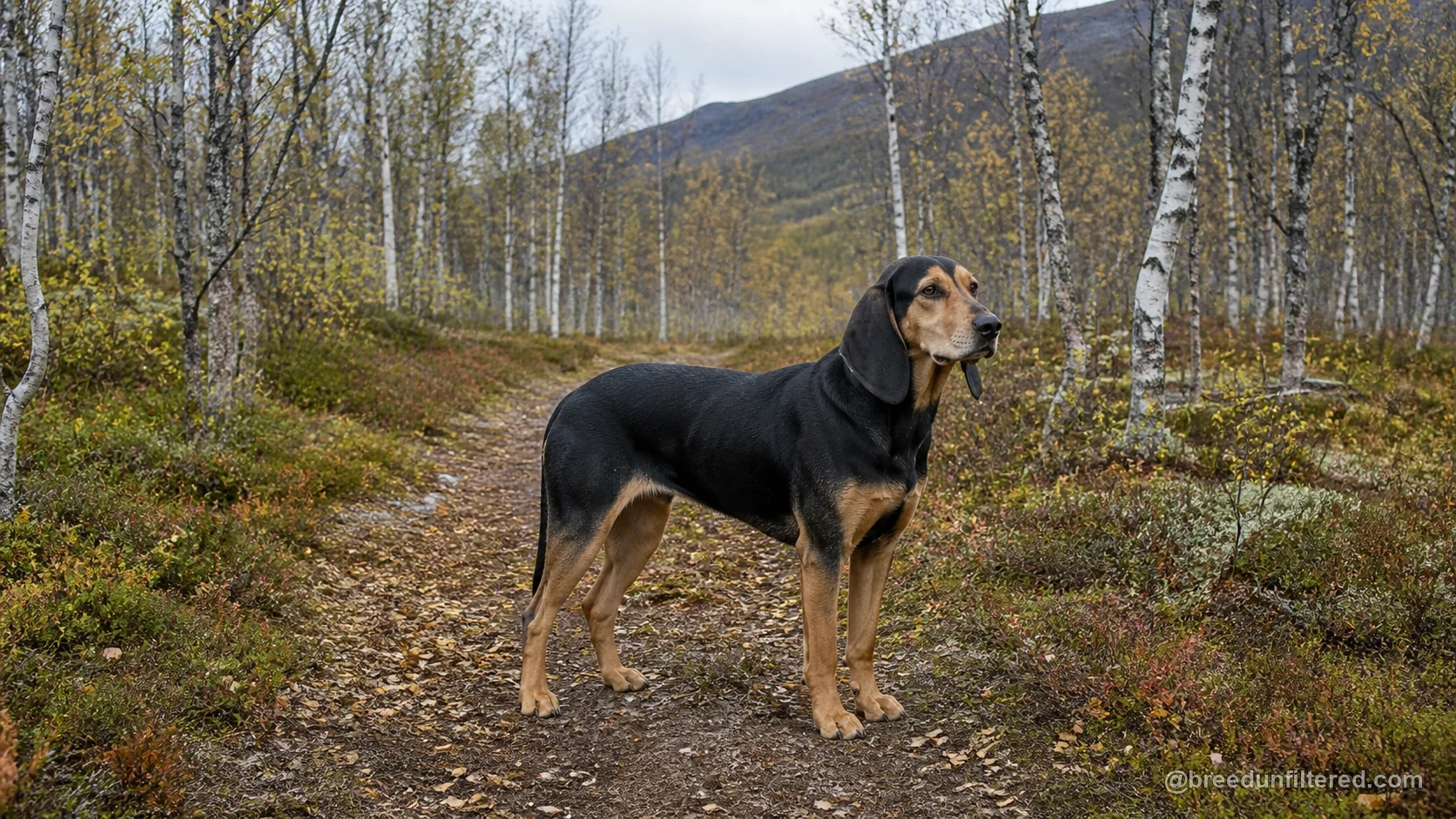
The Norwegian Hound, also known as the Dunker, is a scenthound developed in Norway for hare hunting. Recognized by the FCI under standard number 203, this breed is prized for its endurance, cold-weather resilience, and distinctive blue or black marbled coat. While not as widely known as some other hounds, the Norwegian Hound offers a unique blend of athleticism and companionship for the right owner.
Prospective owners should understand that this is a working hound with strong instincts and a need for purposeful activity. The Norwegian Hound is not a sedentary lapdog; it thrives in an environment where it can use its nose and expend energy. This guide provides an evidence-conscious overview of the breed's characteristics, care requirements, and potential challenges, helping you make an informed decision.
Origin and Purpose
The Norwegian Hound, or Dunker, was developed in Norway in the 19th century by Wilhelm Dunker, who crossed various scent hounds to create a dog suited for hunting hare in the country's rugged terrain. The breed was recognized by the FCI in 1952 and is classified in Group 6 (Scent Hounds and Related Breeds). Its primary role has always been as a trailing hound, working independently to track game and alert hunters with its voice.
Today, the Norwegian Hound remains a dedicated hunting dog, but it also participates in dog sports and can be a loyal family companion. Its historical purpose has shaped its temperament and physical abilities, including a strong prey drive, excellent stamina, and a dense, weather-resistant coat. Understanding this background is crucial for anyone considering the breed, as these traits influence its daily needs and behavior.
Temperament and Variation
Norwegian Hounds are typically described as friendly, even-tempered, and good-natured. They are known for their strong bond with their family and their sociable disposition towards people. However, as a hound, they also possess a degree of independence and can be single-minded when following a scent. Individual temperament varies, influenced by genetics, socialization, and training, so it is important to meet the parents or know the breeder's lines.
While generally not aggressive, Norwegian Hounds may be reserved with strangers, though they are not typically guard dogs. Their hunting instinct can lead to a high prey drive, which may affect their behavior around small animals. Prospective owners should be prepared for a dog that is both affectionate and stubborn, with a voice that carries—a trait common to hounds.
Exercise and Mental Work
As a scent hound, the Norwegian Hound requires substantial daily exercise to stay physically and mentally healthy. This breed is built for endurance, so activities like long walks, jogging, or hiking are ideal. Off-leash exercise in a securely fenced area is beneficial, but recall can be unreliable due to the strong hunting instinct, so a safe environment is essential.
Mental stimulation is equally important. Scent games, tracking exercises, and puzzle toys can help satisfy the breed's need to use its nose. Without adequate physical and mental outlets, Norwegian Hounds may become restless or develop undesirable behaviors. However, the exact amount of exercise varies by individual, age, and health, so owners should adjust accordingly and consult with a veterinarian.
Training and Socialisation
Training a Norwegian Hound requires patience and consistency. They are intelligent but can be independent and somewhat stubborn, which may challenge novice owners. Positive reinforcement methods, such as treats and praise, work best, while harsh corrections can be counterproductive. Early obedience training and socialization are crucial to help them become well-mannered adults.
Socialisation should begin in puppyhood, exposing the dog to various people, environments, and other animals. This helps mitigate potential shyness or reactivity. Because of their hunting background, recall training is particularly important, but owners should never rely on it in unsecured areas. Professional training classes can be beneficial, especially for first-time hound owners.
Family and Other Pets
Norwegian Hounds can make affectionate family dogs, often forming strong bonds with children and enjoying being part of household activities. They are generally tolerant and playful, but as with any breed, interactions with young children should be supervised to ensure safety for both the dog and the child. Their size and energy may be overwhelming for very small children.
Regarding other pets, the Norwegian Hound's prey drive can be a concern. They may chase or harm small animals such as cats, rabbits, or rodents, especially if not raised with them. With proper socialization, some individuals can live peacefully with cats, but it is not guaranteed. Early and ongoing training can help, but owners should be cautious and manage introductions carefully.
Grooming and Health
The Norwegian Hound has a short, dense, and water-resistant coat that requires minimal grooming. Weekly brushing helps remove loose hair and keep the coat healthy, with more frequent brushing during seasonal sheds. They are average shedders. Routine care includes nail trimming, ear cleaning, and dental hygiene, which are important for overall health.
As a breed, Norwegian Hounds are generally healthy, but like all dogs, they may be prone to certain conditions. Responsible breeders screen for hip dysplasia and eye disorders. Regular veterinary check-ups and a balanced diet are essential. Owners should be aware that the breed's floppy ears may be susceptible to infections, so keeping them dry and clean is important. Always consult a veterinarian for health concerns.
Costs and Responsibility
Owning a Norwegian Hound involves significant financial and time commitments. Initial costs include the purchase price from a reputable breeder, which can vary, plus supplies such as a crate, bedding, and food. Ongoing expenses include high-quality dog food, routine veterinary care, vaccinations, and preventive medications. Emergency medical costs and pet insurance should also be considered.
Beyond finances, responsible ownership means providing adequate exercise, mental stimulation, training, and companionship. Norwegian Hounds are not suited to a sedentary lifestyle or being left alone for long periods. They thrive in homes with secure fencing and an active family. Prospective owners should research the breed thoroughly, meet adult dogs, and consider adopting from a rescue if possible.
Clear answers
FREQUENTLY ASKED QUESTIONS
Is the Norwegian Hound good with children?
Norwegian Hounds can be good with children, especially when raised together and properly socialized. They are generally friendly and tolerant, but their size and energy may be too much for very young kids. Always supervise interactions and teach children how to behave around dogs to ensure a positive relationship.
How much exercise does a Norwegian Hound need?
Norwegian Hounds are an active breed that requires substantial daily exercise, typically at least an hour of vigorous activity like running or hiking. They also need mental stimulation through scent games or tracking. The exact amount varies by individual, so adjust based on your dog's energy levels and consult a vet.
Are Norwegian Hounds easy to train?
Norwegian Hounds are intelligent but independent, which can make training challenging for novices. They respond best to positive reinforcement and consistent, patient methods. Early socialization and obedience training are essential. Their strong prey drive may affect recall, so training should emphasize reliable recall in safe environments.
Do Norwegian Hounds get along with other pets?
Norwegian Hounds have a strong prey drive, so they may not be reliable with small pets like cats or rabbits. With early socialization, some individuals can coexist with cats, but it's not guaranteed. Always supervise introductions and manage interactions, especially with smaller animals.
What are common health issues in Norwegian Hounds?
Norwegian Hounds are generally healthy, but like many breeds, they may be prone to hip dysplasia and certain eye conditions. Responsible breeders screen for these issues. Regular veterinary care, a balanced diet, and proper exercise can help maintain health. Ear infections may occur due to floppy ears, so keep them clean and dry.
Sources and further reading
Scores describe typical breed tendencies from 1 to 10. They are not a quality ranking or a prediction for an individual dog.
Size and presence5/10
CompactVery large
Physical strength5/10
LightExceptional
Energy level8/10
LowRelentless
Exercise demand9/10
ModestVery demanding
Mental work needed8/10
ModerateDaily job
Trainability5/10
ChallengingExceptional
Everyday manageability3/10
SpecialistStraightforward
First-time owner fit3/10
Poor fitGood fit
Family-life fit6/10
LimitedExcellent
Dog sociability8/10
SelectiveVery social
Prey drive10/10
LowVery high
Guarding tendency3/10
MinimalSerious
Independence8/10
Handler-focusedSelf-directed
Grooming demand2/10
LightHeavy
Apartment fit4/10
Poor fitGood fit