Complete breed guide
Dachshund OWNERSHIP GUIDE
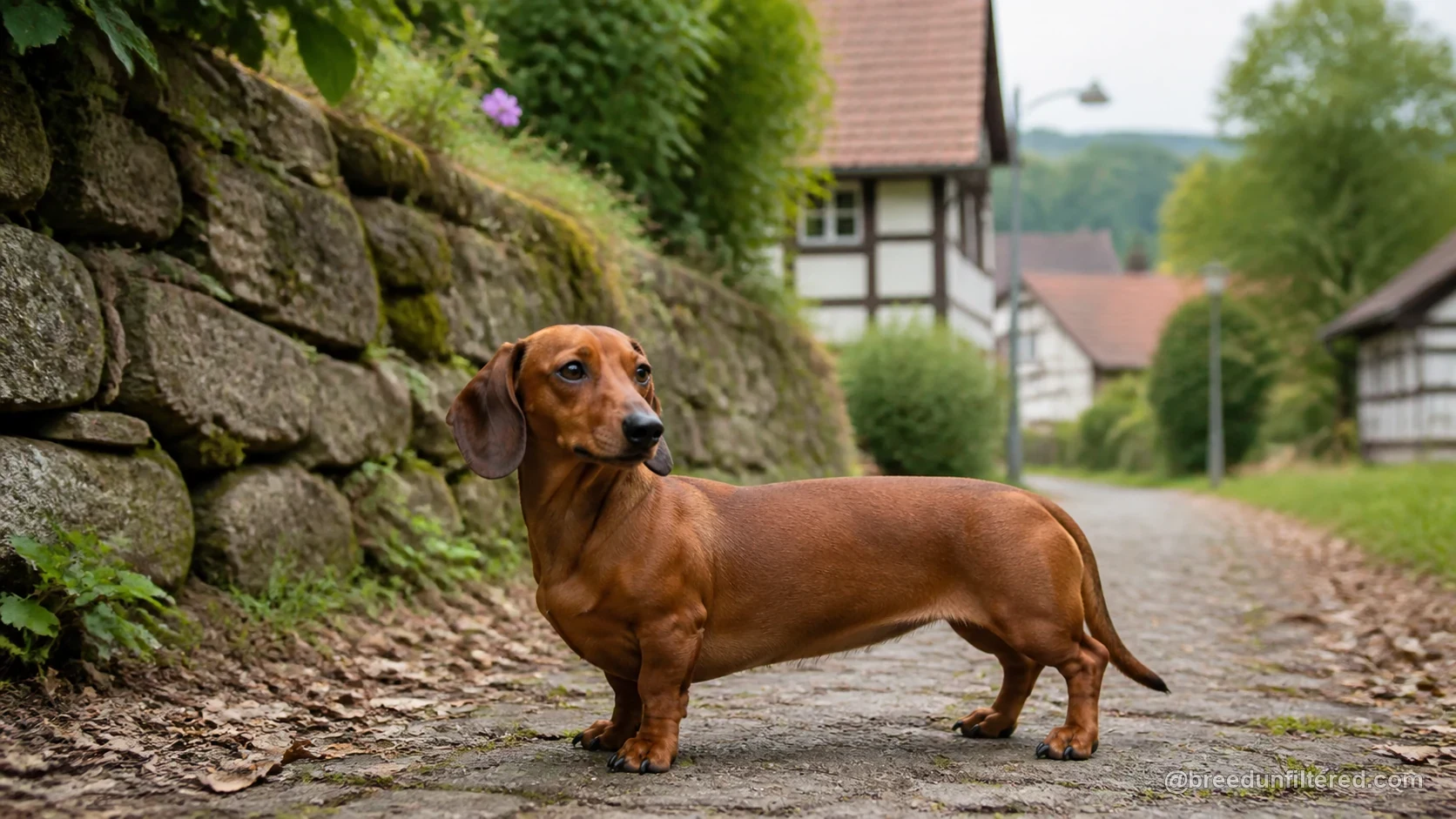
The Dachshund, also known as the badger dog or wiener dog, is a distinctive hound breed with a long body and short legs, originally developed in Germany to hunt badgers and other burrowing game. Recognized by the Fédération Cynologique Internationale (FCI) in Group 4, this breed comes in three coat varieties (smooth, longhaired, and wirehaired) and two sizes (standard and miniature), each with its own nuances. Their courageous and tenacious nature, combined with a playful and sometimes stubborn personality, makes them a unique companion for the right household.
Before welcoming a Dachshund into your life, it's essential to understand their specific needs, from exercise and mental stimulation to grooming and health considerations. This guide provides an evidence-conscious overview of the breed's characteristics, helping you assess whether a Dachshund aligns with your lifestyle, experience, and expectations. Remember that individual dogs vary, and responsible ownership involves research, preparation, and a commitment to meeting the breed's needs.
Origin and Purpose
The Dachshund's history dates back to 15th-century Germany, where they were bred to hunt badgers, rabbits, and other burrowing animals. Their name literally translates to 'badger dog' (Dachs = badger, Hund = dog). The breed's long body, short legs, and strong paws were specifically developed to dig into dens and pursue prey underground. Their courageous and determined temperament was essential for facing formidable opponents like badgers, which are known for their fierce defense.
Over time, Dachshunds were also used to track wounded game, and their keen sense of smell made them valuable hunting companions. The breed was refined in the 17th and 18th centuries, with the standard size used for badgers and wild boar, while smaller versions were developed to hunt foxes and rabbits. Today, while many Dachshunds are beloved family pets, they retain their hunting instincts and are still used for hunting in some parts of the world, reflecting their original purpose.
Temperament and Variation
Dachshunds are known for their lively, playful, and sometimes stubborn temperament. They are intelligent and curious, often displaying a boldness that belies their small size. They can be devoted and affectionate with their families, but they may also exhibit a independent streak, which can make training a challenge. Their hunting background contributes to a strong prey drive and a tendency to bark, making them alert watchdogs.
The breed's temperament can vary somewhat by coat type and size. Smooth-haired Dachshunds are often described as more energetic and bold, while longhaired ones may be calmer and more gentle. Wirehaired Dachshunds are often seen as more outgoing and mischievous. Miniature Dachshunds may be more prone to nervousness or excitability, while standards are generally more laid-back. However, these are generalizations, and individual personality is shaped by genetics, socialization, and training.
Exercise and Mental Work
Dachshunds have moderate exercise needs. Daily walks and playtime are essential, but they are not high-energy dogs that require hours of vigorous activity. However, due to their long backs, it's important to avoid activities that involve jumping or climbing stairs excessively, as these can predispose them to intervertebral disc disease (IVDD). Regular, moderate exercise helps maintain a healthy weight, which is crucial for preventing back problems.
Mental stimulation is equally important for this intelligent breed. Puzzle toys, scent games, and training sessions that challenge their minds can help prevent boredom and destructive behaviors. Dachshunds were bred to solve problems while hunting, so they thrive when given opportunities to use their noses and brains. Without adequate mental engagement, they may become mischievous or develop undesirable habits like excessive barking or digging.
Training and Socialisation
Training a Dachshund requires patience, consistency, and positive reinforcement. They are intelligent but can be stubborn, so harsh methods are counterproductive. Short, fun training sessions that incorporate treats and praise work best. Early socialization is vital to help them become well-adjusted adults, exposing them to various people, animals, and environments in a positive manner. This helps mitigate their natural wariness of strangers and reduces the risk of fear-based aggression.
Dachshunds can be challenging to housebreak, and crate training is often recommended. They may also be prone to separation anxiety, so gradual conditioning to being alone is important. Their strong prey drive means they should be kept on a leash in unfenced areas, as they may chase small animals. With consistent, gentle guidance, Dachshunds can learn basic obedience and even excel in activities like earthdog trials, which tap into their natural instincts.
Family and Other Pets
Dachshunds can make wonderful family pets, but they are not always ideal for households with very young children. Their long backs make them susceptible to injury if dropped or handled roughly, and they may not tolerate tail-pulling or ear-tugging. They tend to bond closely with one person and can be protective, sometimes showing jealousy. With respectful, older children who understand how to interact with dogs, Dachshunds can be playful and affectionate companions.
When it comes to other pets, Dachshunds have a strong prey drive and may view small animals like rabbits, guinea pigs, or even cats as prey. However, early socialization can help them coexist peacefully with cats and other dogs, especially if raised together. They are generally good with other dogs, though they may be assertive and try to dominate. Supervision is recommended when introducing a Dachshund to any new pet, and their hunting instincts should never be underestimated.
Grooming and Health
Grooming needs vary by coat type. Smooth Dachshunds require minimal grooming, just occasional brushing to remove loose hair. Longhaired Dachshunds need more frequent brushing to prevent mats and tangles, especially behind the ears and on the legs. Wirehaired Dachshunds have a harsh, wiry coat that requires regular brushing and occasional hand-stripping to maintain its texture. All varieties shed, and regular nail trimming, ear cleaning, and dental care are essential.
Dachshunds are prone to certain health issues, most notably intervertebral disc disease (IVDD), a spinal condition that can lead to paralysis. Maintaining a healthy weight and avoiding activities that strain the back are crucial preventive measures. Other health concerns include obesity, dental disease, and certain eye conditions. Responsible breeders screen for genetic issues, and prospective owners should be aware of the potential for veterinary costs. Regular check-ups and a healthy lifestyle can help mitigate some risks, but IVDD remains a significant concern for the breed.
Costs and Responsibility
Owning a Dachshund involves financial and time commitments. Initial costs include adoption or purchase fees, which can vary widely depending on the source and pedigree. Ongoing expenses include high-quality food, routine veterinary care, grooming supplies, and preventive medications. Because of their susceptibility to back problems, pet insurance is often recommended to help cover potential surgical costs, which can be substantial. Additionally, Dachshunds can live 12 to 16 years, so owners should be prepared for a long-term commitment.
Responsible ownership also means providing proper training, socialization, and mental stimulation, as well as ensuring a safe environment that minimizes the risk of back injury. This includes using ramps instead of stairs, preventing jumping on and off furniture, and supervising interactions with children. Dachshunds are not a low-maintenance breed; they require attention, patience, and a willingness to adapt to their unique needs. Prospective owners should honestly assess their lifestyle and ability to meet these demands before bringing a Dachshund home.
Clear answers
FREQUENTLY ASKED QUESTIONS
Are Dachshunds good with children?
Dachshunds can be good with children, but they are better suited to families with older, respectful kids who understand how to handle a dog gently. Their long backs make them vulnerable to injury if dropped or roughly handled, and they may not tolerate teasing. With proper socialization and supervision, they can be affectionate and playful companions, but they are not ideal for toddlers or very young children.
Do Dachshunds bark a lot?
Dachshunds are known for being vocal and may bark frequently. This trait stems from their hunting background, where they used their voice to alert hunters. They make excellent watchdogs and will often bark to announce visitors or unusual noises. Without proper training and mental stimulation, excessive barking can become a nuisance, so early training and socialization are important to manage this behavior.
Are Dachshunds easy to train?
Dachshunds are intelligent but can be stubborn and independent, making training a challenge for novice owners. They respond best to positive reinforcement methods, such as treats and praise, and short, engaging sessions. Consistency and patience are key. Harsh training methods are counterproductive and can damage the bond. Early socialization and obedience training are essential to shape a well-behaved adult dog.
How much exercise does a Dachshund need?
Dachshunds have moderate exercise needs, typically requiring daily walks and playtime. However, due to their long backs, it's important to avoid high-impact activities like jumping or running up stairs. Regular, moderate exercise helps maintain a healthy weight, which is crucial for preventing back problems. Mental stimulation through puzzle toys and scent games is also important to keep them engaged and prevent boredom.
What health issues are Dachshunds prone to?
The most significant health concern for Dachshunds is intervertebral disc disease (IVDD), a condition affecting the spinal discs that can lead to pain, paralysis, and even loss of bladder control. Other potential issues include obesity, dental disease, and certain eye conditions. Responsible breeding and maintaining a healthy weight can reduce risks, but owners should be prepared for possible veterinary costs and consider pet insurance.
Sources and further reading
Scores describe typical breed tendencies from 1 to 10. They are not a quality ranking or a prediction for an individual dog.
Size and presence3/10
CompactVery large
Physical strength4/10
LightExceptional
Energy level8/10
LowRelentless
Exercise demand8/10
ModestVery demanding
Mental work needed7/10
ModerateDaily job
Trainability5/10
ChallengingExceptional
Everyday manageability3/10
SpecialistStraightforward
First-time owner fit4/10
Poor fitGood fit
Family-life fit6/10
LimitedExcellent
Dog sociability6/10
SelectiveVery social
Prey drive10/10
LowVery high
Guarding tendency5/10
MinimalSerious
Independence8/10
Handler-focusedSelf-directed
Grooming demand1/10
LightHeavy
Apartment fit6/10
Poor fitGood fit