Complete breed guide
Newfoundland OWNERSHIP GUIDE
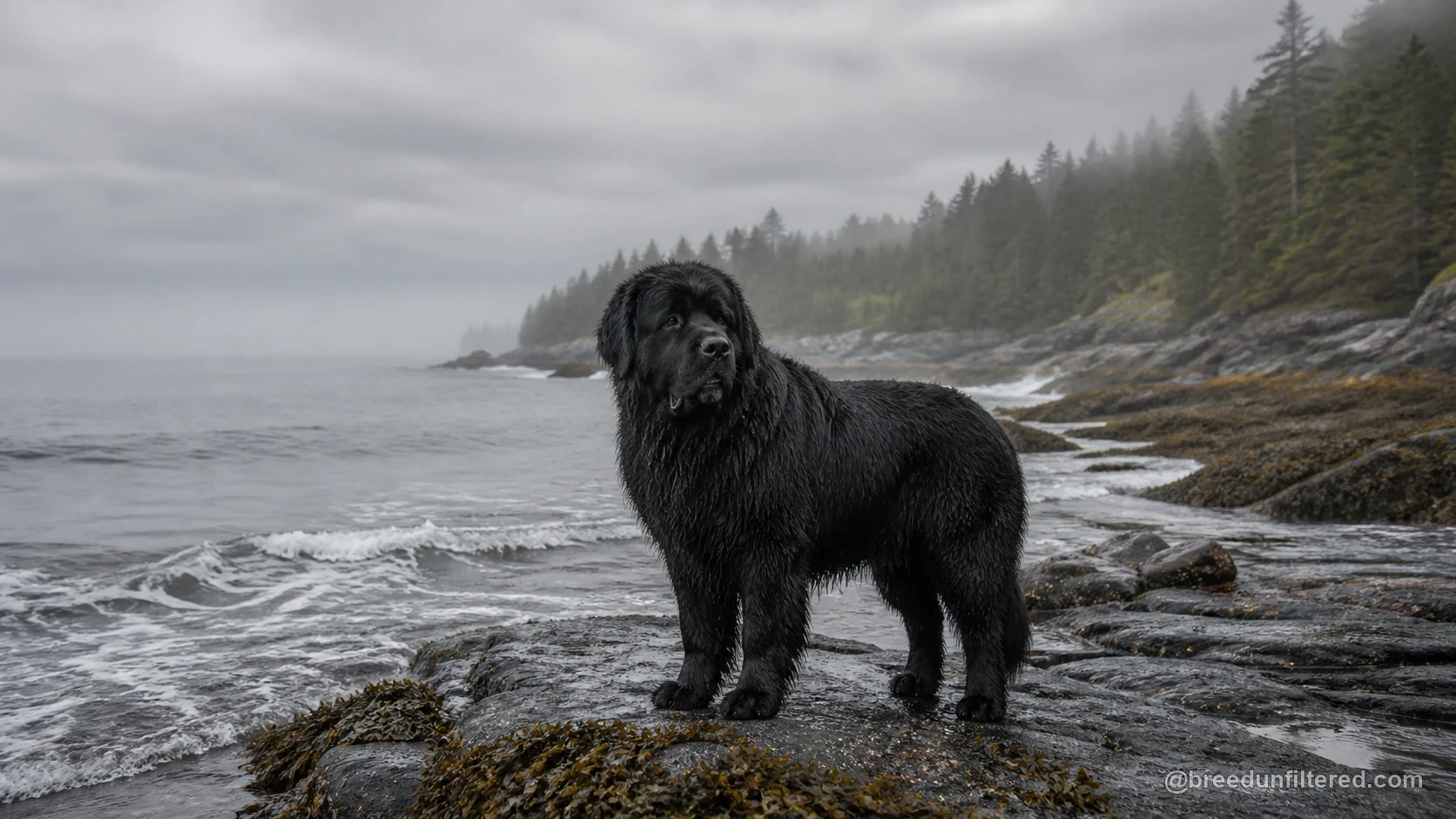
The Newfoundland, often called the gentle giant, is a large working breed from the Canadian island of Newfoundland. Historically used by fishermen to haul nets and rescue people from icy waters, this breed combines immense strength with a famously sweet and patient disposition. Their thick, water-resistant coat and webbed feet make them natural swimmers, and their calm, watchful nature has earned them a reputation as devoted family companions.
Prospective owners should understand that the Newfoundland is not a low-maintenance dog. Their size alone demands space, and their heavy coat requires regular grooming. They are also known for drooling and shedding. However, for those prepared for the commitment, Newfoundlands offer unwavering loyalty and a gentle presence that can enrich a household. This guide provides an evidence-conscious overview of the breed's characteristics, care needs, and responsibilities.
Origin and Purpose
The Newfoundland breed originated on the island of Newfoundland, Canada, where they were developed as working dogs for fishermen. Their ancestors likely included large native dogs and possibly breeds brought by European settlers, such as the Great Pyrenees or the Tibetan Mastiff. These dogs were essential for hauling nets, carrying lines to shore, and even performing water rescues, thanks to their strength, endurance, and swimming ability.
The breed's official FCI standard (number 50) places it in Group 2, which includes Pinscher and Schnauzer types, Molossoid breeds, and Swiss Mountain and Cattle Dogs. The standard describes a powerful, well-balanced dog with a deep chest and a massive head. While their working role has diminished, their instincts for water work and rescue remain strong, and many Newfoundlands still participate in water trials and therapy work.
Temperament and Variation
Newfoundlands are generally known for their sweet, patient, and gentle temperament. They are often described as 'nanny dogs' due to their protective and tolerant nature around children. However, like all breeds, individual temperament varies based on genetics, socialization, and training. They tend to be calm indoors but can be playful outdoors, and they are typically not aggressive, though their size alone can be intimidating.
There is some variation within the breed, with individuals differing in energy levels, sociability, and independence. Some may be more reserved with strangers, while others are outgoing. It is important for prospective owners to meet the parents of a puppy and observe their temperaments, as well as to provide early and ongoing socialization to help the dog develop into a well-adjusted adult.
Exercise and Mental Work
Newfoundlands have moderate exercise needs. They enjoy daily walks and playtime, but they are not high-energy dogs. Their historical role as water rescue dogs means they love to swim, and access to a safe body of water can be a great outlet for their energy. However, vigorous exercise should be moderated, especially in young dogs, to protect their developing joints.
Mental stimulation is equally important. Newfoundlands are intelligent and can become bored if left without activities. Puzzle toys, basic obedience training, and scent games can provide mental challenges. They also excel in activities like cart pulling or drafting, which tap into their working heritage. A tired Newfoundland is a happy and well-behaved companion.
Training and Socialisation
Training a Newfoundland requires patience and consistency. They are generally eager to please, but they can also be somewhat stubborn. Positive reinforcement methods, such as treats and praise, work best. Early socialization is crucial to ensure they are comfortable with various people, animals, and environments. Puppy classes and exposure to different situations can help prevent shyness or fearfulness.
Because of their large size, basic obedience training is essential. A Newfoundland that pulls on the leash or jumps up can be difficult to manage. Training should focus on loose-leash walking, reliable recall, and polite greetings. They are also known for their gentle mouth, but teaching bite inhibition is still important. With consistent training, they can become well-mannered family members.
Family and Other Pets
Newfoundlands are renowned for their affinity with children. Their patient and protective nature makes them excellent family dogs, but supervision is always recommended due to their size. They may inadvertently knock over small children during play, so teaching children how to interact safely with dogs is essential. They are generally tolerant of handling, but like any dog, they have limits.
With other pets, Newfoundlands typically get along well, especially if raised together. They have a low prey drive, so they may be less likely to chase smaller animals, but individual variation exists. Their dog sociability is generally good, but proper introductions and supervision are key. They can be dominant with other dogs of the same sex, so early socialization and neutral introductions are important.
Grooming and Health
The Newfoundland's double coat is thick and water-resistant, but it requires regular grooming. They shed heavily, especially during seasonal changes, and daily brushing is often necessary to manage loose hair and prevent matting. They also have a tendency to drool, which can be messy. Regular ear cleaning, nail trimming, and dental care are also part of the grooming routine.
Health-wise, Newfoundlands are prone to certain conditions, including hip and elbow dysplasia, heart issues such as subaortic stenosis, and cystinuria. Responsible breeders screen for these conditions. Their large size also predisposes them to bloat (gastric dilatation-volvulus), a life-threatening emergency. Prospective owners should be aware of these risks and consider pet insurance. Regular veterinary check-ups and a balanced diet are essential.
Costs and Responsibility
Owning a Newfoundland is a significant financial commitment. Initial costs include purchasing a puppy from a reputable breeder, which can be expensive, as well as supplies like a large crate, bed, and grooming tools. Ongoing costs include high-quality food, which they consume in large quantities, routine veterinary care, and grooming services if not done at home. Emergency medical care can be costly, so pet insurance is often recommended.
Beyond finances, Newfoundlands require a substantial time commitment. They need daily exercise, grooming, and companionship. They are not suited to apartment living unless the owner is committed to providing ample exercise and space. They thrive in homes with a yard, but even then, they are indoor dogs and should not be left outside for long periods. Prospective owners must be prepared for a long-term commitment of 8-10 years.
Clear answers
FREQUENTLY ASKED QUESTIONS
Are Newfoundlands good with children?
Newfoundlands are generally known for their gentle and patient nature, making them good companions for children. However, due to their large size, they can accidentally knock over small children. Supervision and teaching children how to interact respectfully with dogs are essential. Early socialization and training also help ensure a positive relationship.
Do Newfoundlands drool a lot?
Yes, Newfoundlands are known to drool, especially after drinking or eating. The amount varies between individuals, but prospective owners should be prepared for some slobber. Keeping a towel handy and wiping their mouth can help manage the drool, but it is a characteristic of the breed that cannot be completely eliminated.
How much exercise does a Newfoundland need?
Newfoundlands have moderate exercise needs. Daily walks and playtime are usually sufficient, but they also enjoy swimming, which is a great low-impact activity. However, vigorous exercise should be limited in puppies to protect their joints. Mental stimulation is also important to prevent boredom.
Are Newfoundlands easy to train?
Newfoundlands are intelligent and generally eager to please, but they can be somewhat stubborn. Positive reinforcement methods work best. Early socialization and consistent training are important. They respond well to gentle guidance and do not do well with harsh methods. With patience, they can learn many commands and tasks.
What health issues are common in Newfoundlands?
Newfoundlands are prone to certain health conditions, including hip and elbow dysplasia, heart issues like subaortic stenosis, and cystinuria. They are also at risk for bloat, a life-threatening stomach condition. Responsible breeders screen for these issues, and regular veterinary check-ups are important. Pet insurance can help manage costs.
Sources and further reading
Scores describe typical breed tendencies from 1 to 10. They are not a quality ranking or a prediction for an individual dog.
Size and presence10/10
CompactVery large
Physical strength10/10
LightExceptional
Energy level7/10
LowRelentless
Exercise demand7/10
ModestVery demanding
Mental work needed7/10
ModerateDaily job
Trainability7/10
ChallengingExceptional
Everyday manageability2/10
SpecialistStraightforward
First-time owner fit3/10
Poor fitGood fit
Family-life fit6/10
LimitedExcellent
Dog sociability4/10
SelectiveVery social
Prey drive4/10
LowVery high
Guarding tendency8/10
MinimalSerious
Independence7/10
Handler-focusedSelf-directed
Grooming demand7/10
LightHeavy
Apartment fit1/10
Poor fitGood fit