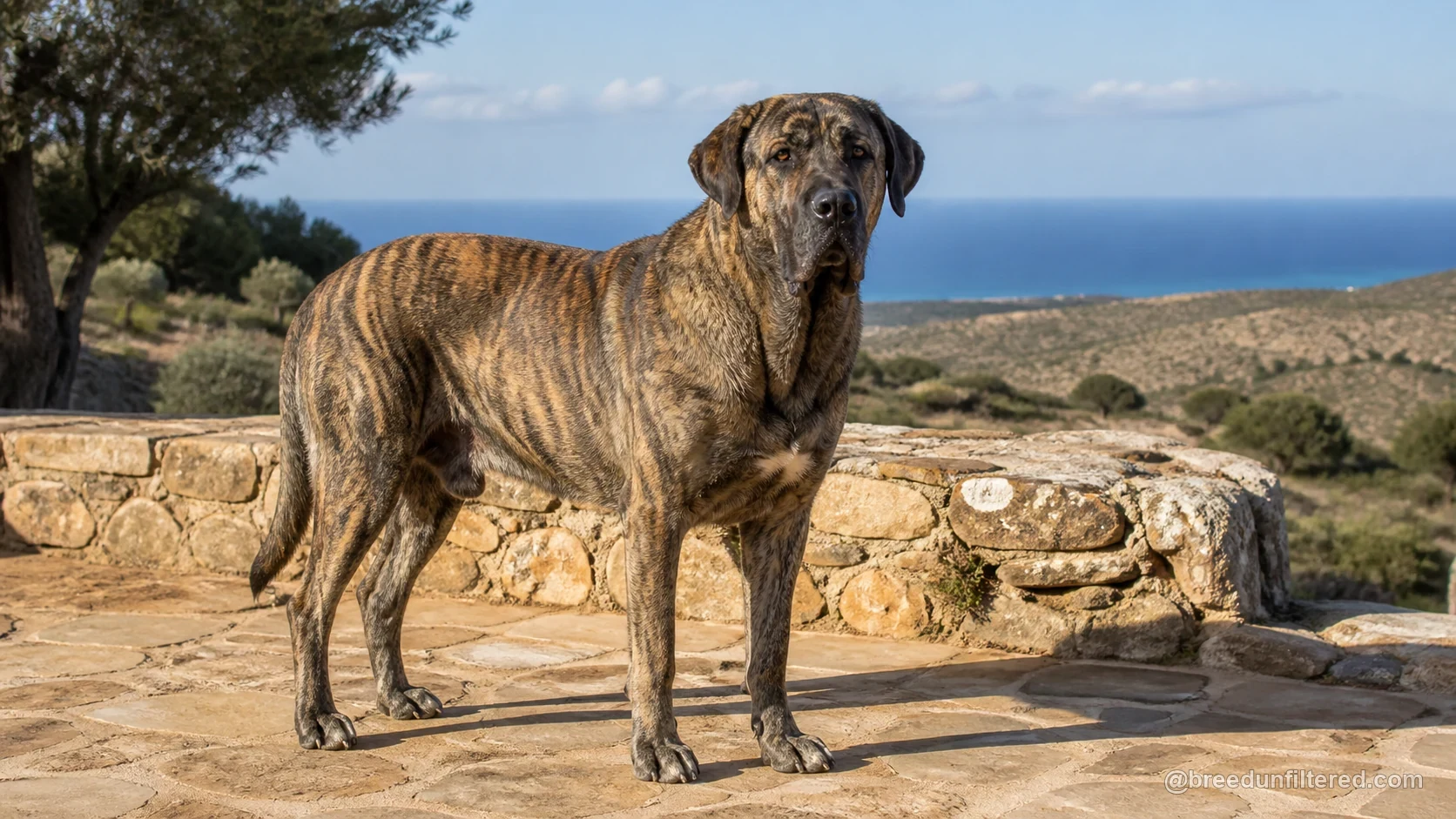
Complete breed guide
Majorca Mastiff OWNERSHIP GUIDE
The Majorca Mastiff, also known as the Perro Dogo Mallorquín, is a powerful and imposing breed with deep roots in the Balearic Islands. Recognized by the Fédération Cynologique Internationale (FCI) in Group 2, this dog was historically used for guarding, herding, and even dog fighting. Today, it is a rare companion that demands respect and understanding from its owner.
Prospective owners should be aware that this is not a dog for everyone. With a strong guarding instinct and a calm but determined temperament, the Majorca Mastiff requires an experienced handler who can provide firm, consistent leadership. This article aims to give you a balanced overview of what to expect, covering everything from daily care to the financial commitment involved.
Origin and Purpose
The Majorca Mastiff originates from the island of Majorca, part of Spain's Balearic Islands. Its ancestors likely include the Spanish Alano and local mastiff-type dogs. Historically, these dogs were used for guarding property, herding cattle, and in the cruel sport of dog fighting, which was outlawed in the 20th century. The breed's development was shaped by the need for a powerful, agile, and fearless dog capable of handling large livestock and protecting its territory.
Today, the breed is recognized by the FCI under standard number 249, with a definitive recognition status. While its historical roles have diminished, the Majorca Mastiff still retains the instincts that made it a versatile working dog. Understanding this background is crucial for prospective owners, as it explains the breed's natural guarding tendencies, high pain tolerance, and strong-willed nature.
Temperament and Variation
The Majorca Mastiff is typically described as calm, loyal, and protective. It tends to be reserved with strangers and deeply devoted to its family. However, individual temperament can vary based on genetics, socialization, and training. Some dogs may be more outgoing, while others are more aloof. It is essential to meet the parents and observe the puppy's behavior to get a sense of its personality.
This breed is known for its self-assured and sometimes stubborn nature. It is not a dog that will blindly obey; rather, it respects confident and consistent leadership. Early and ongoing socialization is vital to ensure that the dog's natural wariness does not develop into aggression. A well-adjusted Majorca Mastiff is a gentle giant at home but a formidable guardian when needed.
Exercise and Mental Work
Despite its size, the Majorca Mastiff is not a high-energy dog. It requires moderate daily exercise to stay physically fit and mentally satisfied. A couple of walks and some playtime in a securely fenced yard are usually sufficient. However, this breed also needs mental stimulation to prevent boredom, which can lead to destructive behaviors. Puzzle toys, obedience training sessions, and scent games are excellent ways to engage its mind.
It is important to avoid over-exercising puppies and young dogs, as their bones and joints are still developing. As adults, they can enjoy longer hikes and activities, but they are not typically suited for intense endurance sports. The key is to provide consistent, moderate activity that matches the dog's individual energy level, which can vary from one dog to another.
Training and Socialisation
Training a Majorca Mastiff requires patience, consistency, and positive reinforcement methods. This breed responds poorly to harsh or forceful training, which can damage the trust between dog and owner. Early socialization is equally important; exposing the puppy to various people, animals, and environments helps shape a well-rounded adult. Puppy classes and controlled interactions with other dogs are highly recommended.
Because of its independent streak, the Majorca Mastiff may test boundaries. Owners must establish clear rules and be consistent in enforcing them. Professional guidance from an experienced trainer can be invaluable, especially for first-time owners of this breed. With proper training, the Majorca Mastiff can become a reliable and obedient companion, but it is not a dog that will work for treats alone; it needs to see the value in the task.
Family and Other Pets
The Majorca Mastiff can be a devoted family dog, especially when raised with children. It is typically patient and protective of its family members. However, due to its size and strength, supervision is necessary when interacting with young children to prevent accidental knocks. The dog's guarding instinct may also make it wary of strangers, so proper introductions are essential.
When it comes to other pets, the Majorca Mastiff's history as a working dog means it may have a high prey drive and a tendency to be dominant. It can coexist with other dogs if socialized early, but same-sex aggression can occur. Cats and small animals may be at risk if the dog's prey drive is strong. Careful management and gradual introductions are crucial, and it is not a breed that should be left unsupervised with small pets.
Grooming and Health
The Majorca Mastiff has a short, dense coat that is relatively easy to groom. Weekly brushing with a rubber curry or hound glove will help remove loose hair and keep the coat healthy. They shed moderately, and more during seasonal changes. Regular ear cleaning, nail trimming, and dental care are also part of the routine. This breed is not hypoallergenic, and its drooling can be a consideration for some owners.
As with many large breeds, the Majorca Mastiff is prone to certain health issues, including hip dysplasia, elbow dysplasia, and bloat (gastric dilatation-volvulus). Responsible breeders screen for these conditions. While the breed is generally hardy, prospective owners should be prepared for potential veterinary costs. Feeding a high-quality diet appropriate for large breeds and maintaining a healthy weight are important preventive measures.
Costs and Responsibility
Owning a Majorca Mastiff is a significant financial and time commitment. Initial costs include the purchase price, which can be high due to the breed's rarity, as well as supplies such as a crate, bedding, and food. Ongoing expenses include high-quality food, routine veterinary care, vaccinations, and preventive medications. Emergency medical care and pet insurance are also worth considering.
Beyond finances, this breed requires a responsible owner who can provide secure fencing, ample space, and consistent training. The Majorca Mastiff is not suitable for apartment living or for owners who are away from home for long periods. It thrives in a home with a yard and an owner who is committed to its well-being. Prospective owners should research the breed thoroughly, talk to breeders and owners, and honestly assess their ability to meet the dog's needs.
Clear answers
FREQUENTLY ASKED QUESTIONS
Is the Majorca Mastiff a good family dog?
The Majorca Mastiff can be a good family dog when properly socialized and trained. It is typically loyal and protective of its family, including children. However, due to its size and guarding instincts, supervision with young children is essential. It may be wary of strangers, so early socialization is key to ensure it distinguishes between normal and threatening situations.
How much exercise does a Majorca Mastiff need?
The Majorca Mastiff has moderate exercise needs. Daily walks and playtime in a securely fenced area are usually sufficient. It is not a high-energy breed, but it does need mental stimulation to prevent boredom. Avoid over-exercising puppies to protect their developing joints. Adjust the routine based on your dog's individual energy level and health.
Are Majorca Mastiffs aggressive?
Majorca Mastiffs are not inherently aggressive, but they have strong guarding instincts and can be wary of strangers. Without proper socialization and training, these instincts can lead to protective or reactive behavior. They are typically calm and gentle with their family. Responsible ownership, including early socialization and consistent training, is crucial to prevent aggression.
What are common health problems in Majorca Mastiffs?
Like many large breeds, Majorca Mastiffs are prone to hip and elbow dysplasia, as well as bloat (gastric dilatation-volvulus). They may also be susceptible to certain eye conditions. Responsible breeders screen for these issues. Regular veterinary check-ups, a balanced diet, and maintaining a healthy weight can help mitigate some risks.
Is the Majorca Mastiff easy to train?
The Majorca Mastiff is intelligent but can be stubborn and independent, making training a challenge for novice owners. It responds best to positive reinforcement and consistent, patient methods. Harsh training can be counterproductive. Early socialization and obedience training are essential. Professional guidance may be beneficial for first-time owners.
Sources and further reading
Scores describe typical breed tendencies from 1 to 10. They are not a quality ranking or a prediction for an individual dog.
Size and presence10/10
CompactVery large
Physical strength10/10
LightExceptional
Energy level7/10
LowRelentless
Exercise demand7/10
ModestVery demanding
Mental work needed7/10
ModerateDaily job
Trainability5/10
ChallengingExceptional
Everyday manageability1/10
SpecialistStraightforward
First-time owner fit2/10
Poor fitGood fit
Family-life fit6/10
LimitedExcellent
Dog sociability3/10
SelectiveVery social
Prey drive8/10
LowVery high
Guarding tendency10/10
MinimalSerious
Independence10/10
Handler-focusedSelf-directed
Grooming demand5/10
LightHeavy
Apartment fit1/10
Poor fitGood fit