Complete breed guide
King Charles Spaniel OWNERSHIP GUIDE
The King Charles Spaniel, recognized by the FCI as breed number 128 in Group 9, is a toy spaniel with a history intertwined with British royalty. Often confused with its close relative, the Cavalier King Charles Spaniel, the King Charles Spaniel (sometimes called the English Toy Spaniel) has a distinct appearance with a flatter face and a domed head. This breed was developed as a companion, and its primary purpose remains to provide affectionate company to its human family.
Prospective owners should understand that the King Charles Spaniel is a companion breed first and foremost. While they share ancestry with sporting spaniels, their modern role is that of a lapdog and family pet. They thrive on human interaction and are known for their gentle, adaptable nature. However, like all breeds, they have specific needs regarding grooming, health monitoring, and socialization that should be carefully considered before bringing one home.
Origin and Purpose
The King Charles Spaniel's roots trace back to the toy spaniels depicted in European paintings from the 16th and 17th centuries, particularly in England. They were favored by royalty, including King Charles II, from whom the breed gets its name. These small spaniels were bred to be companions, warming laps and providing comfort in courtly settings. The breed's development focused on a compact size and a gentle, affectionate disposition, distinguishing them from their larger working spaniel relatives.
Today, the King Charles Spaniel is recognized by the FCI under the name 'King Charles Spaniel' (standard number 128) and is classified in Group 9, which is designated for companion and toy dogs. This classification underscores their purpose as companions rather than working dogs. While they may retain some spaniel traits, such as a soft mouth and a love of play, their primary role is to be a devoted family member, and they are often happiest when close to their people.
Temperament and Variation
The King Charles Spaniel is generally described as gentle, affectionate, and adaptable. They are known for forming strong bonds with their owners and often seek out physical closeness. Individual temperaments can vary, but the breed standard emphasizes a sweet, quiet disposition. They are typically not high-strung, and many are content to be lap dogs, though they also enjoy playtime and short walks. As with any breed, early socialization and positive experiences help shape a well-rounded adult dog.
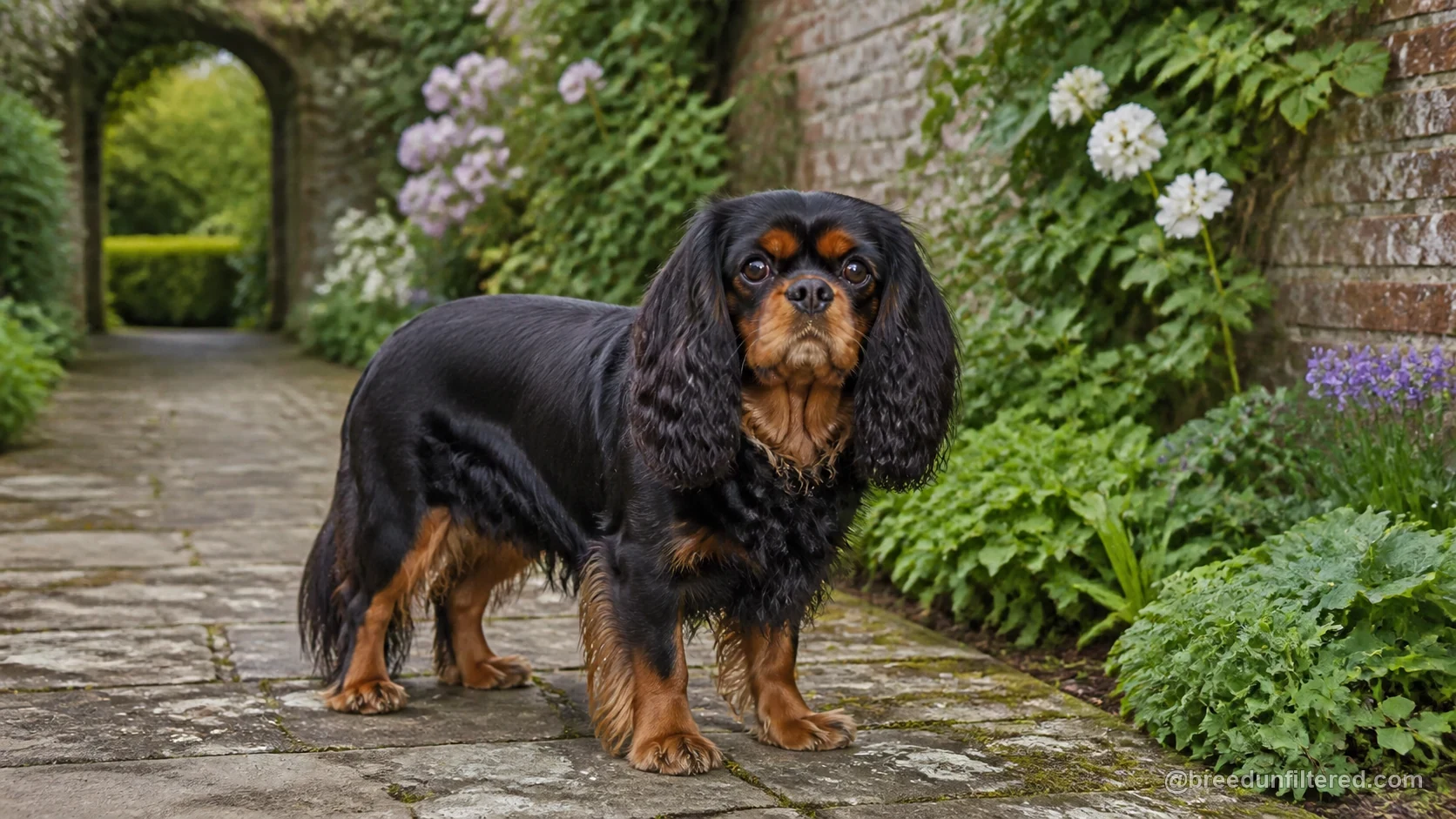
There are four recognized color variations in the breed: Blenheim (chestnut and white), Tricolor (black, white, and tan), Ruby (solid red), and Black and Tan. These color variations do not typically correlate with temperament differences, but they are part of the breed's visual appeal. Prospective owners should be aware that the King Charles Spaniel's flat face can lead to brachycephalic traits, which may influence their tolerance for heat and exercise, and this should be considered when planning activities.
Exercise and Mental Work
King Charles Spaniels have moderate exercise needs. They enjoy daily walks and play sessions, but they are not high-energy dogs. A couple of short to moderate walks per day, along with indoor play, can suffice for many individuals. Due to their brachycephalic nature, they may have difficulty with strenuous exercise, especially in hot or humid weather. Owners should monitor their dog's breathing and avoid overexertion, as respiratory issues can be a concern in flat-faced breeds.
Mental stimulation is equally important for this intelligent breed. Puzzle toys, scent games, and basic obedience training can help keep their minds engaged. They are often eager to please and respond well to positive reinforcement. Without adequate mental and physical activity, they may become bored and develop undesirable behaviors, such as excessive barking or chewing. However, their adaptable nature means they can thrive in various living situations, provided their needs are met.
Training and Socialisation
Training a King Charles Spaniel is generally a pleasant experience due to their willingness to please and their intelligence. They respond best to gentle, positive reinforcement methods, such as treats and praise. Harsh corrections are unnecessary and can damage the trust between dog and owner. Early obedience training is recommended to establish good manners, and consistency is key. They can be sensitive, so a patient approach works best.
Socialisation is crucial for this breed to develop into a confident adult. Exposing them to various people, environments, and other animals from a young age helps prevent shyness or fearfulness. While they are naturally sociable, early experiences shape their behavior. Puppy classes and controlled introductions to other dogs can be beneficial. As with any breed, individual dogs may have varying comfort levels, so it's important to go at the dog's pace and ensure positive associations.
Family and Other Pets
King Charles Spaniels are often described as excellent family companions. They tend to be gentle and patient, making them suitable for families with older children who know how to interact respectfully with dogs. However, due to their small size and delicate build, they may not be the best choice for very young children who might accidentally hurt them. Supervision and teaching children how to handle the dog are essential. They thrive on being included in family activities and can suffer from separation anxiety if left alone for long periods.
With other pets, King Charles Spaniels generally get along well, especially if raised together. They have a low prey drive compared to some other spaniels, but they may still chase small animals if not socialized properly. Early introductions and positive experiences can help them coexist peacefully with cats and other dogs. Their gentle nature often makes them good companions for multi-pet households, but individual personalities always play a role.
Grooming and Health
The King Charles Spaniel has a silky, medium-length coat that requires regular grooming. Brushing several times a week is recommended to prevent mats and tangles, and occasional trimming around the feet and ears may be needed. They are moderate shedders, and regular ear cleaning is important due to their floppy ears, which can trap moisture and debris. Dental care is also crucial, as small breeds are prone to dental issues.
Like many purebred dogs, King Charles Spaniels are predisposed to certain health conditions. These may include mitral valve disease, a heart condition that is common in the breed, as well as eye problems and patellar luxation. Because of their flat faces, they can also experience breathing difficulties. Prospective owners should seek a reputable breeder who screens for these conditions and provides health clearances. Regular veterinary check-ups and a healthy lifestyle can help manage risks, but no dog is guaranteed to be free of health issues.
Costs and Responsibility
Owning a King Charles Spaniel involves financial and time commitments. Initial costs include the purchase price from a responsible breeder, which can be significant, as well as supplies like a crate, bed, and food. Ongoing expenses include high-quality dog food, routine veterinary care, vaccinations, and preventive medications. Grooming supplies or professional grooming services add to the budget. Additionally, potential health issues may require specialized care, so pet insurance or a savings fund is wise.
Beyond finances, responsibility includes providing daily exercise, mental stimulation, grooming, and affection. This breed thrives on human companionship and should not be left alone for extended periods. Prospective owners should assess their lifestyle to ensure they can meet the dog's needs. Adopting from a rescue or shelter is also an option, as there are breed-specific rescues. Responsible ownership means being prepared for the dog's entire lifespan, which can be 10 to 15 years or more.
Clear answers
FREQUENTLY ASKED QUESTIONS
What is the difference between a King Charles Spaniel and a Cavalier King Charles Spaniel?
The King Charles Spaniel and the Cavalier King Charles Spaniel are related but distinct breeds. The King Charles Spaniel has a flatter face, a more domed head, and a shorter muzzle, while the Cavalier has a longer muzzle and a flatter skull. They also differ in size, with the Cavalier being slightly larger. Both are companion dogs, but the King Charles Spaniel is sometimes referred to as the English Toy Spaniel in the United States.
Are King Charles Spaniels good with children?
King Charles Spaniels can be good with children, especially when raised with them and properly socialized. They are generally gentle and patient, but due to their small size, they may be better suited to families with older children who understand how to handle dogs gently. Always supervise interactions between dogs and young children to prevent accidental injuries.
How much exercise does a King Charles Spaniel need?
King Charles Spaniels have moderate exercise needs. They enjoy daily walks and playtime, but they are not high-energy dogs. A couple of short to moderate walks per day, along with indoor play, is often sufficient. Due to their flat faces, they may struggle with intense exercise, especially in hot weather, so it's important to monitor their breathing and avoid overexertion.
Do King Charles Spaniels have health problems?
Like many purebred dogs, King Charles Spaniels are prone to certain health conditions. These may include mitral valve disease, a heart condition, as well as eye problems and patellar luxation. Their flat faces can also lead to breathing difficulties. Responsible breeders screen for these issues, and regular veterinary care can help manage risks, but no dog is guaranteed to be free of health problems.
Are King Charles Spaniels easy to train?
King Charles Spaniels are generally intelligent and eager to please, which makes them relatively easy to train, especially with positive reinforcement methods. They respond well to treats and praise, and they enjoy learning new things. Consistency and patience are key, and harsh training methods should be avoided as they can be sensitive.
Sources and further reading
Scores describe typical breed tendencies from 1 to 10. They are not a quality ranking or a prediction for an individual dog.
Size and presence3/10
CompactVery large
Physical strength3/10
LightExceptional
Energy level6/10
LowRelentless
Exercise demand5/10
ModestVery demanding
Mental work needed6/10
ModerateDaily job
Trainability7/10
ChallengingExceptional
Everyday manageability6/10
SpecialistStraightforward
First-time owner fit7/10
Poor fitGood fit
Family-life fit8/10
LimitedExcellent
Dog sociability7/10
SelectiveVery social
Prey drive2/10
LowVery high
Guarding tendency3/10
MinimalSerious
Independence5/10
Handler-focusedSelf-directed
Grooming demand9/10
LightHeavy
Apartment fit8/10
Poor fitGood fit