Complete breed guide
Pug OWNERSHIP GUIDE
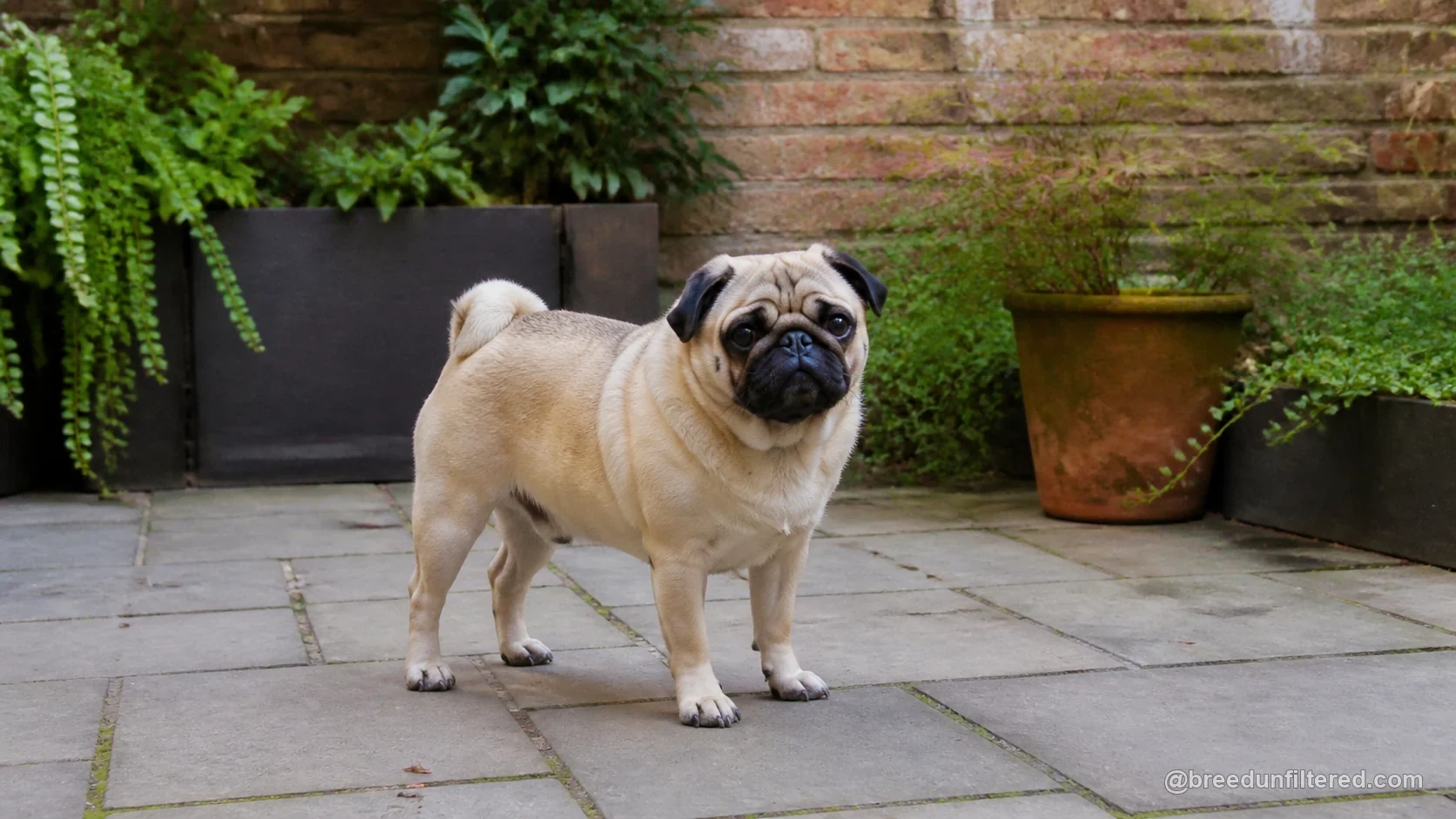
The Pug is a small companion dog with a distinctive wrinkled face and curled tail, recognized for its charming and sociable nature. Originating in ancient China, this breed has been a favorite of royalty and commoners alike, valued for its affectionate disposition and adaptability to various living situations. Prospective owners should understand that while Pugs are delightful companions, they come with specific care requirements, particularly regarding breathing, temperature regulation, and grooming.
This guide aims to provide a balanced overview of the Pug, covering its history, temperament, exercise and training needs, family compatibility, grooming, health considerations, and the financial and time commitments involved. By presenting evidence-based information and acknowledging the breed's individual variability, we hope to help you make an informed decision about whether a Pug is the right addition to your home.
Origin and Purpose
The Pug is an ancient breed with roots tracing back to China, where they were bred as companions for the ruling class. Historical records suggest that Pugs were kept in Chinese monasteries and later became popular in Europe, particularly in the Netherlands and England, where they were associated with royal houses. The breed's primary purpose has always been companionship, and they have been cherished for their ability to provide warmth and affection.
The FCI standard (number 253) places the Pug in Group 9, Companion and Toy Dogs, reflecting its role as a companion. Over centuries, the Pug's appearance has been refined, but its core function remains unchanged: to be a devoted and entertaining household pet. Understanding this origin helps prospective owners appreciate the Pug's strong desire for human interaction and its adaptability to indoor living.
Temperament and Variation
Pugs are generally known for their even-tempered, playful, and affectionate nature. They often form strong bonds with their families and enjoy being involved in daily activities. While individual temperaments can vary, many Pugs are described as sociable and eager to please, making them popular companions. However, they can also be stubborn at times, which may require patient and consistent training approaches.
It is important to recognize that each Pug is an individual, and factors such as socialization, training, and environment play significant roles in shaping behavior. Some Pugs may be more reserved or independent, while others are outgoing and clownish. Prospective owners should meet several Pugs and consult with breeders or rescue organizations to get a sense of the breed's typical temperament and how it might fit with their lifestyle.
Exercise and Mental Work
Pugs have moderate exercise needs, but they are not high-energy dogs. Daily walks and play sessions are usually sufficient to keep them healthy and content. Due to their brachycephalic (flat-faced) anatomy, they are prone to overheating and respiratory difficulties, so exercise should be moderate and adjusted to the weather. Owners should avoid strenuous activity in hot or humid conditions and always provide access to water and shade.
Mental stimulation is equally important for Pugs, as they are intelligent and can become bored if left without engagement. Puzzle toys, basic obedience training, and interactive games can help keep their minds sharp. While they may not require extensive physical exertion, they do benefit from consistent routines that include both physical and mental challenges to prevent behavioral issues.
Training and Socialisation
Training a Pug can be a rewarding experience, but it requires patience and positive reinforcement. Pugs respond well to treats and praise, but they can also be food-motivated and may become distracted. Early socialization is crucial to help them become well-adjusted adults, exposing them to various people, animals, and environments in a controlled manner. Puppy classes and regular outings can aid in this process.
Consistency is key when training a Pug, as they may test boundaries. Harsh methods are not recommended and can damage the trust between dog and owner. Instead, short, fun training sessions that focus on one command at a time tend to yield the best results. With time and effort, Pugs can learn a variety of commands and tricks, showcasing their intelligence and desire to please.
Family and Other Pets
Pugs are generally well-suited to family life, often getting along with children and other pets when properly introduced. Their playful and gentle nature makes them good companions for older children who understand how to interact with dogs respectfully. However, as with any breed, supervision is recommended during interactions with very young children to prevent accidental injuries.
When it comes to other dogs and cats, Pugs can coexist peacefully, especially if they are raised together. They are typically sociable and enjoy the company of other animals, but individual personalities vary. Early socialization and gradual introductions are essential to foster positive relationships. Prospective owners should consider their existing pets' temperaments and the Pug's energy level to ensure a harmonious household.
Grooming and Health
Pugs have a short, double coat that sheds year-round, with heavier shedding during seasonal changes. Regular brushing, at least a few times a week, can help manage loose hair and keep the coat healthy. They also require routine care for their facial wrinkles, which should be cleaned and dried to prevent skin infections. Nail trimming, ear cleaning, and dental hygiene are also important aspects of grooming.
Health-wise, Pugs are prone to certain conditions, including brachycephalic obstructive airway syndrome, eye problems, and skin issues. Not every Pug will experience these, but prospective owners should be aware of the potential for veterinary expenses. Regular check-ups, a balanced diet, and maintaining a healthy weight can mitigate some risks. It is crucial to obtain a Pug from a responsible breeder who screens for hereditary conditions.
Costs and Responsibility
Owning a Pug involves financial commitments beyond the initial purchase or adoption fee. These include high-quality food, routine veterinary care, grooming supplies, and potential emergency medical expenses. Because Pugs may be prone to health issues, pet insurance or a dedicated savings fund can be prudent. Additionally, costs for training classes, boarding, and pet sitting should be considered.
Responsibility also entails providing a safe environment, adequate supervision, and lifelong care. Pugs thrive on human companionship and may suffer from separation anxiety if left alone for long periods. Prospective owners should assess their lifestyle, work schedule, and living situation to ensure they can meet the Pug's needs. Adopting from a rescue is a commendable option, as many Pugs are in need of loving homes.
Clear answers
FREQUENTLY ASKED QUESTIONS
Are Pugs good with children?
Pugs can be good with children, especially when they are raised together and properly socialized. Their playful and gentle nature often makes them suitable companions for older kids who know how to interact with dogs. However, supervision is recommended with toddlers to prevent accidental injuries, as Pugs are small and can be sensitive to rough handling.
How much exercise does a Pug need?
Pugs have moderate exercise needs, typically requiring a daily walk and some playtime. Due to their flat faces, they are prone to overheating, so exercise should be moderate and adjusted to the weather. Avoid strenuous activity in hot or humid conditions, and always provide access to water and shade. Mental stimulation is also important to prevent boredom.
Do Pugs shed a lot?
Yes, Pugs shed year-round, with heavier shedding during seasonal changes. Their short double coat requires regular brushing, at least a few times a week, to manage loose hair. While they are not hypoallergenic, regular grooming can help reduce the amount of hair in the home. Prospective owners should be prepared for some hair on furniture and clothing.
Are Pugs easy to train?
Pugs are intelligent but can be stubborn, so training requires patience and positive reinforcement. They respond well to treats and praise, but they may become distracted. Consistency and short, fun training sessions are effective. Early socialization is also crucial to help them become well-adjusted adults. Harsh methods are not recommended.
What health issues are common in Pugs?
Pugs are prone to certain health conditions, including brachycephalic obstructive airway syndrome, eye problems, and skin infections. Not every Pug will experience these, but prospective owners should be aware of the potential for veterinary expenses. Regular check-ups, a balanced diet, and maintaining a healthy weight can help mitigate some risks. Responsible breeding practices are important.
Sources and further reading
Scores describe typical breed tendencies from 1 to 10. They are not a quality ranking or a prediction for an individual dog.
Size and presence3/10
CompactVery large
Physical strength3/10
LightExceptional
Energy level6/10
LowRelentless
Exercise demand5/10
ModestVery demanding
Mental work needed6/10
ModerateDaily job
Trainability7/10
ChallengingExceptional
Everyday manageability6/10
SpecialistStraightforward
First-time owner fit7/10
Poor fitGood fit
Family-life fit8/10
LimitedExcellent
Dog sociability7/10
SelectiveVery social
Prey drive4/10
LowVery high
Guarding tendency3/10
MinimalSerious
Independence5/10
Handler-focusedSelf-directed
Grooming demand7/10
LightHeavy
Apartment fit8/10
Poor fitGood fit