Complete breed guide
Karelian Bear Dog OWNERSHIP GUIDE
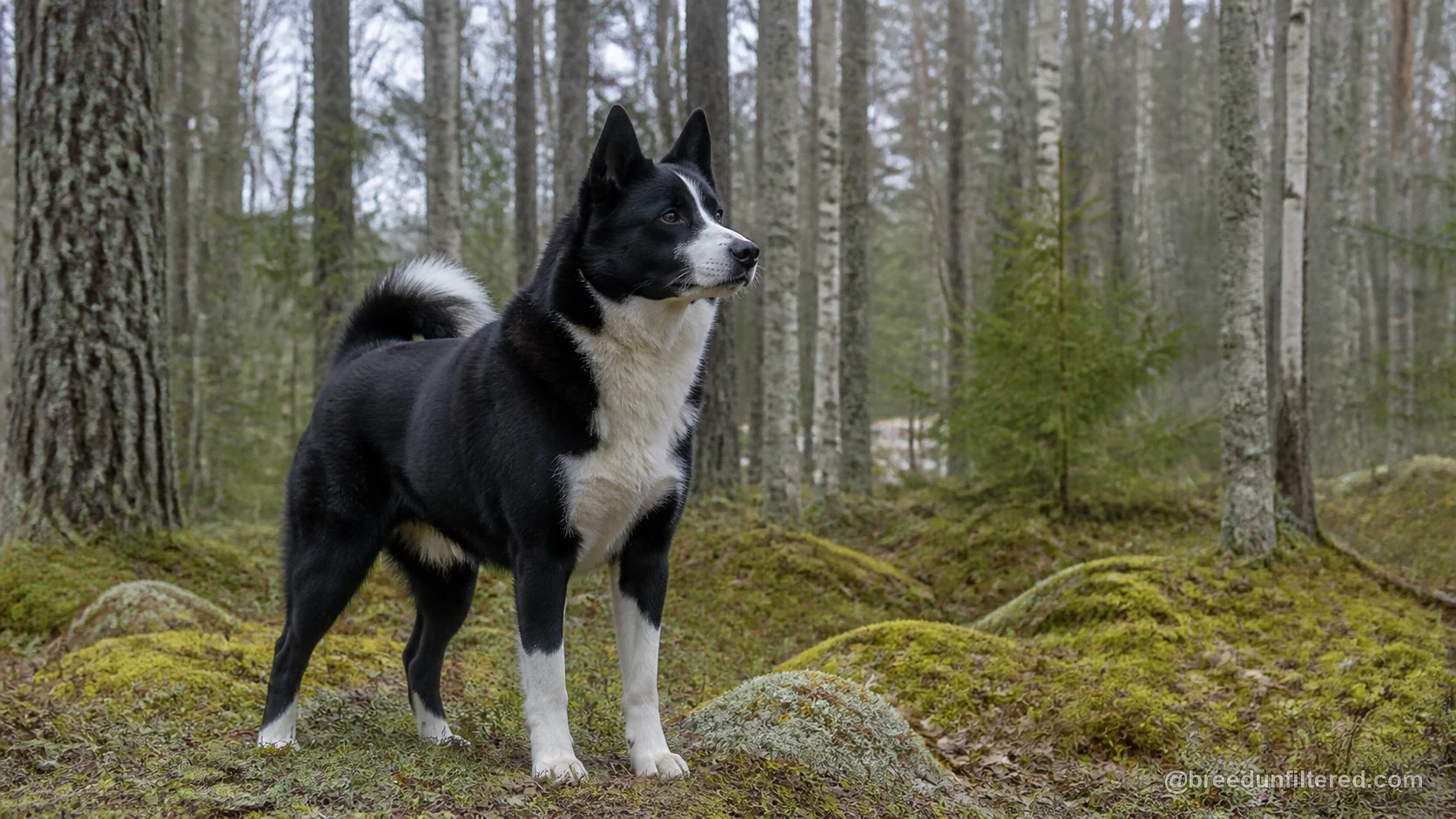
The Karelian Bear Dog is a medium-sized Spitz-type breed from Finland, historically used to hunt large game such as bears, moose, and wild boar. With its black-and-white coat, erect ears, and curled tail, it carries the unmistakable look of a northern hunting dog. This breed is known for its courage, tenacity, and keen hunting instinct, making it a specialized working partner rather than a typical companion pet.
Prospective owners should understand that the Karelian Bear Dog is not a dog for everyone. It is highly energetic, independent, and has a strong prey drive. While it can form deep bonds with its family, it tends to be reserved with strangers and may not get along with other dogs. This article provides an evidence-conscious overview of the breed's characteristics, care needs, and potential challenges, helping you decide if this remarkable but demanding breed fits your lifestyle.
Origin and Purpose
The Karelian Bear Dog originates from the Karelia region, spanning Finland and Russia. It was developed to hunt large game, including bears, moose, and wild boar. The breed's name reflects its primary quarry, and its working style involves barking and distracting the prey while keeping it at bay until the hunter arrives. This requires exceptional courage, agility, and a strong instinct to track and confront dangerous animals.
The breed was standardized in the early 20th century, with the Finnish Kennel Club recognizing it in 1946. The FCI standard (number 48) places it in Group 5, Spitz and primitive types. Today, Karelian Bear Dogs are still used for hunting in their native regions, and they have also been employed in wildlife management, such as deterring bears from populated areas. Their purpose remains deeply rooted in their working heritage.
Temperament and Variation
Karelian Bear Dogs are known for their bold, confident, and independent temperament. They are alert and wary of strangers, making them natural watchdogs. However, they are not aggressive without reason; their behavior is typically controlled and purposeful. Within the breed, individual temperaments can vary, but the standard describes a dog that is self-assured and not prone to nervousness.
These dogs form strong attachments to their family and can be affectionate with those they trust. Yet, they are not overly demonstrative and may prefer to keep a certain distance. Their independence means they are not clingy, but they do require consistent leadership and clear boundaries. Early and ongoing socialization is crucial to help them distinguish between normal and threatening situations, reducing the risk of overreaction.
Exercise and Mental Work
The Karelian Bear Dog is a high-energy breed that requires substantial daily exercise. A simple walk around the block is insufficient; they need opportunities to run, explore, and engage in activities that mimic their hunting instincts. Off-leash exercise in a securely fenced area is ideal, as their prey drive can lead them to chase small animals. Hiking, jogging, and canine sports like agility or barn hunt can help meet their physical needs.
Mental stimulation is equally important. This intelligent breed thrives on problem-solving and tasks that challenge their mind. Puzzle toys, scent work, and training sessions that require focus can help prevent boredom and destructive behaviors. Without adequate mental and physical outlets, Karelian Bear Dogs may become restless, vocal, or develop behavioral issues. Prospective owners should be prepared to dedicate significant time to both exercise and mental enrichment.
Training and Socialisation
Training a Karelian Bear Dog requires patience, consistency, and a firm but fair approach. They are intelligent and can learn quickly, but their independent nature means they may question commands or choose to ignore them if they see no benefit. Positive reinforcement methods, such as treats and praise, work best, while harsh corrections can damage trust and lead to resistance. Early training should focus on basic obedience and impulse control.
Socialisation is critical from a young age. Exposing the puppy to various people, environments, and non-threatening animals can help temper their natural wariness. However, even with thorough socialisation, Karelian Bear Dogs may remain aloof with strangers and may not be reliable with other dogs, especially same-sex ones. Owners should manage interactions carefully and avoid dog parks where conflicts could arise. Professional training classes can be beneficial, provided the trainer understands the breed's unique traits.
Family and Other Pets
Karelian Bear Dogs can be loyal and protective family members, but they are not typically recommended for households with young children. Their boisterous play and strong prey drive could inadvertently knock over a toddler, and they may not tolerate rough handling. Older children who understand how to interact respectfully with dogs can form strong bonds with them. Supervision is essential to ensure safety for both the dog and the child.
Regarding other pets, the Karelian Bear Dog's hunting instinct makes them a poor fit for homes with small animals like cats, rabbits, or guinea pigs. They may view these as prey. Even with early socialisation, their drive can override training. They may coexist with other dogs if raised together, but same-sex aggression can occur. Prospective owners should carefully consider their existing pets and lifestyle before bringing a Karelian Bear Dog home.
Grooming and Health
The Karelian Bear Dog has a double coat that is weather-resistant and requires moderate grooming. Weekly brushing helps manage shedding, which increases during seasonal changes. They are generally clean dogs with minimal odor, and bathing is only needed occasionally. Regular nail trimming, ear cleaning, and dental care are part of routine maintenance. Their coat is not high-maintenance, but they do shed noticeably.
As a breed, Karelian Bear Dogs are generally healthy, but like all purebreds, they may be predisposed to certain conditions. Hip dysplasia and elbow dysplasia are seen, and eye disorders such as progressive retinal atrophy have been reported. Responsible breeders screen their breeding stock for these issues. Prospective owners should ask for health clearances and be prepared for potential veterinary costs. Regular check-ups and a balanced diet contribute to overall well-being.
Costs and Responsibility
Owning a Karelian Bear Dog involves significant financial and time commitments. Initial costs include purchasing from a reputable breeder, which can be substantial, plus supplies like a crate, leash, and food. Ongoing expenses include high-quality dog food, routine veterinary care, vaccinations, and preventive medications. Unexpected health issues can add to the financial burden, so pet insurance is worth considering.
Beyond money, this breed demands a responsible owner who can provide ample exercise, mental stimulation, and firm, consistent training. They are not suited to apartment living or a sedentary lifestyle. Owners must be prepared to manage their dog's prey drive and social limitations. This is a working breed that thrives with a job to do, so prospective owners should evaluate whether they can meet these needs for the dog's entire lifespan, which can be 12 to 15 years.
Clear answers
FREQUENTLY ASKED QUESTIONS
Is the Karelian Bear Dog good with children?
Karelian Bear Dogs can be loyal and protective of their family, but they are not typically recommended for households with young children. Their high energy and strong prey drive may lead to accidental knocking over of toddlers, and they may not tolerate rough handling. Older children who understand dog behavior can form strong bonds, but supervision is always necessary.
How much exercise does a Karelian Bear Dog need?
This breed has high exercise needs and requires substantial daily physical activity. They benefit from long walks, runs, or off-leash time in a securely fenced area. Mental stimulation is equally important, as they are intelligent and need tasks to keep them engaged. Without adequate exercise and mental work, they may become restless or develop behavioral issues.
Are Karelian Bear Dogs aggressive?
Karelian Bear Dogs are not inherently aggressive, but they are wary of strangers and can be territorial. They have a strong prey drive and may not get along with other dogs, especially same-sex ones. Proper socialisation and training from an early age are crucial to help them distinguish between normal and threatening situations. They are not a breed for novice owners.
Can Karelian Bear Dogs live in apartments?
Apartment living is not ideal for a Karelian Bear Dog. They are high-energy and need space to move and explore. Without a yard and ample exercise, they may become frustrated and destructive. If you live in an apartment, you would need to commit to providing extensive daily exercise and mental stimulation, which is challenging but possible for dedicated owners.
What is the lifespan of a Karelian Bear Dog?
The typical lifespan of a Karelian Bear Dog is around 12 to 15 years. They are generally a healthy breed, but like all dogs, they can be prone to certain genetic conditions such as hip dysplasia and eye disorders. Regular veterinary check-ups, a balanced diet, and appropriate exercise can help maintain their health and longevity.
Sources and further reading
Scores describe typical breed tendencies from 1 to 10. They are not a quality ranking or a prediction for an individual dog.
Size and presence5/10
CompactVery large
Physical strength5/10
LightExceptional
Energy level9/10
LowRelentless
Exercise demand10/10
ModestVery demanding
Mental work needed8/10
ModerateDaily job
Trainability5/10
ChallengingExceptional
Everyday manageability1/10
SpecialistStraightforward
First-time owner fit3/10
Poor fitGood fit
Family-life fit6/10
LimitedExcellent
Dog sociability3/10
SelectiveVery social
Prey drive10/10
LowVery high
Guarding tendency7/10
MinimalSerious
Independence9/10
Handler-focusedSelf-directed
Grooming demand8/10
LightHeavy
Apartment fit4/10
Poor fitGood fit