Complete breed guide
Kangal Shepherd Dog OWNERSHIP GUIDE
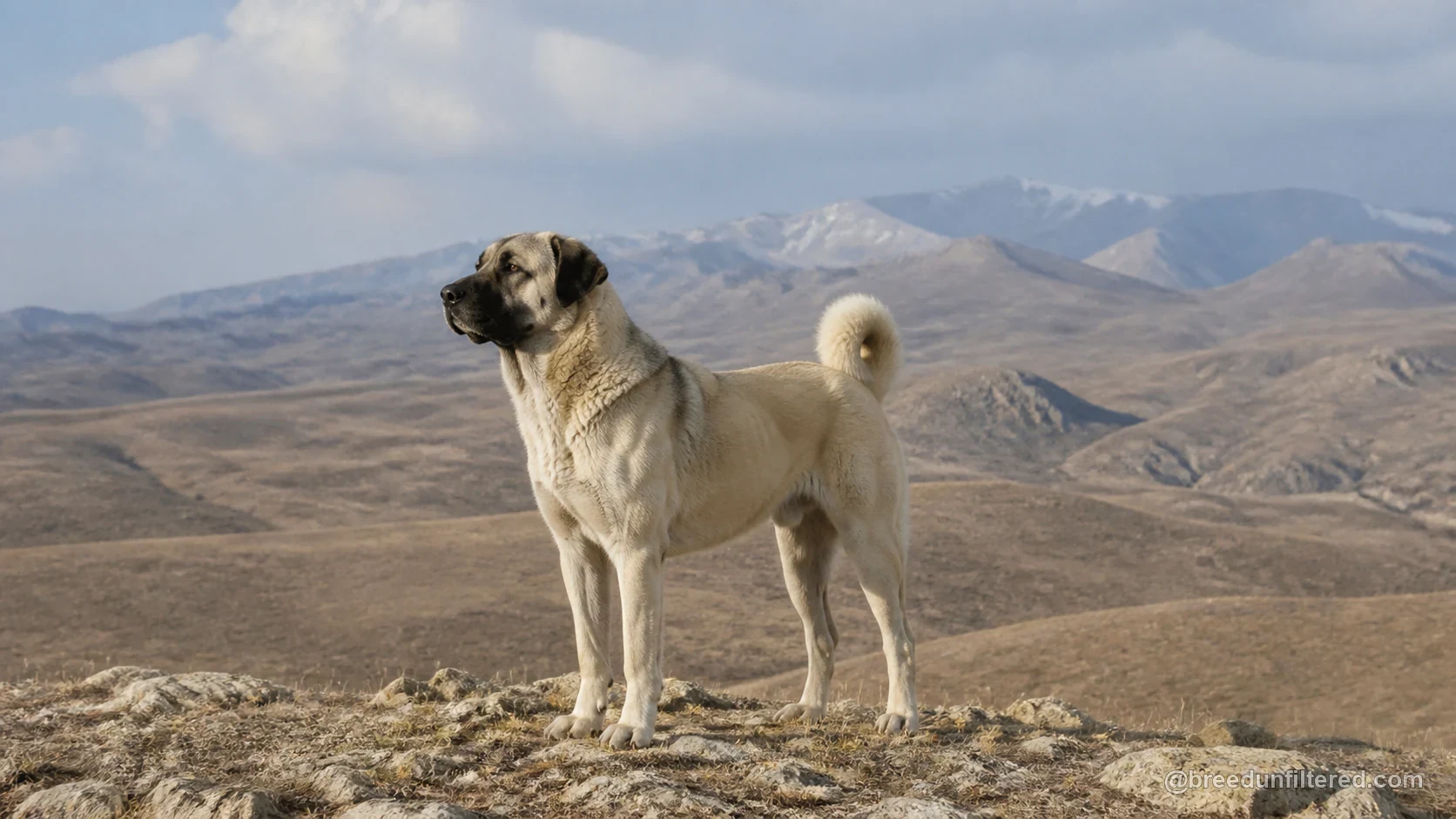
The Kangal Shepherd Dog, recognized by the FCI as a definitive breed under standard number 331, is a livestock guardian from the Sivas region of Turkey. Known for its imposing size, powerful build, and distinctive black mask, the Kangal has been bred for centuries to protect flocks from predators such as wolves and bears. This heritage has shaped a dog that is calm, loyal, and deeply protective, yet also independent and territorial. Prospective owners must understand that the Kangal is not a typical companion dog; it is a working guardian with instincts that require careful management and a suitable environment.
This article provides an evidence-conscious overview of the Kangal Shepherd Dog, covering its origin, temperament, exercise and mental needs, training, family compatibility, grooming, health, and the financial and lifestyle responsibilities involved. We aim to give you a realistic picture of what living with a Kangal entails, emphasizing that individual dogs vary and that responsible ownership begins with thorough research and honest self-assessment.
Origin and Purpose
The Kangal Shepherd Dog originates from the Kangal district of Sivas Province in central Turkey, where it has been used for centuries as a livestock guardian. The breed's primary role is to protect sheep and goats from predators, including wolves, bears, and jackals. This purpose has shaped its physical and behavioral traits: a large, powerful frame, a thick coat for harsh climates, and a temperament that is vigilant, courageous, and independent. The FCI standard describes the Kangal as a 'large, impressive dog' with a 'calm and balanced' character, emphasizing its suitability for guarding.
Unlike herding dogs that move livestock, the Kangal works by patrolling and bonding with the flock, often living alongside them. This lifestyle means the breed is not typically a 'family pet' in the conventional sense, but rather a working guardian that forms strong bonds with its human family and the animals it protects. Understanding this origin is crucial for prospective owners, as it explains the Kangal's need for space, its protective instincts, and its tendency to be wary of strangers. The breed's recognition by the FCI in 2018 as a definitive standard (331) reflects its distinct identity and heritage.
Temperament and Variation
The Kangal Shepherd Dog is generally described as calm, loyal, and protective. It is known for its steady demeanor and its ability to assess threats without unnecessary aggression. However, individual temperament can vary based on genetics, socialization, and training. Some Kangals may be more reserved or aloof, while others may be more outgoing with familiar people. It is important to avoid universal claims: while the breed standard mentions a 'calm and balanced' nature, each dog is an individual, and early experiences play a significant role in shaping behavior.
Kangals are typically devoted to their family and can be gentle with children they know, but they are naturally wary of strangers and may be territorial. This wariness is a breed trait, not a flaw, but it requires responsible management. Prospective owners should be prepared for a dog that may not welcome visitors enthusiastically and that may exhibit protective behaviors. Understanding that the Kangal is not a 'one-size-fits-all' breed is essential; potential owners should seek out reputable breeders who prioritize temperament and health, and they should be willing to invest time in proper socialization.
Exercise and Mental Work
The Kangal Shepherd Dog has moderate to high exercise needs, but its exercise is not the same as that of a high-energy sporting breed. As a livestock guardian, it is accustomed to patrolling large areas, so it benefits from having space to roam and explore. Daily walks, play sessions, and opportunities to use its nose are important, but the Kangal is not a dog that requires hours of intense running. Instead, it thrives on purposeful activity that engages its mind, such as scent work, obedience training, or simply being outdoors in a secure area.
Mental stimulation is crucial for the Kangal to prevent boredom and destructive behaviors. Puzzle toys, training sessions, and tasks that mimic guarding or searching can be beneficial. However, it is important to avoid over-exercising a young Kangal, as its joints are still developing. A balanced approach, with moderate exercise and plenty of mental challenges, is ideal. Prospective owners should also consider that a Kangal may not be satisfied with a small yard; it needs space to patrol and feel secure. Without adequate mental and physical outlets, a Kangal may become restless or develop behavioral issues.
Training and Socialisation
Training a Kangal Shepherd Dog requires patience, consistency, and an understanding of its independent nature. This breed is intelligent but not eager to please in the way a retriever might be; it may question commands and prefer to think for itself. Positive reinforcement methods, such as treats and praise, work best, while harsh or forceful training can damage trust and exacerbate stubbornness. Early training should focus on basic obedience, impulse control, and recall, as a Kangal's guarding instincts can make it difficult to call off once it perceives a threat.
Socialisation is equally important, especially during the critical puppy period. Exposing a Kangal to a variety of people, animals, and environments can help it become more adaptable and less reactive. However, even with thorough socialisation, a Kangal may remain aloof with strangers and may not be suitable for dog parks or off-leash areas where it might feel the need to protect its family. Prospective owners should be prepared for a lifelong commitment to training and management, and they should consider working with a professional trainer who has experience with guardian breeds. The goal is not to suppress the Kangal's protective instincts but to channel them appropriately.
Family and Other Pets
The Kangal Shepherd Dog can be a devoted and gentle companion for its family, including children, when raised with them. It is known to be patient and protective of its human 'flock.' However, its size and strength mean that interactions with young children should always be supervised, and the dog should be taught boundaries. A Kangal may not be the best choice for a first-time dog owner, as its guarding instincts and independence require experienced handling. Families should also consider that a Kangal may be wary of unfamiliar children and may need careful introductions.
Regarding other pets, the Kangal's history as a livestock guardian means it can coexist with other animals, especially if raised with them. However, its prey drive may be triggered by small, fast-moving animals, and it may not tolerate other dogs of the same sex. Early socialisation and training can help, but there is no guarantee. Prospective owners should be cautious about introducing a Kangal into a home with cats or small pets, and they should always supervise interactions. The Kangal's protective nature can also lead to resource guarding, so it is important to establish clear rules and provide a structured environment.
Grooming and Health
The Kangal Shepherd Dog has a dense double coat that sheds seasonally, with heavier shedding in spring and fall. Regular brushing, at least a few times a week, helps manage loose hair and keep the coat healthy. During shedding seasons, daily brushing may be necessary. The Kangal is generally a clean dog and does not require frequent bathing; over-bathing can strip natural oils. Routine care includes nail trimming, ear cleaning, and dental hygiene. Grooming is not a major time commitment, but it should not be neglected.
As a large breed, the Kangal is prone to certain health issues, including hip dysplasia and elbow dysplasia, which are common in many large dogs. Eye conditions, such as entropion, and heart issues may also occur. Responsible breeders screen their breeding stock for these conditions, and prospective owners should ask for health clearances. The Kangal has a relatively long lifespan for a large breed, often 12 to 15 years, but this can vary. Regular veterinary check-ups, a balanced diet, and appropriate exercise are essential for maintaining health. It is important to note that the Kangal is not a breed for everyone; its health and well-being depend on proper care and a suitable environment.
Costs and Responsibility
Owning a Kangal Shepherd Dog involves significant financial and lifestyle commitments. Initial costs include purchasing from a reputable breeder, which can be substantial, as well as supplies such as a crate, bedding, and food. Ongoing expenses include high-quality dog food, routine veterinary care, vaccinations, and parasite prevention. Emergency medical costs can be unpredictable, and pet insurance is worth considering. Additionally, a Kangal requires a secure, fenced yard, which may involve property modifications. Training classes or professional consultations may also be necessary, adding to the cost.
Beyond finances, the responsibility of owning a Kangal is considerable. This breed needs ample space, consistent training, and a dedicated owner who understands its guarding nature. A Kangal is not suitable for apartment living or for owners who are away from home for long periods. It may not be legal to own in certain areas due to breed-specific legislation, so prospective owners must check local regulations. The Kangal's protective instincts can be a liability if not managed properly, and owners must be prepared to take precautions to prevent incidents. Ultimately, the decision to bring a Kangal into your life should be made with careful thought and a commitment to meeting the breed's needs for its entire life.
Clear answers
FREQUENTLY ASKED QUESTIONS
Is the Kangal Shepherd Dog a good family dog?
The Kangal can be a loyal and protective family companion, especially when raised with children. However, its guarding instincts and size require experienced handling and supervision. It may be wary of strangers and other dogs, so early socialisation and training are essential. Families with young children should ensure the dog is well-trained and that interactions are supervised.
How much exercise does a Kangal Shepherd Dog need?
Kangals have moderate to high exercise needs, but they are not high-energy dogs. They benefit from daily walks, playtime, and mental stimulation. They need space to patrol and explore, so a large, securely fenced yard is ideal. Avoid over-exercising puppies to protect their developing joints. Mental challenges are as important as physical activity.
Are Kangal Shepherd Dogs aggressive?
Kangals are not inherently aggressive, but they are protective and territorial. They may show aggression toward perceived threats, including strangers or other animals. Proper socialisation and training can help them distinguish between real threats and normal situations. However, their guarding instincts are strong, and they may not be suitable for homes with frequent visitors or off-leash dog parks.
What is the lifespan of a Kangal Shepherd Dog?
The Kangal Shepherd Dog typically lives 12 to 15 years, which is relatively long for a large breed. Health issues such as hip dysplasia and eye problems can affect lifespan, so choosing a reputable breeder who screens for these conditions is important. Regular veterinary care and a healthy lifestyle can contribute to a longer, healthier life.
Can a Kangal Shepherd Dog live in an apartment?
No, a Kangal Shepherd Dog is not suitable for apartment living. This breed requires ample space to roam and patrol, and it needs a secure, fenced yard. Apartment living can lead to boredom and behavioral issues. Kangals are best suited to rural or suburban homes with large properties where they can fulfill their guarding instincts.
Sources and further reading
Scores describe typical breed tendencies from 1 to 10. They are not a quality ranking or a prediction for an individual dog.
Size and presence8/10
CompactVery large
Physical strength9/10
LightExceptional
Energy level7/10
LowRelentless
Exercise demand7/10
ModestVery demanding
Mental work needed7/10
ModerateDaily job
Trainability6/10
ChallengingExceptional
Everyday manageability1/10
SpecialistStraightforward
First-time owner fit2/10
Poor fitGood fit
Family-life fit7/10
LimitedExcellent
Dog sociability4/10
SelectiveVery social
Prey drive6/10
LowVery high
Guarding tendency10/10
MinimalSerious
Independence10/10
Handler-focusedSelf-directed
Grooming demand7/10
LightHeavy
Apartment fit1/10
Poor fitGood fit