Complete breed guide
Hovawart OWNERSHIP GUIDE
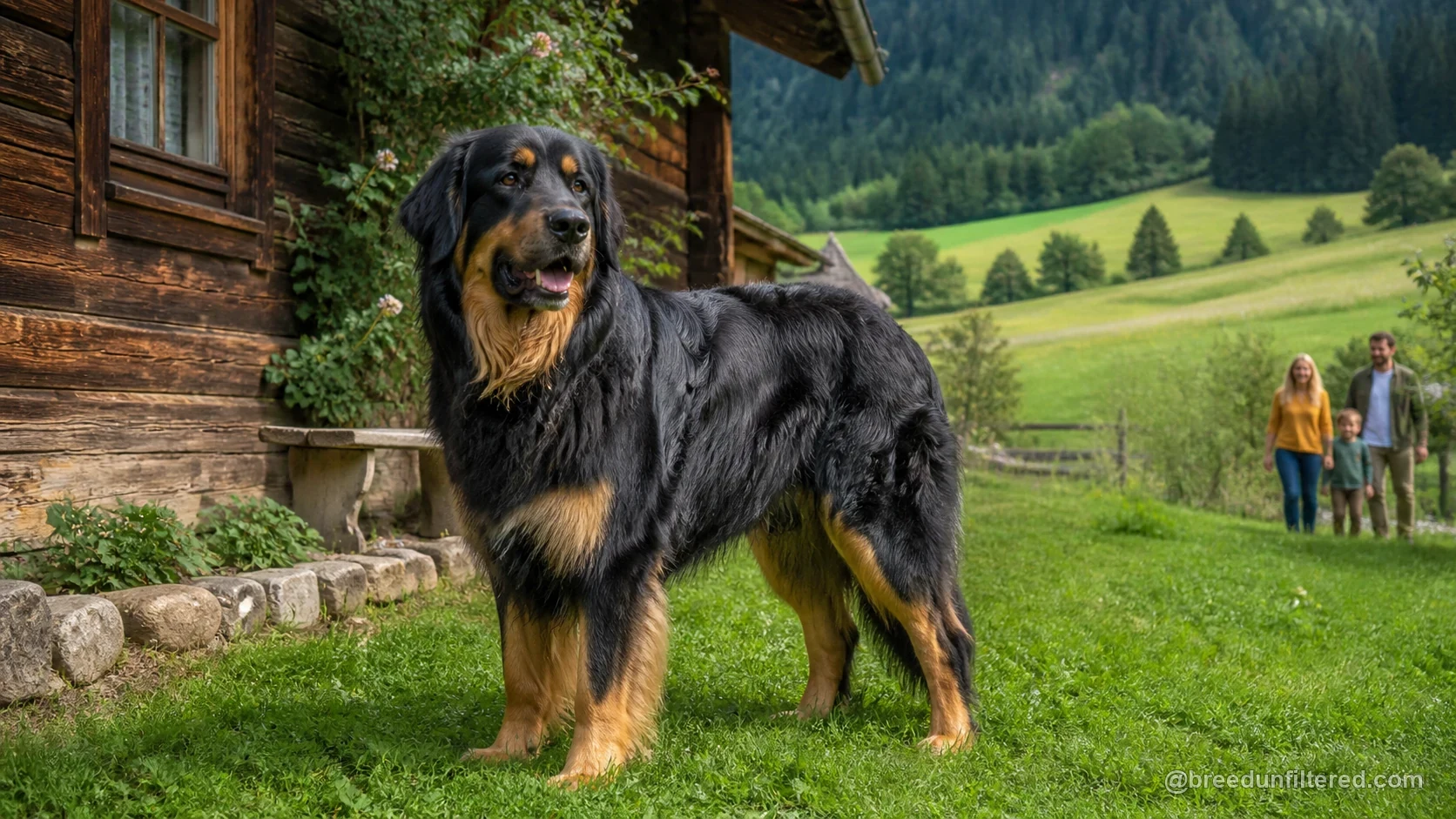
The Hovawart is a large, powerful German breed with a name that means 'guardian of the estate' – a fitting title for a dog historically used to protect farms and homesteads. With a striking black-and-gold or black coat, this breed combines the loyalty of a devoted companion with the instincts of a capable watchdog. Prospective owners should understand that the Hovawart is not a dog for everyone; it thrives in an environment where it can be an active participant in family life and given meaningful tasks.
Originating in the Harz Mountains and the Black Forest, the Hovawart was revived in the early 20th century after near-extinction. Today, it remains a versatile working dog, excelling in search-and-rescue, obedience, and as a family protector. This article provides an evidence-conscious overview of the breed's characteristics, care requirements, and suitability for various lifestyles, helping you decide if a Hovawart is the right addition to your home.
Origin and Purpose
The Hovawart's history is rooted in medieval Germany, where these dogs were valued for guarding castles and farms. The breed's name derives from the Middle High German words 'Hova' (estate) and 'Wart' (guardian). By the late 19th century, the original bloodlines had largely disappeared, but in the 1920s, a dedicated group of breeders, including Kurt Friedrich König, sought to revive the breed by crossing remaining farm dogs with breeds like the German Shepherd, Newfoundland, and Leonberger.
The modern Hovawart was officially recognized by the FCI in 1954, and today it serves as a versatile working dog. While its guarding heritage remains central, the breed is also used in search-and-rescue, tracking, and as a reliable companion. This dual purpose means that a Hovawart needs both physical activity and mental challenges to be content, and it is not a breed that thrives in a purely sedentary or confined environment.
Temperament and Variation
Hovawarts are known for their even temperament, confidence, and strong bond with their family. They are typically alert and watchful, making them excellent watchdogs, but they are not naturally aggressive. Individual variation exists: some lines may be more reserved with strangers, while others are more outgoing. Early and ongoing socialisation is crucial to help a Hovawart develop into a well-adjusted adult that can distinguish between normal and threatening situations.
This breed is often described as having a 'protective' nature, but that does not mean it is automatically a guard dog. A well-bred and properly trained Hovawart is calm and discerning, not prone to random barking or hostility. However, they are independent thinkers and can be stubborn, so they require an owner who can provide consistent, patient guidance. They are not typically recommended for first-time dog owners due to their size and strong-willed personality.
Exercise and Mental Work
Hovawarts are an active breed that needs regular physical exercise to stay healthy and happy. This does not mean they require marathon runs, but they do need daily walks, play sessions, and opportunities to run in a securely fenced area. As a working breed, they also need mental stimulation – puzzle toys, obedience training, and activities like tracking or nose work can help prevent boredom and destructive behaviors.
The amount of exercise will vary with the individual dog's age, health, and energy level, but a typical adult Hovawart benefits from at least an hour of activity per day, split into multiple sessions. Without adequate exercise and mental engagement, a Hovawart may become restless and develop behavioral issues. Prospective owners should be prepared to commit time and effort to meet these needs, especially during the dog's adolescent and adult years.
Training and Socialisation
Training a Hovawart requires patience, consistency, and positive reinforcement methods. This breed is intelligent and capable of learning quickly, but it also has an independent streak that can challenge less experienced handlers. Early socialisation – exposing the puppy to a variety of people, animals, and environments – is essential to foster a confident and well-mannered adult. Puppy classes and ongoing training are strongly recommended.
Hovawarts respond best to firm but gentle guidance; harsh methods can damage trust and lead to resistance. They are sensitive to their owner's mood and thrive in a structured environment with clear rules. Because of their guarding instincts, it is important to teach them appropriate responses to strangers and to avoid encouraging over-protectiveness. Professional training support can be invaluable for owners new to the breed.
Family and Other Pets
Hovawarts are generally devoted to their families and can be excellent companions for children, especially when raised with them. They are often patient and tolerant, but due to their size and strength, supervision is necessary when they interact with very young children to prevent accidental knocks. They tend to form strong bonds with all family members, though they may choose one person as their primary attachment.
With other pets, Hovawarts can coexist peacefully if socialised early, but their guarding and prey drive may be triggered by small animals. They are typically not aggressive toward other dogs, but same-sex aggression can occur in some individuals. As with any breed, introductions should be gradual and controlled. A Hovawart is best suited to a home where it can be part of daily activities rather than left alone for long periods.
Grooming and Health
The Hovawart has a medium-length, dense double coat that sheds moderately year-round and more heavily during seasonal changes. Regular brushing – two to three times a week – helps manage loose hair and keeps the coat healthy. They do not require frequent bathing, but routine nail trimming, ear cleaning, and dental care are important for overall well-being.
As a breed, Hovawarts are generally robust, but like all purebreds, they may be predisposed to certain health conditions. Hip dysplasia, elbow dysplasia, and some eye disorders have been reported in the breed. Responsible breeders screen their breeding stock for these issues. Prospective owners should ask about health clearances and be prepared for potential veterinary costs. Regular check-ups and a balanced diet contribute to a long, healthy life.
Costs and Responsibility
Owning a Hovawart involves significant financial and time commitments. Initial costs include the purchase price from a reputable breeder, which can be substantial, as well as supplies like a crate, bedding, and food. Ongoing expenses include high-quality dog food, routine veterinary care, vaccinations, and preventive medications. Emergency medical care and pet insurance are also worth considering, as large breeds can be prone to injuries or health issues.
Beyond finances, a Hovawart requires a long-term commitment of 10 to 14 years. They need daily exercise, mental stimulation, and companionship. They are not suited to being left alone for extended periods or to living in cramped apartments without adequate exercise. Prospective owners should honestly assess their lifestyle, living situation, and ability to provide consistent training and socialisation before bringing a Hovawart home.
Clear answers
FREQUENTLY ASKED QUESTIONS
Are Hovawarts good with children?
Hovawarts can be excellent family dogs and are often gentle and protective with children they know. However, due to their large size and strong guarding instincts, supervision is essential, especially with younger kids. Early socialisation and training help them learn appropriate behavior, but no breed can be guaranteed to be child-friendly in every individual case.
Do Hovawarts bark a lot?
Hovawarts are alert and will bark to alert their family to unusual activity, which is part of their guarding heritage. They are not typically excessive barkers, but they may bark more if bored or under-exercised. Proper training and mental stimulation can help manage barking, but prospective owners should be prepared for a dog that uses its voice as a watchdog.
Are Hovawarts easy to train?
Hovawarts are intelligent and capable of learning, but they are also independent and can be stubborn. They respond best to positive reinforcement and consistent, patient training. They are not recommended for first-time owners who lack experience with strong-willed breeds. Early socialisation and obedience classes are highly beneficial.
How much exercise does a Hovawart need?
A typical adult Hovawart needs at least an hour of exercise daily, but this can vary with age and health. They enjoy long walks, playtime, and activities like tracking or agility. Mental exercise is equally important; puzzle toys and training sessions help keep them engaged. Without adequate activity, they may become restless or destructive.
Do Hovawarts get along with other dogs?
Hovawarts can get along with other dogs if properly socialised from a young age. However, some individuals may show same-sex aggression or dominance. Early and ongoing socialisation with a variety of dogs is crucial. Supervision during introductions is recommended, and not all Hovawarts will be dog-park friendly.
Sources and further reading
Scores describe typical breed tendencies from 1 to 10. They are not a quality ranking or a prediction for an individual dog.
Size and presence8/10
CompactVery large
Physical strength9/10
LightExceptional
Energy level6/10
LowRelentless
Exercise demand6/10
ModestVery demanding
Mental work needed7/10
ModerateDaily job
Trainability5/10
ChallengingExceptional
Everyday manageability1/10
SpecialistStraightforward
First-time owner fit2/10
Poor fitGood fit
Family-life fit6/10
LimitedExcellent
Dog sociability3/10
SelectiveVery social
Prey drive6/10
LowVery high
Guarding tendency9/10
MinimalSerious
Independence9/10
Handler-focusedSelf-directed
Grooming demand5/10
LightHeavy
Apartment fit3/10
Poor fitGood fit