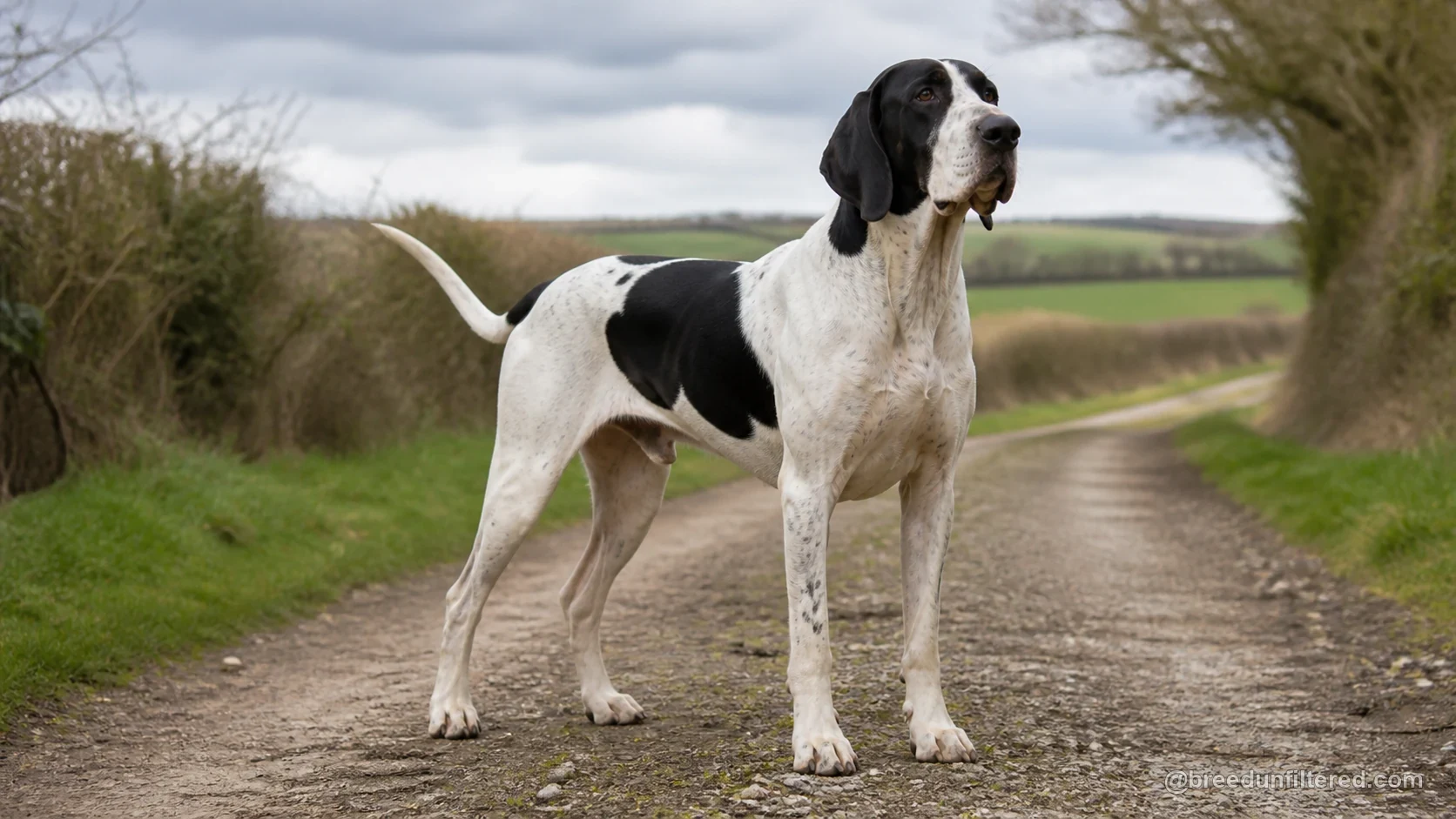
Complete breed guide
Great Anglo-French White And Black Hound OWNERSHIP GUIDE
The Great Anglo-French White and Black Hound, known in French as the Grand Anglo-Français Blanc et Noir, is a large scenthound developed for hunting in packs. Recognized definitively by the Fédération Cynologique Internationale (FCI) in Group 6, this breed combines French hound ancestry with English foxhound influences, resulting in a dog built for endurance, speed, and a keen nose. While not a common companion breed outside its native France, it appeals to hunters and active owners who appreciate its working heritage and distinctive tri-color coat.
This article offers a balanced overview for prospective owners, covering the breed's origins, temperament, exercise needs, training, suitability with families and other pets, grooming, health considerations, and the financial and time commitments involved. It aims to provide practical, evidence-conscious information without making universal claims, as individual dogs vary. Whether you are considering this hound for hunting or as a companion, understanding its inherent drives and needs is essential for a successful partnership.
Origin and Purpose
The Great Anglo-French White and Black Hound is a product of deliberate crossbreeding between French hounds and English Foxhounds, a practice that gained momentum in the 19th century to create a faster, more agile pack hound. The breed's name reflects its heritage: 'Anglo-Français' indicates the blend of English and French bloodlines, while 'Blanc et Noir' describes its predominantly white coat with black patches. The FCI standard (number 323) places it in Group 6, which covers scenthounds and related breeds, and recognizes it as a definitive breed.
Historically, these hounds were bred to hunt large game such as deer and wild boar in packs, relying on their stamina, voice, and ability to follow a scent over challenging terrain. Their purpose was not to be a companion but to work cooperatively with other hounds and hunters. This background shapes many of their behavioral traits, including a strong pack instinct, a tendency to vocalize, and a high prey drive. Understanding this heritage is crucial for anyone considering the breed, as it influences their exercise, training, and living requirements.
Temperament and Individual Variation
The Great Anglo-French White and Black Hound is typically described as sociable, even-tempered, and devoted to their human pack. They are often good-natured and get along well with people, especially when raised with consistent handling. However, like many hounds, they can be independent and may follow their noses rather than commands, which can be challenging for novice owners. Individual temperament varies widely based on genetics, socialization, and training, so it is unwise to expect a uniform personality across the breed.
These dogs are generally not aggressive, but they are bred to work in a pack, which means they usually enjoy the company of other dogs. Their vocal nature—baying and howling—is a breed trait that may not suit all households. They are also known for their determination and persistence, traits that are valuable in the field but can be trying at home. Prospective owners should be prepared for a dog that is affectionate yet independent, and that may not always be eager to please in the way a retriever might be.
Exercise and Mental Work
As a high-energy scenthound, the Great Anglo-French White and Black Hound requires substantial daily exercise to maintain physical and mental well-being. This is not a breed suited to a sedentary lifestyle or apartment living without a dedicated exercise plan. Long walks, runs, or off-lead activities in secure areas are essential, but it is important to note that their strong prey drive means they may chase small animals if given the chance. Therefore, a securely fenced yard is often recommended, and leash walking in unfenced areas is prudent.
Mental stimulation is equally important. Scent work, tracking games, and puzzle toys can help satisfy their innate need to use their nose. Without adequate physical and mental outlets, these hounds may become bored and develop undesirable behaviors such as excessive barking, digging, or attempting to escape. However, it is not accurate to prescribe a specific number of minutes of exercise, as individual needs vary with age, health, and conditioning. Owners should be prepared to adapt their routine to their dog's signals and consult with a veterinarian for personalized advice.
Training and Socialisation
Training a Great Anglo-French White and Black Hound requires patience, consistency, and positive reinforcement methods. These dogs are intelligent but can be stubborn, and they may not respond to harsh or forceful techniques. Early socialization is crucial to help them become well-adjusted adults, exposing them to various people, environments, and other animals in a controlled manner. Puppy classes and regular positive interactions can build confidence and reduce the likelihood of fearfulness or reactivity.
Because they are pack-oriented, they often respond well to training that incorporates rewards such as treats, play, or praise. However, their independent nature means that recall may be unreliable, especially when they catch an interesting scent. Therefore, training should emphasize a strong recall from an early age, but owners should not expect perfection. It is also important to note that these hounds may not be suitable for off-lead areas unless they are in a securely enclosed space, as their hunting instincts can override training.
Family Life and Compatibility with Other Pets
The Great Anglo-French White and Black Hound can make a loving family dog, especially in households that understand and accommodate their needs. They are generally good with children, particularly when raised with them, and their sociable nature often extends to family members. However, their size and exuberance may be overwhelming for very young children, so supervision and teaching children how to interact respectfully with dogs are important. As with any breed, individual temperament varies, and early socialization with children is beneficial.
Regarding other pets, these hounds were bred to hunt in packs, so they typically get along well with other dogs. However, their prey drive can be strong, and they may not be trustworthy with small animals such as cats, rabbits, or guinea pigs, especially if not raised with them. It is not accurate to say they are always aggressive towards cats, but caution is advised. Prospective owners with small pets should seek guidance from breeders or rescue organizations and be prepared to manage introductions carefully.
Grooming and Health Considerations
The Great Anglo-French White and Black Hound has a short, dense coat that is relatively low-maintenance. Weekly brushing with a firm bristle brush or hound glove can help remove loose hair and keep the coat healthy. They shed moderately, and more frequent brushing may be needed during seasonal shedding periods. Bathing should be done only when necessary to avoid stripping natural oils. Regular ear checks are important, as floppy ears can trap moisture and debris, potentially leading to infections.
As with many purebred dogs, there are certain health conditions that may be more prevalent in the breed, but it is not possible to guarantee that an individual will or will not develop them. Some sources mention hip dysplasia, ear infections, and bloat (gastric dilatation-volvulus) as potential concerns, but these are not exclusive to this breed. Responsible breeders often screen for hereditary conditions, and prospective owners should ask about health testing. Regular veterinary check-ups, a balanced diet, and appropriate exercise contribute to overall health, but no breed is immune to illness.
Costs and Long-Term Responsibility
Owning a Great Anglo-French White and Black Hound involves significant financial and time commitments. Initial costs include the purchase price from a reputable breeder, which can vary widely, as well as supplies such as a crate, bedding, food, and veterinary care. Ongoing expenses include high-quality dog food, routine veterinary visits, vaccinations, parasite prevention, and potential emergency medical care. Grooming costs are generally low, but professional grooming may be needed occasionally. Pet insurance is worth considering to help manage unexpected health costs.
Beyond finances, this breed requires a substantial time investment for exercise, training, and companionship. They are not suited to being left alone for long periods, as they may become destructive or vocal. Prospective owners should assess their lifestyle honestly, including their living situation, work schedule, and activity level. It is also important to consider the dog's lifespan, which is typically around 10 to 12 years, and to be prepared for the long-term commitment. Responsible ownership also involves adhering to local regulations regarding leash laws and noise, and ensuring the dog's needs are met throughout its life.
Clear answers
FREQUENTLY ASKED QUESTIONS
Is the Great Anglo-French White and Black Hound a good family dog?
The Great Anglo-French White and Black Hound can be a good family dog in the right environment. They are generally sociable and can form strong bonds with family members, including children, especially when raised with them. However, their size, energy, and strong prey drive require careful management. They may not be suitable for families with very young children or small pets unless properly socialized and supervised. It is essential to provide ample exercise and mental stimulation to prevent behavioral issues.
How much exercise does a Great Anglo-French White and Black Hound need?
This breed has high exercise needs due to its hunting heritage. They require daily vigorous exercise, such as long walks, runs, or off-lead activities in a securely fenced area. The exact amount varies by individual, but they are not suited to a sedentary lifestyle. Without sufficient physical and mental stimulation, they may become bored and develop destructive behaviors. Prospective owners should be prepared to dedicate at least an hour or more each day to exercise, though this is not a precise prescription.
Are Great Anglo-French White and Black Hounds good with other dogs?
Generally, yes. Because they were bred to hunt in packs, they tend to be sociable with other dogs and often enjoy canine companionship. They are usually not aggressive towards other dogs, but individual temperaments vary. Early socialization is important to ensure they develop good social skills. However, their prey drive may make them unsafe around small animals such as cats or rabbits, so caution is advised when introducing them to non-canine pets.
What are the grooming requirements for this breed?
The Great Anglo-French White and Black Hound has a short, dense coat that requires minimal grooming. Weekly brushing with a firm bristle brush or hound glove helps remove loose hair and distribute skin oils. They shed moderately, and more frequent brushing may be needed during shedding seasons. Bathing should be done only when necessary. Regular ear cleaning is important to prevent infections, as their floppy ears can trap moisture. Nail trimming and dental care are also part of routine grooming.
Are there any common health problems in this breed?
As with many purebred dogs, the Great Anglo-French White and Black Hound may be predisposed to certain health conditions, but it is not guaranteed that an individual will develop them. Some sources mention hip dysplasia, ear infections, and bloat as potential concerns. Responsible breeders often screen for hereditary issues. Prospective owners should ask about health testing and maintain regular veterinary check-ups. A healthy diet and appropriate exercise can contribute to overall well-being, but no breed is immune to health problems.
Sources and further reading
15-point breed scorecard
GREAT ANGLO-FRENCH WHITE AND BLACK HOUND AT A GLANCE
Compare this breedScores describe typical breed tendencies from 1 to 10. They are not a quality ranking or a prediction for an individual dog.
Size and presence5/10
CompactVery large
Physical strength5/10
LightExceptional
Energy level9/10
LowRelentless
Exercise demand10/10
ModestVery demanding
Mental work needed8/10
ModerateDaily job
Trainability6/10
ChallengingExceptional
Everyday manageability2/10
SpecialistStraightforward
First-time owner fit3/10
Poor fitGood fit
Family-life fit6/10
LimitedExcellent
Dog sociability9/10
SelectiveVery social
Prey drive10/10
LowVery high
Guarding tendency3/10
MinimalSerious
Independence8/10
Handler-focusedSelf-directed
Grooming demand6/10
LightHeavy
Apartment fit4/10
Poor fitGood fit