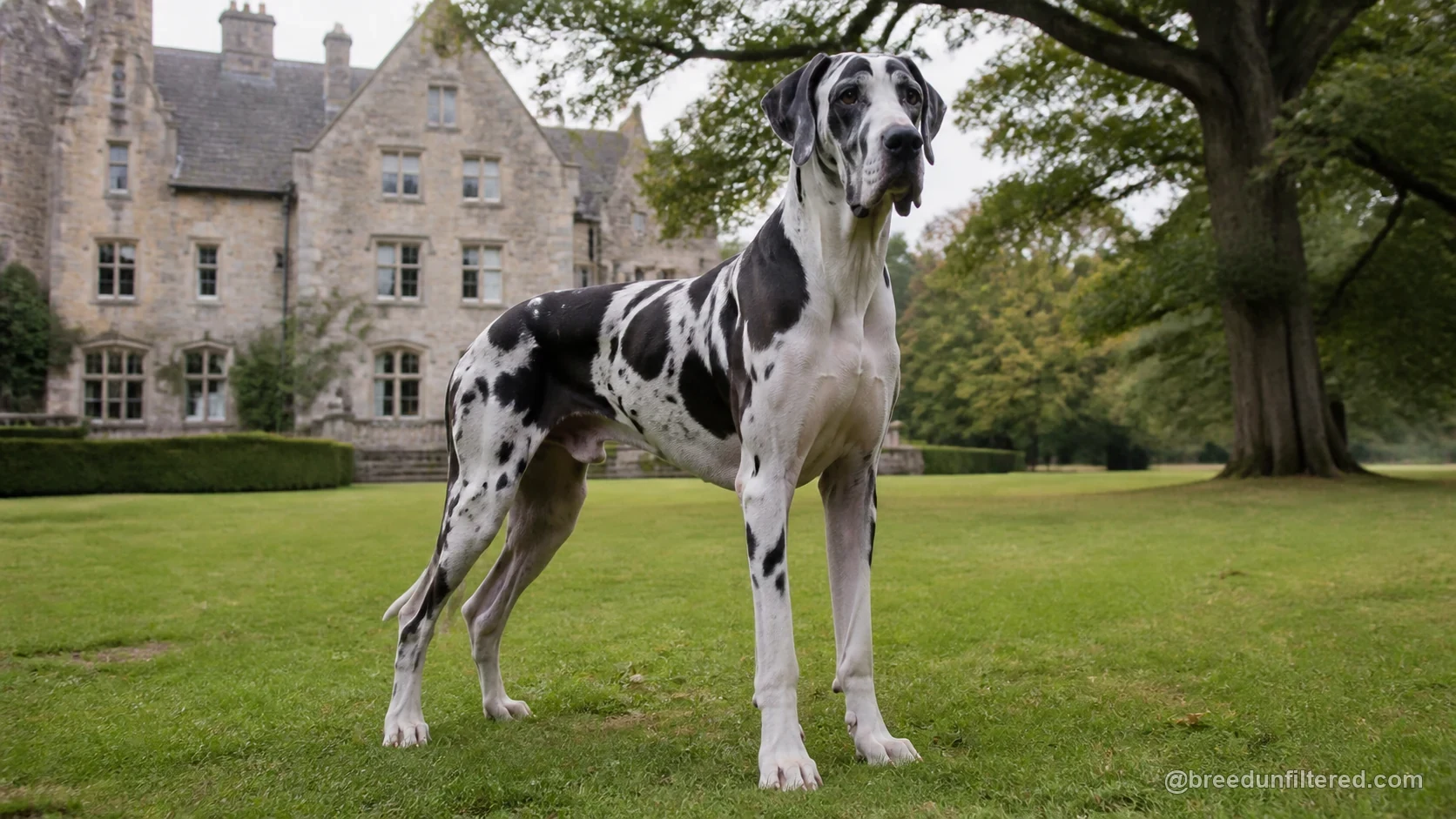
Complete breed guide
Great Dane OWNERSHIP GUIDE
The Great Dane, known officially as the Deutsche Dogge, is a breed that commands attention with its towering stature and noble bearing. Recognized by the Fédération Cynologique Internationale (FCI) in Group 2, this German breed has a history that intertwines with nobility and hunting. Despite their imposing size, Great Danes are often described as gentle giants, known for their affectionate and friendly nature. However, prospective owners must be prepared for the unique challenges that come with sharing their lives with a dog of this magnitude.
This article provides a comprehensive overview of the Great Dane, covering their origin, temperament, exercise and training needs, family compatibility, grooming, health considerations, and the financial and practical responsibilities involved. Whether you are considering adding a Great Dane to your family or simply wish to learn more about this majestic breed, this guide offers evidence-conscious insights to help you make an informed decision.
Origin and Purpose
The Great Dane's roots trace back to ancient times, with ancestors depicted in Egyptian art and later developed in Germany as a boarhound. The breed was refined in the 19th century to combine speed, power, and elegance, serving as a guardian and companion to the nobility. The FCI standard, number 235, describes the Deutsche Dogge as a 'Apollo' among dog breeds, emphasizing its harmonious proportions and regal appearance.
Today, the Great Dane is primarily a companion animal, but its historical purpose as a hunter and protector still influences its temperament. Understanding this background helps prospective owners appreciate the breed's need for space, its protective instincts, and its loyalty. The breed's name 'Great Dane' is a misnomer, as it is not from Denmark, but the name has persisted in English-speaking countries.
Temperament and Variation
Great Danes are typically known for their friendly, patient, and affectionate demeanor. They often form strong bonds with their families and are generally good-natured with strangers, though they can be reserved. Individual temperament varies, influenced by genetics, socialization, and training. The breed is not typically aggressive, but their size alone can be intimidating, making proper socialization essential.
There are several recognized coat colors, including fawn, brindle, blue, black, and harlequin, each with its own aesthetic appeal. While color does not affect temperament, some lines may have been bred for specific traits. Prospective owners should meet both parents if possible to gauge temperament, and always prioritize reputable breeders who focus on health and temperament.
Exercise and Mental Work
Despite their size, Great Danes do not require excessive exercise. They enjoy daily walks and playtime, but they are also content to lounge around the house. However, they do need regular, moderate activity to maintain muscle tone and prevent obesity. Puppies should not be over-exercised to protect their developing joints, and adult Danes should have a securely fenced yard to roam safely.
Mental stimulation is equally important. Great Danes are intelligent and can become bored if left unchallenged. Puzzle toys, obedience training, and interactive games can help keep their minds sharp. Without adequate mental and physical outlets, they may develop destructive behaviors. A tired Great Dane is a happy Great Dane, but 'tired' for this breed often means a good walk and a snuggle session.
Training and Socialisation
Training a Great Dane is a rewarding experience, but it requires consistency and positive reinforcement. They respond well to gentle, reward-based methods and can be sensitive to harsh corrections. Early socialization is crucial to help them become well-adjusted adults. Exposing them to various people, animals, and environments from a young age can reduce the likelihood of fearfulness or aggression.
Because of their size, basic obedience is non-negotiable. Commands like 'sit,' 'stay,' and 'come' are essential for safety. Great Danes are generally eager to please, but they can also be stubborn at times. Patience and persistence are key. Many owners find that enrolling in puppy classes provides a structured environment for both training and socialization.
Family and Other Pets
Great Danes are often excellent family dogs, known for their gentle nature with children. They are typically patient and tolerant, but their size can inadvertently knock over small children, so supervision is essential. They thrive on human companionship and should not be left alone for long periods. They are often described as 'velcro dogs' who want to be near their family members.
With proper introduction, Great Danes can coexist with other dogs and even cats. They generally have a low prey drive, but individual variation exists. Early socialization with other animals is important. Their guarding instinct may make them wary of unfamiliar dogs, but with consistent training, they can learn to be accepting. As with any breed, interactions should always be supervised.
Grooming and Health
Grooming a Great Dane is relatively low-maintenance. Their short coat sheds moderately and requires weekly brushing to remove loose hair. They are clean dogs and do not have a strong odor. Regular nail trimming, ear cleaning, and dental care are important for overall health. Bathing should be done as needed, using a mild dog shampoo.
Health-wise, Great Danes are prone to certain conditions, including bloat (gastric dilatation-volvulus), hip dysplasia, and heart issues. Bloat is a life-threatening emergency, and owners should be aware of the signs and risk factors. Regular veterinary check-ups, a balanced diet, and appropriate exercise can help mitigate some risks. Responsible breeders screen for hereditary conditions, and prospective owners should ask about health clearances.
Costs and Responsibility
Owning a Great Dane is a significant financial commitment. Initial costs include purchasing from a reputable breeder, which can be substantial, as well as supplies like a large crate, bed, and food. Ongoing expenses include high-quality food, routine veterinary care, and potential emergency treatments. Pet insurance is often recommended to help manage unexpected costs.
Beyond finances, Great Danes require a considerable time investment. They need daily exercise, training, and companionship. Their lifespan is relatively short, averaging 7-10 years, which can be emotionally challenging. Prospective owners must be prepared for the physical demands of caring for a giant breed, including the ability to lift and manage a large dog. This breed is not suitable for everyone, and careful consideration is essential.
Clear answers
FREQUENTLY ASKED QUESTIONS
Are Great Danes good with children?
Great Danes are generally known for their gentle and patient nature, making them potentially good family dogs. However, due to their large size, they can accidentally knock over small children. Supervision and teaching children how to interact respectfully with dogs are essential. Proper socialization from a young age helps ensure a positive relationship.
How much exercise does a Great Dane need?
Great Danes require moderate exercise, typically a daily walk and some playtime. They are not overly energetic but need regular activity to stay healthy. Puppies should avoid excessive exercise to protect their joints. Mental stimulation is also important to prevent boredom. Always tailor exercise to your individual dog's age and health.
What are common health issues in Great Danes?
Great Danes are prone to certain health conditions, including bloat (gastric dilatation-volvulus), hip dysplasia, and heart problems like dilated cardiomyopathy. Bloat is a medical emergency that requires immediate veterinary attention. Responsible breeders screen for these issues, and regular check-ups can help manage risks. A healthy lifestyle is key.
Do Great Danes shed a lot?
Great Danes have a short coat that sheds moderately year-round. Weekly brushing can help manage loose hair and keep their coat healthy. They are not heavy shedders compared to some breeds, but they do shed. Regular grooming also provides an opportunity to check for skin issues or parasites.
Are Great Danes easy to train?
Great Danes are intelligent and generally eager to please, making them trainable with positive reinforcement methods. However, they can be sensitive and may not respond well to harsh corrections. Consistency and patience are important. Early socialization and obedience training are crucial to manage their size and ensure good manners.
Sources and further reading
Scores describe typical breed tendencies from 1 to 10. They are not a quality ranking or a prediction for an individual dog.
Size and presence10/10
CompactVery large
Physical strength10/10
LightExceptional
Energy level6/10
LowRelentless
Exercise demand6/10
ModestVery demanding
Mental work needed7/10
ModerateDaily job
Trainability7/10
ChallengingExceptional
Everyday manageability3/10
SpecialistStraightforward
First-time owner fit3/10
Poor fitGood fit
Family-life fit6/10
LimitedExcellent
Dog sociability4/10
SelectiveVery social
Prey drive4/10
LowVery high
Guarding tendency8/10
MinimalSerious
Independence7/10
Handler-focusedSelf-directed
Grooming demand5/10
LightHeavy
Apartment fit1/10
Poor fitGood fit