The honest version
WHAT THIS DOG NEEDS
A social, trainable companion that still needs activity, grooming and real family time.
The honest version
A social, trainable companion that still needs activity, grooming and real family time.
Watch the episode
Complete breed guide
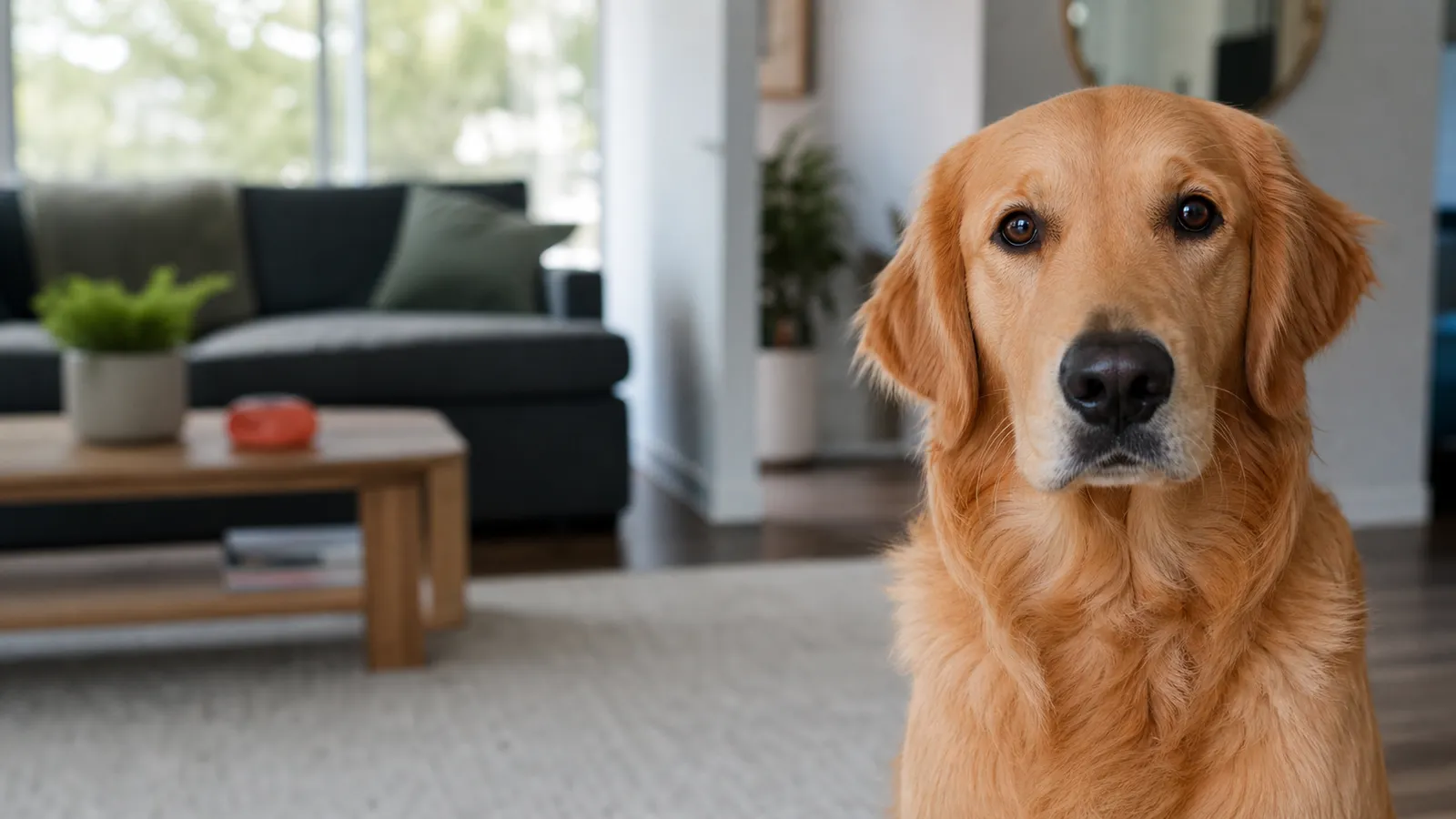
Golden Retrievers are sociable, athletic gundogs whose familiar public image can hide the amount of work behind a well-adjusted adult. Many enjoy people, carrying objects, water, and cooperative activity, but no puppy arrives pre-trained or guaranteed to be gentle. A prospective owner should plan for an energetic adolescence, regular coat care, careful weight management, and years of veterinary and training costs.
This guide is written for households comparing the breed across different countries and living arrangements. Local climate, access to safe exercise, rental rules, veterinary prices, and breeder practices all matter. Breed tendencies can help with planning, while the individual dog's health, early experiences, genetics, age, and learning history will shape daily life more precisely than a label alone.
The Golden Retriever was developed in Scotland during the nineteenth century as a sporting dog able to locate and retrieve shot game over land and from water. A useful retriever needed stamina, a functional weather-resistant coat, a willingness to carry without damaging game, and close cooperation with a handler. Those priorities still appear in modern Goldens as enthusiasm for fetching, swimming, searching, and working beside people.
Companion, show, field, assistance, and performance lines may differ in build, coat, intensity, and working style. These are broad patterns rather than separate breeds, and variation exists within every line and litter. Ask a breeder or rescue what the adults actually do, how they behave in ordinary homes, and which qualities they selected. Appearance alone gives limited information about energy, resilience, or sociability.
Many Goldens are affectionate, socially interested, playful, and motivated to cooperate. Their friendliness may include exuberant greetings, jumping, mouthing, stealing laundry, or carrying household objects, especially when young. Some are more reserved, sensitive, vocal, environmentally cautious, or intense around toys and food. A breed reputation for kindness should never replace supervision, consent-based handling, or attention to stress signals.
Meet adult relatives when possible and observe whether they recover calmly after excitement, accept normal handling, and can settle away from constant attention. In rescue, ask for behavior seen in more than one setting because shelter stress can suppress or amplify responses. Sudden changes in sociability, tolerance, sleep, or activity can have medical or environmental causes, so discuss them with a veterinarian before treating them as a training problem.
A healthy adult commonly benefits from substantial daily movement divided across walks, free exploration in secure areas, retrieving, swimming where water is safe, and structured activities. The right amount varies with age, conditioning, weather, and health. Repeated high-impact ball chasing can create frantic arousal and physical strain, so balance it with sniffing, varied routes, controlled retrieves, and relaxed time outdoors.
Puppies need shorter, age-appropriate sessions and ample sleep rather than forced distance or repetitive jumping. Mental work can include food searches, scent games, simple gundog exercises, trick training, and learning to wait calmly while life happens. A Golden who receives only faster exercise may become fitter without becoming easier to live with. Teach rest on a mat and preserve recovery days after unusually demanding activity.
Reward-based training suits the breed's frequent interest in food, toys, and interaction. Begin with name response, recall, loose-lead walking, four paws on the floor, dropping objects, comfortable grooming, and brief separation. Manage the environment with gates, storage, and a long line while skills develop. Punishing retrieval or chasing a puppy for stolen items can make possession more exciting and may encourage avoidance.
Socialisation means safe, positive exposure at a pace the puppy can handle, not compulsory greetings with every person or dog. Include different surfaces, transport, household sounds, veterinary-style handling, quiet observation, and calm neutrality around wildlife and crowds. Adolescents may temporarily become more distracted or cautious. Reduce difficulty, reinforce successful choices, and consult a qualified reward-based trainer or veterinary behavior professional if fear, guarding, or reactivity persists.
Goldens can suit active families who want a dog involved in daily routines and can tolerate shedding, mud, size, and youthful enthusiasm. Their body weight and wagging tail can overwhelm toddlers or frail adults even without harmful intent. Adults should supervise every child-dog interaction, protect the dog's bed and meals, and teach children not to climb on, hug, corner, or disturb a sleeping dog.
Many live successfully with other dogs, and some with cats or smaller animals, particularly after thoughtful introductions. Compatibility is individual, not automatic. Use barriers, separate feeding, protected resting places, and gradual parallel activity. A retrieving background does not eliminate chasing. If a resident pet is elderly, fearful, or physically vulnerable, consider whether a lively puppy is fair to that animal and seek professional help for tense introductions.
The double coat sheds throughout the year and often more heavily in seasonal changes. Brush to the skin several times a week, checking friction areas behind ears and around legs and tail. Dry the coat and ears after swimming, trim nails, establish tooth care, and inspect skin while grooming. Shaving is not routine coat management and does not stop shedding; ask a veterinarian or experienced groomer about medically necessary clipping.
Breed health discussions commonly include hips, elbows, eyes, heart, skin and ear problems, and cancers, but an online list cannot predict or diagnose an individual. Ask breeders for independently verifiable, current screening results for both parents rather than a simple claim that they were vet checked. Arrange preventive care with a veterinarian, keep the dog lean, and seek prompt advice for pain, collapse, breathing changes, persistent itching, unusual lumps, or altered appetite.
Purchase or adoption fees are only the opening cost. Budget locally for quality food for a medium-large dog, routine examinations, vaccinations or regionally appropriate preventive care, parasite control, insurance or an emergency fund, training classes, grooming tools, secure transport, boarding, and replacement beds and toys. Larger dogs can require higher medication, diagnostic, and surgery costs because many charges scale with weight.
Choose a breeder who discusses limitations openly, documents relevant health screening, raises puppies in a suitable environment, asks buyers serious questions, and offers lifelong return support. Rescue can also be an excellent route when the organization is transparent about known behavior and medical needs. Responsible ownership means daily time, legal identification, humane management, contingency care during illness or travel, and a plan for the dog's needs through old age.
Clear answers
They can be for a prepared first-time owner who has time for training, exercise, grooming, and an energetic adolescence. Their usual sociability and responsiveness can support learning, but size, shedding, mouthing, and excitement are real management demands. A good puppy class, realistic household rules, and access to help matter more than relying on the breed's easygoing image.
There is no universal minute target. A healthy adult usually needs meaningful daily physical activity plus sniffing, training, and opportunities to settle, while puppies, seniors, and dogs with medical limitations need different plans. Build fitness gradually and adjust for heat, humidity, surface, and recovery. A veterinarian can advise on exercise when growth, pain, weight, or illness is a concern.
Yes, most shed consistently and have heavier periods of coat loss. Regular thorough brushing, bathing when needed, and household cleaning reduce loose hair but will not remove it from daily life. Prospective owners with allergies should spend time around adult Goldens and seek medical guidance because no coat type can guarantee an allergy-free home.
An apartment can work if the household reliably provides outdoor exercise, enrichment, toilet access, calmness training, and consideration for neighbors. Floor space is less important than the complete routine, although stairs, hot lifts, noise, and rental restrictions may create practical barriers. A garden is useful but does not replace walks, social contact, or training.
Ask to verify the parents' recommended hip, elbow, eye, and heart screening through the relevant registry, and discuss cancer history, longevity, temperament, and previous litters. Request a contract, care records, identification details, and a clear return policy. The breeder should explain why the pairing was chosen, how puppies are raised and matched, and what support continues after collection.
Scores describe typical breed tendencies from 1 to 10. They are not a quality ranking or a prediction for an individual dog.