Complete breed guide
Finnish Spitz OWNERSHIP GUIDE
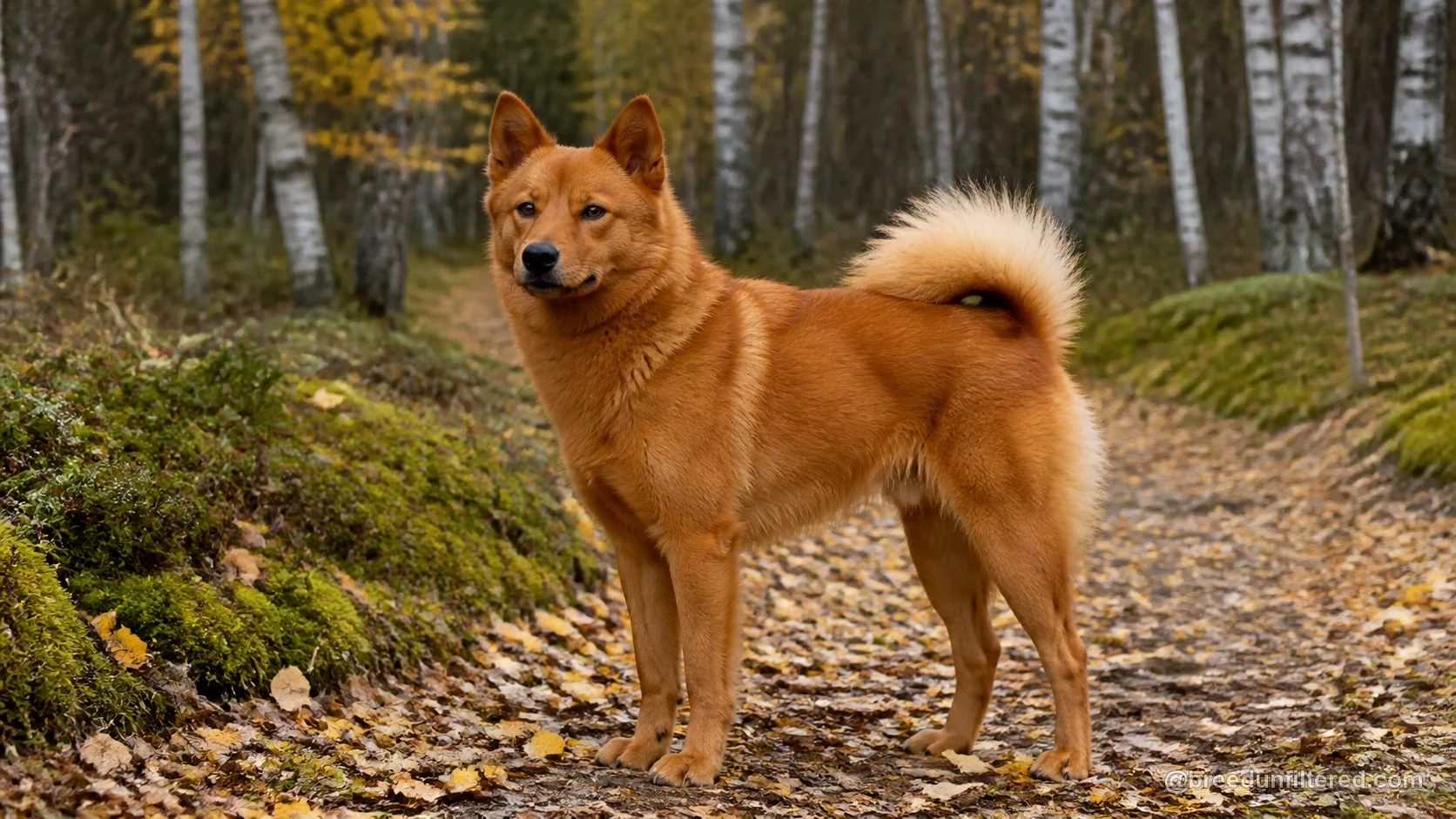
The Finnish Spitz, known as the 'Barking Bird Dog,' is a medium-sized, fox-like spitz breed developed in Finland to hunt game birds. With its bright red-gold coat, pointed ears, and a tail curling over its back, it is both striking and functional. This breed is renowned for its unique hunting style: it locates birds in trees and alerts the hunter with a distinctive, rhythmic bark, sometimes for hours. As a companion, the Finnish Spitz is lively, intelligent, and affectionate with its family, but it also carries a strong independent streak and a vocal nature that may not suit every household.
Prospective owners should understand that the Finnish Spitz is a working breed with high energy and a strong prey drive. It thrives in environments where it can exercise both body and mind, and it requires consistent, patient training. While it can be a wonderful family dog, its barking and hunting instincts demand careful management. This guide provides an evidence-conscious overview of the breed's origins, temperament, care needs, and responsibilities, helping you decide if the Finnish Spitz is the right match for your lifestyle.
Origin and Purpose
The Finnish Spitz is a native breed of Finland, where it has been used for centuries as a hunting dog, particularly for game birds like grouse and capercaillie. Its primary role is to locate birds in trees and 'bark' at them, directing the hunter's attention. This barking behavior is so integral that the breed is often called the 'Barking Bird Dog.' The breed was developed from local spitz-type dogs and was officially recognized by the FCI in 1892, with the first standard published in 1897. Today, it remains a popular hunting companion in its homeland and is also kept as a companion dog worldwide.
The Finnish Spitz's hunting style is unique: it uses its keen sense of smell and sight to find birds, then barks persistently to 'point' the location for the hunter. This behavior is instinctive and can be channeled into activities like barn hunt or nose work. The breed's history as a versatile hunter has shaped its temperament, making it alert, courageous, and independent. Understanding this purpose is key to appreciating the breed's needs and behaviors, as many of its traits are directly linked to its working heritage.
Temperament and Variation
The Finnish Spitz is known for its lively, alert, and friendly disposition. It is typically affectionate with its family and can be good with children, though its high energy and vocal nature may be overwhelming for very young kids. The breed is generally wary of strangers, making it a decent watchdog, but it is not aggressive. Individual temperament varies, influenced by genetics, socialization, and training. Some Finnish Spitz are more independent and stubborn, while others are more eager to please. Early and ongoing socialization is crucial to ensure a well-rounded adult dog.
This breed is highly vocal, and its barking is not just a hunting tool but also a means of communication. It may bark at noises, visitors, or when excited. This trait can be challenging in close quarters or with noise-sensitive neighbors. The Finnish Spitz is also known for its intelligence and problem-solving abilities, which can lead to mischief if not given adequate mental stimulation. Prospective owners should be prepared for a dog that is both entertaining and demanding, with a personality that reflects its working origins.
Exercise and Mental Work
The Finnish Spitz is an energetic breed that requires regular physical exercise to stay healthy and content. Daily walks, runs, or play sessions in a securely fenced area are essential. As a hunting dog, it has excellent stamina and enjoys activities like hiking or jogging. However, exercise needs can vary based on age, health, and individual energy levels. It is important to provide at least an hour of moderate to vigorous activity each day, but this is a general guideline, not a prescription. Always consult with a veterinarian to tailor an exercise plan for your dog.
Mental stimulation is equally important for this intelligent breed. Puzzle toys, obedience training, and scent games can help prevent boredom and destructive behaviors. The Finnish Spitz excels in canine sports like agility, rally, and barn hunt, which tap into its natural abilities. Without sufficient mental and physical outlets, the breed may develop excessive barking, digging, or other unwanted behaviors. Owners should be prepared to invest time in both physical and mental enrichment to keep their Finnish Spitz balanced and happy.
Training and Socialisation
Training a Finnish Spitz requires patience, consistency, and positive reinforcement methods. This breed is intelligent but can be independent and stubborn, so harsh methods are counterproductive. Early socialization is vital to expose the dog to various people, animals, and environments, reducing the likelihood of fearfulness or aggression. Puppy classes and regular, controlled interactions can help shape a confident and well-mannered adult. The Finnish Spitz responds well to reward-based training, but owners should be prepared for occasional lapses in focus, especially when distractions are present.
Because of its hunting background, the Finnish Spitz may have a strong prey drive and a tendency to chase small animals. Reliable recall is essential, and leash training is recommended in unfenced areas. Training should be an ongoing process, not a one-time effort, to reinforce good behavior. The breed's vocal nature can be managed with commands like 'quiet,' but this requires consistent practice. Owners who invest time in training and socialization will find a loyal and responsive companion, but those who neglect these aspects may face challenges.
Family and Other Pets
The Finnish Spitz can make a wonderful family dog for active households. It is typically affectionate and playful with children, especially when raised with them. However, its high energy and boisterous nature may be too much for toddlers, and supervision is recommended. The breed is generally good with other dogs, especially if socialized early, but it may be territorial or assertive with unfamiliar dogs. Its prey drive can be problematic with small pets like cats, rabbits, or birds, as it may view them as quarry. Early and consistent socialization can help mitigate these tendencies, but there is no guarantee.
Families considering a Finnish Spitz should be prepared for a dog that wants to be involved in all activities. It thrives on companionship and may become destructive if left alone for long periods. The breed is not suited for a sedentary lifestyle; it needs an outlet for its energy. With proper training and supervision, the Finnish Spitz can coexist with other pets, but it is essential to manage introductions carefully and never leave it unsupervised with small animals. Prospective owners should assess their household dynamics and commitment to training before bringing this breed home.
Grooming and Health
The Finnish Spitz has a double coat that is relatively easy to groom. It sheds moderately year-round and heavily during seasonal sheds, typically twice a year. Regular brushing, at least twice a week, helps remove loose fur and keep the coat healthy. During heavy shedding periods, daily brushing may be necessary. Bathing should be infrequent to preserve natural oils, and routine care includes nail trimming, ear cleaning, and dental hygiene. The breed is generally healthy, but like all breeds, it may be predisposed to certain conditions, including hip dysplasia, patellar luxation, and some eye disorders. Responsible breeders screen for these issues.
The average lifespan of a Finnish Spitz is around 12 to 15 years, though individual variation exists. Regular veterinary check-ups, a balanced diet, and appropriate exercise contribute to overall health. Owners should be aware of the breed's tendency to gain weight if overfed, so portion control is important. While the Finnish Spitz is a hardy breed, it is not immune to health problems. Prospective owners should seek breeders who perform health testing and provide health clearances. It is also advisable to consider pet insurance to help manage potential veterinary costs.
Costs and Responsibility
Owning a Finnish Spitz involves financial and time commitments. Initial costs include the purchase price from a reputable breeder, which can vary widely, and essential supplies like a crate, bedding, food, and grooming tools. Ongoing expenses include high-quality dog food, routine veterinary care, vaccinations, flea and tick prevention, and potential emergency medical costs. Training classes and pet insurance are additional considerations. The breed's grooming needs are moderate, but professional grooming may be required occasionally. Prospective owners should budget for these expenses and be prepared for unexpected costs.
Beyond finances, owning a Finnish Spitz is a long-term responsibility. This breed can live up to 15 years, requiring daily exercise, mental stimulation, and companionship. It is not a dog that can be left alone for long hours or ignored. Potential owners should assess their lifestyle, living situation, and ability to meet the breed's needs. Adopting from a rescue or shelter is also an option, giving a home to a dog in need. Ultimately, responsible ownership means providing a loving, structured environment and committing to the dog's well-being for its entire life.
Clear answers
FREQUENTLY ASKED QUESTIONS
Is the Finnish Spitz a good family dog?
The Finnish Spitz can be a good family dog for active households that can provide ample exercise and mental stimulation. It is typically affectionate and playful with children, especially when raised with them. However, its high energy and vocal nature may be overwhelming for very young kids, and supervision is recommended. Early socialization and training are essential to ensure a well-mannered companion.
How much exercise does a Finnish Spitz need?
The Finnish Spitz is an energetic breed that requires daily physical activity, such as walks, runs, or play sessions in a securely fenced area. While needs vary by individual, a general guideline is at least an hour of moderate to vigorous exercise per day. Mental stimulation is equally important to prevent boredom and destructive behaviors. Consult with a veterinarian to tailor an exercise plan.
Does the Finnish Spitz bark a lot?
Yes, the Finnish Spitz is known for its vocal nature. It was bred to bark while hunting, and it may bark at noises, visitors, or when excited. This trait can be managed with training, but it is a natural behavior. Prospective owners should be prepared for a dog that is not quiet, making it potentially unsuitable for apartments or noise-sensitive environments.
Are Finnish Spitz good with other pets?
Finnish Spitz can get along with other dogs, especially if socialized early, but they may be assertive with unfamiliar dogs. Their prey drive can be strong, so they may not be safe with small pets like cats, rabbits, or birds. Early and consistent socialization can help, but supervision is always recommended. It's best to introduce them carefully and manage interactions.
What health issues are common in Finnish Spitz?
The Finnish Spitz is generally a healthy breed, but like all breeds, it may be predisposed to certain conditions, including hip dysplasia, patellar luxation, and some eye disorders. Responsible breeders screen for these issues. Regular veterinary check-ups, a balanced diet, and appropriate exercise contribute to overall health. The average lifespan is 12 to 15 years.
Sources and further reading
Scores describe typical breed tendencies from 1 to 10. They are not a quality ranking or a prediction for an individual dog.
Size and presence5/10
CompactVery large
Physical strength5/10
LightExceptional
Energy level9/10
LowRelentless
Exercise demand9/10
ModestVery demanding
Mental work needed8/10
ModerateDaily job
Trainability6/10
ChallengingExceptional
Everyday manageability2/10
SpecialistStraightforward
First-time owner fit3/10
Poor fitGood fit
Family-life fit6/10
LimitedExcellent
Dog sociability7/10
SelectiveVery social
Prey drive10/10
LowVery high
Guarding tendency7/10
MinimalSerious
Independence9/10
Handler-focusedSelf-directed
Grooming demand10/10
LightHeavy
Apartment fit4/10
Poor fitGood fit