Complete breed guide
Estonian Hound OWNERSHIP GUIDE
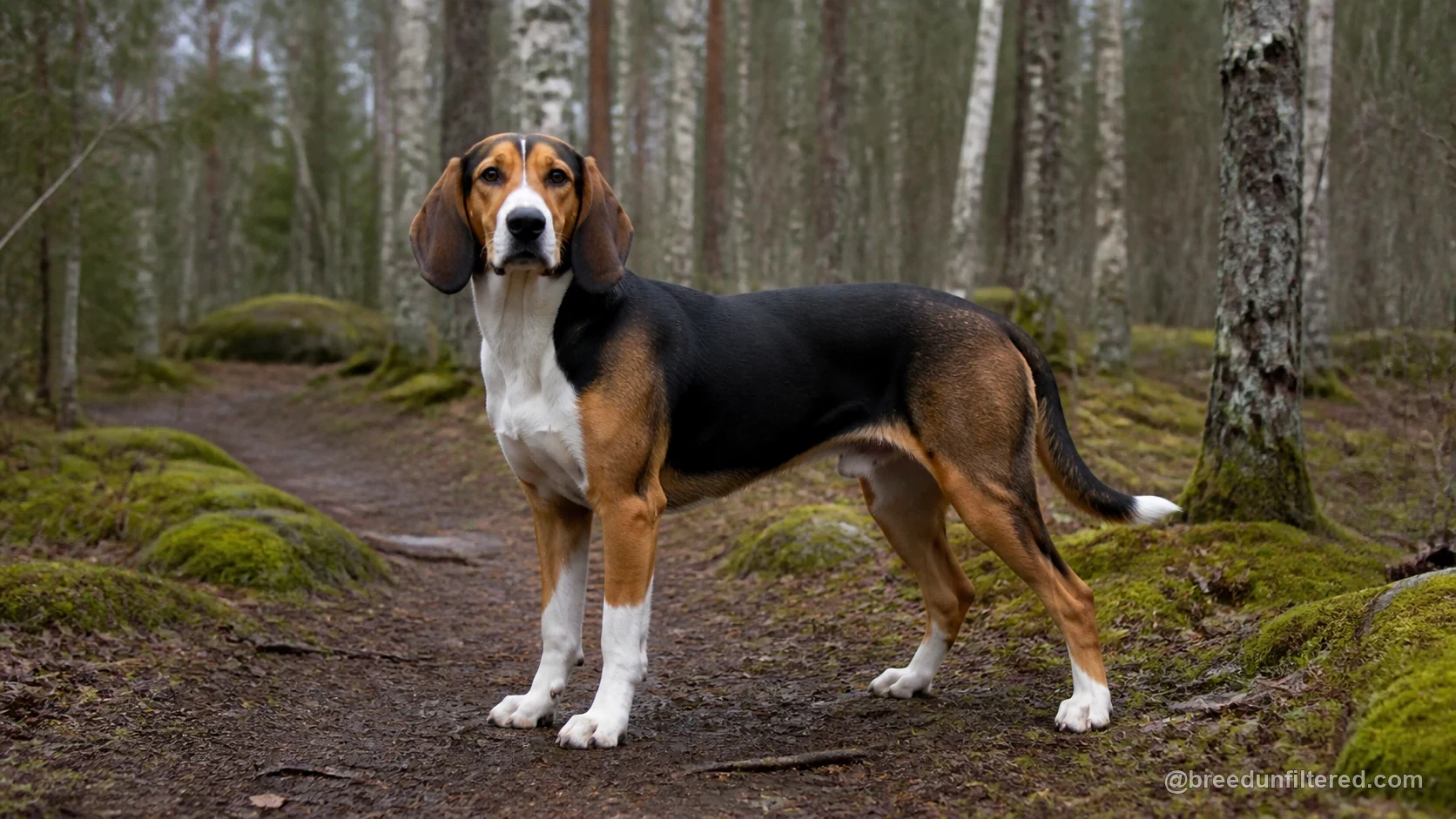
The Estonian Hound, known officially as the Eesti Hagijas, is a scenthound developed in Estonia during the mid-20th century. Bred to hunt fox and hare in the dense forests of the Baltic region, this medium-sized dog combines endurance with a keen nose. Although still relatively rare outside its homeland, it has gained admirers for its balanced nature and adaptability.
For prospective owners, understanding the Estonian Hound means appreciating its dual character: a tireless worker in the field and a calm, affectionate companion at home. This article offers a practical overview of its origin, temperament, exercise needs, training, family compatibility, grooming, and the responsibilities of ownership, helping you decide if this breed fits your lifestyle.
Origin and Purpose
The Estonian Hound was developed in the 1940s and 1950s in Estonia, when local hunters sought a dog suited to the region's terrain and game. The breed was created by crossing various European hounds, including the Beagle, Swiss Hound, and Finnish Hound, to produce a smaller, agile dog that could work in dense undergrowth and withstand cold climates. The goal was a hound with a strong prey drive but also a manageable size for hunting on foot.
Recognized provisionally by the Fédération Cynologique Internationale (FCI) under standard number 366, the Estonian Hound remains a specialized hunting breed. Its primary role is to track and flush game, particularly hare and fox, using its voice to signal the hunter. This purpose has shaped its physical and behavioral traits, including stamina, determination, and a melodic bay that carries through the forest.
Temperament and Variation
Estonian Hounds are typically described as even-tempered, friendly, and alert. They are pack-oriented dogs, often getting along well with other hounds, and they tend to form strong bonds with their human family. While they are not known for aggression, they can be reserved with strangers, though this varies individually. Their hunting instinct is pronounced, and they may be vocal, especially when they catch a scent.
As with any breed, individual temperament varies based on genetics, socialization, and environment. Some Estonian Hounds may be more independent and stubborn, while others are more eager to please. Prospective owners should meet the parents or littermates when possible and discuss temperament with breeders. Early and ongoing socialization is crucial to nurture a well-adjusted adult dog.
Exercise and Mental Work
The Estonian Hound is an energetic breed with substantial exercise needs. As a scenthound, it thrives on activities that engage its nose, such as tracking, scent work, and off-leash exploration in safe, enclosed areas. Daily vigorous exercise is essential, but the exact amount varies with age, health, and individual energy. A tired hound is more likely to be calm indoors.
Mental stimulation is equally important. Puzzle toys, nose games, and training sessions that challenge the mind can prevent boredom and destructive behaviors. Without adequate physical and mental outlets, Estonian Hounds may develop habits like excessive barking or digging. Owners should plan for at least an hour of active exercise daily, supplemented with mental enrichment.
Training and Socialisation
Training an Estonian Hound requires patience and consistency. While intelligent, they are independent thinkers, a trait common in hounds. Positive reinforcement methods, using treats and praise, work best. Harsh corrections can be counterproductive. Early obedience training is recommended to establish basic commands and recall, which is particularly important for a breed with a strong prey drive.
Socialisation from puppyhood is vital. Exposing the dog to various people, animals, and environments helps build confidence and reduces the likelihood of fearfulness or reactivity. Puppy classes and controlled introductions to other dogs can be beneficial. Because they are pack hounds, they generally get along with other dogs, but small pets may trigger their hunting instincts, so supervision is advised.
Family and Pets
Estonian Hounds can make affectionate family companions, especially in active households. They are typically good with children, though their boisterous nature may be overwhelming for very young kids. As with any dog, interactions should be supervised, and children should be taught how to behave around dogs. The breed's sociable disposition often extends to other dogs, making them suitable for multi-dog homes.
However, their hunting instinct means they may not be reliable with cats, rabbits, or other small animals unless raised with them from a young age. Even then, instinct can override training. Prospective owners with small pets should exercise caution and consider the individual dog's background. A securely fenced yard is essential to prevent them from following a scent and wandering off.
Grooming and Health
The Estonian Hound has a short, dense coat that is relatively low-maintenance. Weekly brushing helps remove loose hair and keep the coat healthy. They shed moderately, with heavier shedding during seasonal changes. Bathing is only needed occasionally, as over-bathing can strip natural oils. Regular ear checks are important, as floppy-eared breeds are prone to ear infections.
As a relatively healthy breed, the Estonian Hound has no widespread hereditary conditions reported, but like all dogs, they can be prone to certain issues. Responsible breeders screen for hip dysplasia and eye disorders. Routine veterinary care, a balanced diet, and proper exercise contribute to overall health. Prospective owners should ask breeders about health testing and the longevity of the lines.
Costs and Responsibility
Owning an Estonian Hound involves financial and time commitments. Initial costs include the purchase price, which can vary, and essential supplies like a crate, bed, and food. Ongoing expenses include high-quality dog food, routine veterinary care, vaccinations, and parasite prevention. Emergency medical costs can be significant, so pet insurance is worth considering.
Beyond finances, responsible ownership requires a commitment to training, exercise, and companionship. This breed is not suited to a sedentary lifestyle or long periods alone. Prospective owners should assess their living situation, daily schedule, and ability to provide a secure environment. Adopting from a rescue or breed-specific group is also an option, though availability may be limited outside Estonia.
Clear answers
FREQUENTLY ASKED QUESTIONS
Is the Estonian Hound a good family dog?
Estonian Hounds can be good family dogs in active households. They are generally friendly and affectionate with their family, including children, though their energetic nature may be too much for very young kids. They typically get along well with other dogs, but their hunting instinct may make them unreliable with small pets like cats or rabbits unless raised with them.
How much exercise does an Estonian Hound need?
Estonian Hounds are energetic and need substantial daily exercise, typically at least an hour of vigorous activity. They excel at activities that engage their nose, such as tracking or scent work. Without enough exercise and mental stimulation, they may become bored and develop behaviors like excessive barking or digging.
Are Estonian Hounds easy to train?
Training an Estonian Hound can be moderately challenging due to their independent nature. They respond best to positive reinforcement methods like treats and praise. Consistency and patience are key. Early socialization and obedience training are essential, especially for recall, as their strong prey drive can lead them to follow scents.
Do Estonian Hounds shed a lot?
Estonian Hounds have a short, dense coat that sheds moderately year-round, with heavier shedding during seasonal changes. Weekly brushing can help manage loose hair. They do not require frequent baths, but regular ear checks are important because their floppy ears can be prone to infections.
Are Estonian Hounds suitable for apartment living?
Estonian Hounds are generally not ideal for apartment living due to their high exercise needs and tendency to be vocal. They thrive in homes with access to a securely fenced yard where they can explore and run. If living in an apartment, owners must be committed to providing ample outdoor exercise and mental stimulation.
Sources and further reading
Scores describe typical breed tendencies from 1 to 10. They are not a quality ranking or a prediction for an individual dog.
Size and presence5/10
CompactVery large
Physical strength5/10
LightExceptional
Energy level7/10
LowRelentless
Exercise demand8/10
ModestVery demanding
Mental work needed7/10
ModerateDaily job
Trainability7/10
ChallengingExceptional
Everyday manageability3/10
SpecialistStraightforward
First-time owner fit5/10
Poor fitGood fit
Family-life fit6/10
LimitedExcellent
Dog sociability6/10
SelectiveVery social
Prey drive8/10
LowVery high
Guarding tendency5/10
MinimalSerious
Independence6/10
Handler-focusedSelf-directed
Grooming demand5/10
LightHeavy
Apartment fit3/10
Poor fitGood fit