Complete breed guide
English Foxhound OWNERSHIP GUIDE
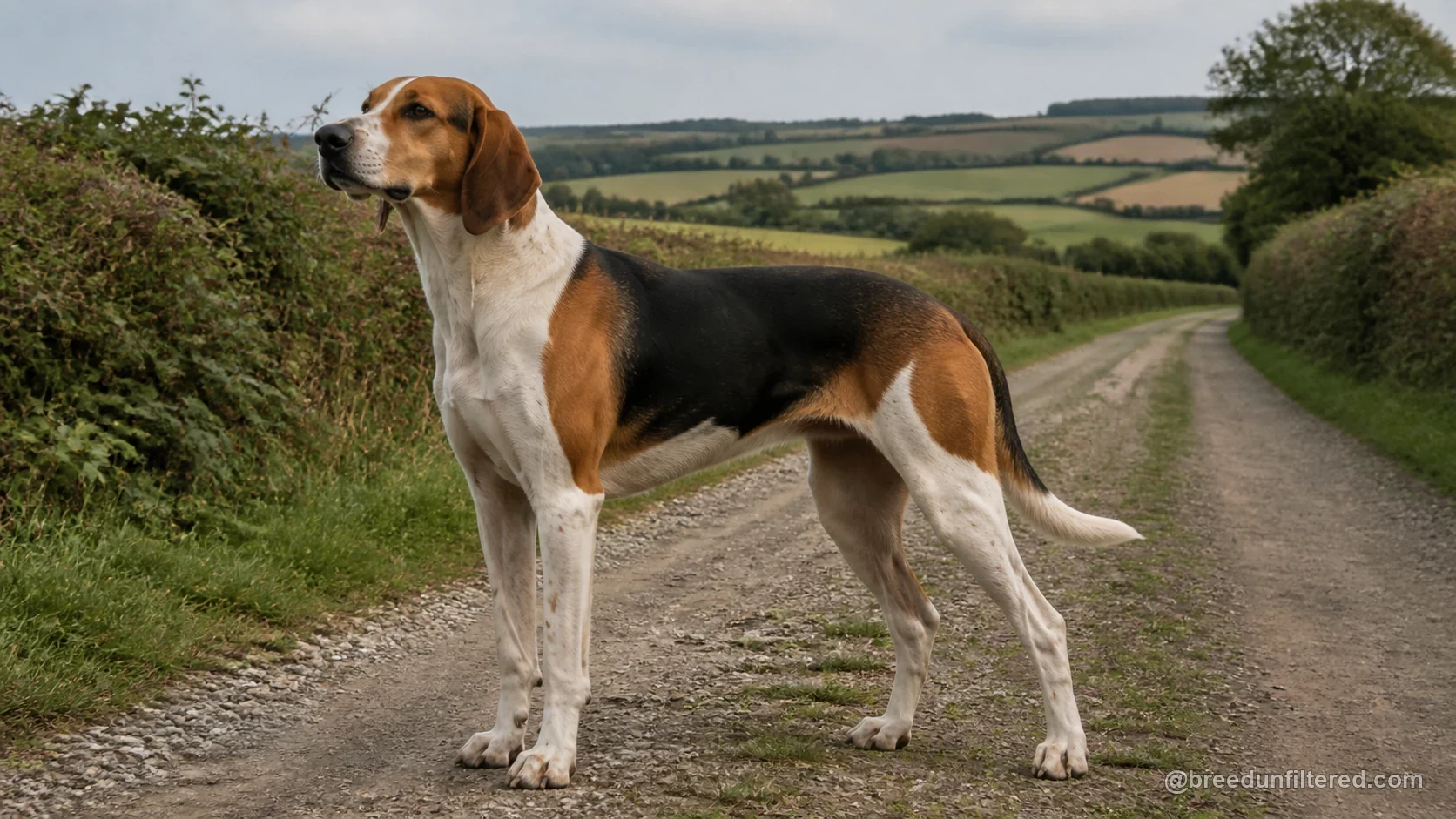
The English Foxhound is a breed developed in the United Kingdom for the pursuit of foxes in mounted packs. Recognized by the FCI in Group 6, this hound is built for endurance, with a deep chest, strong legs, and a keen nose. While not as common as some other hounds, the English Foxhound has a devoted following among those who appreciate its working heritage and amiable disposition.
Prospective owners should understand that this is a dog bred to run with a pack, meaning it thrives on companionship, regular vigorous exercise, and a job to do. It is not a typical house pet; it requires a lifestyle that can accommodate its high energy and strong hunting instincts. This article provides an evidence-conscious overview of the breed's characteristics, care needs, and potential challenges.
Origin and Purpose
The English Foxhound's history is intertwined with the traditional sport of fox hunting in England. Developed over centuries, the breed was selectively bred for speed, stamina, and a strong pack instinct. The FCI standard (No. 159) describes a hound of substantial bone and a balanced, powerful build, designed to follow a scent for hours across varied terrain.
Today, while fox hunting with hounds has changed in many regions, the English Foxhound is still used in working packs and in field trials. Its purpose has shaped its temperament: it is generally sociable with other dogs, vocal, and independent when following a scent. Understanding this background is crucial for anyone considering the breed, as these traits influence its behavior in a home environment.
Temperament and Variation
The English Foxhound is typically described as friendly, even-tempered, and tolerant. Bred to work in a pack, it usually gets along well with other dogs and is not known for aggression. However, individual variation exists, and early socialization remains important. The breed is also known for its musical bay, which it uses to communicate, and it may be reserved with strangers but not typically protective.
Because the breed is primarily a working hound, its temperament can vary depending on whether it comes from working or show lines. Working lines may be more energetic and driven, while show lines might be slightly more laid-back, but both retain strong hunting instincts. Prospective owners should meet the parents and ask about temperament to get a sense of the individual puppy's likely disposition.
Exercise and Mental Work
The English Foxhound is a high-energy breed that requires substantial daily exercise. It is not content with a short walk; it needs opportunities to run and stretch its legs in a safe, enclosed area. Activities like long hikes, jogging, or canine sports such as lure coursing can help meet its physical needs. Without adequate exercise, it may become restless and develop behavioral issues.
Mental stimulation is equally important. This breed is intelligent and has a strong nose, so scent games, tracking, and puzzle toys can provide valuable mental work. However, because it is bred to follow a scent independently, it may not always be eager to please in the way a retriever might be. Owners should be prepared to channel its instincts into constructive activities.
Training and Socialisation
Training an English Foxhound requires patience and consistency. While they are intelligent, they can be independent and somewhat stubborn, especially when a scent catches their attention. Positive reinforcement methods, such as treats and praise, work best. Harsh corrections are counterproductive and can damage trust. Early training should focus on recall, as this breed may be prone to following its nose and ignoring commands.
Socialisation from a young age is essential to help the English Foxhound become a well-adjusted adult. Exposing it to various people, environments, and other animals can reduce the likelihood of fearfulness or reactivity. Because they are pack-oriented, they often do well with other dogs, but small pets like rabbits or cats may trigger their prey drive, so careful introductions are necessary.
Family and Pets
The English Foxhound can make a good family dog for active households. It is generally gentle and tolerant, and it often enjoys being part of family activities. However, its size and energy may be overwhelming for very young children, so supervision is recommended. It is not a clingy lapdog; it appreciates companionship but also values its independence.
Regarding other pets, the English Foxhound's pack instinct usually makes it get along well with other dogs. However, its hunting instinct can be strong, so it may not be safe with small animals such as cats, rabbits, or guinea pigs. Each dog is an individual, and early socialisation can help, but owners should be cautious and never leave a Foxhound unsupervised with small pets.
Grooming and Health
Grooming the English Foxhound is relatively straightforward. Its short, dense coat requires weekly brushing to remove loose hair and keep it healthy. They shed moderately, and more during seasonal changes. Regular ear checks are important, as floppy ears can trap moisture and debris, leading to infections. Nails should be trimmed regularly, and dental hygiene maintained.
As with many purebred dogs, the English Foxhound may be predisposed to certain health conditions, though the breed is generally hardy. Potential issues include hip dysplasia, ear infections, and some eye conditions. Responsible breeders screen for these issues. Owners should maintain a healthy weight and provide regular veterinary care. It is essential to consult a veterinarian for any health concerns.
Costs and Responsibility
Owning an English Foxhound involves significant financial and time commitments. Initial costs include purchasing from a reputable breeder, which can be substantial, as well as supplies like a crate, bedding, and food. Ongoing expenses include high-quality dog food, routine veterinary care, vaccinations, and preventive medications. Emergency medical costs can be unexpected, so pet insurance is worth considering.
Beyond finances, this breed demands a considerable amount of time and energy. It is not suitable for a sedentary lifestyle or a small apartment without access to secure outdoor space. Prospective owners must be prepared for daily vigorous exercise, training, and mental stimulation. The English Foxhound is a rewarding companion for the right person, but it is a serious commitment that should not be taken lightly.
Clear answers
FREQUENTLY ASKED QUESTIONS
Is the English Foxhound a good family dog?
The English Foxhound can be a good family dog for active households. It is generally gentle and tolerant, and it often enjoys being part of family activities. However, its size and energy may be overwhelming for very young children, so supervision is recommended. It is not a clingy lapdog; it appreciates companionship but also values its independence.
How much exercise does an English Foxhound need?
The English Foxhound is a high-energy breed that requires substantial daily exercise. It is not content with a short walk; it needs opportunities to run and stretch its legs in a safe, enclosed area. Activities like long hikes, jogging, or canine sports such as lure coursing can help meet its physical needs. Without adequate exercise, it may become restless and develop behavioral issues.
Does the English Foxhound get along with other dogs?
Yes, the English Foxhound generally gets along well with other dogs due to its pack-oriented nature. Bred to work in a pack, it is typically sociable and tolerant of other canines. However, individual variation exists, and early socialisation is important. It may not be safe with small pets like cats or rabbits due to its strong prey drive.
Is the English Foxhound easy to train?
Training an English Foxhound can be challenging due to its independent and sometimes stubborn nature. They are intelligent but may be more focused on following a scent than on pleasing their owner. Positive reinforcement methods, such as treats and praise, work best. Early training should focus on recall, as this breed may be prone to ignoring commands when distracted.
What are the grooming requirements for an English Foxhound?
Grooming the English Foxhound is relatively straightforward. Its short, dense coat requires weekly brushing to remove loose hair and keep it healthy. They shed moderately, and more during seasonal changes. Regular ear checks are important, as floppy ears can trap moisture and debris, leading to infections. Nails should be trimmed regularly, and dental hygiene maintained.
Sources and further reading
Scores describe typical breed tendencies from 1 to 10. They are not a quality ranking or a prediction for an individual dog.
Size and presence5/10
CompactVery large
Physical strength6/10
LightExceptional
Energy level9/10
LowRelentless
Exercise demand10/10
ModestVery demanding
Mental work needed8/10
ModerateDaily job
Trainability6/10
ChallengingExceptional
Everyday manageability2/10
SpecialistStraightforward
First-time owner fit3/10
Poor fitGood fit
Family-life fit6/10
LimitedExcellent
Dog sociability9/10
SelectiveVery social
Prey drive10/10
LowVery high
Guarding tendency3/10
MinimalSerious
Independence8/10
Handler-focusedSelf-directed
Grooming demand4/10
LightHeavy
Apartment fit4/10
Poor fitGood fit