Complete breed guide
Small Swiss Hound OWNERSHIP GUIDE
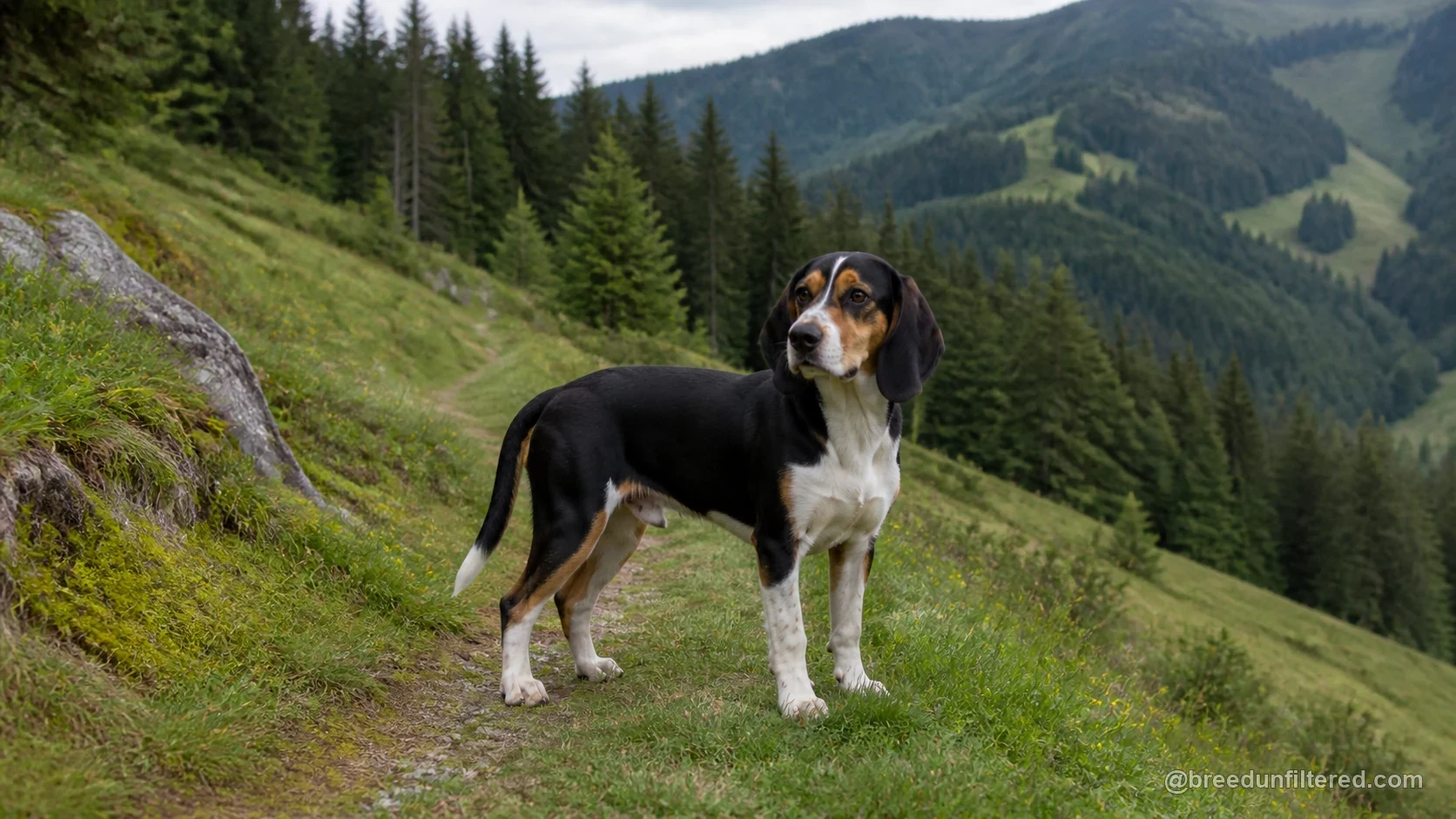
The Small Swiss Hound, known officially as the Schweizer Niederlaufhund, is a compact scenthound developed in Switzerland for tracking game through challenging terrain. While less common outside its homeland, this breed offers a fascinating blend of independence, stamina, and a keen nose. Prospective owners should understand that this is a working hound at heart, with instincts and needs that differ markedly from typical companion breeds.
This article provides an evidence-conscious overview of the Small Swiss Hound, drawing on the FCI breed standard and general scenthound knowledge. We'll explore the breed's origins, temperament, exercise and training requirements, suitability for families, grooming, health considerations, and the financial and time commitments involved. The goal is to help you make an informed decision about whether this rare and specialized breed fits your lifestyle.
Origin and Purpose
The Small Swiss Hound, or Niederlaufhund, is a Swiss scenthound breed with a history rooted in hunting. According to the FCI breed standard, the Small Swiss Hound is a smaller version of the Swiss Hound, developed to hunt in dense forests and mountainous terrain where a more compact dog could maneuver more easily. The breed's name 'Niederlaufhund' translates to 'low-running dog,' reflecting its ability to follow scent trails close to the ground.
The FCI classifies the Small Swiss Hound in Group 6 (Scent hounds and related breeds), Section 1.2 (Medium-sized Hounds), with working trial requirements. This classification underscores the breed's primary purpose as a hunting companion. While some individuals may adapt to non-hunting homes, the breed's instincts are deeply ingrained, and owners should be prepared for a dog that may be vocal, independent, and driven to follow scents.
Temperament and Variation
The Small Swiss Hound is described in the FCI standard as having a lively, keen, and persistent temperament, typical of scenthounds. These dogs are generally even-tempered and sociable with people, but they possess a strong independent streak, a product of their history of working alone or in packs with minimal human direction. They are not typically aggressive, but they can be reserved with strangers, and their hunting drive is pronounced.
There are four recognized varieties of the Small Swiss Hound, distinguished by coat color and type: Bernese, Jura, Lucerne, and Schwyz. While temperament is broadly similar across varieties, individual variation exists. Some lines may be more outgoing, others more reserved. Prospective owners should meet the parents of a puppy if possible and discuss temperament with the breeder, as early socialization and training play a significant role in shaping adult behavior.
Exercise and Mental Work
As a scenthound, the Small Swiss Hound requires substantial daily exercise to remain physically and mentally healthy. This is not a breed suited to a sedentary lifestyle or to being left alone in a yard. Regular opportunities to run, explore, and use its nose are essential. Activities such as hiking, tracking, or scent work can be particularly fulfilling, as they tap into the breed's natural abilities.
Mental stimulation is as important as physical exercise. Without adequate mental challenges, a Small Swiss Hound may become bored and develop undesirable behaviors such as excessive barking, digging, or attempts to escape. Puzzle toys, nose games, and training sessions that engage the dog's mind can help. However, owners should be aware that this breed's independent nature means it may not always be eager to please, and mental work should be framed as a rewarding game rather than a chore.
Training and Socialisation
Training a Small Swiss Hound requires patience and consistency. These dogs are intelligent but independent, and they may be less motivated by praise than by food or the opportunity to follow a scent. Positive reinforcement methods, using high-value treats and games, tend to work best. Harsh training techniques are counterproductive and can damage the trust between dog and owner.
Early and ongoing socialization is crucial to help the Small Swiss Hound become a well-adjusted companion. Exposing the puppy to a variety of people, animals, environments, and sounds can reduce the likelihood of fearfulness or reactivity. However, due to the breed's strong prey drive, off-leash reliability is difficult to achieve, and owners should use secure fencing and leashes in unfenced areas. Scent hounds are also known for their vocalizations, which can be a challenge in close-knit communities.
Family and Other Pets
The Small Swiss Hound can be a loyal and affectionate family member, especially when raised with children. They are generally tolerant and playful, but like any dog, interactions with young children should be supervised. Their hunting instincts may lead them to chase small animals, so they may not be reliable with cats, rabbits, or other small pets unless raised with them from puppyhood.
With other dogs, the Small Swiss Hound often gets along well, as they are pack-oriented by nature. However, same-sex aggression can occur, particularly among unneutered males. Early socialization and careful introductions are important. Families considering this breed should be prepared for a dog that may be more interested in following a scent than in cuddling on the couch, and they should have a secure, fenced yard to prevent escape.
Grooming and Health
The Small Swiss Hound has a short, dense coat that is relatively low-maintenance. Weekly brushing with a soft bristle brush or hound glove can help remove loose hair and keep the coat healthy. They shed moderately year-round, with heavier shedding during seasonal changes. Bathing is only necessary when the dog is dirty, as over-bathing can strip natural oils.
As with many purebred dogs, the Small Swiss Hound may be predisposed to certain health conditions, though the breed is generally considered hardy. Potential concerns include hip dysplasia, ear infections (due to their floppy ears), and bloat, though the prevalence is not well-documented. Prospective owners should ask breeders about health screenings for the parents and ensure the puppy receives regular veterinary care. A balanced diet and appropriate exercise are key to maintaining overall health.
Costs and Responsibility
Owning a Small Swiss Hound involves significant financial and time commitments. Initial costs include the purchase price, which can be high due to the breed's rarity, as well as supplies such as a crate, bedding, and food. Ongoing expenses include high-quality dog food, routine veterinary care, vaccinations, parasite prevention, and pet insurance. Emergency medical care can be costly, so planning ahead is wise.
Beyond finances, this breed demands a substantial investment of time for exercise, training, and mental stimulation. Owners must be prepared for a dog that may not be content to lounge all day and may require creative outlets for its energy. The Small Swiss Hound is not a breed for everyone, but for an experienced owner who appreciates its working heritage and can meet its needs, it can be a rewarding and devoted companion.
Clear answers
FREQUENTLY ASKED QUESTIONS
Is the Small Swiss Hound a good family dog?
The Small Swiss Hound can be a good family dog for active households that understand its hunting instincts. They are generally sociable and can be gentle with children, but supervision is recommended, especially with young kids. Their high energy and prey drive may make them unsuitable for homes with small pets, and they need plenty of exercise and mental stimulation to thrive.
How much exercise does a Small Swiss Hound need?
The Small Swiss Hound is a high-energy scenthound that requires substantial daily exercise. This includes at least an hour of vigorous activity, such as running or hiking, plus opportunities to use its nose. Without sufficient exercise and mental challenges, they may become bored and develop destructive behaviors. Owners should be prepared for an active lifestyle.
Are Small Swiss Hounds easy to train?
Training a Small Swiss Hound can be challenging due to their independent nature and strong scent drive. They are intelligent but may be stubborn and easily distracted by interesting smells. Positive reinforcement with high-value treats and consistent, patient methods work best. Early socialization and obedience training are essential to manage their instincts.
Do Small Swiss Hounds get along with other dogs?
Small Swiss Hounds generally get along well with other dogs, as they are pack-oriented. However, same-sex aggression can occur, particularly among unneutered males. Early socialization and proper introductions are important. They may not be reliable with small pets like cats or rabbits due to their prey drive, so caution is advised.
What are the grooming requirements for a Small Swiss Hound?
The Small Swiss Hound has a short, dense coat that is easy to care for. Weekly brushing helps remove loose hair and keep the coat shiny. They shed moderately, with heavier shedding during seasonal changes. Regular ear cleaning is important to prevent infections, and nail trimming and dental care should be part of the routine.
Sources and further reading
Scores describe typical breed tendencies from 1 to 10. They are not a quality ranking or a prediction for an individual dog.
Size and presence3/10
CompactVery large
Physical strength4/10
LightExceptional
Energy level9/10
LowRelentless
Exercise demand10/10
ModestVery demanding
Mental work needed8/10
ModerateDaily job
Trainability6/10
ChallengingExceptional
Everyday manageability1/10
SpecialistStraightforward
First-time owner fit3/10
Poor fitGood fit
Family-life fit7/10
LimitedExcellent
Dog sociability3/10
SelectiveVery social
Prey drive10/10
LowVery high
Guarding tendency3/10
MinimalSerious
Independence8/10
Handler-focusedSelf-directed
Grooming demand4/10
LightHeavy
Apartment fit5/10
Poor fitGood fit