Complete breed guide
Chesapeake Bay Retriever OWNERSHIP GUIDE
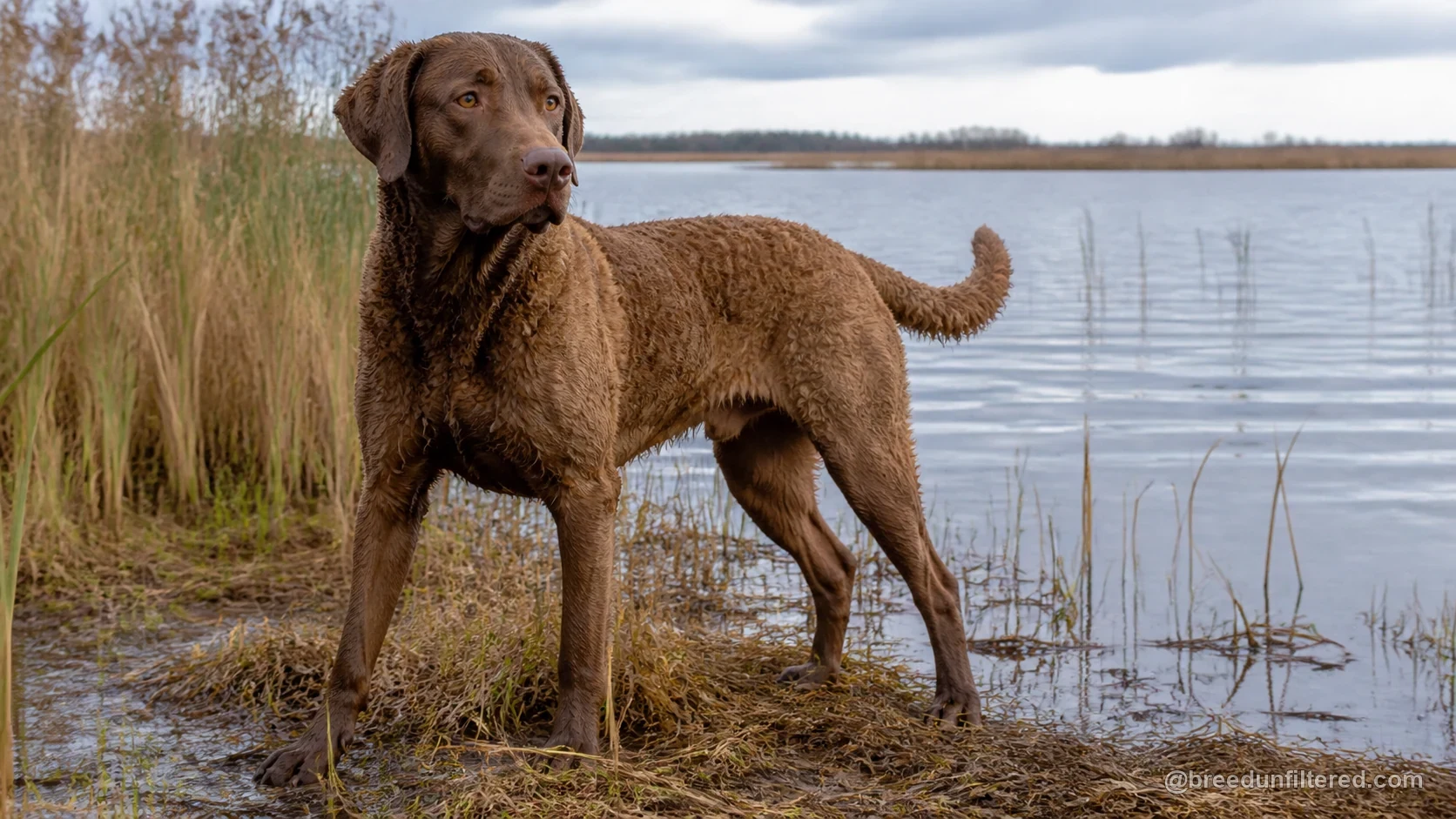
The Chesapeake Bay Retriever, often called the Chessie, is a rugged, water-loving gundog developed along the Chesapeake Bay in the United States. Unlike many retrievers bred primarily for field trials, the Chessie was created to withstand icy waters and harsh conditions while retrieving waterfowl for hunters. This heritage has shaped a breed that is powerful, resilient, and deeply loyal to its family, but also independent and sometimes stubborn.
Prospective owners should understand that the Chesapeake Bay Retriever is not a generic retriever. It tends to be more reserved with strangers, more protective of its home, and more demanding in terms of exercise and mental stimulation. While they can be wonderful companions for active individuals or families, they are not the best choice for first-time dog owners or those seeking a low-maintenance pet. This article provides an honest overview of the breed's characteristics, care requirements, and the responsibilities involved in owning a Chessie.
Origin and Purpose
The Chesapeake Bay Retriever originated in the early 19th century in the Chesapeake Bay region of Maryland and Virginia. The breed's foundation is often traced to two Newfoundland dogs rescued from a shipwreck in 1807, which were then crossed with local retrievers and other gundogs. The result was a dog uniquely adapted to the cold, rough waters of the bay, with a dense, oily coat that repels water and provides insulation.
The Chessie was bred for practical purposes: retrieving waterfowl under demanding conditions. This required not only physical strength and endurance but also intelligence and a strong will. Unlike some retrievers that are eager to please, the Chesapeake Bay Retriever was selected for its ability to work independently and make decisions in the field. This purpose-driven origin continues to influence the breed's temperament and behavior today.
Temperament and Variation
Chesapeake Bay Retrievers are known for their loyal, affectionate, and protective nature toward their families. They often form strong bonds with their owners and can be gentle and playful at home. However, they are typically more reserved and wary around strangers compared to other retrievers. This guarding tendency, combined with their size and strength, means they need proper socialization from an early age to ensure they are well-adjusted adults.
Individual temperament can vary widely within the breed. Some Chessies are more outgoing and social, while others are more aloof and independent. Factors such as genetics, early socialization, and training play significant roles. It is important for prospective owners to meet the parents of a puppy and discuss temperament with breeders to get a sense of what to expect. No universal temperament claim can be made for every individual dog.
Exercise and Mental Work
The Chesapeake Bay Retriever is a high-energy breed that requires substantial daily exercise to stay physically and mentally healthy. They thrive on activities that engage their natural retrieving instincts, such as fetching, swimming, and field work. A fenced yard is often recommended, as their love of water and strong prey drive can lead them to wander if given the chance. Without adequate exercise, they may become bored and develop destructive behaviors.
Mental stimulation is equally important. Chessies are intelligent dogs that enjoy problem-solving and challenging tasks. Activities like nose work, obedience training, and puzzle toys can help keep their minds sharp. They also excel in dog sports such as dock diving and agility, which combine physical exertion with mental engagement. Prospective owners should be prepared to dedicate time each day to both physical and mental exercise to meet the breed's needs.
Training and Socialisation
Training a Chesapeake Bay Retriever requires patience, consistency, and a firm but fair approach. They are independent thinkers and may question commands if they see no reason to comply. Positive reinforcement methods, such as treats and praise, tend to work best, as harsh training can damage the trust between dog and owner. Early obedience training is essential to establish leadership and prevent stubbornness from becoming a problem.
Socialisation is critical for Chessies, especially given their natural wariness of strangers. Exposing them to a variety of people, animals, and environments from a young age helps them become more confident and less reactive. Puppy classes and regular outings can be beneficial. However, even with good socialisation, some Chessies may retain a protective instinct, so owners should be prepared to manage this trait responsibly.
Family and Other Pets
Chesapeake Bay Retrievers can make excellent family dogs for active households. They are generally good with children, especially when raised with them, and can be playful and tolerant. However, their size and boisterousness may be overwhelming for very young children, so supervision is recommended. They are also known to be protective of their family, which can be a positive trait but requires careful management to avoid over-protectiveness.
When it comes to other pets, Chessies can vary. They were bred to retrieve, and their prey drive may be strong, particularly toward small animals like cats or rabbits. Early socialisation with other dogs can help them get along, but they may be dominant or assertive with unfamiliar dogs. Prospective owners should consider their existing pets and be prepared to manage introductions carefully. No guarantee can be made for every individual dog.
Grooming and Health
The Chesapeake Bay Retriever has a thick, wavy double coat that is naturally water-resistant. They shed moderately year-round and more heavily during seasonal changes. Regular brushing, at least once or twice a week, helps manage loose hair and keep the coat healthy. Bathing should be infrequent to preserve the coat's natural oils, which are important for water repellency. Their ears should be checked regularly to prevent infections, especially after swimming.
As with many purebred dogs, Chessies may be prone to certain health conditions, including hip dysplasia, progressive retinal atrophy, and various heart issues. Responsible breeders screen their breeding stock for these conditions. Prospective owners should ask for health clearances and be prepared for potential veterinary costs. Regular check-ups and a balanced diet are essential to maintain overall health, but no breed is free from health concerns.
Costs and Responsibility
Owning a Chesapeake Bay Retriever involves significant financial and time commitments. Initial costs include purchasing a puppy from a reputable breeder, which can be expensive, as well as supplies like crates, leashes, and food. Ongoing expenses include high-quality dog food, routine veterinary care, vaccinations, and preventive medications. Emergency medical care can add to the cost, so pet insurance is often recommended.
Beyond finances, owners must be responsible for providing proper training, socialisation, and exercise throughout the dog's life. Chessies are not a breed that can be left alone for long periods; they need companionship and mental engagement. They are also not ideal for apartment living unless owners are extremely dedicated to meeting their exercise needs. Prospective owners should honestly assess their lifestyle and ability to meet these demands before bringing a Chessie home.
Clear answers
FREQUENTLY ASKED QUESTIONS
Are Chesapeake Bay Retrievers good with children?
Chesapeake Bay Retrievers can be good with children, especially when raised with them from puppyhood. They are often playful and protective, but their large size and energetic nature may be too much for very young kids. Supervision is recommended to ensure safe interactions, and early socialisation helps them learn appropriate behavior around children.
Do Chesapeake Bay Retrievers shed a lot?
Yes, Chesapeake Bay Retrievers shed moderately throughout the year and more heavily during seasonal changes. Their thick double coat requires regular brushing, at least once or twice a week, to manage loose hair. Bathing should be infrequent to preserve natural oils that keep their coat water-resistant.
Are Chesapeake Bay Retrievers easy to train?
Chesapeake Bay Retrievers are intelligent but independent, which can make training a challenge for novice owners. They respond best to positive reinforcement and consistent, patient methods. Early obedience training and socialisation are crucial to channel their willfulness into good behavior. Experienced handlers often find them rewarding to train.
How much exercise does a Chesapeake Bay Retriever need?
Chesapeake Bay Retrievers are high-energy dogs that need substantial daily exercise, typically at least an hour or more of vigorous activity. They enjoy swimming, fetching, and other retrieving games. Mental stimulation is equally important to prevent boredom. Without enough exercise, they may become destructive or develop behavioral issues.
Are Chesapeake Bay Retrievers good apartment dogs?
Chesapeake Bay Retrievers are generally not ideal for apartment living due to their size, energy, and need for space. They require a fenced yard and plenty of outdoor exercise. If you live in an apartment, you would need to commit to multiple daily walks and off-leash activities to meet their needs, which can be challenging.
Sources and further reading
Scores describe typical breed tendencies from 1 to 10. They are not a quality ranking or a prediction for an individual dog.
Size and presence6/10
CompactVery large
Physical strength7/10
LightExceptional
Energy level9/10
LowRelentless
Exercise demand10/10
ModestVery demanding
Mental work needed8/10
ModerateDaily job
Trainability9/10
ChallengingExceptional
Everyday manageability5/10
SpecialistStraightforward
First-time owner fit6/10
Poor fitGood fit
Family-life fit9/10
LimitedExcellent
Dog sociability8/10
SelectiveVery social
Prey drive9/10
LowVery high
Guarding tendency4/10
MinimalSerious
Independence4/10
Handler-focusedSelf-directed
Grooming demand7/10
LightHeavy
Apartment fit3/10
Poor fitGood fit