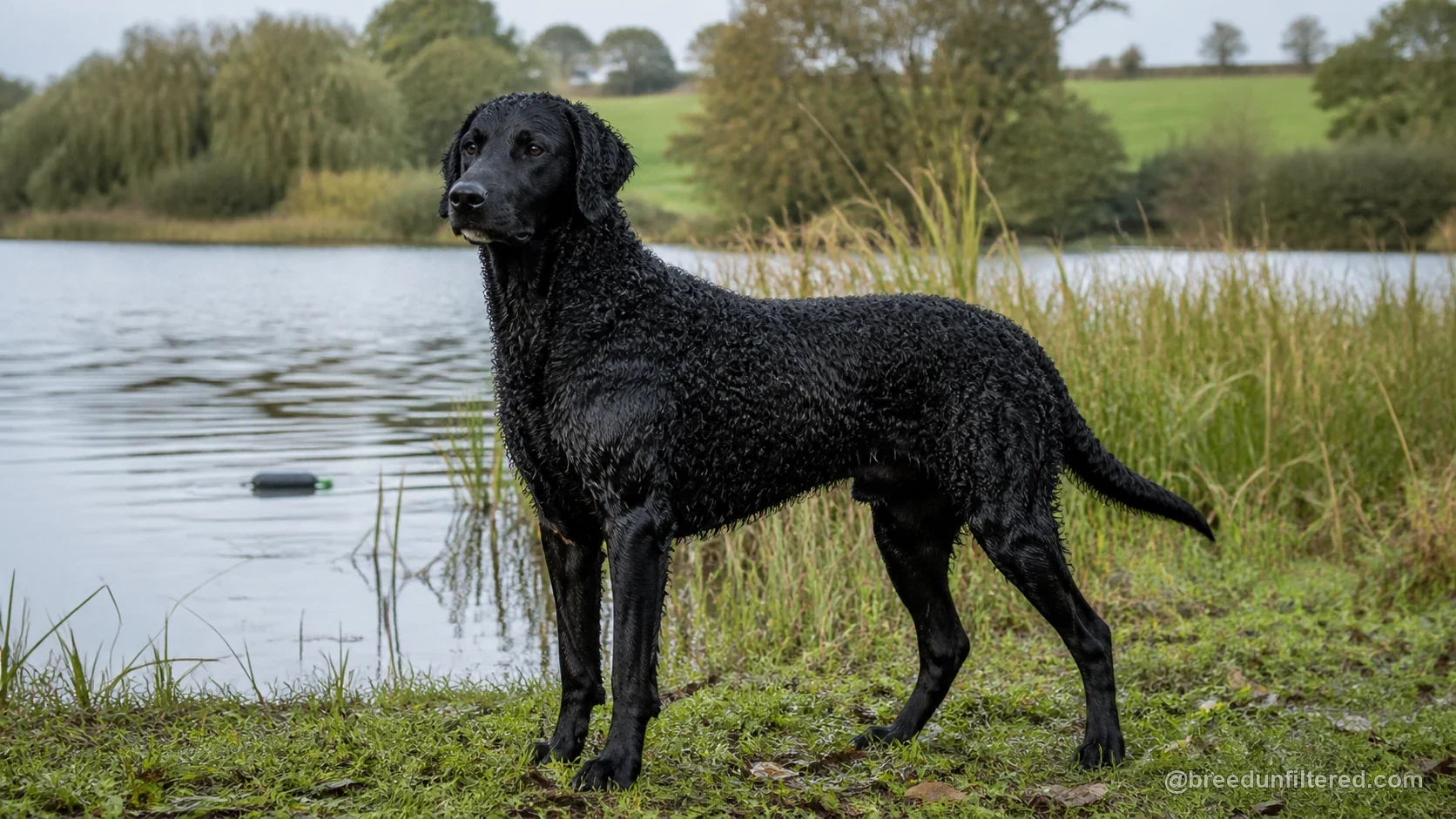
Complete breed guide
Curly Coated Retriever OWNERSHIP GUIDE
The Curly Coated Retriever is one of the oldest and most distinctive of the retriever breeds, known for its tight, water-resistant curls and a silhouette that sets it apart in the field and at home. Originally developed in England to retrieve game from land and water, this breed combines the enthusiasm of a working gundog with a somewhat independent and sometimes aloof character. Prospective owners should appreciate that the Curly Coated Retriever is not a typical 'everyone's best friend' retriever; it often forms a deep bond with its family while remaining reserved with strangers.
This article provides a balanced overview of the Curly Coated Retriever, covering its origins, temperament, exercise and mental stimulation needs, training approaches, suitability with families and other pets, grooming and health considerations, and the financial and time commitments involved. The goal is to help you decide whether this intelligent, energetic, and loyal breed aligns with your lifestyle and expectations. Remember that individual dogs vary, and early socialisation and consistent, positive training are key to a well-adjusted companion.
Origin and Purpose
The Curly Coated Retriever's exact origins are not fully documented, but it is widely believed to have been developed in England during the early 19th century, possibly from crosses involving the now-extinct English Water Spaniel, the retrieving setter, and later the Poodle and Labrador Retriever. The breed was prized for its ability to work in cold water and dense cover, retrieving game with a soft mouth and a strong swimming drive. Its distinctive curly coat provided protection from harsh weather and brambles.
Recognised by the Fédération Cynologique Internationale (FCI) in Group 8, the Curly Coated Retriever remains a versatile working dog, though it is also kept as a companion. The breed's purpose has always been practical: to assist hunters in retrieving both fur and feather. Today, while many are family pets, they still excel in field trials, obedience, and other canine sports, reflecting their heritage as a resilient and capable gundog.
Temperament and Variation
Curly Coated Retrievers are often described as confident, intelligent, and somewhat independent. They tend to be affectionate with their family but can be reserved or aloof with strangers, which is a trait that may be mistaken for shyness or aggression but is usually just a calm wariness. They are not typically 'velcro' dogs; they may follow you from room to room but are also content to entertain themselves. Their temperament can vary, with some lines being more outgoing and others more serious.
This breed is known for its 'curly' sense of humour and can be quite playful, even into adulthood. They are generally not aggressive, but their guarding instinct is moderate; they may alert bark but are not typically guard dogs. Early and ongoing socialisation is crucial to help them become well-adjusted adults, as they can be wary of unfamiliar people and situations. Understanding that each dog is an individual is key; some may be more eager to please, while others are more stubborn.
Exercise and Mental Work
Curly Coated Retrievers are high-energy dogs that require substantial daily exercise to stay physically and mentally healthy. They are natural athletes and enjoy activities like running, swimming, fetching, and hiking. A fenced yard is beneficial, but on-leash walks and off-leash time in safe areas are also important. Without adequate exercise, they may become restless and develop destructive behaviours. However, the exact amount varies by age, health, and individual temperament.
Mental stimulation is equally important. This breed is intelligent and can become bored easily. Puzzle toys, nose work, obedience training, and interactive games can help challenge their minds. They often excel in dog sports such as agility, rally, and dock diving, which combine physical and mental engagement. A tired Curly is a happy Curly, and providing both physical and mental outlets will help prevent behavioural issues.
Training and Socialisation
Training a Curly Coated Retriever requires patience, consistency, and positive reinforcement. They are intelligent but can be independent and may question commands if they see no benefit. Harsh methods are counterproductive; instead, use treats, praise, and play as rewards. Early socialisation is vital: expose your puppy to a variety of people, animals, environments, and sounds to build a confident, well-mannered adult. Puppy classes are a great start.
Because of their retrieving instinct, they may pick up objects and carry them, which can be channelled into fetch games. They are generally eager to learn but may have a stubborn streak. Keep training sessions short and fun to maintain their interest. Consistency from all family members is important. With the right approach, they can be highly trainable, but they are not the best choice for first-time owners who are not prepared for a strong-willed, energetic dog.
Family and Other Pets
Curly Coated Retrievers can make excellent family dogs, especially in active households. They are generally good with children, especially when raised with them, but their exuberance and size mean they should be supervised around very young children to prevent accidental knocking over. They are loyal and protective of their family, but they may be reserved with strangers, so early socialisation is key. They thrive on being included in family activities.
With other dogs, they usually get along well, especially if socialised from a young age. Their prey drive, however, can be significant, so they may not be reliable around small pets like cats, rabbits, or birds unless raised with them and trained consistently. Even then, supervision is wise. As with any breed, individual temperaments vary, and proper introductions are essential.
Grooming and Health
The Curly Coated Retriever's coat is its hallmark, but it requires specific care. The tight curls should not be brushed daily, as that can break the curls and make the coat frizzy. Instead, occasional brushing (weekly or biweekly) and combing with a wide-toothed comb are recommended. They shed lightly year-round and more heavily seasonally. Bathing should be infrequent to preserve natural oils. Their ears should be checked regularly for moisture and debris, and nails trimmed as needed.
As a breed, Curly Coated Retrievers are generally healthy, but like all purebreds, they can be prone to certain conditions. These may include hip dysplasia, elbow dysplasia, eye disorders such as progressive retinal atrophy, and some types of cancer. Responsible breeders screen their breeding stock for these issues. Regular veterinary check-ups, a balanced diet, and appropriate exercise contribute to overall health. Prospective owners should be prepared for potential health costs and should seek a breeder who provides health clearances.
Costs and Responsibility
Owning a Curly Coated Retriever involves significant financial and time commitments. Initial costs include the purchase price from a reputable breeder (which can be substantial), as well as supplies like crates, bedding, food, and veterinary care. Ongoing expenses include high-quality food, routine vet visits, vaccinations, flea and tick prevention, and pet insurance. Emergency medical care can be costly, so planning ahead is wise.
Beyond money, this breed demands time for exercise, training, grooming, and companionship. They are not suited to being left alone for long periods. Prospective owners should assess their lifestyle to ensure they can meet the breed's needs. Adopting from a rescue is also an option, which can be more affordable and gives a dog a second chance. Responsible ownership means committing to the dog's well-being for its entire life, which can be 10-12 years or more.
Clear answers
FREQUENTLY ASKED QUESTIONS
Are Curly Coated Retrievers good with children?
Curly Coated Retrievers can be good with children, especially when raised with them and properly socialised. They are generally playful and tolerant, but their size and energy can be overwhelming for very young kids. Supervision is recommended to prevent accidental injuries. Early training to teach gentle behaviour is important, and children should also be taught how to interact respectfully with dogs.
How much exercise does a Curly Coated Retriever need?
Curly Coated Retrievers are high-energy dogs that need substantial daily exercise, typically at least an hour or more of vigorous activity. This can include running, swimming, fetching, and interactive play. They also need mental stimulation to prevent boredom. The exact amount varies by age and individual, but a well-exercised Curly is more relaxed at home.
Are Curly Coated Retrievers easy to train?
They are intelligent and capable of learning quickly, but they can be independent and stubborn. Positive reinforcement methods work best, as harsh training can cause them to shut down. Consistency and patience are key. They respond well to reward-based training and enjoy activities that engage their minds, such as obedience and agility.
Do Curly Coated Retrievers shed a lot?
Curly Coated Retrievers shed moderately, but their tight curls tend to trap loose hair, so shedding may be less noticeable than in other breeds. Regular grooming, including occasional brushing and combing, helps remove dead hair and prevent matting. They are not hypoallergenic, and people with allergies should spend time with the breed before committing.
What health issues are common in Curly Coated Retrievers?
Like many purebred dogs, Curly Coated Retrievers can be prone to certain hereditary conditions, including hip and elbow dysplasia, eye disorders such as progressive retinal atrophy, and some cancers. Responsible breeders screen for these issues. Regular veterinary care and a healthy lifestyle can help manage risks, but prospective owners should be aware of potential health costs.
Sources and further reading
Scores describe typical breed tendencies from 1 to 10. They are not a quality ranking or a prediction for an individual dog.
Size and presence6/10
CompactVery large
Physical strength6/10
LightExceptional
Energy level9/10
LowRelentless
Exercise demand10/10
ModestVery demanding
Mental work needed8/10
ModerateDaily job
Trainability8/10
ChallengingExceptional
Everyday manageability5/10
SpecialistStraightforward
First-time owner fit6/10
Poor fitGood fit
Family-life fit9/10
LimitedExcellent
Dog sociability8/10
SelectiveVery social
Prey drive7/10
LowVery high
Guarding tendency4/10
MinimalSerious
Independence6/10
Handler-focusedSelf-directed
Grooming demand5/10
LightHeavy
Apartment fit5/10
Poor fitGood fit