Complete breed guide
Canarian Warren Hound OWNERSHIP GUIDE
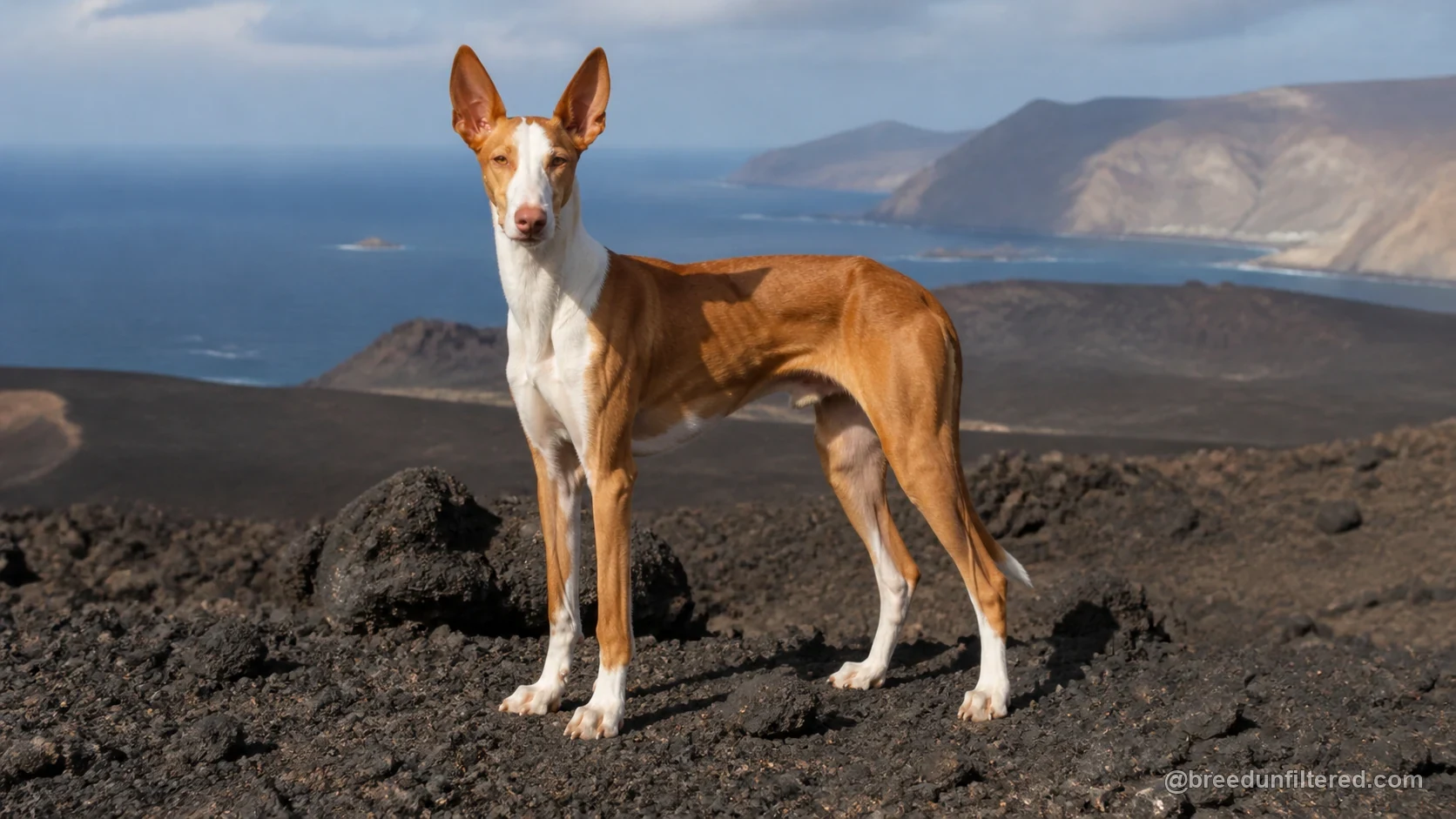
The Canarian Warren Hound, also known as the Podenco Canario, is a primitive sighthound from the Canary Islands, recognized by the FCI in Group 5. Bred for centuries to hunt rabbits in rugged volcanic terrain, this breed combines remarkable athleticism with a keen, independent mind. Its lean, agile body and large erect ears give it a distinctive silhouette, while its history as a working hunter shapes much of its behavior and needs.
Prospective owners should understand that this is not a typical companion dog. The Canarian Warren Hound thrives in an environment that respects its hunting instincts and provides ample physical and mental stimulation. While loyal and affectionate with its family, it can be reserved with strangers and may not suit every household. This article offers a balanced overview of the breed's characteristics, care requirements, and the responsibilities involved in owning one.
Origin and Purpose
The Canarian Warren Hound originates from the Canary Islands, where it was developed to hunt rabbits in the island's volcanic landscapes. Its name 'warren hound' reflects its specialty in pursuing rabbits through rocky burrows and dense scrub. The breed is believed to have ancient roots, possibly descending from dogs brought to the islands by early settlers, and it has remained relatively unchanged due to geographic isolation.
The FCI standard (number 329) classifies it as a primitive type, emphasizing its functional hunting ability over showy appearance. Historically, these dogs were valued for their endurance, speed, and keen sight and scent, working in packs or individually. Today, while some are still used for hunting, many are kept as companions, but their purpose-driven nature remains a core aspect of their temperament and behavior.
Temperament and Variation
Canarian Warren Hounds are typically alert, intelligent, and independent. They form strong bonds with their human family and can be affectionate, but they often retain a degree of aloofness with strangers. Their temperament is shaped by their hunting background, leading to a high prey drive and a tendency to chase small animals. Individual variation exists, influenced by genetics, socialization, and training, so generalizations should be made cautiously.
These dogs are not typically aggressive but may be reserved or wary in new situations. They are sensitive and respond best to positive, patient handling. Their independence can be mistaken for stubbornness, but it reflects their history of making decisions while hunting. Early and ongoing socialization is crucial to help them become well-adjusted companions, especially in urban or family environments.
Exercise and Mental Work
As a high-energy sighthound, the Canarian Warren Hound requires substantial daily exercise to stay physically and mentally healthy. Long walks, runs, or opportunities to sprint in a securely fenced area are essential. Without adequate activity, they may develop behavioral issues such as excessive barking or destructive chewing. However, exercise needs vary with age, health, and individual temperament, so owners should adjust accordingly.
Mental stimulation is equally important. These intelligent dogs benefit from puzzle toys, scent games, and activities that engage their natural hunting instincts, such as lure coursing or nose work. Boredom can lead to frustration, so providing a variety of enrichment is key. Owners should be prepared to dedicate time each day to both physical and mental challenges to ensure a balanced, contented dog.
Training and Socialisation
Training a Canarian Warren Hound requires patience and consistency. They respond well to positive reinforcement techniques, such as treats and praise, but may become disinterested with harsh methods. Their independent nature means they may not always be eager to please, so training sessions should be short, engaging, and varied. Early obedience training is recommended to establish a foundation of good manners.
Socialisation from a young age is vital to help them become comfortable with various people, animals, and environments. Exposing them to different sights and sounds can reduce fearfulness and reactivity. While they can coexist with other dogs if properly introduced, their prey drive may make them unsafe around small pets like rabbits or cats. Owners must manage these interactions carefully and never assume universal compatibility.
Family and Pets
Canarian Warren Hounds can be loving family members, especially in homes that respect their need for space and activity. They are often gentle with children they know, but due to their size and energy, supervision is advised, particularly with very young kids. They may not tolerate rough handling, so teaching children how to interact respectfully is essential.
Their compatibility with other pets is highly variable. While they may get along with dogs of similar size, their hunting instinct can be triggered by smaller animals, including cats and rodents. Introductions should be gradual and controlled, and even then, some individuals may never be trustworthy with small pets. Prospective owners with existing pets should consider this risk and seek guidance from breed-experienced professionals.
Grooming and Health
The Canarian Warren Hound has a short, smooth coat that is relatively low-maintenance. Weekly brushing helps remove loose hair and keep the coat healthy. They shed moderately, and more during seasonal changes. Regular ear checks are important, as their large erect ears can accumulate dirt. Nail trimming, dental care, and occasional baths are part of routine grooming.
As a breed, they are generally hardy, but like all dogs, they may be prone to certain health conditions. Responsible breeders screen for issues such as hip dysplasia and eye disorders. Owners should maintain regular veterinary check-ups and a balanced diet to support overall health. There is no guarantee of specific health outcomes, so prospective owners should ask breeders about health testing and family history.
Costs and Responsibility
Owning a Canarian Warren Hound involves financial and time commitments. Initial costs include the purchase price from a reputable breeder or adoption fees, plus supplies like a crate, bedding, and food. Ongoing expenses include high-quality dog food, routine veterinary care, vaccinations, and preventive medications. Emergency medical costs can be significant, so pet insurance is worth considering.
Beyond finances, this breed demands a significant investment of time and energy. They are not suited to a sedentary lifestyle or long periods alone. Prospective owners must be prepared for daily exercise, mental enrichment, and training. It is also essential to secure a safe, fenced yard to prevent escapes, as their hunting instincts may lead them to roam. Responsible ownership means understanding and meeting these needs for the dog's entire life.
Clear answers
FREQUENTLY ASKED QUESTIONS
Is the Canarian Warren Hound good with children?
Canarian Warren Hounds can be good with children if they are raised together and properly socialized. They are generally gentle and affectionate with their family, but due to their size and energy, supervision is recommended, especially with younger children. Teaching children to respect the dog's space and avoid rough play is important to prevent accidental injuries.
How much exercise does a Canarian Warren Hound need?
This breed has high exercise needs, typically requiring at least 1-2 hours of vigorous activity daily, though individual needs vary. They enjoy running, hiking, and off-leash play in a secure area. Without sufficient exercise, they may become restless and develop behavioral problems. Mental stimulation is equally important to keep them engaged.
Are Canarian Warren Hounds easy to train?
Training can be challenging due to their independent nature. They are intelligent but may not be as eager to please as some other breeds. Positive reinforcement methods work best, and sessions should be short and interesting. Consistency and patience are key. Early socialization and obedience training are highly recommended.
Do Canarian Warren Hounds get along with other pets?
Their compatibility with other pets varies. They often do well with other dogs, especially if raised together, but their prey drive can be strong, making them unsafe around small animals like cats, rabbits, or guinea pigs. Careful introductions and management are essential, and even then, some individuals may never be trustworthy with small pets.
What are the grooming requirements for a Canarian Warren Hound?
Grooming is relatively low-maintenance. Their short coat requires weekly brushing to remove loose hair and keep it healthy. They shed moderately, with heavier shedding during seasonal changes. Regular ear checks, nail trimming, and dental care are also necessary. Bathing is only needed occasionally, unless they get dirty.
Sources and further reading
Scores describe typical breed tendencies from 1 to 10. They are not a quality ranking or a prediction for an individual dog.
Size and presence5/10
CompactVery large
Physical strength5/10
LightExceptional
Energy level9/10
LowRelentless
Exercise demand10/10
ModestVery demanding
Mental work needed8/10
ModerateDaily job
Trainability6/10
ChallengingExceptional
Everyday manageability2/10
SpecialistStraightforward
First-time owner fit3/10
Poor fitGood fit
Family-life fit7/10
LimitedExcellent
Dog sociability6/10
SelectiveVery social
Prey drive10/10
LowVery high
Guarding tendency6/10
MinimalSerious
Independence9/10
Handler-focusedSelf-directed
Grooming demand8/10
LightHeavy
Apartment fit4/10
Poor fitGood fit