Complete breed guide
Bull Terrier OWNERSHIP GUIDE
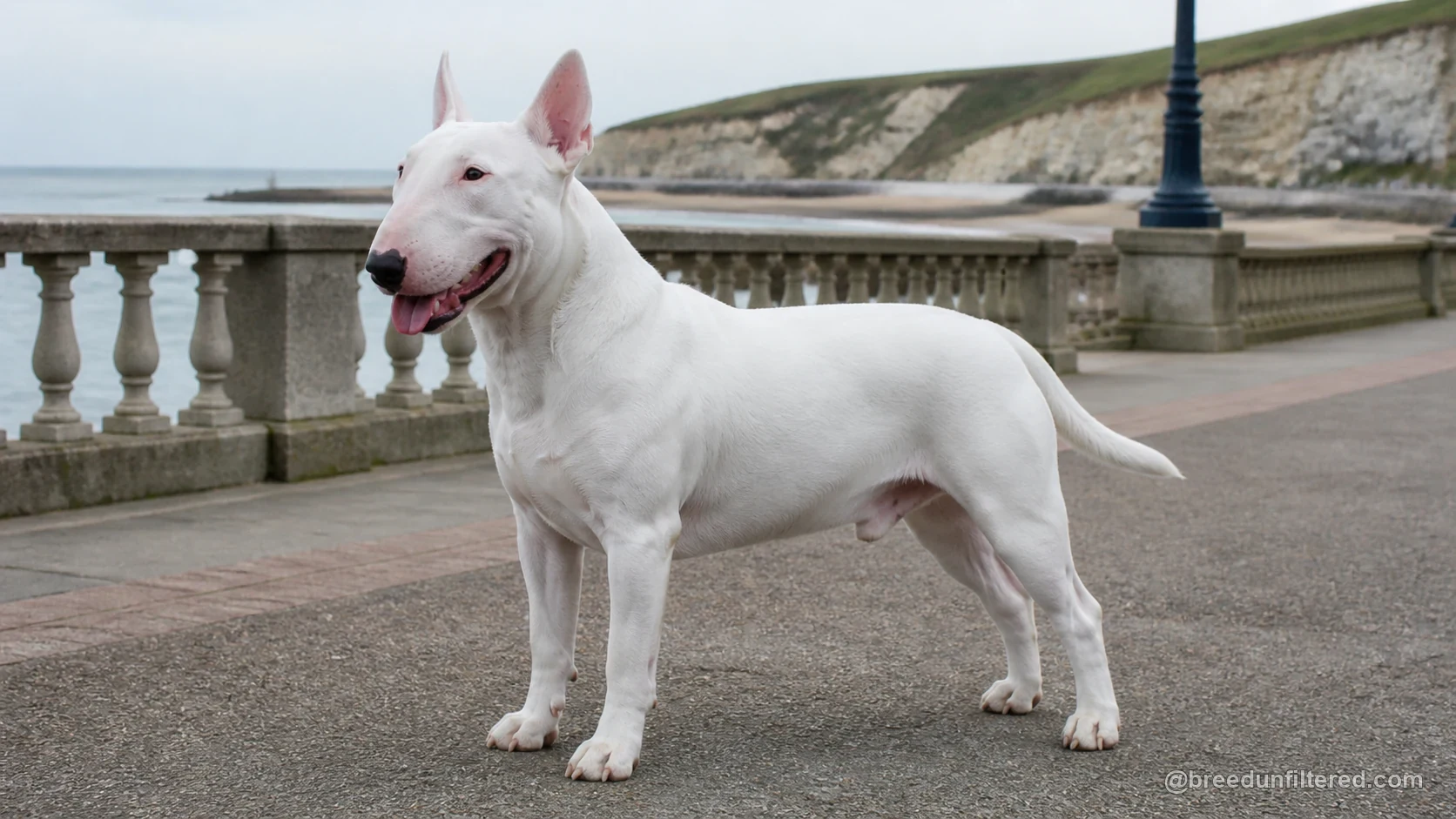
The Bull Terrier, with its unmistakable egg-shaped head and muscular build, is a breed that commands attention and affection in equal measure. Originating in 19th-century England, this dog was developed from crosses between the Old English Bulldog and various terriers, aiming to create a tenacious yet agile companion. Today's Bull Terrier is a far cry from its fighting ancestors, bred instead for companionship, yet it retains a bold, determined character that requires an experienced and committed owner.
Prospective owners should understand that the Bull Terrier is not a dog for everyone. Its playful, sometimes clownish demeanor hides a strong-willed and energetic nature that demands consistent training, ample exercise, and early socialization. While deeply loyal and affectionate with their families, they can be stubborn and may not get along with other animals if not properly introduced. This guide provides an evidence-conscious overview of the breed's needs, helping you decide if the Bull Terrier is the right fit for your lifestyle.
Origin and Purpose
The Bull Terrier's roots trace back to early 19th-century England, where bulldogs and terriers were crossed to produce a dog with the tenacity of the former and the agility of the latter. These early 'bull and terriers' were used in blood sports like bull-baiting and dog fighting, but as these practices were outlawed, breeders like James Hinks began refining the breed into a more elegant and companionable dog. Hinks is credited with standardizing the white Bull Terrier in the 1860s, aiming for a clean, pure appearance and a more amiable temperament.
The breed's purpose evolved from fighting to that of a loyal companion and show dog. The Bull Terrier's distinctive head shape, with its convex profile and small, triangular eyes, was developed through selective breeding. Recognized by the FCI in Group 3 (Terriers), the Bull Terrier today is primarily a family pet and show dog, though it retains a strong prey drive and a protective instinct. Understanding this history helps explain the breed's physical and behavioral traits, which are a blend of power, determination, and affection.
Temperament and Variation
Bull Terriers are known for their playful, mischievous, and sometimes stubborn personalities. They are often described as 'clowns' due to their antics and love of attention. They form strong bonds with their families and can be very affectionate, often seeking physical closeness. However, they are also independent thinkers and can be willful, which may challenge novice owners. Their temperament can vary between individuals, but a well-bred and properly socialized Bull Terrier is typically good-natured and loyal.
There are two size varieties: the standard Bull Terrier and the Miniature Bull Terrier, which is a separate breed in some registries but shares many traits. Both share the same distinctive head and personality, but the miniature is smaller and more portable. Regardless of size, Bull Terriers are generally not aggressive by nature, but they can be protective and may exhibit same-sex aggression if not socialized early. It's crucial to meet the parents or observe the puppy's behavior to gauge temperament, as individual variation is significant.
Exercise and Mental Work
Bull Terriers are energetic dogs that require regular physical activity to stay healthy and happy. They enjoy brisk walks, play sessions, and opportunities to run in a secure area. However, their exercise needs are not extreme; a couple of moderate walks daily plus playtime can suffice for many adults. Puppies and young adults may have bursts of energy and need more structured activity. It's important to avoid over-exercising puppies to protect their developing joints.
Mental stimulation is equally vital for this intelligent breed. Without adequate mental challenges, Bull Terriers can become bored and destructive. Puzzle toys, obedience training, and interactive games like hide-and-seek can help keep their minds engaged. They also excel in dog sports such as agility, obedience, and even weight pulling, which can provide both physical and mental outlets. A tired Bull Terrier is a well-behaved one, so incorporating both physical and mental exercise into their daily routine is essential.
Training and Socialisation
Training a Bull Terrier requires patience, consistency, and positive reinforcement methods. They respond well to reward-based training, but they can be stubborn and may test boundaries. Early socialization is crucial to help them become well-adjusted adults. Exposing them to various people, animals, environments, and sounds from a young age can reduce the likelihood of fearfulness or aggression. Puppy classes are an excellent way to start this process.
Because of their strong-willed nature, Bull Terriers are not recommended for first-time dog owners unless they are committed to seeking professional guidance. They need a firm but gentle handler who can establish clear rules and boundaries. Harsh training methods can lead to resentment and behavioral issues. Consistency is key; training sessions should be short and engaging to hold their attention. With proper training, Bull Terriers can be obedient and reliable companions, but it requires ongoing effort throughout their lives.
Family and Other Pets
Bull Terriers can make wonderful family pets for households with older children who understand how to interact respectfully with dogs. They are generally playful and tolerant, but their boisterous nature and strength might be too much for very young children. As with any dog, supervision is essential to prevent accidental injuries. They are loyal and protective of their family, often forming a strong bond with one person in particular.
Regarding other pets, Bull Terriers have a high prey drive and may not be trustworthy with small animals like cats, rabbits, or rodents. They can also be aggressive towards other dogs, especially those of the same sex. Early socialization can help mitigate these tendencies, but it is not a guarantee. Many Bull Terriers live peacefully with cats if raised together, but introductions should be gradual and supervised. Prospective owners should be prepared to manage their dog's interactions with other animals carefully.
Grooming and Health
Grooming a Bull Terrier is relatively low-maintenance. Their short, flat coat requires only occasional brushing to remove loose hair and keep it shiny. They shed moderately, so weekly brushing can help control shedding. They are generally clean dogs and do not have a strong doggy odor. Regular nail trimming, ear cleaning, and dental care are important parts of their grooming routine.
Like many purebred dogs, Bull Terriers are prone to certain health conditions. These may include deafness (especially in white dogs), heart disease, kidney disease, and skin allergies. Responsible breeders screen for these issues, but prospective owners should be aware of the potential costs and care involved. Regular veterinary check-ups and a healthy diet can help manage some conditions. It's essential to obtain a puppy from a breeder who performs health testing and provides a health guarantee.
Costs and Responsibility
Owning a Bull Terrier is a significant financial and time commitment. The initial cost of a puppy from a reputable breeder can be substantial, often ranging from $1,500 to $3,000 or more, depending on location and bloodline. Additionally, there are ongoing expenses for food, veterinary care, grooming supplies, and pet insurance. Emergency medical costs can be high, so it's wise to budget accordingly.
Beyond finances, Bull Terriers require a substantial investment of time and energy. They need daily exercise, mental stimulation, and companionship. They are not suited to being left alone for long periods and may develop separation anxiety. Prospective owners should assess their lifestyle to ensure they can meet the breed's needs. This includes providing a secure, fenced yard and being prepared for a dog that may live 10-14 years. Responsible ownership also involves ongoing training and socialization to ensure a well-behaved companion.
Clear answers
FREQUENTLY ASKED QUESTIONS
Are Bull Terriers good with children?
Bull Terriers can be good with children, especially when raised with them and properly socialized. They are playful and affectionate, but their strong, boisterous nature may be too much for very young children. Supervision is essential to prevent accidental injuries, and children should be taught how to interact respectfully with dogs.
Do Bull Terriers get along with other dogs?
Bull Terriers can be aggressive towards other dogs, particularly those of the same sex. Early socialization can help, but it is not a guarantee. Many Bull Terriers do best as the only dog in the household. If you have other dogs, introductions should be gradual and supervised, and you should be prepared to manage their interactions.
How much exercise does a Bull Terrier need?
Bull Terriers are energetic and need regular exercise, typically at least an hour of activity per day. This can include walks, playtime, and mental stimulation. Without enough exercise, they can become bored and destructive. However, their needs are not extreme, and they can adapt to apartment living if given sufficient daily exercise.
Are Bull Terriers easy to train?
Bull Terriers are intelligent but can be stubborn, making training a challenge for novice owners. They respond best to positive reinforcement methods with consistency and patience. Early socialization and obedience training are crucial. Professional guidance may be beneficial for first-time owners to ensure a well-behaved dog.
What health issues are common in Bull Terriers?
Bull Terriers are prone to certain health conditions, including deafness (especially in white dogs), heart disease, kidney disease, and skin allergies. Responsible breeders screen for these issues, but prospective owners should be aware of potential costs. Regular veterinary check-ups and a healthy lifestyle can help manage some conditions.
Sources and further reading
Scores describe typical breed tendencies from 1 to 10. They are not a quality ranking or a prediction for an individual dog.
Size and presence4/10
CompactVery large
Physical strength6/10
LightExceptional
Energy level8/10
LowRelentless
Exercise demand8/10
ModestVery demanding
Mental work needed8/10
ModerateDaily job
Trainability5/10
ChallengingExceptional
Everyday manageability1/10
SpecialistStraightforward
First-time owner fit2/10
Poor fitGood fit
Family-life fit6/10
LimitedExcellent
Dog sociability3/10
SelectiveVery social
Prey drive10/10
LowVery high
Guarding tendency5/10
MinimalSerious
Independence9/10
Handler-focusedSelf-directed
Grooming demand2/10
LightHeavy
Apartment fit5/10
Poor fitGood fit