Complete breed guide
Scottish Terrier OWNERSHIP GUIDE
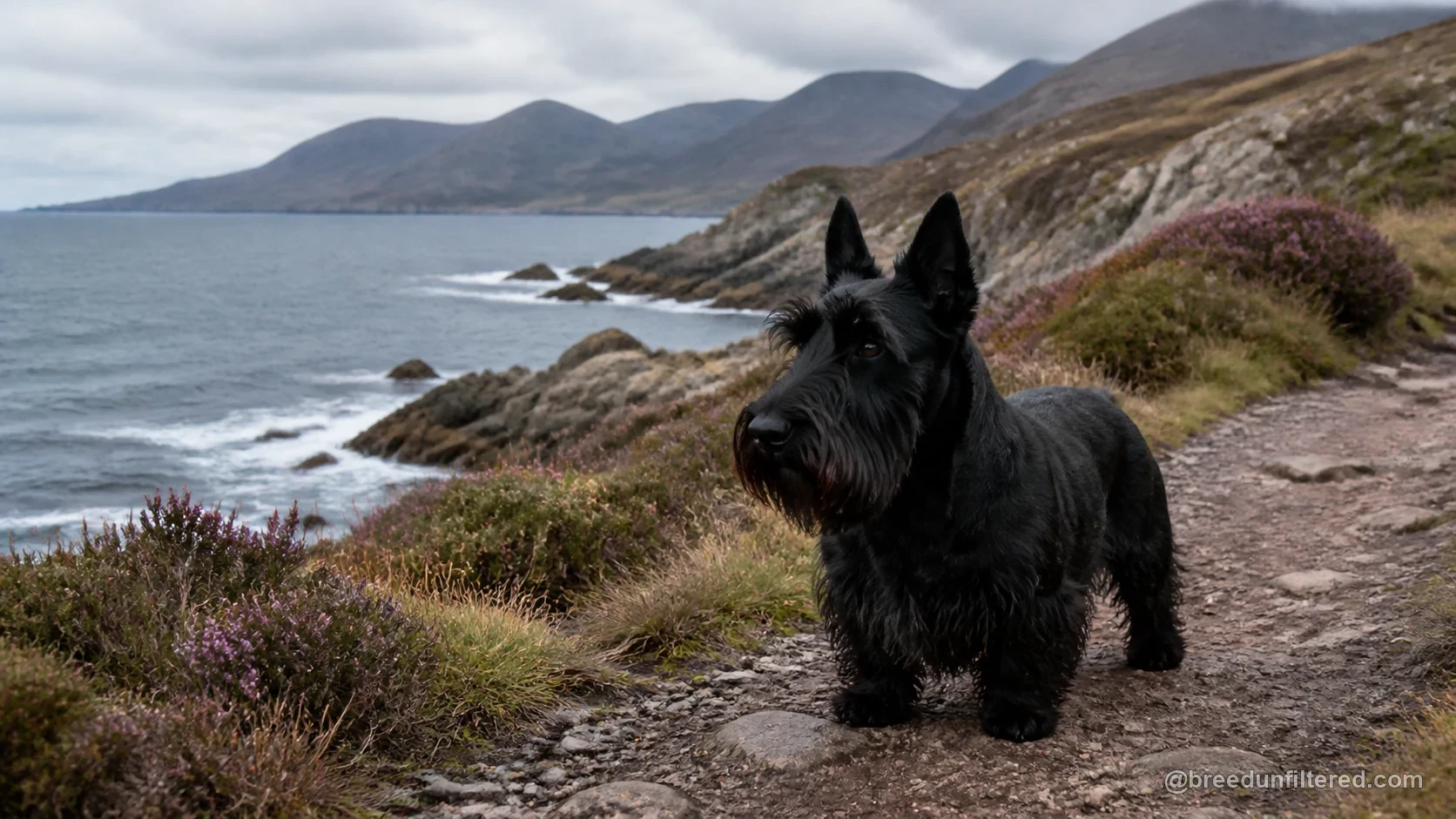
The Scottish Terrier, often affectionately called the 'Scottie,' is a small but sturdy dog with a distinctive beard, eyebrows, and a dignified, almost regal bearing. Originating from Scotland, this breed has a long history as a tenacious vermin hunter and a loyal companion. For prospective owners, understanding the Scottie's unique personality and needs is essential to ensure a harmonious match between the dog and its human family.
This article provides an evidence-conscious overview of the Scottish Terrier, drawing on official breed standards and recognized sources. We'll explore the breed's origin and purpose, typical temperament, exercise and mental stimulation requirements, training and socialization needs, compatibility with families and other pets, grooming and health considerations, and the financial and time commitments involved. By the end, you'll have a clearer picture of whether a Scottish Terrier is the right companion for your lifestyle.
Origin and Purpose
The Scottish Terrier is one of the oldest terrier breeds, with roots in the Scottish Highlands. Historically, these dogs were bred to hunt and kill vermin such as rats, foxes, and badgers. Their sturdy build, courage, and determination made them well-suited for working in rugged terrain. The breed was officially recognized by the FCI in 1955, and the current standard (FCI Standard No. 73) describes a dog that is 'a sturdy, compact, short-legged terrier' with a 'very determined' character.
Today, the Scottish Terrier is primarily a companion animal, but its working heritage still influences its personality. They are known for their independence and self-assuredness, traits that were valuable in a hunting dog but can present challenges in a modern household. Understanding this background helps prospective owners appreciate why Scotties may be stubborn or aloof at times, and why they need consistent, patient training.
Temperament and Variation
Scottish Terriers are often described as confident, alert, and dignified. They tend to be loyal to their family and can be reserved with strangers. While individual temperaments vary, the breed standard notes that the Scottie is 'independent, self-reliant, and courageous.' This means they may not always be eager to please, and they can have a stubborn streak. However, many owners find their intelligence and quirky personality endearing.
It's important to note that temperament is influenced by genetics, socialization, and training. A well-bred and properly socialized Scottie can be a delightful companion, while one that lacks early exposure may become overly wary or reactive. Prospective owners should seek a reputable breeder who prioritizes temperament and health, and be prepared to invest time in socialization from puppyhood.
Exercise and Mental Work
Scottish Terriers are moderately energetic dogs. They enjoy daily walks and play sessions, but they are not high-energy athletes. A couple of short to moderate walks per day, plus some off-lead time in a securely fenced area, can meet their physical needs. However, because they were bred to hunt, they have a strong prey drive and may chase small animals, so secure fencing and leash control are essential.
Mental stimulation is equally important for this intelligent breed. Puzzle toys, scent games, and training sessions that challenge their minds can help prevent boredom and destructive behaviors. Without adequate mental and physical outlets, a Scottie may become stubborn or develop undesirable habits. Owners should be prepared to provide both physical exercise and engaging activities to keep their Scottie content.
Training and Socialisation
Training a Scottish Terrier requires patience and consistency. They are intelligent but can be independent and stubborn, so traditional obedience methods may not always work. Positive reinforcement techniques, such as treats and praise, are generally more effective than harsh corrections. Early socialization is crucial to help them become well-adjusted adults, exposing them to various people, places, and situations in a positive way.
Scotties may not be the easiest breed for first-time dog owners, but with dedication and a sense of humor, they can learn basic commands and good manners. Crate training and housebreaking can be accomplished with a consistent routine. It's also important to establish clear boundaries and be firm but fair, as Scotties respect confident leadership.
Family and Other Pets
Scottish Terriers can make loyal companions for families, but they may not be the best choice for households with very young children. Their independent nature and low tolerance for rough handling can lead to snapping if provoked. Older children who understand how to interact respectfully with dogs are usually a better match. As with any breed, supervision and teaching children proper dog etiquette are essential.
Regarding other pets, Scotties often have a strong prey drive and may not get along with small animals like rabbits or hamsters. They can coexist with other dogs, especially if raised together, but they may be territorial or assertive. Early socialization and careful introductions can improve the chances of peaceful cohabitation, but there are no guarantees. Prospective owners should consider their existing pets and be prepared to manage interactions.
Grooming and Health
The Scottish Terrier has a wiry, double coat that requires regular grooming. Brushing several times a week helps prevent mats and removes loose hair. Professional grooming every 4-6 weeks is often recommended to maintain the breed's distinctive appearance, including hand-stripping or clipping. They are moderate shedders, and their beard may require regular cleaning to avoid food buildup.
Like many purebred dogs, Scottish Terriers are prone to certain health conditions, including patellar luxation, von Willebrand's disease, and some skin issues. Responsible breeders screen for these conditions, but prospective owners should be aware of potential health costs. Regular veterinary check-ups, a balanced diet, and appropriate exercise can help maintain overall health. It's also important to note that Scotties can be prone to weight gain, so portion control is key.
Costs and Responsibility
Owning a Scottish Terrier involves significant financial and time commitments. Initial costs include the purchase price from a reputable breeder, which can vary, plus supplies such as a crate, bedding, food, and grooming tools. Ongoing expenses include high-quality dog food, routine veterinary care, vaccinations, flea and tick prevention, and pet insurance. Grooming costs can add up, especially if you use professional services.
Beyond finances, prospective owners must be prepared for a long-term commitment of 12-15 years. Scotties require daily exercise, mental stimulation, grooming, and training. They thrive on companionship and should not be left alone for long periods. If you are considering a Scottish Terrier, ensure you have the time, resources, and patience to meet their needs. Adoption from a rescue is also a wonderful option, giving a deserving dog a second chance.
Clear answers
FREQUENTLY ASKED QUESTIONS
Are Scottish Terriers good with children?
Scottish Terriers can be good with children, but they are often better suited to families with older, respectful children. Their independent nature and low tolerance for rough handling mean they may not tolerate tail pulling or ear tugging. Always supervise interactions and teach children how to approach and handle dogs gently.
How much exercise does a Scottish Terrier need?
Scottish Terriers are moderately energetic and typically need about 30-60 minutes of exercise per day, split into walks and playtime. They also benefit from mental stimulation like puzzle toys or training sessions. However, individual needs vary, so adjust based on your dog's age, health, and energy level.
Are Scottish Terriers easy to train?
Scottish Terriers are intelligent but can be stubborn and independent, which can make training challenging. They respond best to positive reinforcement methods, such as treats and praise, and consistent, patient training. Early socialization and obedience classes are recommended to help them become well-behaved companions.
Do Scottish Terriers shed a lot?
Scottish Terriers have a wiry double coat that sheds moderately. Regular brushing several times a week can help manage loose hair and prevent mats. Professional grooming every 4-6 weeks is often recommended to maintain their coat and reduce shedding. They are not considered hypoallergenic.
What health issues are common in Scottish Terriers?
Scottish Terriers may be prone to certain health conditions, including patellar luxation, von Willebrand's disease, and skin issues. Responsible breeders screen for these conditions, but prospective owners should be aware of potential health costs. Regular veterinary check-ups and a healthy lifestyle can help manage risks.
Sources and further reading
Scores describe typical breed tendencies from 1 to 10. They are not a quality ranking or a prediction for an individual dog.
Size and presence4/10
CompactVery large
Physical strength5/10
LightExceptional
Energy level9/10
LowRelentless
Exercise demand9/10
ModestVery demanding
Mental work needed8/10
ModerateDaily job
Trainability6/10
ChallengingExceptional
Everyday manageability2/10
SpecialistStraightforward
First-time owner fit4/10
Poor fitGood fit
Family-life fit6/10
LimitedExcellent
Dog sociability4/10
SelectiveVery social
Prey drive10/10
LowVery high
Guarding tendency4/10
MinimalSerious
Independence9/10
Handler-focusedSelf-directed
Grooming demand6/10
LightHeavy
Apartment fit5/10
Poor fitGood fit