Complete breed guide
Bouvier Des Flandres OWNERSHIP GUIDE
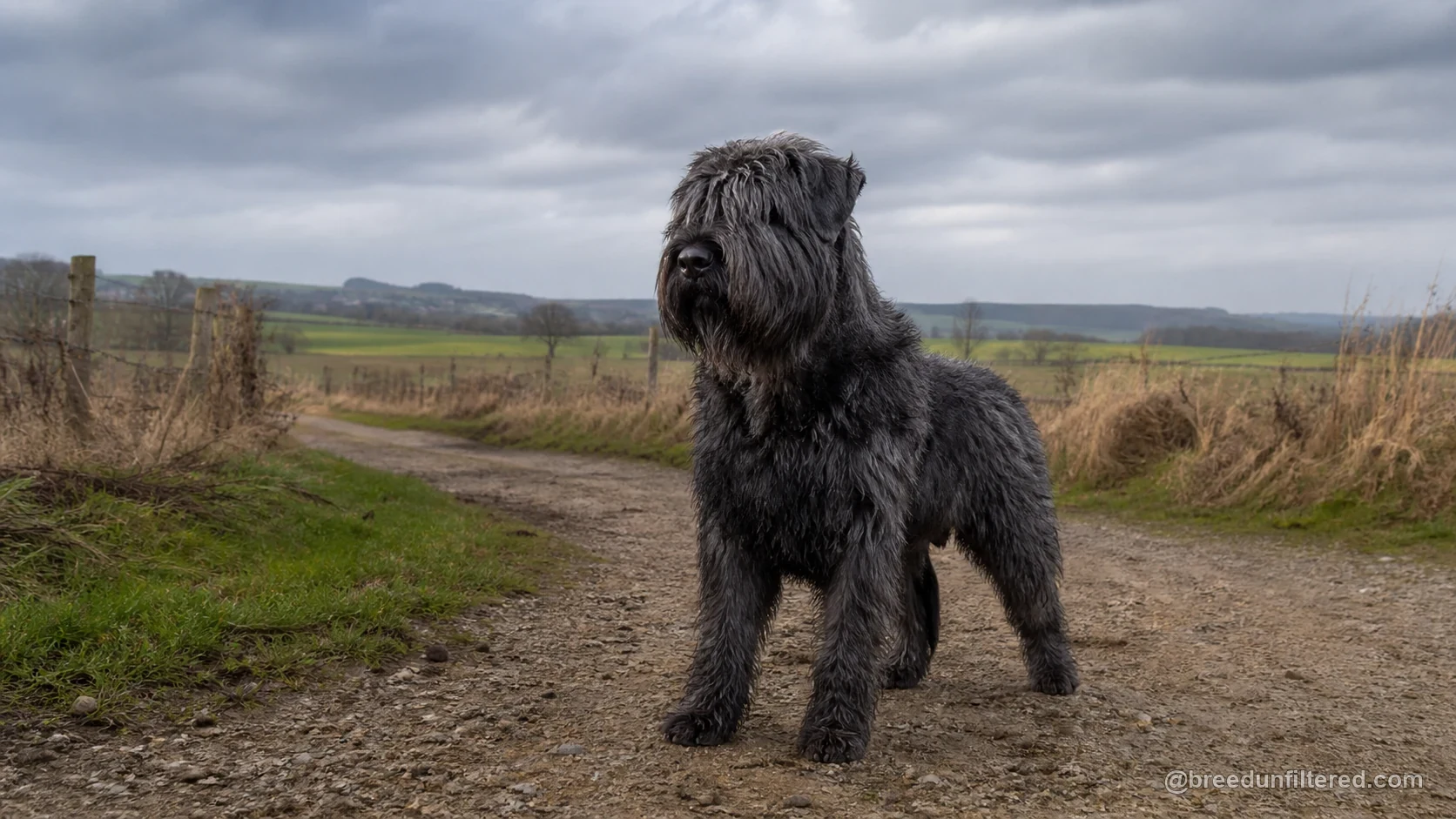
The Bouvier des Flandres is a robust, powerful herding dog originating from the Flanders region of Belgium and France. Historically used for cattle driving and farm work, this breed is known for its distinctive rough double coat, impressive beard, and steady, reliable character. Prospective owners should understand that the Bouvier is not a high-energy companion for everyone; it is a working dog with a strong sense of purpose and a calm, thoughtful disposition.
In this guide, we provide an evidence-based overview of the Bouvier des Flandres, covering its origins, temperament, exercise and training needs, family compatibility, grooming, and health considerations. We aim to help you decide if this breed aligns with your lifestyle, emphasizing that individual dogs vary and that responsible ownership requires commitment and research.
Origin and Purpose
The Bouvier des Flandres, meaning 'cowherd of Flanders,' was developed in the early 20th century in the agricultural regions of Belgium and France. These dogs were bred to perform a variety of farm tasks, including herding cattle, pulling carts, and guarding property. Their versatility and hardiness made them invaluable to farmers, and they were also used by the military and police during the World Wars.
The breed's working heritage is reflected in its physical structure and temperament. The FCI standard describes a dog that is powerful, compact, and well-muscled, with a double coat that protects against harsh weather. The Bouvier's calm and steady nature, combined with its intelligence and willingness to work, made it a dependable partner in demanding environments. Today, while fewer Bouviers work on farms, they still excel in dog sports, search and rescue, and as loyal companions.
Temperament and Variation
The Bouvier des Flandres is often described as calm, steady, and even-tempered. They are known for their strong bond with their family and their natural protective instincts. However, individual temperament can vary based on genetics, socialization, and training. Some Bouviers may be more reserved with strangers, while others are more outgoing. It is essential to meet the parents and observe the puppy's behavior to gauge its personality.
This breed is not typically hyperactive; they are more likely to be observant and thoughtful. They are intelligent and can be independent thinkers, which sometimes translates to a stubborn streak. Early and consistent training is crucial to channel their intelligence positively. While they are generally good-natured, they require a confident owner who can provide clear leadership and structure.
Exercise and Mental Work
The Bouvier des Flandres has moderate to high exercise needs. They are not couch potatoes, but they do not require excessive running. Daily walks, playtime in a securely fenced yard, and opportunities to use their herding instincts are beneficial. Activities like obedience, agility, or herding trials can provide both physical and mental stimulation. Without adequate exercise, they may become bored and develop undesirable behaviors.
Mental work is equally important for this intelligent breed. Puzzle toys, scent work, and training sessions that challenge their minds can help prevent boredom. Because they were bred to make decisions independently, they appreciate having a job to do. Engaging their problem-solving skills can strengthen the bond between dog and owner and promote a well-balanced temperament.
Training and Socialisation
Training a Bouvier des Flandres requires patience, consistency, and positive reinforcement methods. They respond well to reward-based training, but they can be sensitive to harsh corrections. Early socialization is critical to ensure they grow into well-mannered adults. Exposing them to various people, animals, environments, and sounds during puppyhood helps reduce the likelihood of fearfulness or aggression.
This breed is known for its protective nature, so it is important to teach them appropriate boundaries and to distinguish between normal and threatening situations. Obedience training should be ongoing, and owners should aim to establish themselves as calm, confident leaders. A well-trained Bouvier is a reliable and trustworthy companion, but training requires a significant time commitment.
Family and Other Pets
Bouviers des Flandres can make excellent family dogs when raised with children and properly socialized. They are generally patient and gentle, but due to their size and strength, supervision is recommended around very young children to prevent accidental knocking over. They are often protective of their family, which can be a positive trait, but it also means they need clear guidance on acceptable behavior.
With other pets, early socialization is key. Bouviers have a herding instinct, which may lead them to chase or nip at smaller animals, but with proper training, they can coexist peacefully with cats and other dogs. Their prey drive can vary, so it is important to assess each dog individually. Introducing them to other pets gradually and under controlled conditions is advisable.
Grooming and Health
The Bouvier des Flandres has a dense double coat that requires regular grooming. Weekly brushing is necessary to prevent mats and tangles, and more frequent grooming may be needed during shedding seasons. Many owners choose to have the coat professionally trimmed several times a year. The beard and eyebrows require special attention to keep them clean and free of debris.
As with many large breeds, Bouviers may be predisposed to certain health conditions, including hip dysplasia, elbow dysplasia, and eye disorders. Responsible breeders screen their breeding stock for these issues. Regular veterinary check-ups, a balanced diet, and appropriate exercise can help maintain overall health. Prospective owners should be prepared for potential health care costs and should seek a breeder who prioritizes health testing.
Costs and Responsibility
Owning a Bouvier des Flandres involves significant financial and time commitments. Initial costs include the purchase price from a reputable breeder, which can be substantial, as well as supplies such as a crate, bedding, and grooming tools. Ongoing expenses include high-quality food, routine veterinary care, grooming services, and pet insurance. Emergency medical care can be costly, so planning is essential.
Beyond finances, this breed requires a dedicated owner who can provide daily exercise, mental stimulation, training, and grooming. Bouviers thrive in homes with secure yards and are not well-suited to apartment living unless their exercise needs are met. They are loyal and protective, making them excellent watchdogs, but they need early socialization to avoid over-protectiveness. Prospective owners should honestly assess their lifestyle and ability to meet these responsibilities.
Clear answers
FREQUENTLY ASKED QUESTIONS
Are Bouviers des Flandres good with children?
Bouviers can be good with children when raised with them and properly socialized. They are generally patient and protective, but due to their size, supervision is recommended with young children to prevent accidental injury. Teaching children how to interact respectfully with dogs is also important.
How much exercise does a Bouvier des Flandres need?
Bouviers have moderate to high exercise needs. They benefit from daily walks, playtime, and mental challenges. Activities like obedience training, agility, or herding trials can provide both physical and mental stimulation. Without adequate exercise, they may become bored and develop behavioral issues.
Do Bouviers des Flandres shed a lot?
Bouviers have a double coat that sheds moderately year-round and more heavily during seasonal changes. Regular brushing, at least weekly, helps manage loose hair and prevent mats. Many owners opt for professional grooming to keep the coat in good condition.
Are Bouviers des Flandres easy to train?
Bouviers are intelligent and trainable, but they can be independent and sometimes stubborn. They respond best to positive reinforcement methods and consistent, patient training. Early socialization and obedience training are essential to bring out their best qualities.
Do Bouviers des Flandres get along with other dogs?
With proper socialization, Bouviers can get along with other dogs. They have a herding instinct, which may lead to chasing or nipping, but this can be managed with training. Individual temperament varies, so introductions should be gradual and supervised.
Sources and further reading
Scores describe typical breed tendencies from 1 to 10. They are not a quality ranking or a prediction for an individual dog.
Size and presence6/10
CompactVery large
Physical strength6/10
LightExceptional
Energy level9/10
LowRelentless
Exercise demand9/10
ModestVery demanding
Mental work needed10/10
ModerateDaily job
Trainability7/10
ChallengingExceptional
Everyday manageability3/10
SpecialistStraightforward
First-time owner fit4/10
Poor fitGood fit
Family-life fit7/10
LimitedExcellent
Dog sociability6/10
SelectiveVery social
Prey drive7/10
LowVery high
Guarding tendency8/10
MinimalSerious
Independence7/10
Handler-focusedSelf-directed
Grooming demand8/10
LightHeavy
Apartment fit4/10
Poor fitGood fit