Complete breed guide
Azawakh OWNERSHIP GUIDE
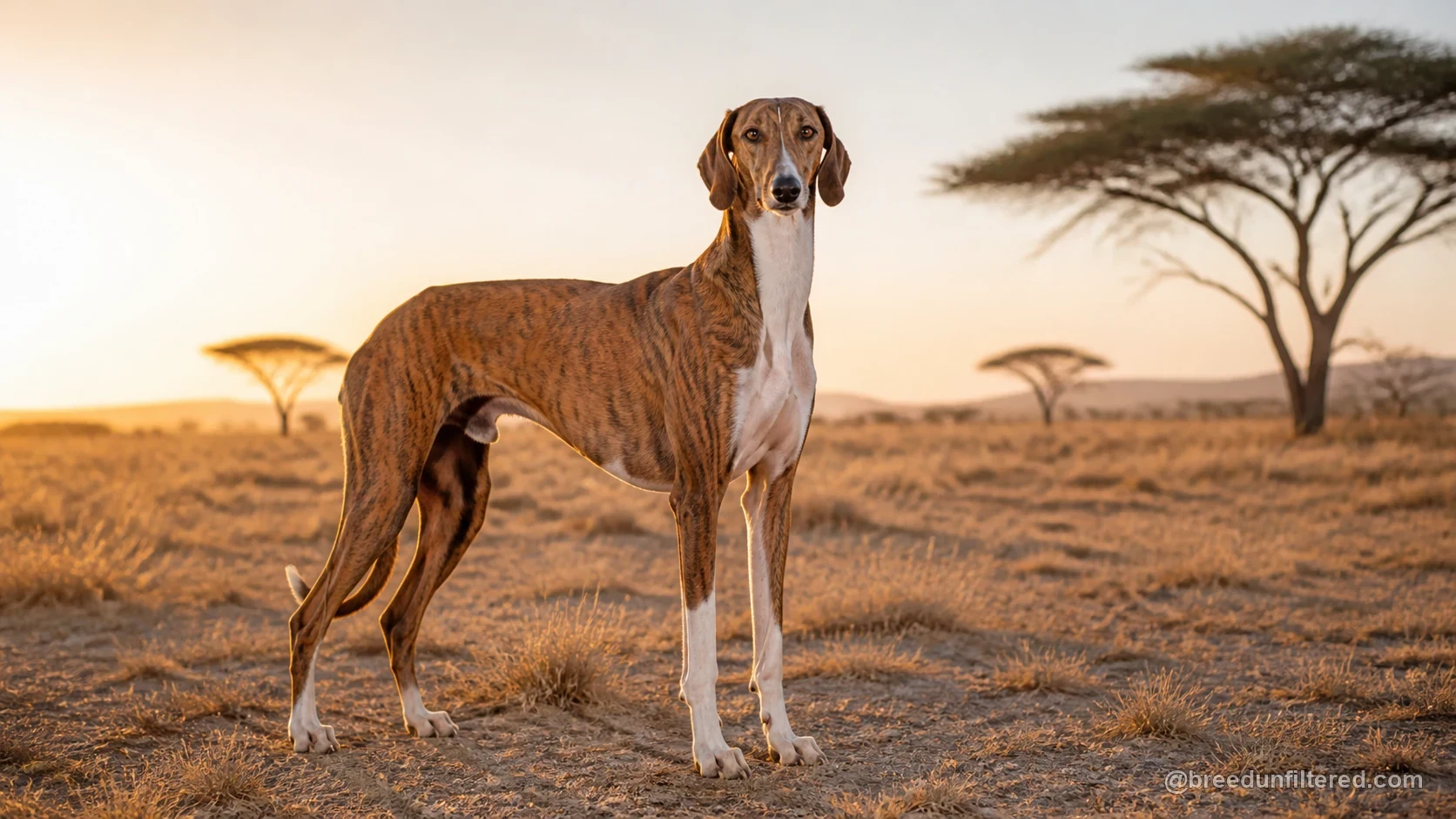
The Azawakh is a sighthound of striking elegance, originating from the Sahel region of West Africa, where it has been bred for centuries by the Tuareg and other nomadic peoples. Known for its tall, slender frame and distinctive gaits, this breed is both a hunter and a guardian, deeply bonded to its family. Prospective owners should understand that the Azawakh is not a typical companion dog; it retains many primal instincts and a strong sense of independence, making it a rewarding but challenging addition to the right home.
This article provides an evidence-conscious overview of the Azawakh, drawing on official breed standards and recognized kennel club resources. We will explore the breed's purpose, temperament, exercise needs, training, family compatibility, grooming, health considerations, and the financial and time commitments involved. Whether you are considering an Azawakh or simply curious about this ancient breed, this guide aims to offer balanced, practical insights without making universal claims about individual dogs.
Origin and Purpose
The Azawakh originates from the Sahel region of West Africa, specifically areas now within Mali, Niger, and Burkina Faso. The breed is named after the Azawakh Valley, and it has been a companion of the Tuareg people for centuries. Historically, the Azawakh served as a hunter of small game and a guardian of the camp, valued for its speed, endurance, and keen sight. The FCI standard (No. 307) describes it as a sighthound of great elegance, with a very dry, fine, and sometimes almost transparent skin.
In its native land, the Azawakh lives closely with humans, often sharing living quarters and forming strong bonds. This close relationship has shaped its temperament: it is typically loyal and affectionate with its family but wary of strangers. The breed was introduced to Europe in the 1970s and to the United States later, where it remains relatively rare. Understanding its original purpose helps explain its high prey drive, independence, and protective instincts, which are essential traits for prospective owners to consider.
Temperament and Variation
The Azawakh is known for its dignified and reserved demeanor. It is often described as aloof with strangers, yet deeply devoted to its family. Individual temperaments can vary, but many Azawakhs exhibit a strong bond with their primary caregiver and may be less demonstrative than other sighthounds. They are intelligent and sensitive, with a strong sense of self, and they may not respond well to harsh training methods. Early and ongoing socialization is crucial to help them become well-adjusted adults.
While the breed standard outlines general characteristics, there is natural variation among individuals. Some Azawakhs may be more outgoing, while others are more reserved. Their guarding instinct, inherited from their role as camp guardians, can manifest as alertness and protectiveness, but it is not typically aggressive without provocation. Prospective owners should be prepared for a dog that is both independent and affectionate, often forming a one-person bond while remaining polite but distant with others.
Exercise and Mental Work
As a sighthound, the Azawakh requires regular opportunities to run and stretch its legs. It is not a high-energy dog in the sense of constant activity, but it does need daily exercise, including a secure area where it can sprint. A fenced yard is ideal, as the breed's prey drive can lead it to chase small animals. Leash walks are important, but they should be supplemented with off-lead running in a safe, enclosed space. Without adequate exercise, an Azawakh may become restless or develop behavioral issues.
Mental stimulation is equally important. The Azawakh is intelligent and can become bored with repetitive tasks. Puzzle toys, scent games, and training sessions that engage their problem-solving abilities can help meet their mental needs. However, they are not typically eager to please in the way some other breeds are, so training should be creative and rewarding. Owners should be prepared to provide both physical and mental outlets to keep their Azawakh content and well-balanced.
Training and Socialisation
Training an Azawakh requires patience, consistency, and a gentle approach. This breed is sensitive and may shut down if subjected to harsh corrections. Positive reinforcement methods, such as treats and praise, tend to work best. Because of their independent nature, they may not always be motivated to obey, so training sessions should be short and varied to maintain interest. Early obedience training is recommended to establish a foundation of good manners and recall, though recall can be unreliable in the presence of prey.
Socialisation is critical from a young age. Exposing an Azawakh puppy to a wide range of people, environments, and other animals can help mitigate their natural wariness of strangers. However, even with thorough socialisation, many Azawakhs remain aloof with unfamiliar people. They may also have a strong prey drive, so interactions with small pets should be managed carefully. Owners should be prepared to invest time in ongoing socialisation throughout the dog's life to ensure it remains a well-mannered companion.
Family and Pets
The Azawakh can be a devoted family member, forming strong bonds with its human pack. They are often gentle and affectionate with children they know, but due to their sensitive nature, they may not tolerate rough handling. Supervision is recommended when an Azawakh is around young children, as with any breed. They are not typically aggressive, but their size and energy could inadvertently knock over a small child. Families with older, respectful children may find the Azawakh a loyal and loving companion.
Regarding other pets, the Azawakh's prey drive can be a significant factor. They may view small animals, such as cats or rabbits, as prey, and even with early socialisation, this instinct can be strong. Some Azawakhs can live peacefully with cats if raised together, but it is not guaranteed. They generally get along with other dogs, especially sighthounds, but may be reserved with unfamiliar dogs. Prospective owners with existing pets should carefully consider the individual dog's temperament and history.
Grooming and Health
The Azawakh has a short, fine coat that requires minimal grooming. Weekly brushing with a soft brush or hound glove can help remove loose hair and keep the coat healthy. They are generally clean dogs and may have little to no doggy odor. Bathing is only needed occasionally. Their nails should be trimmed regularly, and their ears checked for debris. Dental care, such as brushing, is also recommended to maintain overall health.
As a breed, the Azawakh is generally healthy, but like all breeds, it can be prone to certain conditions. These may include hip dysplasia, hypothyroidism, and some eye issues, though the prevalence is not well-documented. Responsible breeders screen for hereditary conditions. The Azawakh has a low body fat percentage, making them sensitive to cold and anesthesia. Owners should be aware of these considerations and work with a veterinarian familiar with sighthounds. Regular veterinary check-ups are essential.
Costs and Responsibility
Owning an Azawakh involves significant financial and time commitments. Initial costs include the purchase price from a reputable breeder, which can be substantial due to the breed's rarity. Ongoing expenses include high-quality food, routine veterinary care, vaccinations, and preventive medications. Because of their thin coat and low body fat, they may need protective clothing in cold weather, adding to costs. Pet insurance is advisable to help manage unexpected medical expenses.
Beyond finances, prospective owners must consider the responsibility of providing appropriate exercise, training, and socialisation. The Azawakh is not a breed for a first-time owner or someone with a sedentary lifestyle. They require a secure, fenced area to run and a commitment to positive training methods. They also need companionship and may not do well if left alone for long periods. Potential owners should research the breed thoroughly, talk to experienced Azawakh owners, and be prepared for a loyal but independent companion.
Clear answers
FREQUENTLY ASKED QUESTIONS
Are Azawakhs good with children?
Azawakhs can be good with children they know, but they are sensitive and may not tolerate rough handling. Supervision is essential, especially with young children. They are not typically aggressive, but their size and energy could accidentally knock over a small child. With respectful, older children, they can form strong bonds and be gentle companions.
Do Azawakhs get along with other pets?
Due to their strong prey drive, Azawakhs may not be reliable with small animals like cats or rabbits, even if raised together. They generally get along with other dogs, especially sighthounds, but may be reserved with unfamiliar dogs. Early socialisation can help, but individual temperament varies, so careful introductions and management are necessary.
How much exercise does an Azawakh need?
Azawakhs need daily exercise, including a secure area to run and stretch their legs. They are not hyperactive but require regular opportunities to sprint. A fenced yard is ideal, and leash walks should be supplemented with off-lead running in a safe, enclosed space. Without adequate exercise, they may become restless or develop behavioral issues.
Are Azawakhs easy to train?
Azawakhs are intelligent but independent, so training can be challenging. They respond best to positive reinforcement methods, such as treats and praise, and may shut down with harsh corrections. Training sessions should be short and varied to maintain interest. Early obedience training and consistent socialisation are important for a well-adjusted adult.
What health issues are common in Azawakhs?
Azawakhs are generally healthy, but like all breeds, they can be prone to certain conditions, including hip dysplasia, hypothyroidism, and some eye issues. The prevalence is not well-documented. Responsible breeders screen for hereditary conditions. Their low body fat makes them sensitive to cold and anesthesia, so owners should work with a vet familiar with sighthounds.
Sources and further reading
Scores describe typical breed tendencies from 1 to 10. They are not a quality ranking or a prediction for an individual dog.
Size and presence6/10
CompactVery large
Physical strength6/10
LightExceptional
Energy level9/10
LowRelentless
Exercise demand9/10
ModestVery demanding
Mental work needed6/10
ModerateDaily job
Trainability6/10
ChallengingExceptional
Everyday manageability3/10
SpecialistStraightforward
First-time owner fit4/10
Poor fitGood fit
Family-life fit7/10
LimitedExcellent
Dog sociability7/10
SelectiveVery social
Prey drive10/10
LowVery high
Guarding tendency2/10
MinimalSerious
Independence8/10
Handler-focusedSelf-directed
Grooming demand1/10
LightHeavy
Apartment fit5/10
Poor fitGood fit