Complete breed guide
Airedale Terrier OWNERSHIP GUIDE
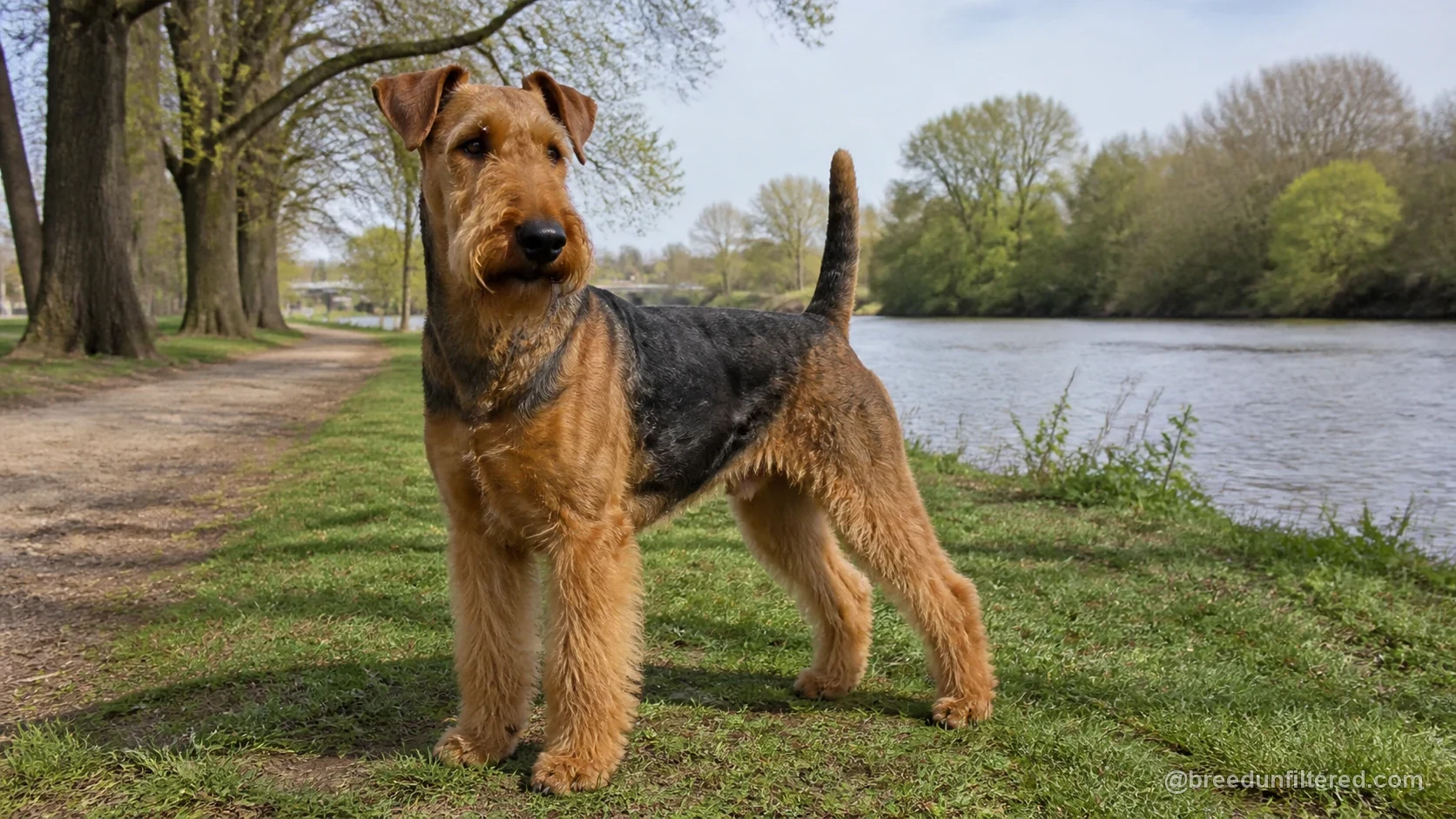
The Airedale Terrier, often called the 'King of Terriers,' is the largest of the terrier breeds. Developed in the Aire Valley of Yorkshire, England, this breed was originally bred to catch otters and rats, but its intelligence and versatility soon led to roles in hunting, police work, and military service. With a distinctive wiry coat and a confident, alert expression, the Airedale combines the tenacity of a terrier with a noble bearing.
Prospective owners should understand that the Airedale is a spirited, intelligent, and energetic companion. They are known for their playful nature and strong will, which can be both endearing and challenging. This guide provides an evidence-conscious overview of the breed's characteristics, care requirements, and suitability for various lifestyles, helping you make an informed decision about welcoming an Airedale into your home.
Origin and Purpose
The Airedale Terrier originated in the mid-19th century in the Aire Valley of Yorkshire, England, where it was developed by crossing the now-extinct Black and Tan Terrier with the Otterhound. This combination produced a versatile working dog capable of hunting otters and rats along the riverbanks, as well as serving as a loyal companion and watchdog. The breed's name comes from the Aire River, and it was officially recognized by the Kennel Club in the 1880s.
During World War I, Airedales were used by the military as messengers, sentries, and search dogs, earning a reputation for courage and reliability. Their intelligence and trainability also led to roles in police work and as guide dogs for the blind. Today, the Airedale is primarily a companion and show dog, but it retains its working instincts and excels in dog sports such as agility, obedience, and tracking. The FCI standard (No. 7) classifies the breed in Group 3 (Terriers) and notes its balanced, powerful build.
Temperament and Variation
The Airedale Terrier is known for its confident, outgoing, and sometimes mischievous personality. They are intelligent and independent, often described as having a 'big dog in a small suit' attitude. While they are affectionate with their families, they can be reserved with strangers and may exhibit a protective streak. Individual temperament varies, influenced by genetics, socialization, and training, so it's essential to meet the parents and observe the puppy's behavior when possible.
Airedales are playful and energetic, often retaining a puppy-like exuberance well into adulthood. They are not typically aggressive but can be assertive and determined, which may challenge first-time owners. Their terrier heritage means they have a strong prey drive and may chase small animals. Early and ongoing socialization is crucial to help them become well-adjusted adults. While they are generally good with children in the family, their boisterous nature may be too much for very young kids, so supervision is recommended.
Exercise and Mental Work
Airedales are an energetic breed that requires regular physical activity to stay healthy and happy. They benefit from daily walks, play sessions, and opportunities to run in a securely fenced area. However, exercise needs vary by age, health, and individual energy levels, so owners should adjust accordingly. Without adequate exercise, Airedales may become bored and develop destructive behaviors like digging or chewing.
Mental stimulation is equally important for this intelligent breed. Puzzle toys, obedience training, and interactive games can help keep their minds engaged. Airedales excel in activities that challenge them, such as agility, nose work, and tracking. They also enjoy tasks that involve problem-solving, which can strengthen the bond between dog and owner. Owners should be prepared to provide both physical and mental outlets to prevent boredom-related issues.
Training and Socialisation
Training an Airedale requires patience, consistency, and a sense of humor. They are intelligent but can be stubborn, so positive reinforcement methods work best. Harsh corrections may lead to resistance or distrust. Early socialization is vital to expose them to various people, animals, and environments, helping to reduce the likelihood of fearfulness or aggression. Puppy classes and controlled introductions can be beneficial.
Airedales respond well to reward-based training that includes treats, praise, and play. They are quick learners but may become bored with repetitive drills, so keeping sessions short and varied is key. They also have a strong independent streak, which can make off-leash reliability a challenge. Owners should practice recall in safe, enclosed areas. With consistent training, Airedales can excel in obedience and canine sports, showcasing their versatility and intelligence.
Family and Other Pets
Airedales can make wonderful family companions for active households. They are generally affectionate and loyal to their family members, often forming strong bonds with children. However, their energetic and sometimes boisterous play may be overwhelming for toddlers, so supervision is advised. They are not typically aggressive but may be protective, making them decent watchdogs. Their size and strength require owners to manage them carefully around small children.
Regarding other pets, Airedales have a strong prey drive due to their terrier heritage. They may chase or harm small animals like cats, rabbits, or rodents, especially if not raised with them. With early socialization, some Airedales can coexist peacefully with cats, but it is not guaranteed. They generally get along with other dogs, especially if properly socialized, but may be assertive with same-sex dogs. Prospective owners with existing pets should consider the individual dog's temperament and history.
Grooming and Health
The Airedale's wiry coat requires regular grooming to maintain its texture and appearance. Weekly brushing is recommended to remove loose hair and prevent mats. Hand-stripping, a process of plucking dead hair, is often needed for show dogs, but pet owners may opt for clipping. Professional grooming every few months can help manage the coat. They are moderate shedders, and regular ear cleaning and nail trimming are essential.
Like all breeds, Airedales are prone to certain health conditions, though not every dog will be affected. Some conditions reported in the breed include hip dysplasia, hypothyroidism, and certain eye disorders. Responsible breeders screen for these issues. Regular veterinary check-ups, a balanced diet, and appropriate exercise contribute to overall health. Owners should be prepared for potential health care costs and seek a reputable breeder who conducts health testing.
Costs and Responsibility
Owning an Airedale Terrier involves financial and time commitments. Initial costs include the purchase price from a reputable breeder, which can vary, as well as supplies like a crate, bedding, and grooming tools. Ongoing expenses include high-quality food, routine veterinary care, vaccinations, and preventive medications. Grooming costs, whether professional or DIY, should also be considered. Emergency medical care can be significant, so pet insurance may be a wise investment.
Beyond finances, Airedales require a significant time investment for exercise, training, and companionship. They are not a breed that thrives when left alone for long periods. Prospective owners should assess their lifestyle to ensure they can meet the breed's needs. Adopting from a rescue or shelter is also an option, giving a home to a dog in need. Responsible ownership includes lifelong care, training, and providing a safe environment.
Clear answers
FREQUENTLY ASKED QUESTIONS
Are Airedale Terriers good with children?
Airedales can be good with children, especially when raised with them, but their energetic and boisterous nature may be too much for very young kids. They are generally affectionate and loyal, but supervision is recommended to prevent accidental knocking over. Early socialization and training help them learn appropriate behavior around children.
Do Airedale Terriers shed a lot?
Airedales are moderate shedders. Their wiry coat requires regular brushing to remove loose hair and prevent mats. Hand-stripping or clipping can manage shedding, but no dog is truly hypoallergenic. Weekly grooming and occasional professional care are typically necessary to keep their coat healthy.
How much exercise does an Airedale Terrier need?
Airedales are an energetic breed that needs daily physical activity, such as walks and playtime, plus mental stimulation. The exact amount varies by age and health, but they generally require at least an hour of exercise per day. Without enough activity, they may become bored and develop destructive behaviors.
Are Airedale Terriers easy to train?
Airedales are intelligent but can be stubborn, making training a challenge for novice owners. They respond best to positive reinforcement methods like treats and praise. Consistency and patience are key. Early socialization and obedience classes are highly recommended to channel their intelligence positively.
Do Airedale Terriers get along with other dogs and pets?
Airedales have a strong prey drive and may chase small animals, so caution is needed with cats and rodents. They can get along with other dogs, especially if socialized early, but may be assertive with same-sex dogs. Individual temperament varies, so introductions should be gradual and supervised.
Sources and further reading
Scores describe typical breed tendencies from 1 to 10. They are not a quality ranking or a prediction for an individual dog.
Size and presence4/10
CompactVery large
Physical strength6/10
LightExceptional
Energy level8/10
LowRelentless
Exercise demand8/10
ModestVery demanding
Mental work needed8/10
ModerateDaily job
Trainability6/10
ChallengingExceptional
Everyday manageability4/10
SpecialistStraightforward
First-time owner fit4/10
Poor fitGood fit
Family-life fit6/10
LimitedExcellent
Dog sociability4/10
SelectiveVery social
Prey drive10/10
LowVery high
Guarding tendency5/10
MinimalSerious
Independence7/10
Handler-focusedSelf-directed
Grooming demand6/10
LightHeavy
Apartment fit5/10
Poor fitGood fit