Complete breed guide
Tibetan Mastiff OWNERSHIP GUIDE
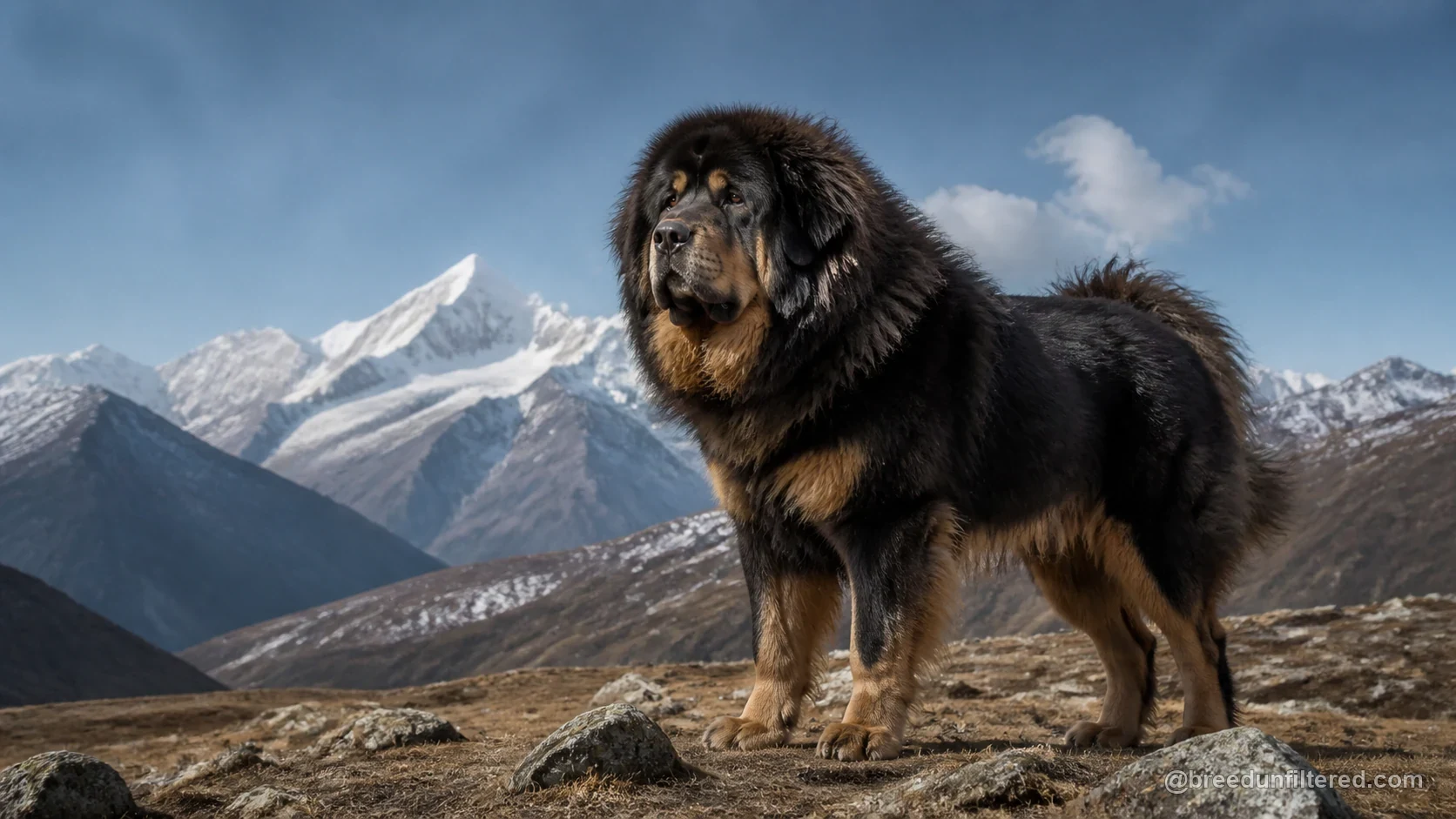
The Tibetan Mastiff, known as the Do-Khyi in its native land, is an ancient breed that has guarded livestock and monasteries on the Tibetan Plateau for centuries. With a majestic appearance and a deep, resonant bark, this large molosser-type dog is both imposing and loyal. Prospective owners should understand that this is not a typical companion dog; it is a primitive breed with strong instincts and a independent nature.
Bred to work autonomously in harsh conditions, the Tibetan Mastiff is intelligent, watchful, and often aloof with strangers. While they can form deep bonds with their families, they require experienced handling, consistent training, and ample space. This article provides an evidence-conscious overview of the breed's characteristics, care, and responsibilities, helping you decide if this noble guardian is the right fit for your lifestyle.
Origin and Purpose
The Tibetan Mastiff is an ancient breed that originated in the Himalayan region, where it served as a guardian of flocks, herds, and monasteries. Its history is intertwined with the nomadic cultures of Tibet, Nepal, and surrounding areas, where it was valued for its ability to deter predators like wolves and snow leopards. The breed's name 'Do-Khyi' translates to 'tied dog' or 'door dog,' reflecting its role as a sentinel that was often tethered during the day and released at night.
The breed's isolation in the high altitudes of Tibet contributed to its distinct physical and temperamental traits. It is one of the oldest breeds, with genetic studies suggesting a deep ancestry. The FCI recognized the Tibetan Mastiff in 1961 under standard number 230, and today it is found worldwide, though its original working purpose remains a core part of its identity. Understanding this heritage is crucial for prospective owners, as it explains the breed's protective instincts and independent thinking.
Temperament and Variation
Tibetan Mastiffs are known for their calm, composed demeanor within their family, but they are naturally wary of strangers and can be highly territorial. They are not typically aggressive without reason, but their guarding instincts are strong, and they will alert their family to any perceived threat. Individual temperament varies widely, influenced by genetics, socialization, and training. Some may be more outgoing, while others are more reserved, but all share a certain aloofness that is characteristic of the breed.
This breed is not a 'people-pleaser' in the way many sporting or herding breeds are. They are independent thinkers and may choose to ignore commands if they see no benefit. This independence can be challenging for novice owners. However, with proper socialization from an early age, they can learn to accept visitors and other animals. It's essential to recognize that each dog is an individual, and while breed tendencies exist, they do not guarantee a specific temperament.
Exercise and Mental Work
Despite their large size, Tibetan Mastiffs are not high-energy dogs. They are relatively inactive indoors and may be content with a moderate daily walk. However, they do require regular exercise to maintain physical health and mental well-being. A securely fenced yard is essential, as they are known to roam and patrol their territory. Off-leash exercise is not recommended due to their independent nature and potential to wander.
Mental stimulation is equally important. These intelligent dogs benefit from puzzle toys, scent work, and training sessions that challenge their minds. Without adequate mental engagement, they may become bored and develop destructive behaviors. Activities that mimic their guarding instincts, such as patrolling a property or participating in canine sports like obedience or rally, can be fulfilling. It's important to tailor exercise to the individual dog's age and health, avoiding overexertion, especially in hot weather.
Training and Socialisation
Training a Tibetan Mastiff requires patience, consistency, and a calm, assertive approach. They respond poorly to harsh methods and may become stubborn or resistant. Positive reinforcement techniques, such as treats and praise, work best. Early socialization is critical to help them distinguish between genuine threats and normal situations. Exposing them to a variety of people, animals, and environments during puppyhood can reduce fearfulness and aggression.
Because of their independent nature, Tibetan Mastiffs may not be as eager to please as other breeds. Training sessions should be short and engaging to hold their interest. It's also important to establish clear boundaries and rules from the start. Professional training classes, especially those that focus on positive methods, can be beneficial for both the dog and the owner. However, even with training, the breed's guarding instincts remain, so management and supervision are always necessary.
Family and Other Pets
Tibetan Mastiffs can be devoted and protective family members, especially with children they are raised with. They are generally gentle and patient, but due to their size, supervision is essential to prevent accidental injury. They may not tolerate rough handling from young children, so teaching children how to interact respectfully is crucial. The breed's protective nature means they may be wary of strangers, including friends of the family, unless properly introduced.
With other pets, Tibetan Mastiffs can coexist if raised together, but they may be aggressive towards unfamiliar dogs, especially those of the same sex. Their prey drive is moderate, and they may chase small animals, so caution is needed with cats and other small pets. Early socialization can improve their tolerance, but it's not guaranteed. Prospective owners should be prepared to manage introductions and provide a structured environment to ensure harmony.
Grooming and Health
The Tibetan Mastiff has a thick double coat that sheds heavily, especially during seasonal changes. Regular brushing, at least a few times a week, is necessary to remove loose hair and prevent matting. During shedding season, daily brushing may be required. They are generally clean dogs and have minimal odor, but their ears should be checked regularly, and nails trimmed as needed. Bathing should be infrequent to preserve natural oils.
As a large breed, Tibetan Mastiffs are prone to certain health issues, including hip dysplasia, elbow dysplasia, and eye conditions such as progressive retinal atrophy. They may also be susceptible to hypothyroidism and certain cardiac issues. Responsible breeders screen for these conditions, but prospective owners should be aware of potential health costs. Regular veterinary check-ups and a balanced diet are essential. Their lifespan is typically 10-12 years, which is relatively long for a dog of their size.
Costs and Responsibility
Owning a Tibetan Mastiff is a significant financial and time commitment. The initial cost of a puppy from a reputable breeder can be high, often ranging from $1,500 to $5,000 or more, depending on lineage and location. Ongoing expenses include high-quality food, veterinary care, grooming supplies, and pet insurance. Because of their size, they may require larger doses of medications and more expensive equipment, such as crates and beds.
Beyond financial costs, the responsibility of owning a Tibetan Mastiff should not be underestimated. They need a secure, spacious environment, consistent training, and an owner who understands their unique temperament. They are not suitable for apartment living or first-time dog owners. Potential owners should research local regulations, as some areas have restrictions on large breeds. It's also important to consider the dog's lifespan and the long-term commitment required to provide a loving home.
Clear answers
FREQUENTLY ASKED QUESTIONS
Are Tibetan Mastiffs good with children?
Tibetan Mastiffs can be good with children if they are raised together and properly socialized. They are generally gentle and protective, but their large size means supervision is essential to prevent accidental injury. Teach children how to interact respectfully and never leave a dog and child unsupervised. Each dog's temperament varies, so early socialization and training are key.
Do Tibetan Mastiffs require a lot of exercise?
Tibetan Mastiffs have moderate exercise needs. They enjoy daily walks and time to roam in a securely fenced yard, but they are not hyperactive. Mental stimulation is just as important as physical exercise to prevent boredom. Avoid excessive exercise, especially in hot weather, as they are prone to overheating due to their thick coat.
Are Tibetan Mastiffs easy to train?
Tibetan Mastiffs are intelligent but independent, making training a challenge for novice owners. They respond best to positive reinforcement and consistent, patient methods. Early socialization and obedience training are crucial. They may not be as eager to please as other breeds, so training requires time and dedication.
Do Tibetan Mastiffs shed a lot?
Yes, Tibetan Mastiffs shed heavily, especially during seasonal changes. Their thick double coat requires regular brushing, at least a few times a week, and daily during shedding season. They are not hypoallergenic. Regular grooming helps manage loose hair and keeps their coat healthy.
Are Tibetan Mastiffs suitable for apartment living?
No, Tibetan Mastiffs are not suitable for apartment living. They need space to move and a securely fenced yard to patrol. They are large, active dogs that require room to roam. Apartment living can lead to frustration and behavioral issues. A house with a yard is ideal.
Sources and further reading
Scores describe typical breed tendencies from 1 to 10. They are not a quality ranking or a prediction for an individual dog.
Size and presence10/10
CompactVery large
Physical strength10/10
LightExceptional
Energy level7/10
LowRelentless
Exercise demand7/10
ModestVery demanding
Mental work needed7/10
ModerateDaily job
Trainability7/10
ChallengingExceptional
Everyday manageability1/10
SpecialistStraightforward
First-time owner fit2/10
Poor fitGood fit
Family-life fit6/10
LimitedExcellent
Dog sociability4/10
SelectiveVery social
Prey drive6/10
LowVery high
Guarding tendency10/10
MinimalSerious
Independence8/10
Handler-focusedSelf-directed
Grooming demand7/10
LightHeavy
Apartment fit1/10
Poor fitGood fit