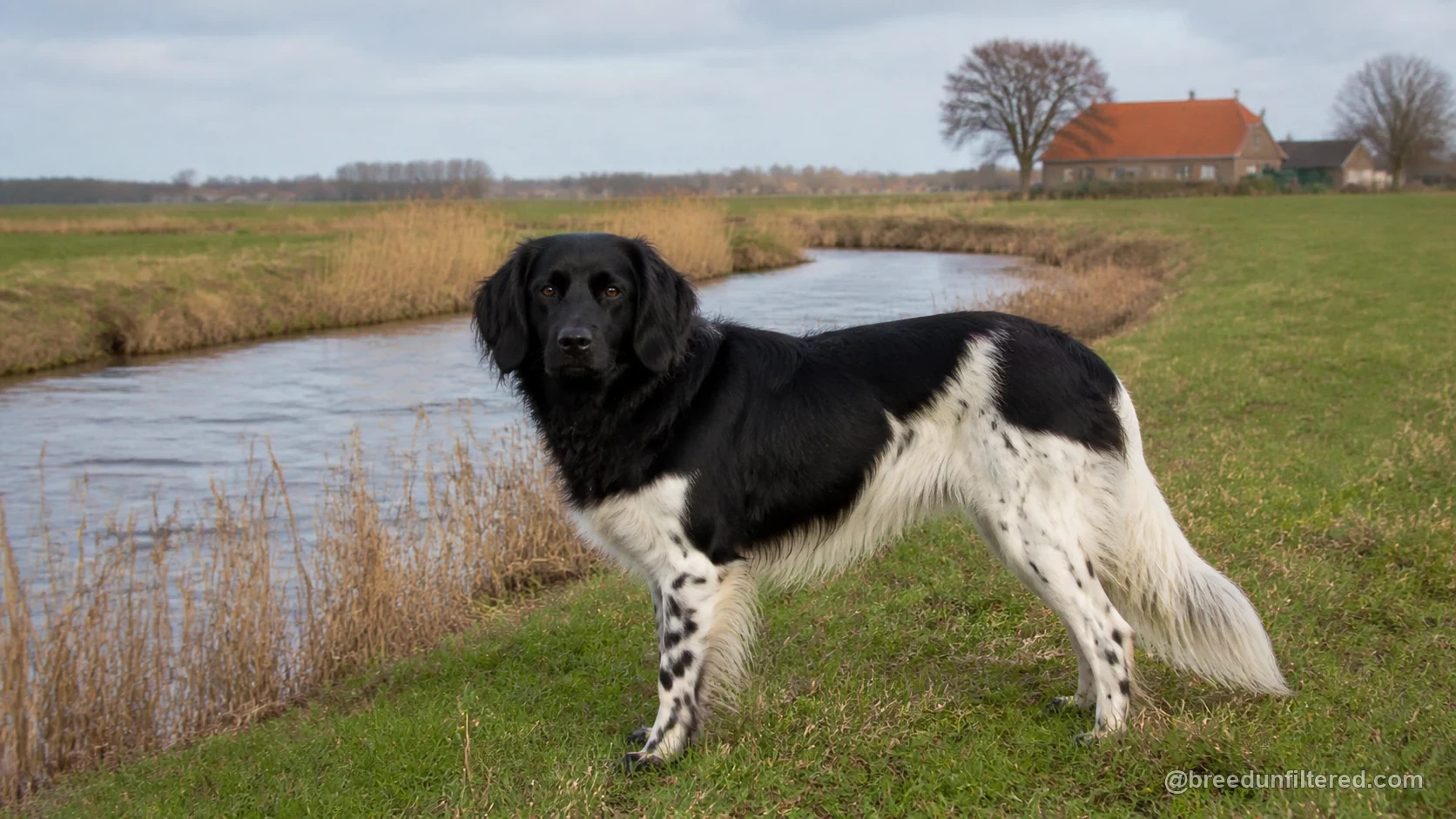
Complete breed guide
Stabijhoun OWNERSHIP GUIDE
The Stabijhoun (pronounced STAH-bee-hoon) is a rare and versatile gundog breed originating from the Friesland region of the Netherlands. Known for its distinctive black-and-white or brown-and-white coat and its gentle, intelligent expression, the Stabijhoun has historically served as a multi-purpose farm dog, adept at hunting small game, retrieving, and guarding property. Today, it remains a devoted companion and a capable working dog, prized for its adaptability and affectionate nature.
For prospective owners, the Stabijhoun offers a unique blend of hunting ability and family loyalty. However, this breed is not for everyone. It requires ample exercise, mental stimulation, and consistent training to thrive. Understanding the Stabijhoun's origins, temperament, and care needs is essential to determine if this rare Dutch breed fits your lifestyle. This guide provides a comprehensive overview to help you make an informed decision.
Origin and Purpose
The Stabijhoun's roots trace back to the province of Friesland in the Netherlands, where it was developed as a versatile farm dog. Historically, these dogs worked alongside farmers, hunting rabbits and waterfowl, retrieving game, and even serving as ratters. Their ability to work both on land and in water made them invaluable in the marshy lowlands of Friesland. The breed's name is derived from 'Stabij', meaning 'stand by me', reflecting its close working relationship with its owner.
By the early 20th century, the Stabijhoun was recognized as a distinct breed, and the Dutch Kennel Club officially recognized it in 1942. Today, the breed remains relatively rare, with most populations concentrated in the Netherlands and a growing interest in other countries. The Fédération Cynologique Internationale (FCI) classifies the Stabijhoun in Group 7 (Pointing Dogs), underlining its hunting heritage. Despite its rarity, the breed's versatility and amiable disposition continue to attract dedicated enthusiasts.
Temperament and Variation
The Stabijhoun is known for its calm, gentle, and affectionate temperament. It typically forms strong bonds with its family and is often described as a 'velcro dog' that prefers to be close to its people. This breed is generally good-natured and patient, making it a suitable companion for families. However, individual temperaments can vary, and early socialization plays a crucial role in shaping a well-rounded adult dog.
While the Stabijhoun is not typically aggressive, it can be reserved with strangers, which makes it a decent watchdog. It is also known for its sensitivity; harsh training methods can be counterproductive. The breed's hunting instinct is still present, so it may have a tendency to chase small animals if not properly trained. Overall, the Stabijhoun is a versatile and adaptable dog that thrives on human companionship and purposeful activity.
Exercise and Mental Work
The Stabijhoun is an energetic and athletic breed that requires regular exercise to stay happy and healthy. Daily walks, runs, or play sessions are essential, but this breed also benefits from activities that engage its mind. Because it was bred to hunt, the Stabijhoun enjoys games like fetch, scent work, and swimming. Without adequate physical and mental stimulation, it may become bored and develop destructive behaviors.
Mental work is just as important as physical exercise for this intelligent breed. Puzzle toys, obedience training, and interactive games can help satisfy its need for mental challenges. The Stabijhoun excels in dog sports such as agility, rally, and tracking, which provide both physical and mental outlets. Prospective owners should be prepared to dedicate time each day to exercise and enrichment to ensure a well-balanced companion.
Training and Socialisation
Training a Stabijhoun is generally a rewarding experience due to its intelligence and eagerness to please. Positive reinforcement methods, such as treats, praise, and play, work best. This breed responds poorly to harsh corrections, which can damage trust and hinder progress. Consistency and patience are key, and early training should focus on basic obedience and impulse control.
Socialisation is crucial for the Stabijhoun to develop into a confident and well-mannered adult. Exposing the puppy to a variety of people, animals, environments, and situations from a young age helps prevent shyness or fearfulness. Because of its hunting background, the Stabijhoun may have a strong prey drive, so socialisation with small pets should be done carefully and gradually. With proper socialisation, the Stabijhoun can get along well with other dogs and children.
Family and Other Pets
The Stabijhoun is generally an excellent family dog, known for its patience and affection towards children. It tends to be gentle and tolerant, making it a suitable playmate for kids who are taught to respect dogs. However, as with any breed, supervision is recommended when young children interact with the dog to prevent accidental injuries. The Stabijhoun thrives on being included in family activities and may suffer from separation anxiety if left alone for long periods.
When it comes to other pets, the Stabijhoun's compatibility depends on early socialisation and individual temperament. It can live harmoniously with other dogs, especially if raised together. However, its hunting instinct may make it a risk to small animals like cats, rabbits, or birds. With careful introduction and training, some Stabijhouns can coexist with cats, but it is not guaranteed. Prospective owners should assess their household dynamics and be prepared to manage the dog's prey drive.
Grooming and Health
The Stabijhoun has a medium-length, slightly wavy coat that is water-resistant and requires moderate grooming. Weekly brushing is usually sufficient to remove loose hair and prevent mats, but more frequent brushing may be needed during seasonal shedding. The breed is a moderate shedder. Bathing should be done as needed, and regular ear cleaning is important to prevent infections, especially since the breed's floppy ears can trap moisture.
Overall, the Stabijhoun is considered a relatively healthy breed, but like all dogs, it can be prone to certain inherited conditions. Hip dysplasia, elbow dysplasia, and eye disorders are among the health concerns reported in the breed. Responsible breeders screen their breeding stock for these conditions. Prospective owners should ask for health clearances and be prepared for routine veterinary care. The breed's lifespan is typically around 12 to 14 years, though individual health can vary.
Costs and Responsibility
Owning a Stabijhoun is a long-term commitment that involves financial and time responsibilities. Initial costs include purchasing a puppy from a reputable breeder, which can be significant due to the breed's rarity. Additionally, you will need to budget for food, veterinary care, grooming supplies, and training classes. Unexpected medical expenses can arise, so pet insurance or a savings fund is advisable.
Beyond finances, the Stabijhoun requires a significant investment of time and energy. It needs daily exercise, mental stimulation, and companionship. This breed is not suited to a sedentary lifestyle or being left alone for extended periods. Prospective owners should honestly assess their ability to meet these needs. Adopting a Stabijhoun is a rewarding experience, but it is not a decision to be taken lightly. Responsible ownership includes providing proper training, socialisation, and lifelong care.
Clear answers
FREQUENTLY ASKED QUESTIONS
Are Stabijhouns good with children?
Yes, Stabijhouns are generally good with children. They are known for their gentle and patient nature, making them suitable family companions. However, as with any breed, it is important to supervise interactions between dogs and young children and teach children how to behave around dogs. Early socialisation and training help ensure a positive relationship.
How much exercise does a Stabijhoun need?
Stabijhouns are an energetic breed that requires a substantial amount of daily exercise. This includes walks, runs, or play sessions, as well as mental stimulation. They enjoy activities like fetch, swimming, and scent work. Without enough exercise, they may become bored and develop behavioral issues. Prospective owners should be prepared to provide at least an hour of vigorous activity each day.
Do Stabijhouns shed a lot?
Stabijhouns are moderate shedders. They have a medium-length, wavy coat that requires weekly brushing to remove loose hair and prevent mats. During seasonal changes, they may shed more heavily, and more frequent brushing may be needed. Regular grooming helps manage shedding and keeps the coat healthy.
Are Stabijhouns easy to train?
Stabijhouns are intelligent and eager to please, which makes them generally trainable. They respond best to positive reinforcement methods such as treats and praise. Harsh training techniques can be counterproductive. Consistency and early socialisation are important. They excel in obedience and dog sports when trained with patience and encouragement.
Is the Stabijhoun a rare breed?
Yes, the Stabijhoun is considered a rare breed, especially outside of the Netherlands. Its population is relatively small, and finding a reputable breeder may require a waiting list. This rarity can also mean higher costs for puppies. Prospective owners should be prepared to do thorough research and possibly travel to find a responsible breeder.
Sources and further reading
Scores describe typical breed tendencies from 1 to 10. They are not a quality ranking or a prediction for an individual dog.
Size and presence6/10
CompactVery large
Physical strength5/10
LightExceptional
Energy level8/10
LowRelentless
Exercise demand9/10
ModestVery demanding
Mental work needed8/10
ModerateDaily job
Trainability9/10
ChallengingExceptional
Everyday manageability5/10
SpecialistStraightforward
First-time owner fit5/10
Poor fitGood fit
Family-life fit9/10
LimitedExcellent
Dog sociability8/10
SelectiveVery social
Prey drive10/10
LowVery high
Guarding tendency4/10
MinimalSerious
Independence4/10
Handler-focusedSelf-directed
Grooming demand4/10
LightHeavy
Apartment fit5/10
Poor fitGood fit