Complete breed guide
Drever OWNERSHIP GUIDE
The Drever is a short-legged scent hound that originated in Sweden, developed for hunting hare and fox in dense forests and rugged terrain. It is a relatively rare breed outside its native country, but its friendly and determined nature has earned it a dedicated following among hunters and active families alike. The breed's name comes from the Swedish word 'drev,' meaning 'drive,' reflecting its role in driving game toward hunters.
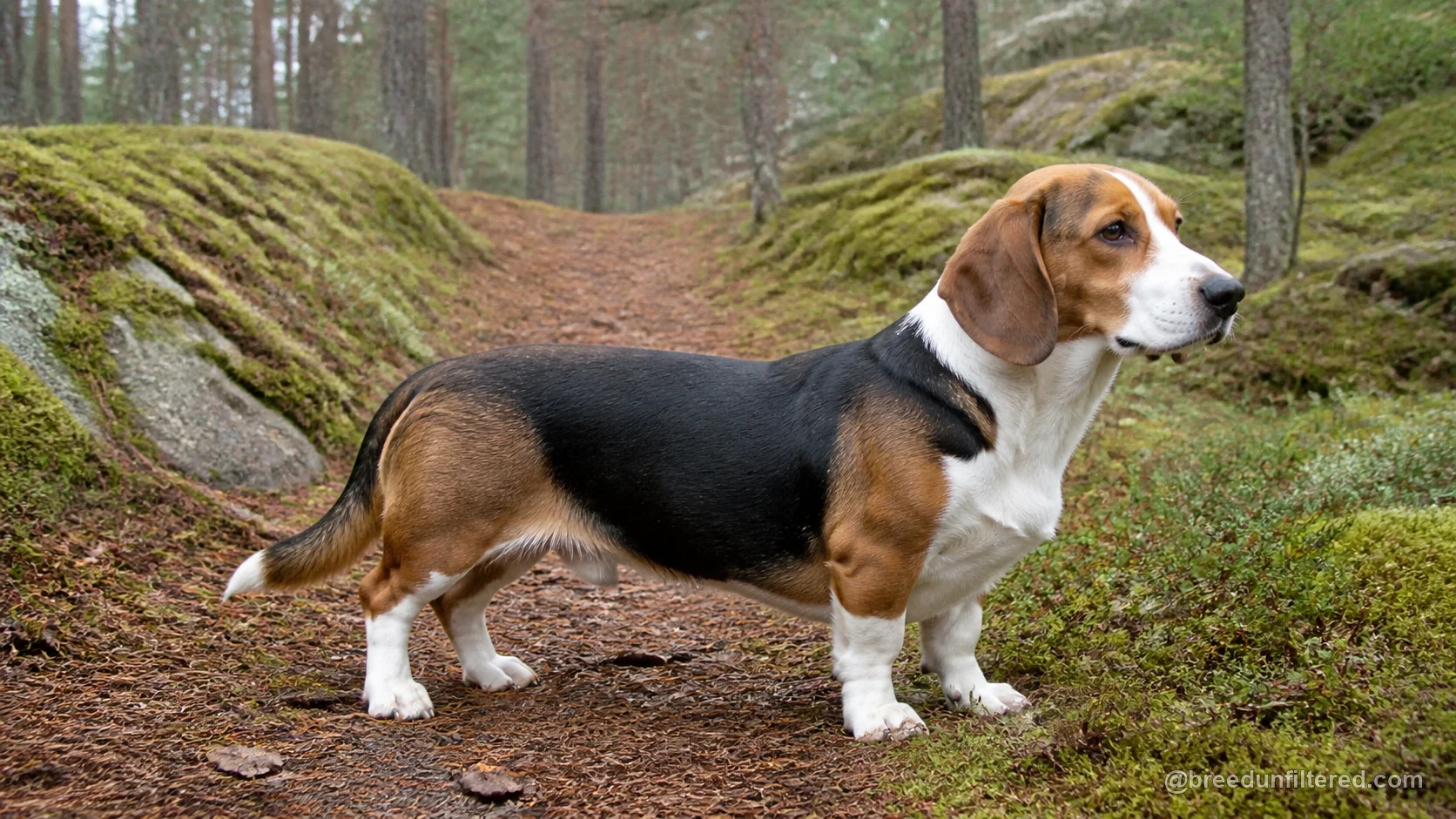
With a sturdy, rectangular body and a confident, lively expression, the Drever is built for endurance and agility. It is known for its excellent nose and its ability to work independently, yet it remains a sociable and even-tempered companion at home. This article provides a comprehensive overview of the Drever, covering its history, temperament, care requirements, and more, to help prospective owners decide if this breed fits their lifestyle.
Origin and Purpose
The Drever's roots trace back to the early 20th century in Sweden, where breeders crossed the Westphalian Dachsbracke, a German scent hound, with various Swedish hounds to create a dog better suited to local hunting conditions. The goal was to produce a short-legged hound that could trail game through thick underbrush and withstand cold climates. The breed was officially recognized in Sweden in 1947 and later gained international recognition by the FCI in 1955.
Today, the Drever remains primarily a working hound, used for hunting hare and fox. Its short legs allow it to move easily through dense vegetation, and its persistent barking while on the trail helps hunters track its location. Despite its hunting focus, the Drever has also become a beloved family pet, appreciated for its friendly disposition and moderate size. Its dual role as a hunter and companion makes it a versatile breed for those who understand its needs.
Temperament and Variation
The Drever is generally described as even-tempered, friendly, and self-assured. It is known to be good-natured with people, including children, and typically gets along well with other dogs. However, as a scent hound, it can be single-minded when following a trail, which may translate into a stubborn streak during training. Individual temperament can vary, influenced by genetics, socialization, and training, so early and consistent handling is important.
While the breed standard describes a typical Drever, there can be variation in size, coat color, and energy levels among individuals. Some may be more reserved, while others are more outgoing. Prospective owners should meet several Drevers and talk to breeders to get a sense of the range of temperaments. It's also worth noting that the Drever's hunting instinct is strong, so its behavior around small animals may vary, and supervision is recommended.
Exercise and Mental Work
The Drever is an energetic breed that requires regular physical activity to stay healthy and content. As a hunting dog, it thrives on opportunities to use its nose and explore. Daily walks, off-leash runs in safe areas, and activities like tracking or nose work can help meet its exercise needs. Without adequate exercise, a Drever may become restless and develop undesirable behaviors such as excessive barking or digging.
Mental stimulation is equally important for this intelligent breed. Puzzle toys, scent games, and obedience training sessions can keep its mind engaged. The Drever is not a high-octane athlete like some other hounds, but it has good stamina and enjoys moderate to vigorous activity. Owners should be prepared to provide at least an hour of exercise per day, though individual needs may vary based on age and health.
Training and Socialisation
Training a Drever requires patience and a positive approach. This breed is intelligent but can be independent and somewhat stubborn, so harsh methods are counterproductive. Using treats, praise, and play as rewards works best. Early socialization is crucial to help the Drever become a well-adjusted adult. Exposing it to various people, places, and situations during puppyhood can reduce the likelihood of fearfulness or aggression later.
Because the Drever is a hound, its recall may be unreliable when it catches an interesting scent. Training a solid recall in a safe, enclosed area is essential. Consistency and short, engaging training sessions are more effective than long, repetitive drills. Owners who enjoy training and are willing to work with the breed's independent nature will find the Drever a rewarding companion.
Family and Other Pets
The Drever is generally good with children and can make a wonderful family dog. Its friendly and tolerant nature means it often enjoys playing and being part of family activities. However, as with any breed, interactions between dogs and young children should always be supervised to ensure safety for both. The Drever's sturdy build allows it to handle rough play, but it may not be the best choice for very young children who might accidentally hurt it.
When it comes to other pets, the Drever's hunting instinct can be a concern. It may chase small animals such as cats, rabbits, or rodents, especially if not raised with them. Early socialization can help, but there is no guarantee. Many Drevers live peacefully with cats if introduced properly, but supervision is advised. With other dogs, the Drever is usually sociable and enjoys the company of its kind, making it a good candidate for multi-dog households.
Grooming and Health
The Drever has a short, dense coat that is easy to groom. Weekly brushing with a firm bristle brush or a hound glove will help remove loose hair and keep the coat healthy. The breed sheds moderately throughout the year, with heavier shedding during seasonal changes. Regular ear checks are important, as floppy ears can trap moisture and debris, leading to infections. Nail trimming and dental care should be part of the routine.
Overall, the Drever is considered a hardy breed with a relatively long lifespan, often living 12 to 14 years. However, like all breeds, it may be prone to certain health conditions. Responsible breeders screen for hip dysplasia and eye disorders. It is also important to keep the Drever at a healthy weight, as obesity can exacerbate joint issues. Prospective owners should ask breeders about health testing and be prepared for routine veterinary care.
Costs and Responsibility
Owning a Drever involves financial and time commitments. The initial cost of a puppy from a reputable breeder can vary, but it is important to budget for quality food, routine veterinary care, vaccinations, and preventive medications. Additionally, because the Drever is an active breed, owners should consider costs for secure fencing, training classes, and possibly dog sports or activities. Unexpected medical expenses can arise, so pet insurance is worth considering.
Beyond finances, owning a Drever is a long-term responsibility. This breed thrives on human companionship and should not be left alone for long periods. It needs daily exercise, mental stimulation, and social interaction. Prospective owners should assess their lifestyle to ensure they can meet these needs. Adopting a Drever from a rescue or shelter is also an option, and it can be a rewarding way to give a dog a second chance. Responsible ownership includes providing proper training, healthcare, and a safe environment.
Clear answers
FREQUENTLY ASKED QUESTIONS
Is the Drever a good family dog?
The Drever can be a good family dog due to its friendly and even-tempered nature. It generally gets along well with children and other dogs, especially when raised with them. However, its hunting instinct may lead it to chase small pets, so supervision is necessary. Early socialization and training are key to ensuring a well-adjusted family companion.
How much exercise does a Drever need?
The Drever is an energetic breed that requires regular exercise to stay healthy and happy. Daily walks, off-leash runs in safe areas, and activities like tracking or nose work are ideal. Most Drevers need at least an hour of exercise per day, but individual needs can vary. Without enough activity, they may become bored and develop behavioral issues.
Are Drevers easy to train?
Drevers are intelligent but can be independent and stubborn, which may make training a challenge. They respond best to positive reinforcement methods such as treats and praise. Consistency and patience are essential. Early socialization and obedience training are recommended to manage their strong hunting instincts and ensure they become well-mannered adults.
Do Drevers shed a lot?
Drevers have a short, dense coat that sheds moderately throughout the year, with heavier shedding during seasonal changes. Weekly brushing can help manage loose hair and keep the coat in good condition. While they are not heavy shedders, they are not considered hypoallergenic, and regular grooming is necessary to minimize shedding around the home.
What health issues are common in Drevers?
Drevers are generally healthy, but like many breeds, they may be prone to certain conditions such as hip dysplasia and ear infections. Responsible breeders screen for these issues. Regular veterinary check-ups, a balanced diet, and proper exercise can help maintain their health. It's important to keep them at a healthy weight to avoid joint problems.
Sources and further reading
Scores describe typical breed tendencies from 1 to 10. They are not a quality ranking or a prediction for an individual dog.
Size and presence5/10
CompactVery large
Physical strength5/10
LightExceptional
Energy level8/10
LowRelentless
Exercise demand8/10
ModestVery demanding
Mental work needed8/10
ModerateDaily job
Trainability4/10
ChallengingExceptional
Everyday manageability3/10
SpecialistStraightforward
First-time owner fit3/10
Poor fitGood fit
Family-life fit6/10
LimitedExcellent
Dog sociability8/10
SelectiveVery social
Prey drive9/10
LowVery high
Guarding tendency3/10
MinimalSerious
Independence10/10
Handler-focusedSelf-directed
Grooming demand4/10
LightHeavy
Apartment fit4/10
Poor fitGood fit