The honest version
WHAT THIS DOG NEEDS
Social, athletic and independent. A beautiful breed whose needs can be wildly mismatched with sedentary living.
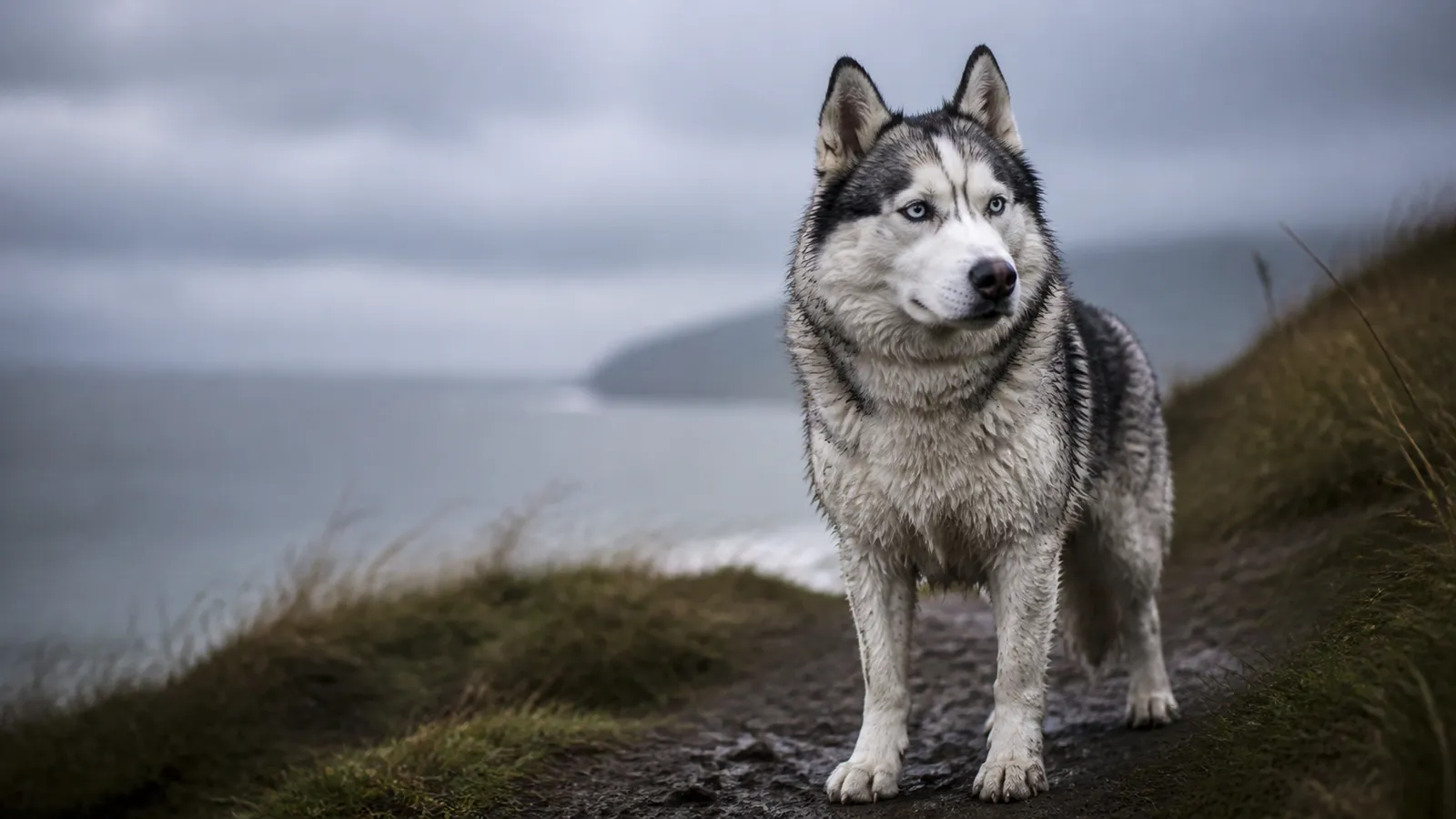
The honest version
Social, athletic and independent. A beautiful breed whose needs can be wildly mismatched with sedentary living.
Watch the episode
Complete breed guide
The Siberian Husky is a medium-sized northern working dog developed for efficient travel in harness with a team. Its beauty, sociability, athletic movement, and expressive communication attract people around the world, but appearance is a poor reason to choose one. Many Huskies are energetic, independent in decision-making, interested in running, skilled at exploiting weak containment, and heavily shedding. These are manageable traits in a prepared home, not defects to be corrected after adoption.
A prospective owner should ask whether daily life can accommodate secure exercise, training that works with motivation, seasonal coat care, and management around small animals. Climate also matters: a double coat is not a reason to leave a dog outside in severe cold, and hot or humid regions require conservative activity planning. Individuals vary with breeding, age, health, rearing, and experience, so meet adult dogs and seek evidence about the particular dog rather than relying on internet stereotypes.
The Siberian Husky traces to sled dogs developed by the Chukchi people of northeastern Asia for transport across long distances in severe conditions. Selection favoured endurance, efficient movement, the ability to work among other dogs, and a size that could be maintained on limited resources. Dogs imported to Alaska became known through sled racing and transport, including demanding relay work. This background differs from that of heavier freight-pulling northern breeds, even though the public often groups all sled dogs together.
Historical purpose still informs modern care. A Husky may find forward motion, exploration, teamwork, and running inherently rewarding, while repetitive obedience for its own sake may be less compelling. Owners can channel those preferences through canicross, bikejoring, skijoring, recreational mushing, hiking on secure equipment, scent work, or other structured activities. Pulling sports require suitable age, veterinary guidance, progressive conditioning, correct equipment, safe surfaces, and weather awareness. A pet Husky does not need to race, but it does need a life that respects its physical and exploratory motivations.
Many Siberian Huskies are socially interested, playful, curious, and relatively welcoming to unfamiliar people, qualities connected to working in groups and living near families. They may communicate with howls, whines, and dramatic vocal sequences as well as barking. Independence does not mean low intelligence; it often means the dog evaluates whether an offered behaviour is worthwhile. Some are cuddly, others prefer nearby companionship, and some experience separation-related distress. Their friendly reputation is not a guarantee with children, visitors, or dogs, and it should not replace individual assessment.
Chase behaviour and roaming deserve realistic attention. A Husky may pursue cats, wildlife, livestock, or running dogs even after good training, and recall can fail when the environment is more rewarding than the handler. Other individuals coexist with smaller pets under careful management. Genetics, early exposure, reinforcement history, pain, and maturity all affect behaviour. If a dog shows sudden irritability, panic when alone, persistent escape attempts, or aggressive behaviour, consult a veterinarian and an appropriately qualified behaviour professional rather than attributing everything to stubbornness or trying increasingly severe corrections.
Healthy adult Huskies generally need substantial daily activity, but no fixed mileage is right for every dog. Build a varied routine around brisk walking, secure running where available, sniffing, exploration, play, and short training sessions. Puppies should not be taken on forced long runs or repetitive high-impact routes while they are developing. Older dogs and those with medical conditions need modified plans. Conditioning should increase gradually, with attention to feet, gait, hydration, appetite, and recovery after exercise.
Heat management is essential in warm climates. Exercise during cooler parts of the day, provide shade and fresh water, avoid hot surfaces, and ask a veterinarian how to recognise heat stress and respond in an emergency. Never assume shaving the double coat makes strenuous hot-weather exercise safe; clipping may affect coat protection and does not remove the need for caution. Indoor enrichment can include food searches, scent trails, shredding safe materials, puzzle feeding, and calm skill work. Rest matters too, because a dog kept in constant high arousal may become harder, not easier, to settle.
Husky training is most effective when rewards compete with the environment and management prevents rehearsal of unsafe choices. Start with name response, check-ins, loose-lead walking, recall on a long line, waiting at gates, releasing objects, settling, handling, and positive muzzle conditioning. Use food, play, permission to sniff, and forward movement as rewards. Short successful repetitions often work better than drilling. Punishment may suppress warning signals or make the dog avoid the handler, while an unsecured area can undo months of recall practice in seconds.
Socialisation should expose a puppy gradually to transport, grooming, veterinary handling, urban and rural sounds, varied people, calm dogs, and household routines without forcing interaction. Because many Huskies enjoy canine company, owners may assume every dog encounter is welcome, but adult preferences vary and crowded dog parks can teach rough or avoidant behaviour. Continue structured learning through adolescence. Trainers should explain body language and reinforcement, respect breed-typical motivation without excusing dangerous behaviour, and collaborate with veterinary professionals when pain, panic, or aggression may be involved.
A Siberian Husky can be an engaging family companion, yet a busy household must still provide routine, supervision, and rest. Excited dogs may jump, mouth, steal objects, or bowl over small children. Adults should supervise all contact, teach children to leave sleeping and eating dogs alone, and use gates or separate rooms when attention is divided. Vocalising may affect neighbours, and separation alone for long working days can be difficult for some individuals. Before adoption, decide who covers exercise, grooming, training, and emergency care every day of the year.
Multi-dog living can suit some Huskies, especially when play styles and resources are compatible, but group ancestry does not guarantee harmony. Introduce dogs gradually, supervise valuable items, and give each dog separate rest and feeding space. Cats, rabbits, poultry, and other small animals require a more conservative plan because chase and predatory behaviour may appear quickly and silently. Secure barriers, leads, and separate zones are essential, and unsupervised access may never be appropriate. Foster-home history helps with matching but cannot promise future behaviour in a new setting.
The Siberian Husky has a dense double coat that sheds and typically releases large amounts of undercoat during seasonal changes. Regular brushing reduces loose hair and helps owners inspect the skin, feet, ears, and body condition. During a coat blow, daily attention may be practical. Avoid tools that cut healthy topcoat unless a grooming professional or veterinarian recommends them for a specific reason. Nails, including any dewclaws, need routine care, and teeth benefit from veterinarian-approved home cleaning. Bathing is occasional for many Huskies, provided the coat dries fully.
Breed-club health guidance commonly focuses on eye examinations and hip evaluation, with recommendations evolving as research develops. Ask breeders for current, independently verifiable results on both parents and discuss relatives' vision, mobility, neurological health, skin, longevity, and causes of death. A puppy examination and a commercial DNA panel do not replace the complete programme recommended by the relevant national club. Owners should establish local veterinary care, keep the dog lean, discuss preventive medicine and exercise, and promptly investigate squinting, eye cloudiness, weakness, seizures, gait changes, recurrent skin problems, or any sudden change in behaviour.
Budget beyond the purchase or adoption fee. Food, veterinary care, vaccination and parasite control suited to local risks, grooming equipment, training, pet care during travel, insurance or emergency savings, secure walking gear, and safe transport all recur. Harness sports add specialised equipment, lessons, travel, and sometimes club fees. Housing damage, fence improvement, and treatment after an escape can be expensive. Insurance and rental rules vary by country and property, so obtain written information and local price estimates before committing.
Containment is a core welfare responsibility. Inspect fence height, gates, gaps, weak panels, objects that can serve as steps, and surfaces that allow digging. Use identification and a registered microchip where available, check collars and harnesses for fit, and do not rely on invisible boundaries for a dog motivated to run. Ethical breeders provide verifiable health information, honest temperament matching, appropriate puppy rearing, and lifetime return support. Responsible rescues disclose known history and uncertainty. The right home plans for twelve or more years of changing needs, including old age, relocation, illness, and the loss of a primary caregiver.
Clear answers
Some individuals develop excellent recall, but breed-typical interest in running and chasing makes unsecured freedom a high-risk choice for many. Use fenced areas or a well-managed long line, continue rewarding recall, and judge the actual environment rather than relying on past success.
Some can live comfortably with careful management, but heat and humidity restrict safe activity. Provide cool indoor space, water, shade, and exercise at cooler times. Discuss individual risk and heat-emergency signs with a veterinarian, especially for puppies, seniors, or unwell dogs.
They can learn quickly, but environmental rewards often compete strongly with the handler. Training works best with valuable reinforcement, short sessions, and secure management. Independence should shape the teaching plan, not become an excuse for unsafe behaviour or harsh methods.
Some do, particularly with appropriate early experience, while others may show dangerous chase or predatory behaviour. Use gradual introductions, barriers, escape routes, and close supervision. A past history with one cat does not guarantee safety with every small animal.
Plan for regular brushing and much more frequent work during seasonal undercoat shedding. Nails, teeth, skin, and feet also need routine care. The coat should not be shaved as a casual heat solution; seek professional advice for medical matting or skin problems.
Scores describe typical breed tendencies from 1 to 10. They are not a quality ranking or a prediction for an individual dog.