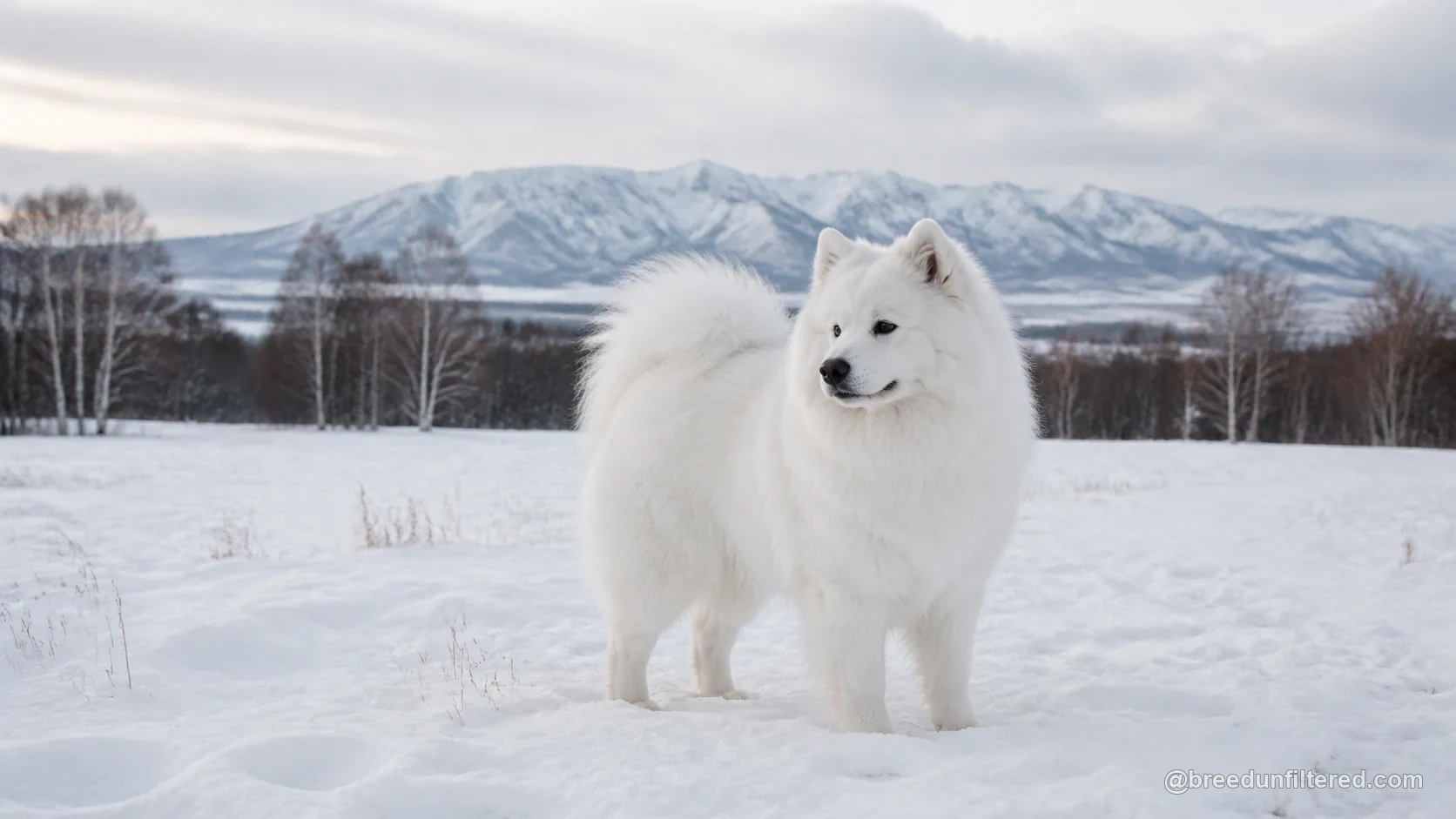
Complete breed guide
Samoyed OWNERSHIP GUIDE
The Samoyed, with its characteristic 'Sammy smile' and plush white coat, is a breed that captures hearts at first sight. Originating from the nomadic Samoyede people of Siberia, these dogs were bred for herding reindeer, pulling sleds, and keeping their human companions warm in harsh Arctic conditions. This heritage has shaped a dog that is not only beautiful but also intelligent, resilient, and deeply devoted to its family.
However, prospective owners should look beyond the striking appearance. The Samoyed is a working breed with substantial needs for exercise, mental stimulation, and social interaction. They are known for their friendly and outgoing nature, but they also possess a stubborn streak and a strong prey drive. This guide aims to provide a balanced, evidence-conscious overview of the breed, helping you decide if a Samoyed is the right fit for your lifestyle.
Origin and Purpose
The Samoyed's history is deeply intertwined with the Samoyede people of northwestern Siberia, who relied on these dogs for survival. These versatile canines were used for herding reindeer, pulling sleds, and even acting as living hot-water bottles during frigid nights. The breed's ability to work in extreme cold and its cooperative nature were essential to the nomadic lifestyle of its people.
In the late 19th and early 20th centuries, Samoyeds were brought to Europe and North America by explorers and enthusiasts. Their striking appearance and amiable temperament quickly gained popularity. Today, while they are primarily companion animals, they retain the instincts and capabilities of their working ancestors, which influences their behavior and needs in a domestic setting.
Temperament and Variation
Samoyeds are renowned for their friendly, gentle, and sociable disposition. They are often described as 'smiling' due to the upturned corners of their mouths, which reflects their generally happy outlook. They are typically affectionate with family members and tend to get along well with strangers, making them poor guard dogs but excellent companions. However, individual temperament can vary, and early socialization plays a crucial role in shaping a well-adjusted adult.
While the breed standard describes a confident and alert dog, there is natural variation in energy levels, sociability, and trainability. Some Samoyeds may be more independent or reserved, while others are more outgoing and eager to please. Prospective owners should meet several dogs and speak with reputable breeders to understand the range of temperaments within the breed.
Exercise and Mental Work
As a working breed, Samoyeds require regular physical exercise to maintain their physical and mental well-being. Daily walks, play sessions, and opportunities to run in a securely fenced area are typically recommended. Without adequate exercise, they may become bored and develop undesirable behaviors such as excessive barking or digging. The exact amount varies by age, health, and individual energy levels.
Mental stimulation is equally important. Samoyeds are intelligent and enjoy tasks that challenge their minds, such as puzzle toys, obedience training, or canine sports like agility and rally. Engaging their problem-solving abilities helps prevent boredom and strengthens the bond between dog and owner. A tired Samoyed is generally a content and well-behaved one.
Training and Socialisation
Samoyeds are intelligent but can be independent and stubborn, which may present training challenges. They respond best to positive reinforcement techniques, such as treats, praise, and play, rather than harsh methods. Consistency and patience are key. Early socialization with various people, animals, and environments is crucial to help them develop into confident, well-mannered adults.
Because of their history as sled dogs, Samoyeds may have a strong desire to pull and can be easily distracted by scents or moving objects. Training should include reliable recall and loose-leash walking. Enrolling in puppy classes or working with a professional trainer can be beneficial, especially for first-time owners. It's important to remember that training is an ongoing process throughout the dog's life.
Family and Other Pets
Samoyeds are generally excellent family dogs, known for their gentle and playful nature with children. They are typically patient and enjoy being part of family activities. However, as with any breed, interactions between dogs and young children should always be supervised to ensure safety for both. Their herding instincts may lead them to try to 'herd' children, which can be managed through training.
When it comes to other pets, Samoyeds usually get along well with other dogs, especially if raised together. However, their prey drive can be strong, and they may not be trustworthy with small animals like cats, rabbits, or rodents. Early socialization and careful introductions can help, but there is always a risk. Prospective owners with small pets should consider this carefully.
Grooming and Health
The Samoyed's beautiful double coat requires significant grooming. They shed heavily, often described as 'blowing' their coat, typically twice a year. Regular brushing, at least a few times a week, is necessary to manage loose fur and prevent matting. During heavy shedding periods, daily brushing may be needed. Their coat is also known to be relatively dirt-resistant, but occasional baths are still required.
Like all breeds, Samoyeds are prone to certain health conditions, though not every dog will be affected. Some conditions that have been reported include hip dysplasia, progressive retinal atrophy, and hypothyroidism. Responsible breeders screen their breeding stock for these issues. Prospective owners should ask about health clearances and be prepared for potential veterinary costs. Regular check-ups and a healthy diet contribute to overall well-being.
Costs and Responsibility
Owning a Samoyed involves significant financial and time commitments. Initial costs include the purchase price from a reputable breeder, which can be substantial, as well as supplies like a crate, bed, and grooming tools. Ongoing expenses include high-quality food, routine veterinary care, vaccinations, and preventive medications. Grooming costs can also add up if you choose professional services.
Beyond finances, Samoyeds require a considerable amount of time and attention. They are social animals that thrive on human companionship and should not be left alone for long periods. They need daily exercise, mental stimulation, and grooming. Prospective owners should honestly assess their lifestyle and ability to meet these needs. Adopting from a rescue or shelter is also a rewarding option to consider.
Clear answers
FREQUENTLY ASKED QUESTIONS
Are Samoyeds good with children?
Samoyeds are generally known for their gentle and friendly nature, and they often do well with children. They are typically patient and enjoy being part of family activities. However, as with any breed, interactions should always be supervised, and children should be taught how to properly approach and handle a dog. Early socialization and training can help ensure a positive relationship.
Do Samoyeds shed a lot?
Yes, Samoyeds shed significantly. They have a thick double coat that 'blows' (sheds heavily) typically twice a year, though some shedding occurs year-round. Regular brushing, at least a few times a week, is essential to manage loose fur and prevent mats. During heavy shedding periods, daily brushing may be necessary. Prospective owners should be prepared for fur on clothing and furniture.
Are Samoyeds easy to train?
Samoyeds are intelligent but can be independent and stubborn, which can make training a challenge. They respond best to positive reinforcement methods, such as treats and praise. Consistency and patience are crucial. Early socialization and puppy classes are highly recommended. With the right approach, they can learn many commands and tricks, but owners should be prepared for a dog that may test boundaries.
How much exercise does a Samoyed need?
Samoyeds are an active working breed and require regular exercise to stay happy and healthy. This typically includes daily walks, playtime, and opportunities to run in a securely fenced area. The exact amount varies by age and individual energy levels, but a general guideline is at least an hour of activity per day. Without enough exercise, they may become bored and develop destructive behaviors.
Are Samoyeds good apartment dogs?
Samoyeds can adapt to apartment living if their exercise and mental stimulation needs are met, but they are not ideal for every apartment dweller. They are active and vocal, and their barking may disturb neighbors. They also need space to move and a secure area to run. A home with a fenced yard is often more suitable, but with dedicated daily exercise, some Samoyeds can thrive in apartments.
Sources and further reading
Scores describe typical breed tendencies from 1 to 10. They are not a quality ranking or a prediction for an individual dog.
Size and presence5/10
CompactVery large
Physical strength5/10
LightExceptional
Energy level8/10
LowRelentless
Exercise demand8/10
ModestVery demanding
Mental work needed8/10
ModerateDaily job
Trainability5/10
ChallengingExceptional
Everyday manageability2/10
SpecialistStraightforward
First-time owner fit3/10
Poor fitGood fit
Family-life fit6/10
LimitedExcellent
Dog sociability6/10
SelectiveVery social
Prey drive10/10
LowVery high
Guarding tendency6/10
MinimalSerious
Independence10/10
Handler-focusedSelf-directed
Grooming demand10/10
LightHeavy
Apartment fit4/10
Poor fitGood fit