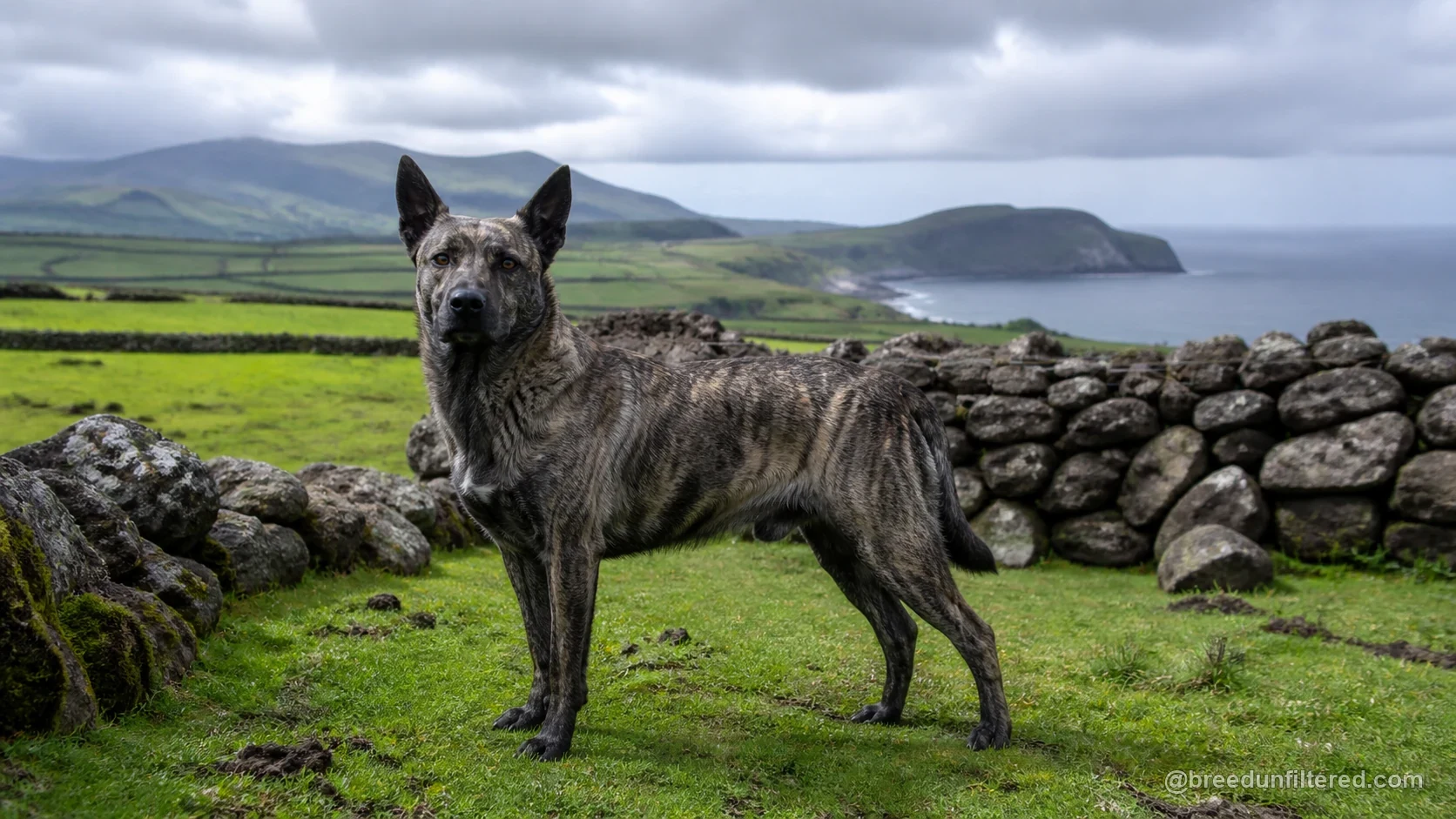
Complete breed guide
Saint Miguel Cattle Dog OWNERSHIP GUIDE
The Saint Miguel Cattle Dog, also known as the Cão Fila de São Miguel, is a rare and powerful breed from the Azores. Developed to work with cattle on the island of São Miguel, this dog is known for its courage, loyalty, and strong guarding instincts. Prospective owners should understand that this is not a typical companion breed; it requires experienced handling, ample space, and a clear job to thrive.
This article provides an evidence-conscious overview of the breed, drawing from the official FCI standard and general breed knowledge. We will explore the breed's origins, temperament, exercise needs, training, family compatibility, grooming, health, and the responsibilities of ownership. The goal is to help you decide if this remarkable but demanding dog is the right fit for your lifestyle.
Origin and Purpose
The Saint Miguel Cattle Dog originates from the island of São Miguel in the Azores, an autonomous region of Portugal. The breed's development is closely tied to the island's cattle industry, where dogs were needed to herd and control cattle in rugged terrain. The FCI standard (number 340) describes a dog that is robust, agile, and capable of working independently, often using its voice and body to move livestock.
Historically, these dogs were also used for guarding property and family, a role that remains in their instincts today. The breed's name 'Fila' suggests a 'gripping' or 'holding' style of work, similar to other Fila breeds. While still used for working cattle on the Azores, the breed is rare outside its homeland, and prospective owners should seek reputable breeders who prioritize health and temperament.
Temperament and Variation
The Saint Miguel Cattle Dog is typically described as loyal, courageous, and protective. The FCI standard notes that the breed is 'expressive, lively, and very intelligent,' with a tendency to be wary of strangers. This wariness, combined with a strong guarding instinct, makes early and ongoing socialisation essential. Individual temperament can vary, and not every dog will exhibit the same intensity of these traits.
While some individuals may be more outgoing, the breed generally forms a strong bond with its family and can be reserved or aloof with unfamiliar people. They are not typically aggressive without reason, but their protective nature means they need clear leadership and consistent boundaries. Prospective owners should be prepared for a dog that is alert and watchful, often acting as a deterrent simply by its presence.
Exercise and Mental Work
As a working breed, the Saint Miguel Cattle Dog has substantial exercise needs. They are not suited to a sedentary lifestyle and require daily physical activity to maintain their physical and mental well-being. Activities such as long walks, jogging, or hiking can help meet their energy requirements, but they also need a job to do. Without adequate exercise and mental stimulation, they may develop destructive behaviors.
Mental work is equally important. This intelligent breed thrives on problem-solving tasks, obedience training, and activities like herding trials or canine sports. Puzzle toys, scent work, and structured play can provide mental enrichment. Owners should be prepared to dedicate time each day to both physical and mental exercise, as a bored Saint Miguel Cattle Dog can become restless and challenging.
Training and Socialisation
Training a Saint Miguel Cattle Dog requires patience, consistency, and a firm but fair approach. They are intelligent and can learn quickly, but they may also test boundaries. Positive reinforcement methods, such as treats and praise, tend to work best, while harsh corrections can damage trust. Early training should focus on basic obedience and impulse control, as these dogs can be strong-willed.
Socialisation is critical from a young age. Exposing the dog to a variety of people, places, and situations helps mitigate their natural wariness of strangers. Puppy classes and controlled introductions to other dogs can be beneficial. However, even with thorough socialisation, the breed's guarding instincts may remain, so owners must manage interactions with unfamiliar people and animals responsibly.
Family and Other Pets
The Saint Miguel Cattle Dog can be a devoted family companion, especially when raised with children. They are often gentle and protective with their own family, but their size and energy may be overwhelming for very young children. Supervision is recommended, and children should be taught how to interact respectfully with dogs. The breed's herding instinct may lead to nipping at heels, which needs to be managed through training.
When it comes to other pets, the Saint Miguel Cattle Dog's compatibility varies. They may get along with dogs they are raised with, but same-sex aggression can occur. Their prey drive towards smaller animals, such as cats or rabbits, may be high, so introductions should be careful and gradual. As with any dog, individual temperament and early socialisation play a significant role in how they interact with other animals.
Grooming and Health
The Saint Miguel Cattle Dog has a short, dense coat that is relatively low-maintenance. Regular brushing, perhaps once or twice a week, will help remove loose hair and keep the coat healthy. They shed moderately, and more frequent brushing may be needed during seasonal changes. Bathing should be done only when necessary to avoid stripping natural oils.
As a breed, the Saint Miguel Cattle Dog is generally robust, but like all dogs, they may be prone to certain health conditions. Hip dysplasia and other joint issues can occur, as can eye problems. Responsible breeders screen for these conditions. Prospective owners should ask for health clearances and be prepared for routine veterinary care. Lifespan is typically around 12 to 14 years, though individual health varies.
Costs and Responsibility
Owning a Saint Miguel Cattle Dog is a significant financial and time commitment. Initial costs include the purchase price, which can be high due to the breed's rarity, as well as supplies like a crate, bed, and food. Ongoing costs include high-quality dog food, routine veterinary care, vaccinations, and parasite prevention. Emergency medical expenses should also be considered, and pet insurance may be a wise investment.
Beyond finances, responsible ownership requires a commitment to training, socialisation, and providing adequate exercise and mental stimulation. This breed is not suitable for first-time dog owners or those living in small apartments without access to secure outdoor space. They thrive in homes with a yard and an active lifestyle. Prospective owners should thoroughly research the breed, meet adult dogs if possible, and be prepared for a long-term partnership with a powerful and loyal companion.
Clear answers
FREQUENTLY ASKED QUESTIONS
Is the Saint Miguel Cattle Dog good with children?
The Saint Miguel Cattle Dog can be good with children when raised with them and properly socialised. They are often protective and loyal to their family, but their size and energy may be too much for very young children. Supervision is essential, and children should be taught how to interact gently. Early training can help manage herding instincts that may lead to nipping.
How much exercise does a Saint Miguel Cattle Dog need?
This breed has high exercise needs due to its working heritage. They require daily physical activity such as long walks, runs, or play sessions, as well as mental stimulation. Without enough exercise, they may become bored and develop destructive behaviors. Owners should be prepared to provide at least an hour of vigorous activity each day, though individual needs vary.
Are Saint Miguel Cattle Dogs aggressive?
Saint Miguel Cattle Dogs are not inherently aggressive, but they have strong guarding instincts and can be wary of strangers. They are protective of their family and property, which can be misinterpreted as aggression. Proper socialisation and training are crucial to help them distinguish between normal and threatening situations. With responsible ownership, they can be well-adjusted companions.
Do Saint Miguel Cattle Dogs get along with other dogs?
Saint Miguel Cattle Dogs may get along with other dogs, especially if raised together, but they can be dominant or same-sex aggressive. Their herding and guarding instincts may also lead to conflicts. Early and ongoing socialisation is important, and introductions should be managed carefully. Not all individuals will be dog-friendly, so it's essential to assess each dog's temperament.
What is the lifespan of a Saint Miguel Cattle Dog?
The typical lifespan of a Saint Miguel Cattle Dog is around 12 to 14 years, though some may live longer with good care. As with any breed, they can be prone to certain health issues like hip dysplasia and eye problems. Regular veterinary check-ups, a balanced diet, and appropriate exercise can contribute to a longer, healthier life.
Sources and further reading
Scores describe typical breed tendencies from 1 to 10. They are not a quality ranking or a prediction for an individual dog.
Size and presence8/10
CompactVery large
Physical strength9/10
LightExceptional
Energy level6/10
LowRelentless
Exercise demand6/10
ModestVery demanding
Mental work needed7/10
ModerateDaily job
Trainability5/10
ChallengingExceptional
Everyday manageability1/10
SpecialistStraightforward
First-time owner fit3/10
Poor fitGood fit
Family-life fit6/10
LimitedExcellent
Dog sociability3/10
SelectiveVery social
Prey drive6/10
LowVery high
Guarding tendency10/10
MinimalSerious
Independence10/10
Handler-focusedSelf-directed
Grooming demand5/10
LightHeavy
Apartment fit3/10
Poor fitGood fit