Complete breed guide
Russian Black Terrier OWNERSHIP GUIDE
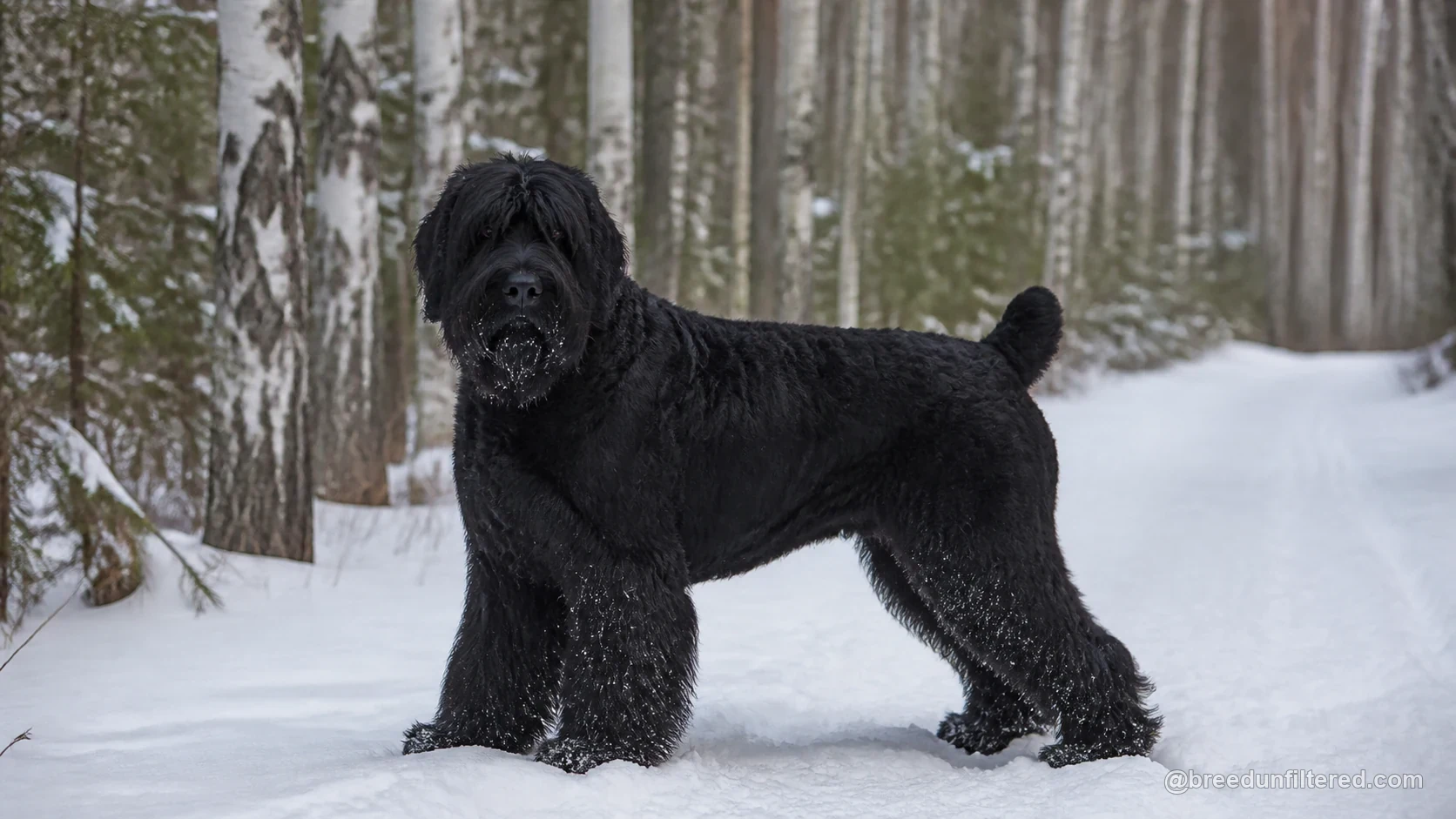
The Russian Black Terrier, also known as the Black Russian Terrier, is a large, robust working breed developed in the mid-20th century in the Soviet Union. Originally created for military and guard duties, this breed combines strength, intelligence, and a distinctive black coat. Today, they are valued as loyal companions and capable protectors, but they are not a breed for everyone. Prospective owners should be prepared for a dog that requires consistent training, ample exercise, and dedicated grooming.
This article provides an in-depth look at the Russian Black Terrier, covering its origins, temperament, exercise needs, training, family compatibility, grooming, health considerations, and the responsibilities of ownership. By understanding the breed's characteristics and demands, you can make an informed decision about whether this impressive canine is the right fit for your lifestyle.
Origin and Purpose
The Russian Black Terrier was developed in the late 1940s and 1950s at the Red Star Kennel in the Soviet Union. The goal was to create a large, hardy, and versatile working dog capable of performing military and police duties, including guarding, patrolling, and detection. The breed was produced by crossing several breeds, including the Giant Schnauzer, Airedale Terrier, Rottweiler, and Newfoundland, among others. The result was a powerful, confident dog with a weather-resistant black coat.
After the Cold War, the breed transitioned to civilian life, where it became a popular guard and companion dog in Russia and later in other countries. The Fédération Cynologique Internationale (FCI) recognized the Russian Black Terrier definitively in 1984 under standard number 327, placing it in Group 2 (Pinscher and Schnauzer type, Molossoid and Swiss Mountain and Cattle Dogs). Today, the breed is still used for working roles but is primarily a devoted family protector and show dog.
Temperament and Variation
Russian Black Terriers are known for their calm, confident, and even-tempered nature. They are typically alert and watchful, making them excellent watchdogs. However, they can be aloof with strangers and are naturally protective of their family. Early socialization is crucial to ensure they distinguish between normal and threatening situations. While they are not typically aggressive without reason, their guarding instincts are strong, and they may be wary of unfamiliar people or animals.
Individual temperament can vary based on genetics, socialization, and training. Some may be more outgoing, while others are more reserved. They are generally intelligent and willing to please, but they also have an independent streak. This breed is not recommended for first-time owners due to its size, strength, and need for firm, consistent leadership. With proper guidance, they can be gentle and affectionate with their family, often forming strong bonds with children.
Exercise and Mental Work
Russian Black Terriers are a working breed with moderate to high energy levels. They require regular daily exercise to keep them physically fit and mentally stimulated. A typical routine might include long walks, jogging, or play sessions in a securely fenced area. They also enjoy activities like obedience training, agility, and tracking, which provide both physical and mental challenges. Without adequate exercise, they may become bored and develop destructive behaviors.
Mental work is equally important for this intelligent breed. Puzzle toys, scent games, and training sessions that require problem-solving can help keep their minds sharp. They thrive when they have a job to do, whether it's learning new commands or participating in canine sports. Owners should be prepared to dedicate time each day to both physical and mental enrichment to ensure a well-balanced and content dog.
Training and Socialisation
Training a Russian Black Terrier requires patience, consistency, and positive reinforcement methods. They respond well to reward-based training, but they can be stubborn and may test boundaries. Early obedience training is essential to establish leadership and prevent unwanted behaviors. Harsh or punitive methods are counterproductive and can damage the trust between dog and owner. Professional training classes can be beneficial, especially for first-time owners.
Socialisation should begin early and continue throughout the dog's life. Exposing the puppy to a variety of people, places, sounds, and other animals helps them develop into well-adjusted adults. Because of their protective nature, it is important to teach them to remain calm in new situations. A well-socialized Russian Black Terrier is more likely to be confident and less reactive, making them easier to manage in public and around guests.
Family and Other Pets
Russian Black Terriers can make excellent family dogs when raised with children and properly trained. They are typically patient and gentle with kids, but due to their large size, supervision is necessary to prevent accidental knocking over of small children. They are loyal and protective, often forming strong bonds with their human family. However, they may not tolerate rough handling, so children should be taught how to interact respectfully with the dog.
When it comes to other pets, early socialisation is key. They may have a high prey drive, which can make them unsuitable for homes with small animals like cats or rabbits unless raised with them from a young age. They can get along with other dogs, especially if they are socialized properly, but same-sex aggression can occur. Prospective owners should be prepared to manage introductions and provide clear boundaries.
Grooming and Health
The Russian Black Terrier has a dense, wiry double coat that requires regular grooming. Weekly brushing is necessary to prevent matting and tangling, and more frequent grooming may be needed during seasonal sheds. Professional grooming every few months is often recommended to maintain the coat's texture and appearance. They also need regular ear cleaning, nail trimming, and dental care to keep them healthy.
Like many large breeds, Russian Black Terriers are prone to certain health conditions, including hip and elbow dysplasia, progressive retinal atrophy, and some heart issues. Responsible breeders screen their breeding stock for these conditions. Regular veterinary check-ups and a balanced diet are important for overall health. The breed has a relatively long lifespan for its size, often living 10-12 years, but individual health can vary.
Costs and Responsibility
Owning a Russian Black Terrier is a significant financial and time commitment. Initial costs include purchasing from a reputable breeder, which can be expensive, as well as supplies like a crate, bedding, and grooming tools. Ongoing expenses include high-quality food, routine veterinary care, vaccinations, and grooming services. Emergency medical costs can be substantial, so pet insurance is worth considering.
Beyond finances, this breed demands a responsible owner who can provide firm leadership, ample exercise, and mental stimulation. They are not suited to apartment living unless given extensive daily exercise. A securely fenced yard is ideal. Prospective owners should also consider the breed's protective nature and ensure they can manage it appropriately. Owning a Russian Black Terrier is a long-term commitment that should not be taken lightly.
Clear answers
FREQUENTLY ASKED QUESTIONS
Are Russian Black Terriers good with children?
Russian Black Terriers can be good with children when properly socialized and trained. They are typically patient and protective, but due to their large size, supervision is essential to prevent accidental injuries. Teaching children how to interact gently and respectfully with the dog is crucial. Early and ongoing socialization helps ensure a positive relationship.
How much exercise does a Russian Black Terrier need?
Russian Black Terriers are a working breed with moderate to high energy levels. They need at least an hour of exercise daily, which can include walks, jogging, or playtime in a fenced area. Mental stimulation is equally important, so activities like obedience training, puzzle toys, and scent games are recommended to keep them engaged and prevent boredom.
Are Russian Black Terriers easy to train?
Russian Black Terriers are intelligent and eager to please, but they can also be independent and stubborn. Training requires patience, consistency, and positive reinforcement methods. Early obedience training and socialization are essential. They respond well to reward-based techniques, but harsh methods can be counterproductive. Professional training classes can be helpful for novice owners.
Do Russian Black Terriers shed a lot?
Russian Black Terriers have a dense, wiry coat that sheds moderately. They are not heavy shedders, but they do require regular grooming to prevent matting and to remove loose hair. Weekly brushing is recommended, with more frequent grooming during seasonal sheds. Professional grooming every few months helps maintain the coat's condition and appearance.
Are Russian Black Terriers good guard dogs?
Yes, Russian Black Terriers were bred for guarding and protection, and they have strong protective instincts. They are naturally alert and wary of strangers, making them excellent watchdogs. However, they need proper socialization to distinguish between normal and threatening situations. They are loyal and devoted to their family, and they will act to protect them if necessary.
Sources and further reading
Scores describe typical breed tendencies from 1 to 10. They are not a quality ranking or a prediction for an individual dog.
Size and presence8/10
CompactVery large
Physical strength9/10
LightExceptional
Energy level6/10
LowRelentless
Exercise demand6/10
ModestVery demanding
Mental work needed7/10
ModerateDaily job
Trainability7/10
ChallengingExceptional
Everyday manageability1/10
SpecialistStraightforward
First-time owner fit2/10
Poor fitGood fit
Family-life fit6/10
LimitedExcellent
Dog sociability3/10
SelectiveVery social
Prey drive8/10
LowVery high
Guarding tendency9/10
MinimalSerious
Independence7/10
Handler-focusedSelf-directed
Grooming demand7/10
LightHeavy
Apartment fit3/10
Poor fitGood fit