Complete breed guide
Romagna Water Dog OWNERSHIP GUIDE
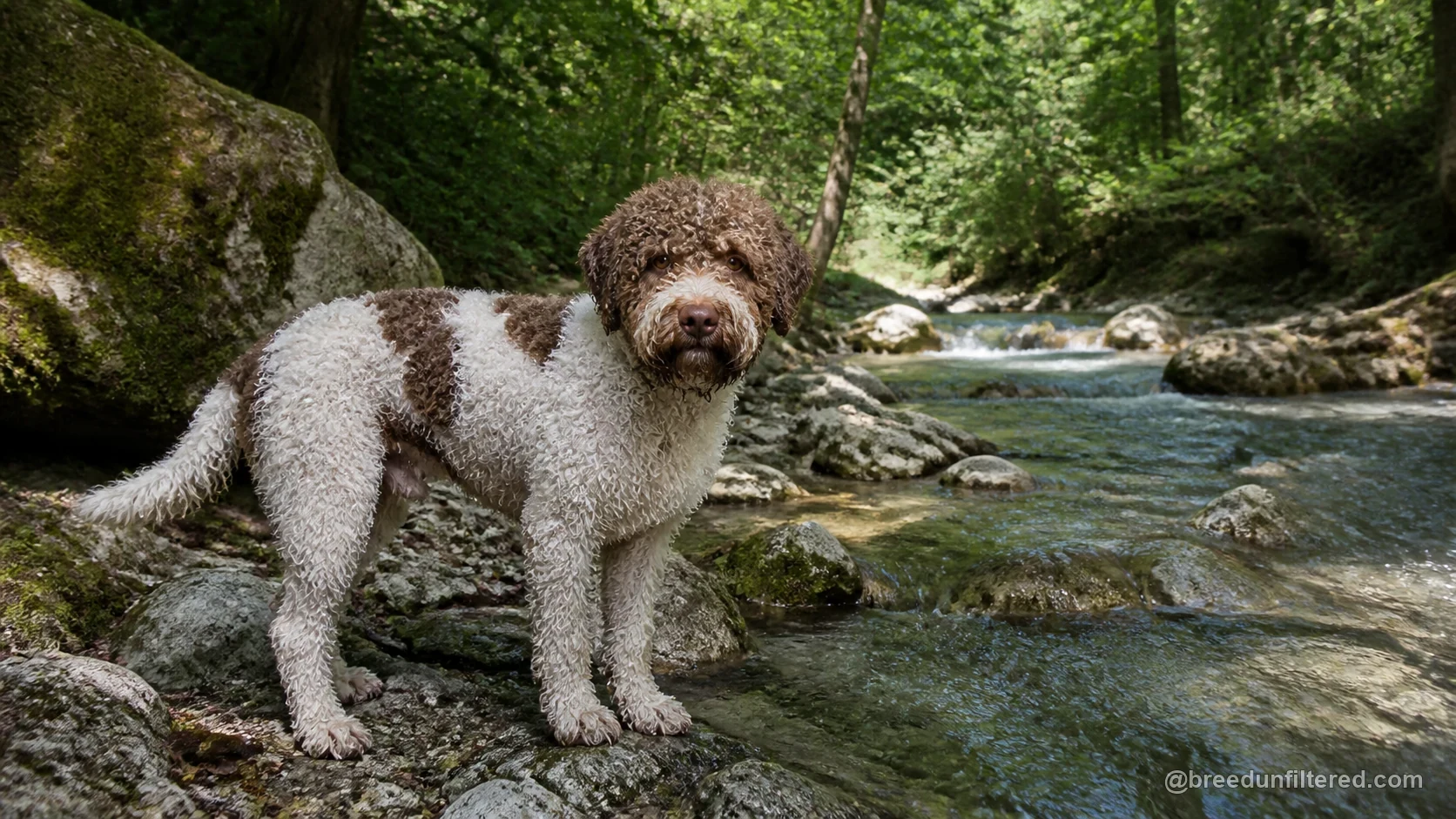
The Romagna Water Dog, known internationally as the Lagotto Romagnolo, is an ancient breed from the marshlands of Romagna in northeastern Italy. Historically prized as a water retriever, this medium-sized dog has gained modern fame as a truffle hunter, thanks to its exceptional scenting ability and keen intelligence. The breed's name derives from 'lagotto,' meaning 'duck dog' in the local dialect, reflecting its original purpose of retrieving waterfowl from the marshes.
Today, the Romagna Water Dog is recognized by the Fédération Cynologique Internationale (FCI) in Group 8, which includes retrievers, flushing dogs, and water dogs. Its distinctive curly, woolly coat and sturdy build make it both functional and charming. However, prospective owners should understand that this is a working breed with specific needs: it thrives on mental challenges, requires consistent training, and forms strong bonds with its family. This guide provides an evidence-conscious overview of the breed's characteristics, care, and responsibilities.
Origin and Purpose
The Romagna Water Dog's history is deeply intertwined with the marshlands of the Italian region of Romagna, where it was used for centuries to retrieve waterfowl. The breed's ancestors are believed to have been water dogs from the Mediterranean, and its development was shaped by the need for a hardy, agile dog capable of working in challenging aquatic environments. The FCI standard (number 298) acknowledges this heritage, noting the breed's strong swimming ability and dense, water-repellent coat.
With the drainage of the marshes in the early 20th century, the breed's role shifted from water retrieval to truffle hunting, a task for which it is now renowned. The Lagotto's extraordinary olfactory capabilities and persistent, methodical search style make it an ideal truffle dog. This transition highlights the breed's adaptability and intelligence, but also means that modern Romagna Water Dogs are often driven by a strong desire to work and use their noses, which prospective owners should be prepared to channel constructively.
Temperament and Variation
The Romagna Water Dog is generally described as affectionate, loyal, and eager to please, but like all breeds, individual temperament varies. The FCI standard characterizes the breed as 'docile, very attached to his master, and easy to train.' Many owners report a playful, sociable companion that enjoys being part of family activities. However, the breed's working heritage means it can be energetic and alert, and it may be reserved with strangers without proper socialisation.
It is important to avoid universal claims about temperament, as genetics, upbringing, and environment all play significant roles. Some Romagna Water Dogs may be more independent or sensitive than others. Prospective owners should meet the parents of a puppy if possible and work with reputable breeders who prioritize stable temperaments. Early and ongoing socialisation is crucial to help the dog develop into a well-adjusted adult, regardless of its innate tendencies.
Exercise and Mental Work
As a working breed, the Romagna Water Dog requires regular physical exercise, but its needs are often more about quality than quantity. Daily walks, play sessions, and opportunities to swim are beneficial, but the breed's true fulfillment comes from mental stimulation. Activities that engage its nose, such as scent work, tracking, or puzzle toys, are particularly valuable. Without adequate mental challenges, the dog may become bored and develop undesirable behaviors like digging or excessive barking.
It is not possible to prescribe an exact exercise regimen, as individual dogs vary in energy and fitness. However, prospective owners should be prepared to provide at least an hour of activity per day, split into sessions, and to incorporate training games that challenge the mind. The breed's love of water means that swimming is often a favorite activity, but always ensure safety and supervise around water. A tired Romagna Water Dog is a content one, but mental fatigue is just as important as physical exhaustion.
Training and Socialisation
The Romagna Water Dog is intelligent and generally eager to learn, which makes training a rewarding experience for both dog and owner. Positive reinforcement methods, such as treats, praise, and play, work best. Harsh corrections are unnecessary and can damage the trust between dog and handler. Consistency and patience are key, as the breed can be sensitive to tone and may become stubborn if training is repetitive or boring.
Socialisation should begin early and continue throughout the dog's life. Exposing the puppy to a variety of people, animals, environments, and sounds helps prevent fearfulness and aggression. While the breed is generally good with other dogs, individual preferences vary, and proper introductions are essential. The Romagna Water Dog's natural prey drive, inherited from its hunting past, may be triggered by small animals, so supervision around cats or small pets is advised until the dog's behavior is known.
Family and Other Pets
The Romagna Water Dog can make a wonderful family companion, known for its affectionate nature and strong attachment to its human pack. It often gets along well with children, especially when raised with them, and enjoys participating in family activities. However, as with any breed, interactions between dogs and young children should always be supervised to ensure safety for both. The dog's herding or retrieving instincts may lead it to 'herd' children, which can be managed through training.
Regarding other pets, the breed's compatibility varies. Many Romagna Water Dogs live peacefully with other dogs, and some with cats, especially if raised together. However, its prey drive may be strong, so caution is warranted with small furry animals like rabbits or guinea pigs. Early socialisation and training can help mitigate potential issues, but there are no guarantees. Prospective owners should assess their household dynamics and be prepared to manage introductions carefully.
Grooming and Health
The Romagna Water Dog's distinctive curly coat requires regular grooming to prevent matting and to maintain its water-resistant properties. Brushing several times a week is typically necessary, and many owners opt for professional grooming every few months. The coat does not shed heavily, which may be appealing to some, but it does require consistent care. Regular ear cleaning is also important, as the breed's floppy ears can trap moisture and debris, potentially leading to infections.
As with all breeds, the Romagna Water Dog is prone to certain health conditions, though not every individual will be affected. The breed has a higher incidence of juvenile epilepsy and some inherited eye disorders, according to health registries. Responsible breeders screen their breeding stock for these conditions. Prospective owners should ask about health testing and obtain a health guarantee. Regular veterinary check-ups, a balanced diet, and appropriate exercise contribute to overall well-being, but no breed is immune to health issues.
Costs and Responsibility
Owning a Romagna Water Dog involves significant financial and time commitments. Initial costs include the purchase price from a reputable breeder, which can be substantial, as well as supplies like crates, bedding, and grooming tools. Ongoing expenses include high-quality food, routine veterinary care, vaccinations, and preventive medications. Grooming costs can add up, especially if professional services are used. Additionally, pet insurance is advisable to help cover unexpected medical expenses.
Beyond finances, this breed demands a responsible owner who can provide ample time for exercise, training, and companionship. The Romagna Water Dog is not a breed that thrives when left alone for long periods; it may develop separation anxiety. Prospective owners should honestly assess their lifestyle, living situation, and ability to meet the breed's needs. Adopting from a rescue or shelter is also an option, though availability may be limited. Responsible ownership means being prepared for a 12- to 15-year commitment.
Clear answers
FREQUENTLY ASKED QUESTIONS
Is the Romagna Water Dog a good family dog?
The Romagna Water Dog can be a good family dog, as it is typically affectionate and loyal to its family members. It often gets along well with children, especially when raised with them, and enjoys being involved in activities. However, like any breed, individual temperament varies, and proper socialisation and supervision are essential. The breed's high energy and need for mental stimulation mean that families should be prepared to provide adequate exercise and engagement.
Does the Romagna Water Dog shed a lot?
The Romagna Water Dog is considered a low-shedding breed, which may be appealing to people with mild allergies, though no dog is truly hypoallergenic. Its curly, woolly coat traps loose hair, reducing shedding. However, this coat requires regular brushing to prevent matting and to remove dead hair. Without proper grooming, the coat can become tangled and uncomfortable for the dog. Regular professional grooming is often recommended.
How much exercise does a Romagna Water Dog need?
The Romagna Water Dog is an energetic working breed that needs regular exercise, but the exact amount varies by individual. Generally, at least an hour of physical activity per day is recommended, split into walks, play, and swimming if available. Mental exercise is equally important; scent games, puzzle toys, and training sessions help satisfy its need to work. Without sufficient activity, the dog may become bored and develop behavioral issues.
Are Romagna Water Dogs easy to train?
Romagna Water Dogs are intelligent and generally eager to please, which makes them trainable with positive reinforcement methods. They respond well to treats, praise, and play, and they enjoy learning new tasks. However, they can be sensitive and may become bored with repetitive training, so sessions should be varied and engaging. Consistency and patience are key. Early socialisation and puppy classes are recommended to build a solid foundation.
What health issues are common in Romagna Water Dogs?
Like all breeds, Romagna Water Dogs may be prone to certain health conditions, though not every individual will be affected. Health registries indicate a higher incidence of juvenile epilepsy and some inherited eye disorders, such as progressive retinal atrophy. Responsible breeders screen their breeding dogs for these conditions. Regular veterinary check-ups, a healthy diet, and appropriate exercise can help maintain overall health, but prospective owners should be aware of potential issues.
Sources and further reading
Scores describe typical breed tendencies from 1 to 10. They are not a quality ranking or a prediction for an individual dog.
Size and presence6/10
CompactVery large
Physical strength6/10
LightExceptional
Energy level8/10
LowRelentless
Exercise demand8/10
ModestVery demanding
Mental work needed8/10
ModerateDaily job
Trainability9/10
ChallengingExceptional
Everyday manageability7/10
SpecialistStraightforward
First-time owner fit6/10
Poor fitGood fit
Family-life fit9/10
LimitedExcellent
Dog sociability9/10
SelectiveVery social
Prey drive7/10
LowVery high
Guarding tendency3/10
MinimalSerious
Independence4/10
Handler-focusedSelf-directed
Grooming demand9/10
LightHeavy
Apartment fit5/10
Poor fitGood fit