Complete breed guide
Chihuahua OWNERSHIP GUIDE
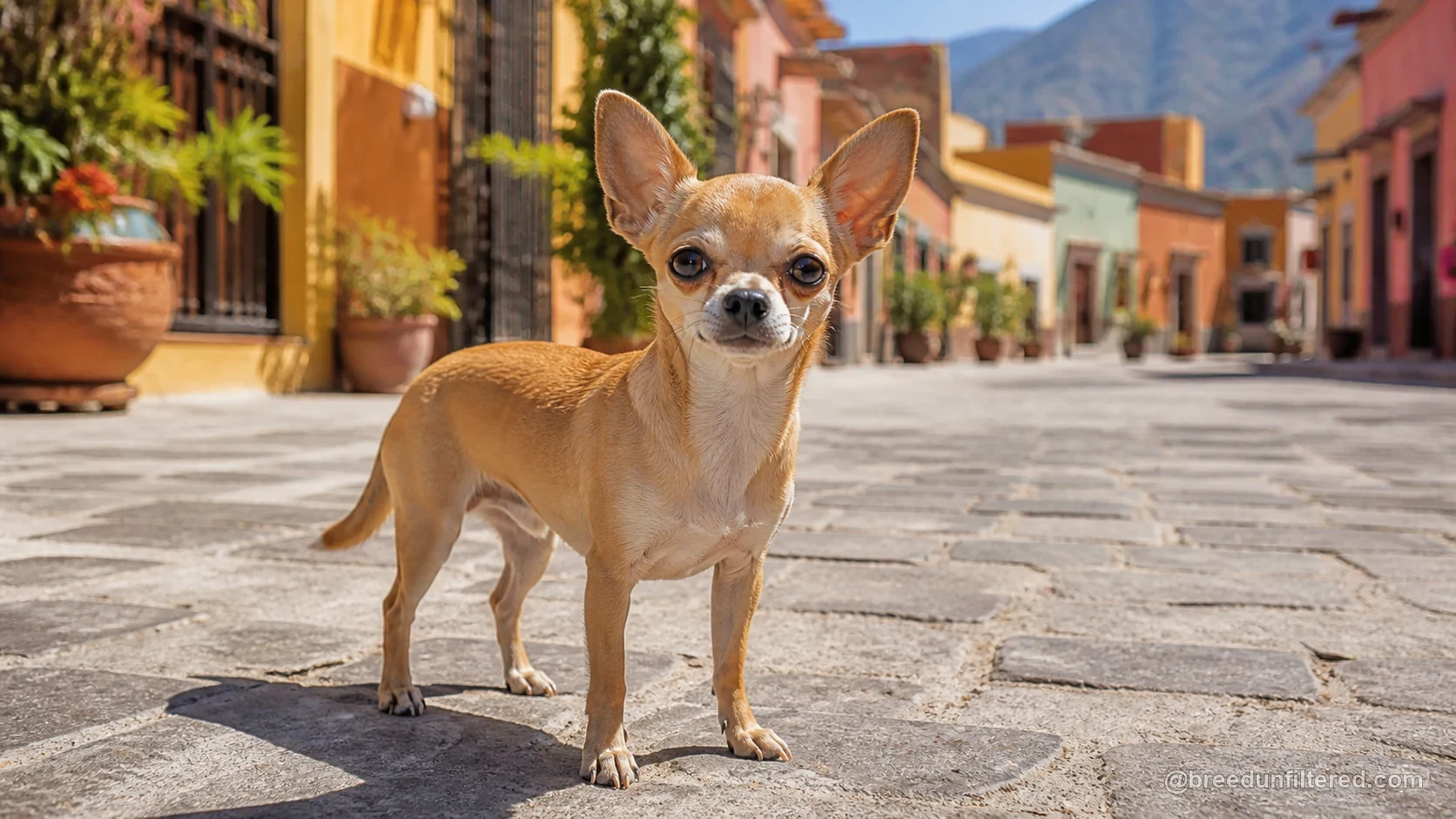
The Chihuahua, recognized by the Fédération Cynologique Internationale (FCI) under standard number 218, is one of the world's smallest dog breeds, yet it carries a remarkably bold and alert demeanor. Originating from Mexico, this breed has captured hearts globally with its distinctive apple-shaped head, large expressive eyes, and a personality that often belies its diminutive stature. Prospective owners should understand that the Chihuahua is not merely a lapdog; it is a spirited, loyal companion that thrives on close human interaction and can be surprisingly assertive.
This article provides an evidence-conscious overview of the Chihuahua, drawing on the official FCI standard and reputable breed resources. We will explore the breed's historical purpose, typical temperament, exercise and mental stimulation needs, training and socialization requirements, compatibility with families and other pets, grooming and health considerations, and the financial and time commitments involved. By the end, you will have a realistic picture of what life with a Chihuahua entails, helping you decide if this tiny dog is the right fit for your lifestyle.
Origin and Purpose
The Chihuahua is named after the Mexican state of Chihuahua, where the breed was discovered in the mid-19th century. However, its ancestry is believed to trace back to the Techichi, a small companion dog kept by the Toltec civilization, and later the Aztecs, who valued these dogs for companionship and possibly ritual purposes. The FCI standard notes that the breed is a 'natural' one, meaning it developed without significant human-directed breeding, and it was officially recognized by the FCI in 1954.
Historically, the Chihuahua served primarily as a companion and warm-bed warmer, not as a working dog. Its small size allowed it to be easily carried and kept in close quarters. Today, the breed's purpose remains largely unchanged: to be a devoted and portable companion. Understanding this background helps explain why Chihuahuas often form intense bonds with their owners and may be wary of strangers, as they were not bred to be outgoing or independent workers.
Temperament and Variation
Chihuahuas are known for their alert, lively, and courageous temperament. They are often described as 'big dogs in small bodies,' displaying confidence that can border on boldness. The FCI standard describes the breed as 'gay, alert, and spirited,' but individual temperaments can vary widely. Some Chihuahuas are outgoing and sociable, while others are more reserved and prefer the company of one person. Early and consistent socialization can help shape a well-adjusted adult.
There are two coat varieties recognized by the FCI: smooth (short-haired) and long-haired. Both share similar temperaments, though long-haired Chihuahuas may have a slightly calmer disposition, a tendency not universally observed. Additionally, there is variation in head shape (apple-head vs. deer-head), but the FCI standard only recognizes the apple-head as correct. Prospective owners should be aware that these variations can influence grooming needs and potential health considerations, but temperament is largely influenced by genetics and environment.
Exercise and Mental Work
Despite their small size, Chihuahuas have moderate energy levels and require daily exercise to stay healthy and happy. A few short walks and indoor play sessions are typically sufficient, but they also enjoy exploring and can be surprisingly athletic. Because of their tiny stature, they are prone to injury from rough play or falls, so exercise should be supervised and adapted to their size. Mental stimulation is equally important; puzzle toys, training games, and interactive play can prevent boredom and destructive behaviors.
Chihuahuas are intelligent and can learn quickly, but they also have a stubborn streak. They benefit from short, engaging training sessions that incorporate positive reinforcement. Without adequate mental work, they may develop excessive barking or anxiety. Owners should aim to provide a variety of activities that challenge their minds, such as hide-and-seek, scent games, or agility (with appropriate equipment). Remember that every dog is an individual, so adjust exercise and mental stimulation to your Chihuahua's energy and interest.
Training and Socialisation
Training a Chihuahua requires patience and consistency. They respond best to positive reinforcement techniques, such as treats, praise, and play, while harsh methods can lead to fear or defensiveness. Housebreaking can be challenging due to their small bladders and sometimes stubborn nature, so crate training and frequent outdoor breaks are often recommended. Early obedience training is essential to establish good manners and prevent small-dog syndrome, where the dog becomes overly demanding or aggressive.
Socialisation is crucial for Chihuahuas to develop into well-rounded adults. Exposing them to a variety of people, environments, and other animals from a young age can help reduce fearfulness and reactivity. Because they are small, they may feel threatened by larger dogs or unfamiliar situations, so controlled and positive introductions are key. Puppy classes and regular outings can help build confidence. Remember that socialisation is an ongoing process, not a one-time event.
Family and Other Pets
Chihuahuas can make wonderful companions for families, but they are often better suited to households with older children who understand how to handle a small, delicate dog. Their tiny bones are fragile, and rough handling can cause injury. They may also be possessive of their owners and can become jealous if they feel threatened. With proper training and supervision, they can coexist peacefully with children, but it is essential to teach children to respect the dog's space and signals.
When it comes to other pets, Chihuahuas can get along with cats and other dogs if introduced properly. However, they may exhibit a 'big dog' attitude and try to assert dominance over larger dogs, which can lead to conflicts. They also have a moderate prey drive, so they may chase small animals like rodents or birds. Early socialisation and careful introductions are vital to foster harmonious relationships. Always supervise interactions between a Chihuahua and other pets, especially if the other pet is significantly larger.
Grooming and Health
Grooming needs vary by coat type. Smooth-coated Chihuahuas require minimal grooming—a weekly brush and occasional bath are sufficient. Long-coated Chihuahuas need more frequent brushing (two to three times a week) to prevent mats and tangles, especially around the ears, tail, and legs. Both varieties shed, and regular brushing helps control loose hair. Dental care is particularly important, as small breeds are prone to dental issues; daily brushing and professional cleanings are recommended.
Chihuahuas are generally a healthy breed, but they are predisposed to certain conditions, including patellar luxation, heart problems, and eye issues. They are also prone to obesity, which can exacerbate other health problems. Responsible breeders screen for hereditary conditions, but owners should be prepared for potential veterinary costs. Regular check-ups, a balanced diet, and maintaining a healthy weight are key to a long, happy life. Always consult a veterinarian for specific health concerns.
Costs and Responsibility
Owning a Chihuahua involves financial and time commitments. Initial costs include adoption or purchase fees, which can vary widely, as well as supplies like a crate, bed, food, and toys. Ongoing expenses include high-quality dog food, routine veterinary care, vaccinations, flea and tick prevention, and grooming supplies. Emergency medical care can be costly, so pet insurance is worth considering. Additionally, Chihuahuas have a long lifespan (often 12-20 years), so be prepared for a long-term commitment.
Beyond finances, Chihuahuas require daily attention, exercise, and mental stimulation. They thrive on human companionship and may suffer from separation anxiety if left alone for long periods. Prospective owners should assess their lifestyle to ensure they can provide the time and care needed. It is also important to consider the ethical responsibility of choosing a reputable breeder or adopting from a rescue. A well-cared-for Chihuahua can bring immense joy, but it is a commitment not to be taken lightly.
Clear answers
FREQUENTLY ASKED QUESTIONS
Are Chihuahuas good with children?
Chihuahuas can be good with children, but they are best suited to families with older, respectful children who understand how to handle a small, fragile dog. Their tiny size makes them prone to injury from rough play or accidental drops. Early socialisation and training can help, but supervision is always recommended. Some Chihuahuas may be possessive or nervous around young children, so it's important to assess each dog's temperament and teach children how to interact gently.
How much exercise does a Chihuahua need?
Chihuahuas have moderate energy levels and typically need about 30 minutes of exercise per day, which can be split into short walks and indoor play. However, individual needs vary based on age, health, and temperament. Because they are small, they can get much of their exercise indoors, but outdoor walks are important for mental stimulation and socialisation. Always avoid overexertion and protect them from extreme weather, as they are sensitive to cold.
Are Chihuahuas easy to train?
Chihuahuas are intelligent and can learn quickly, but they can also be stubborn and independent. They respond best to positive reinforcement methods, such as treats and praise. Consistency and patience are key. Housebreaking can be challenging due to their small bladders, so crate training and frequent bathroom breaks are often recommended. Early obedience training and socialisation are essential to prevent behavioral issues like excessive barking or aggression.
Do Chihuahuas get along with other dogs?
Chihuahuas can get along with other dogs if properly socialised from a young age. They often have a 'big dog' attitude and may try to assert dominance over larger dogs, which can lead to conflicts. They may also be wary of unfamiliar dogs. Early and ongoing socialisation with a variety of dogs can help them develop good social skills. Always supervise interactions, especially with larger breeds, to prevent injury to the Chihuahua.
What are common health issues in Chihuahuas?
Chihuahuas are generally healthy, but they are prone to certain conditions, including patellar luxation (knee dislocation), heart problems like mitral valve disease, and eye issues such as glaucoma and dry eye. They are also susceptible to dental disease due to their small mouths. Obesity is a common concern, which can exacerbate other health problems. Regular veterinary check-ups, a balanced diet, and maintaining a healthy weight are important for their well-being.
Sources and further reading
Scores describe typical breed tendencies from 1 to 10. They are not a quality ranking or a prediction for an individual dog.
Size and presence1/10
CompactVery large
Physical strength1/10
LightExceptional
Energy level5/10
LowRelentless
Exercise demand4/10
ModestVery demanding
Mental work needed6/10
ModerateDaily job
Trainability5/10
ChallengingExceptional
Everyday manageability6/10
SpecialistStraightforward
First-time owner fit7/10
Poor fitGood fit
Family-life fit8/10
LimitedExcellent
Dog sociability7/10
SelectiveVery social
Prey drive4/10
LowVery high
Guarding tendency3/10
MinimalSerious
Independence7/10
Handler-focusedSelf-directed
Grooming demand9/10
LightHeavy
Apartment fit10/10
Poor fitGood fit