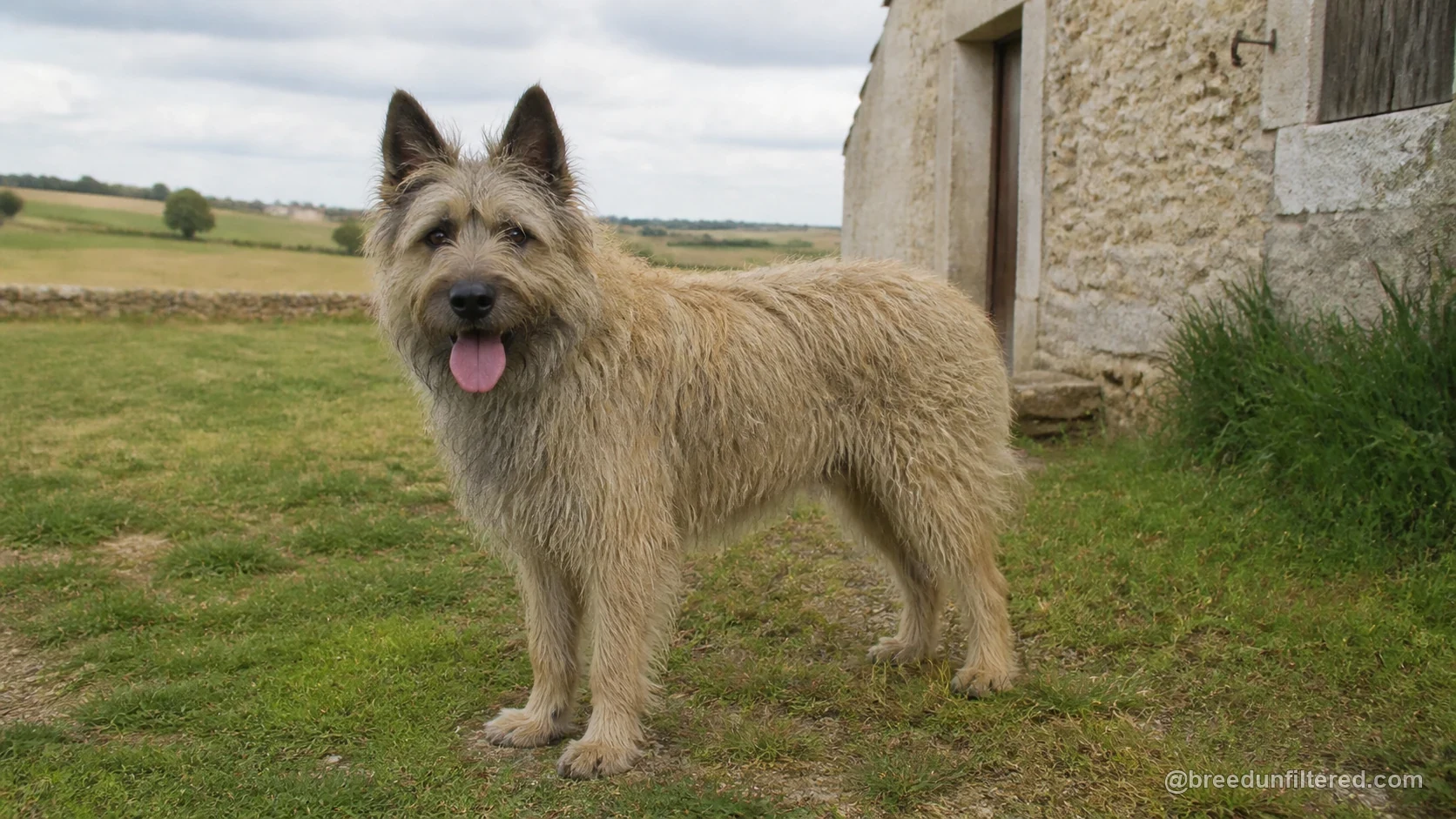
Complete breed guide
Picardy Sheepdog OWNERSHIP GUIDE
The Picardy Sheepdog, also known as the Berger de Picardie, is a rustic French herding breed with a distinctive shaggy coat and an endearing, slightly mischievous expression. Originating from the Picardy region in northern France, this breed has worked alongside shepherds for centuries, valued for its intelligence, agility, and steadfast dedication to its flock. While not as widely known as some other French herders, the Picardy Sheepdog has a loyal following among enthusiasts who appreciate its versatility and character.
Prospective owners should understand that the Picardy Sheepdog is a working breed at heart. It thrives on having a job to do, whether that involves herding, participating in dog sports, or engaging in structured activities with its family. This breed is known for its sensitivity and strong bond with its people, but it can be reserved with strangers. With proper socialisation and training, the Picardy Sheepdog can be a devoted companion for an active household that appreciates its unique blend of independence and affection.
Origin and Purpose
The Picardy Sheepdog is one of the oldest French herding breeds, with roots tracing back to the 9th century, though its modern development is centered in the Picardy region. Historically, these dogs were employed to herd and guard livestock, often working in challenging terrain and weather. Their ability to think independently and make decisions while moving flocks made them indispensable to shepherds, and they were prized for their endurance and keen herding instincts.
Despite their long history, the Picardy Sheepdog was not officially recognised until the early 20th century, with the first standard written in 1925. The breed faced a decline after the World Wars, but dedicated breeders worked to preserve it. Today, the Picardy Sheepdog remains a rare breed, primarily found in France, with a small but growing presence in other countries. Its purpose has expanded to include dog sports and companionship, but its herding heritage remains a core part of its identity.
Temperament and Variation
The Picardy Sheepdog is known for its intelligent, sensitive, and somewhat reserved nature. It forms a strong attachment to its family and can be wary of unfamiliar people, making early socialisation essential. This breed is not typically aggressive but may be aloof with strangers, and it has a playful, sometimes clownish side with those it trusts. Individual temperament can vary, with some dogs being more outgoing and others more cautious, but the breed generally exhibits a balanced and adaptable disposition.
As a herding breed, the Picardy Sheepdog has a natural tendency to be watchful and may attempt to herd children or other pets. It is not a breed that thrives on constant attention but rather appreciates being included in family activities. While it can be independent, it is also eager to please its owner, which makes it responsive to training when approached with patience and positive reinforcement. Understanding these traits helps prospective owners appreciate the breed's unique character.
Exercise and Mental Work
The Picardy Sheepdog is an energetic breed that requires regular physical exercise to stay healthy and content. Daily walks, play sessions, and opportunities to run in a securely fenced area are important. However, physical activity alone is not sufficient; this intelligent breed also needs mental stimulation to prevent boredom and destructive behaviors. Puzzle toys, scent work, and training sessions that challenge its mind are highly beneficial.
Because of its herding background, the Picardy Sheepdog excels in activities that involve problem-solving and coordination, such as agility, obedience, and herding trials. Owners should be prepared to provide a variety of activities to keep the dog engaged. Without adequate exercise and mental engagement, the breed may develop undesirable habits like excessive barking or chewing. A well-exercised Picardy Sheepdog is typically calm and relaxed indoors.
Training and Socialisation
Training a Picardy Sheepdog requires a gentle yet consistent approach. This breed is sensitive and responds best to positive reinforcement techniques, such as treats, praise, and play. Harsh corrections can damage the trust between dog and owner and lead to reluctance or stubbornness. Early obedience training is recommended to establish good manners and a strong foundation for lifelong learning.
Socialisation is equally crucial, especially during puppyhood. Exposing the Picardy Sheepdog to a variety of people, animals, environments, and sounds helps it develop into a well-adjusted adult. While it may always be somewhat reserved with strangers, proper socialisation can reduce anxiety and prevent overreactive behavior. Enrolling in puppy classes and arranging controlled introductions can be valuable. With time and patience, this breed can become a reliable and responsive companion.
Family and Pets
The Picardy Sheepdog can make a devoted family dog for households that appreciate its energy and intelligence. It tends to form strong bonds with all family members, though it may choose one person as its primary attachment. With children, the breed can be playful and protective, but as with any dog, interactions should be supervised, especially with younger children who may not understand the dog's herding instincts. Teaching children how to approach and handle the dog respectfully is important.
When it comes to other pets, the Picardy Sheepdog's herding instinct may lead it to chase or try to control smaller animals, including cats and other dogs. Early socialisation can help it learn to coexist peacefully, but supervision is advised. The breed generally gets along with other dogs, especially if raised together, but may be reserved with unfamiliar dogs. Prospective owners should be prepared to manage these tendencies and provide clear guidance to ensure harmonious relationships.
Grooming and Health
The Picardy Sheepdog has a shaggy, double coat that requires regular grooming to keep it in good condition. Weekly brushing is typically sufficient to remove loose hair and prevent matting, though more frequent grooming may be needed during seasonal sheds. The coat is weather-resistant and does not require frequent bathing, but regular ear cleaning, nail trimming, and dental care are essential parts of the grooming routine.
As a breed, the Picardy Sheepdog is generally healthy, but like all dogs, it may be predisposed to certain conditions. Responsible breeders screen for hip dysplasia and eye disorders, and prospective owners should ask about health testing. Regular veterinary check-ups and a balanced diet contribute to overall well-being. While the breed's lifespan is typically around 12 to 14 years, individual health can vary. Staying informed about potential health concerns is part of responsible ownership.
Costs and Responsibility
Owning a Picardy Sheepdog involves significant financial and time commitments. Initial costs include purchasing from a reputable breeder, which can be substantial due to the breed's rarity, as well as supplies such as crates, bedding, and grooming tools. Ongoing expenses include high-quality food, routine veterinary care, vaccinations, and preventive medications. Emergency medical costs and pet insurance are also considerations that should be factored into the budget.
Beyond finances, prospective owners must be prepared for the time and energy required to meet this breed's exercise and mental stimulation needs. The Picardy Sheepdog is not a low-maintenance companion; it thrives in an active household where it can participate in daily activities. Potential owners should also consider the responsibility of training and socialising the dog, as well as providing a safe environment. This breed is best suited for experienced dog owners who can offer consistent guidance and a fulfilling lifestyle.
Clear answers
FREQUENTLY ASKED QUESTIONS
Is the Picardy Sheepdog a good family dog?
The Picardy Sheepdog can be a good family dog for active households that understand its herding instincts and need for mental stimulation. It is loyal and affectionate with its family, but may be reserved with strangers. Early socialisation and training are essential to ensure it interacts well with children and other pets. Supervision is recommended, especially with young children.
How much exercise does a Picardy Sheepdog need?
The Picardy Sheepdog is an energetic breed that requires daily physical exercise, such as long walks, runs, or play sessions in a secure area. However, mental exercise is equally important to prevent boredom. Activities like puzzle toys, obedience training, and dog sports can help meet its needs. Without adequate exercise, it may develop behavioral issues.
Are Picardy Sheepdogs easy to train?
Picardy Sheepdogs are intelligent and eager to please, but they are also sensitive and can be independent. They respond best to positive reinforcement methods, such as treats and praise, and may become stubborn if handled harshly. Consistent, patient training from an early age is recommended. They excel in activities that challenge their minds, such as agility and herding trials.
What are common health issues in Picardy Sheepdogs?
The Picardy Sheepdog is generally a healthy breed, but like many dogs, it may be prone to hip dysplasia and certain eye conditions. Responsible breeders perform health screenings to reduce the risk. Regular veterinary check-ups and a balanced diet are important for maintaining health. Lifespan is typically around 12 to 14 years, but individual health can vary.
Do Picardy Sheepdogs shed a lot?
The Picardy Sheepdog has a double coat that sheds moderately throughout the year, with heavier shedding during seasonal changes. Regular brushing, at least once a week, helps manage loose hair and prevent matting. During shedding seasons, more frequent brushing may be necessary. The coat is weather-resistant and does not require frequent bathing.
Sources and further reading
Scores describe typical breed tendencies from 1 to 10. They are not a quality ranking or a prediction for an individual dog.
Size and presence6/10
CompactVery large
Physical strength5/10
LightExceptional
Energy level8/10
LowRelentless
Exercise demand8/10
ModestVery demanding
Mental work needed10/10
ModerateDaily job
Trainability9/10
ChallengingExceptional
Everyday manageability5/10
SpecialistStraightforward
First-time owner fit4/10
Poor fitGood fit
Family-life fit7/10
LimitedExcellent
Dog sociability6/10
SelectiveVery social
Prey drive7/10
LowVery high
Guarding tendency7/10
MinimalSerious
Independence5/10
Handler-focusedSelf-directed
Grooming demand6/10
LightHeavy
Apartment fit4/10
Poor fitGood fit