Complete breed guide
Pharaoh Hound OWNERSHIP GUIDE
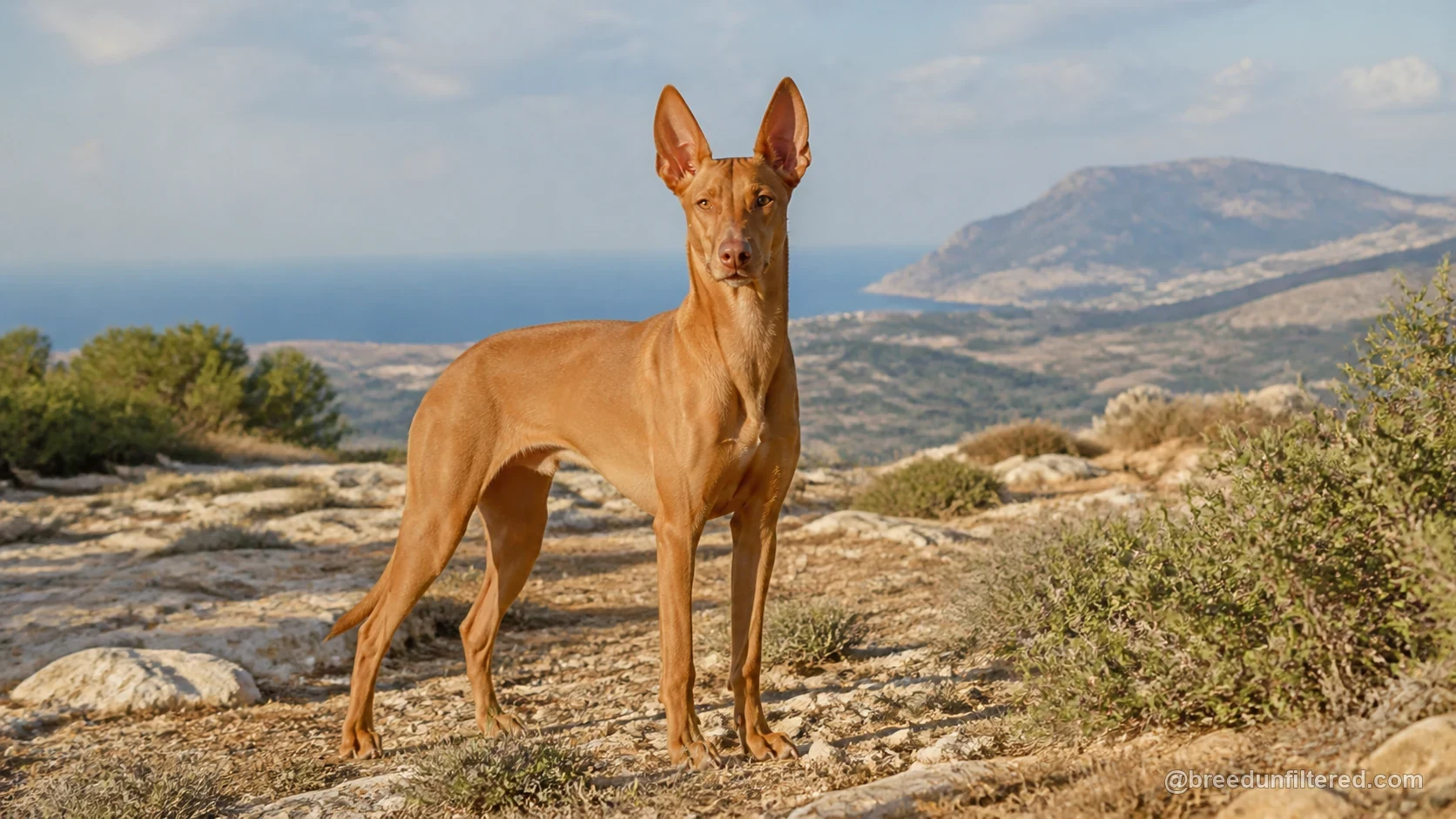
The Pharaoh Hound is an ancient breed with roots tracing back to the Mediterranean, often associated with the island of Malta. Known for its sleek, athletic build and distinctive amber eyes, this sighthound combines elegance with a keen hunting instinct. The breed's name suggests a connection to ancient Egypt, though its exact lineage remains a subject of historical debate. Today, the Pharaoh Hound is recognized by the Fédération Cynologique Internationale (FCI) in Group 5, and it serves as both a capable hunter and a devoted companion.
Prospective owners should understand that the Pharaoh Hound is a sighthound, meaning it relies on sight and speed to pursue prey. This trait influences its behavior, including a strong chase drive and a tendency to be alert to movement. While the breed is known for its affectionate and playful nature with family, it also possesses an independent streak that can present training challenges. This article provides an evidence-conscious overview of the breed's characteristics, care requirements, and considerations for those thinking of welcoming a Pharaoh Hound into their home.
Origin and Purpose
The Pharaoh Hound's history is often linked to the ancient world, with depictions of similar dogs appearing in Egyptian art. However, the breed as we know it today is believed to have developed in Malta, where it was used for hunting rabbits. The FCI standard (No. 248) describes the Pharaoh Hound as a 'hunting dog' that works by sight and scent, and it is still used for this purpose in some regions. The breed's name, while evocative, is not definitively proven to indicate direct descent from ancient Egyptian dogs, and experts caution against overstating such claims.
The Pharaoh Hound's primary role has been as a hunter of small game, particularly rabbits. Its agility and speed allow it to navigate rough terrain, and its keen senses make it an effective tracker. In modern times, the breed also excels in dog sports such as lure coursing and agility, which tap into its natural abilities. Understanding this background helps prospective owners appreciate the breed's physical and mental needs, as well as its strong prey drive.
Temperament and Variation
Pharaoh Hounds are often described as affectionate and playful with their families, forming strong bonds with their human companions. They are known to be gentle and can be good with children when properly socialized. However, like many sighthounds, they can be reserved with strangers and may be sensitive to harsh training methods. Individual temperament varies, and early socialization plays a crucial role in shaping a well-adjusted adult dog.
The breed is also noted for its intelligence and independent nature. This independence can manifest as stubbornness, but it also means the Pharaoh Hound is capable of problem-solving. They are not typically aggressive, but their hunting instincts can lead them to chase small animals. Prospective owners should be prepared for a dog that is both loving and self-reliant, requiring a patient approach to training and a secure environment to prevent wandering.
Exercise and Mental Work
As a sighthound, the Pharaoh Hound has a high energy level and requires regular exercise to maintain physical and mental well-being. Daily walks and opportunities to run in a safe, enclosed area are important. Activities that allow the dog to use its speed and agility, such as lure coursing or fetch, can be particularly satisfying. However, because of their strong prey drive, off-leash exercise should only occur in securely fenced areas to prevent chasing after wildlife.
Mental stimulation is equally important for this intelligent breed. Puzzle toys, scent games, and training sessions that challenge the mind can help prevent boredom and destructive behaviors. Without adequate mental and physical outlets, a Pharaoh Hound may become restless or develop undesirable habits. Prospective owners should be ready to commit time each day to both exercise and enrichment.
Training and Socialisation
Training a Pharaoh Hound requires patience and consistency. They respond best to positive reinforcement techniques, such as treats and praise, and can become disengaged if forced or coerced. Early socialization is crucial to help them become comfortable with various people, animals, and environments. Puppy classes and controlled introductions can build confidence and reduce the likelihood of fearfulness or reactivity.
Because of their independent nature, Pharaoh Hounds may not be as eager to please as some other breeds. Training sessions should be kept short and engaging to hold their attention. Recall (coming when called) is particularly important to practice, given their hunting instincts. Owners who are experienced with sighthounds or who seek professional guidance may find training more manageable.
Family and Pets
Pharaoh Hounds can make loving family pets, especially in households that understand their needs. They are generally gentle with children, but as with any dog, interactions should be supervised, and children should be taught how to behave around dogs. The breed's playful nature can make them good companions for active families, but their size and energy may be overwhelming for very young children.
Regarding other pets, the Pharaoh Hound's prey drive can be a concern. They may view small animals, such as rabbits or cats, as prey, especially if not raised with them. Early socialization with other dogs can help, but their instinct to chase may still be strong. Prospective owners with existing pets should carefully consider the breed's hunting background and take precautions to ensure safe introductions and management.
Grooming and Health
The Pharaoh Hound has a short, smooth coat that is relatively low-maintenance. Weekly brushing with a soft brush or hound glove can help remove loose hair and keep the coat shiny. They are moderate shedders, and bathing is only needed occasionally. Their ears should be checked regularly for dirt or infection, and nail trimming should be done as needed.
As a breed, Pharaoh Hounds are generally healthy, but like all dogs, they can be prone to certain conditions. Responsible breeders screen for issues such as hip dysplasia and patellar luxation. It is important for owners to provide regular veterinary care, a balanced diet, and appropriate exercise to support overall health. While the breed has a relatively long lifespan, individual health outcomes vary, and owners should be prepared for potential medical expenses.
Costs and Responsibility
Owning a Pharaoh Hound involves financial commitment beyond the initial purchase price. Costs include high-quality food, routine veterinary care, vaccinations, parasite prevention, and grooming supplies. Additionally, owners should budget for potential unexpected medical issues and consider pet insurance. The breed's exercise needs may also require investments in secure fencing or membership to dog sports facilities.
Responsible ownership also entails time and dedication. Pharaoh Hounds thrive on human interaction and should not be left alone for long periods. They require daily exercise, mental stimulation, and training. Prospective owners should assess their lifestyle to ensure they can meet these needs. Adopting from a rescue or purchasing from a reputable breeder who health tests and raises puppies in a home environment is crucial for the well-being of the dog.
Clear answers
FREQUENTLY ASKED QUESTIONS
Are Pharaoh Hounds good with children?
Pharaoh Hounds can be good with children when properly socialized and supervised. They are generally gentle and playful, but their size and energy may be too much for very young kids. Teaching children how to interact respectfully with dogs and always supervising interactions helps ensure a positive relationship.
Do Pharaoh Hounds need a lot of exercise?
Yes, Pharaoh Hounds are an energetic breed that requires regular exercise to stay healthy and happy. Daily walks and opportunities to run in a safe, enclosed area are important. Without adequate exercise, they may become bored and develop behavioral issues. Mental stimulation is also essential.
Are Pharaoh Hounds easy to train?
Pharaoh Hounds are intelligent but independent, which can make training a challenge. They respond best to positive reinforcement methods and may become stubborn if forced. Consistency, patience, and short, engaging sessions are key. Early socialization and training are crucial for a well-behaved adult.
Do Pharaoh Hounds get along with other pets?
Due to their strong prey drive, Pharaoh Hounds may not be reliable with small animals like cats or rabbits, especially if not raised with them. They can get along with other dogs, but introductions should be gradual and supervised. Owners should be cautious and manage interactions to prevent chasing.
What is the grooming requirement for a Pharaoh Hound?
The Pharaoh Hound has a short, smooth coat that is low-maintenance. Weekly brushing helps remove loose hair and keep the coat healthy. They shed moderately, and bathing is only needed occasionally. Regular ear checks, nail trims, and dental care are also part of routine grooming.
Sources and further reading
Scores describe typical breed tendencies from 1 to 10. They are not a quality ranking or a prediction for an individual dog.
Size and presence5/10
CompactVery large
Physical strength5/10
LightExceptional
Energy level8/10
LowRelentless
Exercise demand8/10
ModestVery demanding
Mental work needed8/10
ModerateDaily job
Trainability6/10
ChallengingExceptional
Everyday manageability3/10
SpecialistStraightforward
First-time owner fit3/10
Poor fitGood fit
Family-life fit7/10
LimitedExcellent
Dog sociability6/10
SelectiveVery social
Prey drive10/10
LowVery high
Guarding tendency6/10
MinimalSerious
Independence9/10
Handler-focusedSelf-directed
Grooming demand8/10
LightHeavy
Apartment fit4/10
Poor fitGood fit